Best 24 Ft Above Ground Pool in 2026: Buying Guide and Top Picks
Disclosure: We may earn a commission when you buy through links on this page, at no extra cost to you. As an Amazon Associate I earn from qualifying purchases. Learn more

What to look for in the best 24 ft above ground pool: the main types, key features, realistic price ranges and mistakes to avoid before you order.
A 24 ft pool is a serious step up in size, and choosing the wrong one costs you a season of leaks, rust, and frustration. The best 24 ft above ground pool for your yard depends on build materials and weather resistance, true water capacity, and how much assembly work you can handle. This guide compares pool types rather than pushing one brand, and the product table below the intro lets you compare current options.
If you are still weighing sizes before you commit, our guide to the best above ground pool covers the wider range of diameters and depths. Here we stay focused on the 24 ft class, what it holds, what it needs around it, and what ownership really involves.



Pool Types Compared Instead of Individual Picks
At this diameter you will mostly meet three builds. Metal frame pools use steel tubes that click or pin together to support a flexible liner. They cost less, store flat in winter, and suit owners who want the option to move the pool later. Their weak points are frame joints and liner wear at contact points, so coating quality matters a lot.
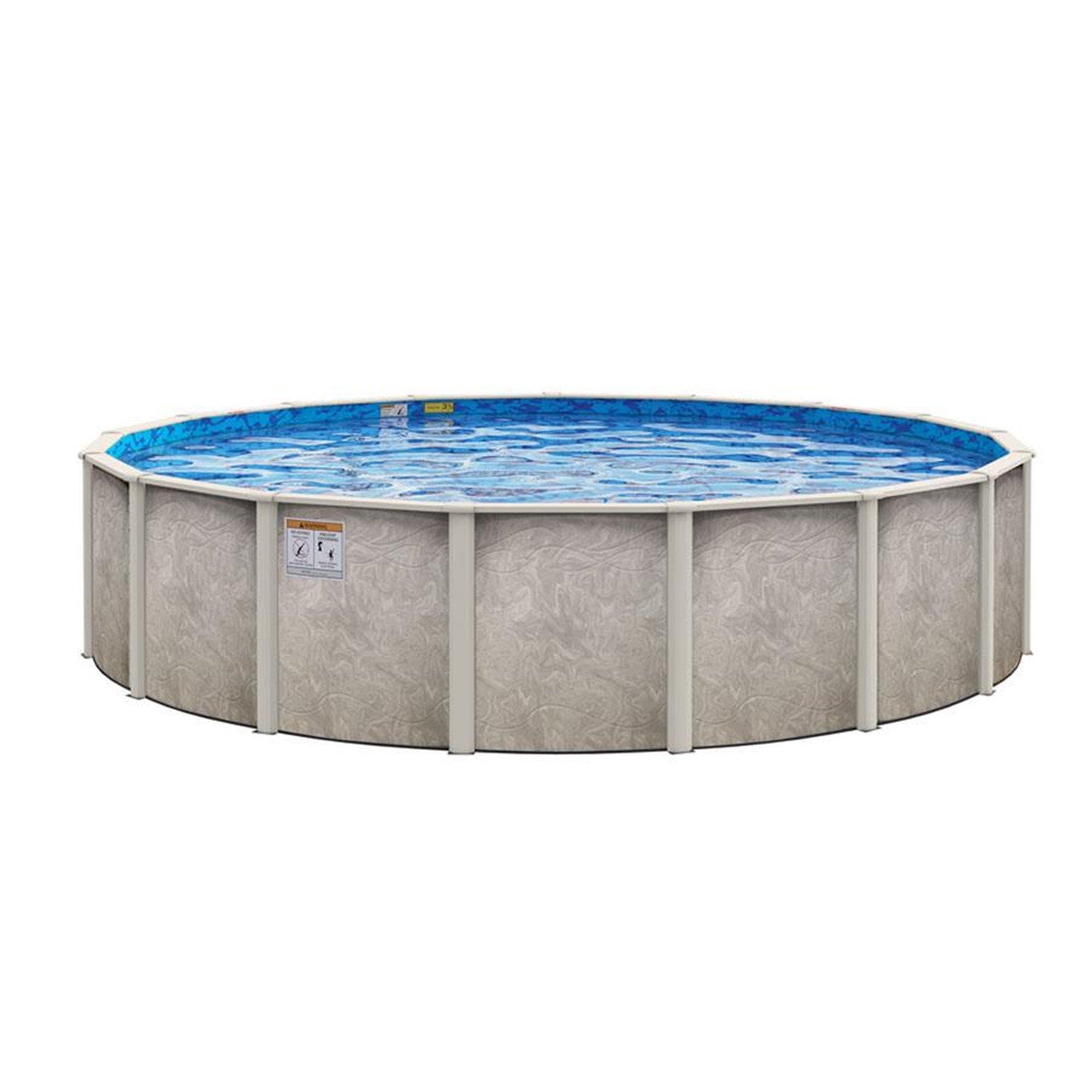
Steel wall pools use a continuous rolled wall held in a track, with uprights and top rails around the outside. They feel more rigid, tolerate wind and rowdy swimmers better, and often stay up all year. Assembly takes longer and usually needs two or three adults, and a dented wall panel is a bigger repair than a swapped frame tube.
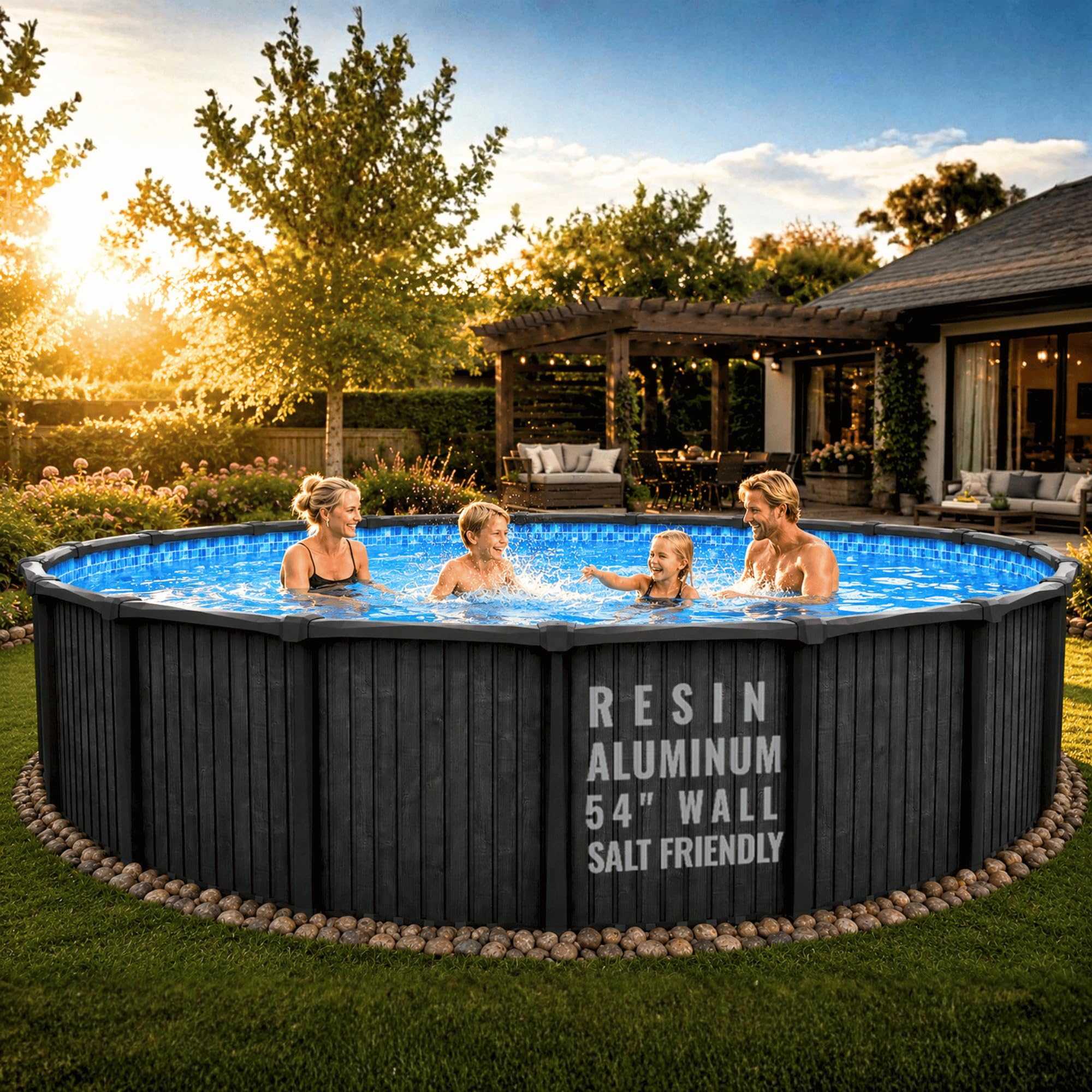
Resin and hybrid pools replace some steel parts with molded resin rails and uprights that cannot rust. They suit coastal yards and saltwater systems well, and they tend to sit at the top of the price range. Check which parts are truly resin before you pay extra, because many hybrids still use steel uprights under a resin cover.
How to Compare 24 ft Above Ground Pools
Compare every candidate on the same five points: liner and wall materials, stated capacity at real fill depth, frame or wall protection against weather, the pump and filter included in the box, and warranty length for the liner, frame, and wall separately. Manufacturer specifications and verified buyer reviews are the most useful sources, because they show seam failures, rust timing, and missing parts that a spec sheet never mentions.
How to Choose the Right Above Ground Pool
Size and form factor
A round 24 ft pool gives you the most even wall support and the simplest assembly, and it fits games and group floating well. Oval and rectangular shapes use yard length better and leave a lane for short laps, but they need extra side supports that widen the footprint. If a rectangle appeals to you, see our guide to the best rectangular above ground pool for support and bracing details. Wall heights at this size usually run 48 to 52 inches, and deeper walls add water weight as well as swimming room.
Type and structure
Match the structure to how permanent you want the pool to be. Frame pools come down for storage and forgive small leveling errors least visibly, while steel wall pools reward careful ground work with many seasons in place. Inflatable ring models at 24 ft exist, but they flex when swimmers lean on the edge and lose shape as air pressure drops. Saltwater compatible pools need resin parts or strong coatings, because salt speeds up corrosion on bare steel fasteners and rails.
Features worth paying for
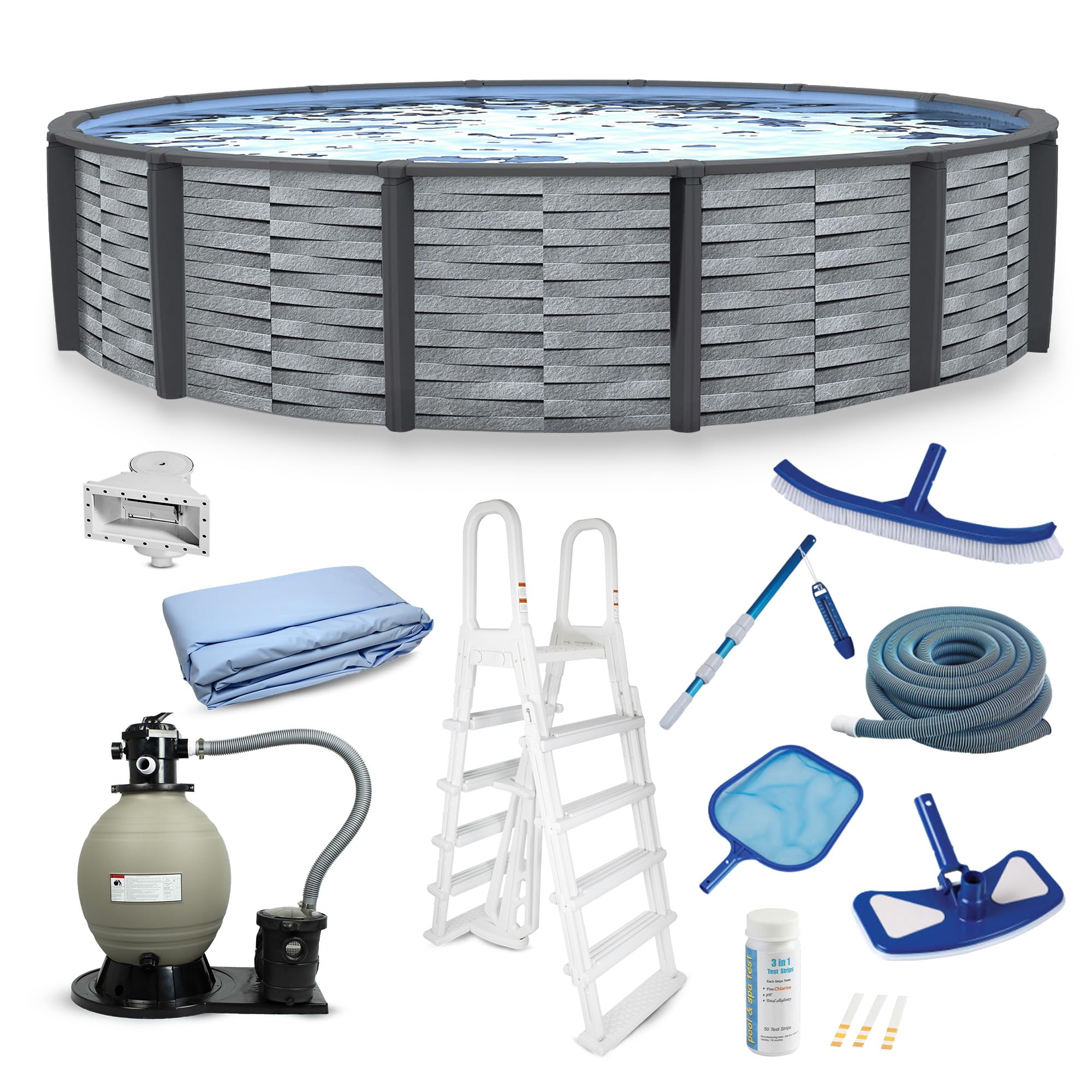
The pump and filter decide your water clarity more than any other extra. Cartridge filters are simple and cheap to run but need frequent rinsing at this volume, while sand filters handle about 12,000 to 13,000 gallons with less weekly attention. A sturdy ladder with a locking or removable outer section helps you control access to the water. A fitted cover, a ground cloth, and a skimmer are worth having from day one, because replacing a punctured liner costs far more than protecting it.
Weather resistant materials
Sun, rain, and freeze cycles age a pool faster than swimming does. Look for liners described as thick vinyl with ultraviolet protection, and steel parts with powder coating or galvanizing over every cut edge. Resin rails shrug off sprinkler water and pool chemicals without surface rust. In snowy regions, ask whether the maker allows the pool to stand filled through winter, because some frame pools must come down before freezing weather while steel wall pools are built to stay up with proper closing steps.
Size for your space
Measure a clear circle of about 30 ft across, not just the 24 ft water line. You need roughly 3 ft of working room around the pool for the ladder, filter hoses, and walking access, plus space away from fences where local codes require clearance. Keep the pool clear of overhead wires, septic lines, and tree roots, and avoid low spots where rain collects. Tight yards change the answer fast, and our guide to the best small above ground pool shows what smaller diameters still do well.
Assembly and anchoring
Ground preparation decides whether the pool lasts. The site must be level within about an inch across the full diameter, built by digging high spots down rather than filling low spots up, because fill soil settles under thousands of gallons. Expect a full weekend with help for a steel wall model and most of a day for a frame model. Our walkthrough on how to assemble an above ground pool covers the leveling and wall handling steps in order, including why you should never fill a pool that leans to one side.
Care and off season storage
Weekly care is simple but steady: run the filter daily, skim leaves before they sink, brush the waterline, and test chlorine and pH twice a week in heavy use. At closing time, balance the water, lower it below the skimmer where the maker directs, and cover the pool tightly. Frame pool owners who store parts indoors should dry the liner fully first to prevent mildew. For the full closing sequence, follow our guide to how to winterize an above ground pool before the first hard freeze arrives.
How much should you spend?
Basic large frame pools start at about $600 to $1,000, but the included pump is often undersized, so budget for an upgrade. Mid range frame and entry steel wall pools run about $1,000 to $2,000 and bring thicker liners and stronger filters. Full steel wall and resin hybrid pools reach about $2,000 to $3,000 or more once you add a sand filter, ladder, and cover. Spend first on structure and filtration, and skip decorative extras until those two are solid.
Is a 24 ft Above Ground Pool the Right Size for You?
Families with older children and teens
Families gain the most at this size because several swimmers can spread out without constant contact, and games stop feeling crowded. The depth suits confident swimmers, while younger children need an adult watching whenever they are in or near the water. Follow your local pool barrier rules and the manufacturer's instructions, remove or lock the ladder between swim sessions, and never let anyone dive into this shallow water.
Adults who want room to float and exercise
Adults choose 24 ft pools for full length floats, water workouts, and cooling off after yard work without bumping the walls. If adult use is your main goal, our guide to the best above ground pool for adults compares depth and access options in more detail. A round pool gives gentle circulation for low impact exercise, though serious lap swimmers will still prefer a long rectangular shape.
Hosts and larger households
If your yard hosts cookouts and visiting cousins all summer, capacity is the argument for 24 ft. Six to eight people can share the water comfortably, and the surrounding deck or patio traffic stays manageable when you planned that 30 ft clear circle. Hosts should weigh the higher chemical and heating costs honestly, because a 24 ft pool holds roughly 1.8 times the water of an 18 ft pool, and chemical and heating costs rise with it.
Common Mistakes to Avoid
- Setting up on unlevel ground, so one wall carries extra pressure and the liner creeps or the frame bends.
- Buying on diameter alone and forgetting the ladder, pump, and clearance space, so the pool crowds fences and doors.
- Accepting the smallest included pump for 12,000 plus gallons, so the water turns cloudy within weeks of heavy use.
- Placing the pool under trees, so leaf tannins stain the liner and falling branches risk punctures.
- Leaving the ladder in place and the gate open, so children can reach the water without an adult present.
- Draining a steel wall pool fully for cleaning, so the liner shrinks and the wall can shift or collapse in wind.
FAQs
What is the best 24 ft above ground pool?
The right answer depends on permanence and budget rather than one brand. Steel wall pools suit owners who want a fixed backyard feature for many seasons, frame pools suit owners who value lower cost and winter storage, and resin hybrids suit coastal or saltwater setups. Match the included filter to the full water volume, confirm the warranty terms for liner and structure separately, and choose the build your yard and schedule support.
What size above ground pool do I need?
Count your regular swimmers first, then measure your yard. Two or three occasional swimmers do fine in 15 to 18 ft pools, while groups of five or more feel cramped below 24 ft. Allow for future use too, because children grow into the space quickly. Also check local permit and fence rules before ordering, since some towns set rules by water depth or total capacity rather than diameter alone.
How long does an above ground pool last?
Liners commonly last about 6 to 10 seasons before sun and chemicals make the vinyl brittle, and you can replace a liner without replacing the whole pool. Steel walls and frames often serve 15 seasons or longer when rust spots get sanded and sealed early. Resin parts last longest in wet climates. Keeping the water balanced protects every material at once, because acidic water attacks metal while excess chlorine fades and weakens vinyl.
Is an above ground pool worth it?
It is worth it when your household will swim several times a week through the season, because cost per swim drops fast at that pace. It is harder to justify for a yard you plan to sell soon or a family that travels all summer. Add the ongoing costs to your math: chemicals, filter media or cartridges, electricity for the pump, and a replacement liner one day. Occasional swimmers may get better value from a smaller pool with lower upkeep.
How do you clean an above ground pool?
Start at the surface with a skimmer net, then vacuum the floor slowly so settled debris lifts into the filter instead of clouding the water. A robotic or suction cleaner sized for above ground pools saves time on a 24 ft floor, where manual vacuuming takes a while. Clean the filter after each deep clean, and shock the water in the evening after heavy parties so the chlorine works overnight without sun burning it off.
What is the most reliable above ground pool brand?
No single brand wins on reliability, because results track the product line and the care it gets more than the logo. Judge a maker by warranty handling, spare liner and parts availability in your country, and how clearly it publishes wall and liner specifications. A brand that still sells replacement parts for older pools protects you years later. Buyer reviews that mention support outcomes after a leak tell you more than star ratings alone.
Final Thoughts
Choose the structure first, the filter second, and the extras last, and a 24 ft pool will reward you for many summers. Measure honestly, level carefully, and keep safety barriers in place from the first fill. When you are ready to compare the best 24 ft above ground pool options for your yard, use the product table above to match each type against your space, budget, and climate.