Best Bright Solar Lights (2026): Lumens, Types and Buying Guide
Disclosure: We may earn a commission when you buy through links on this page, at no extra cost to you. As an Amazon Associate I earn from qualifying purchases. Learn more

Compare lumens, panel size and battery runtime to find the best bright solar lights for your paths, yard and entries.
Many solar lights look charming in photos and then give off only a faint glow once the sun goes down. If you need light you can actually walk, cook, or work by, brightness has to come first. The best bright solar lights pair a strong lumen output with a large panel and a battery that can hold that output for hours, and the sections below group the main types by brightness, color temperature, and installation so you can spot the right fit fast.
This guide explains what counts as bright, which type suits each part of your property, and which features are worth paying for. For a broader starting point, see our guide to the best solar lights.




Who Should Buy Bright Solar Lights?
Homeowners With Dark Paths and Steps
You walk from a car to a door in the dark, and guests need to see steps, edges, and uneven ground clearly. Bright pathway and wall lights help here because they put usable light on the ground instead of a soft glow at ankle height. Choose fixtures that aim light downward and space them so the lit pools overlap slightly along the route you use most. Keep that in mind when you compare the best bright solar lights for each part of your yard.
Gardeners Who Want Plants and Beds to Stand Out
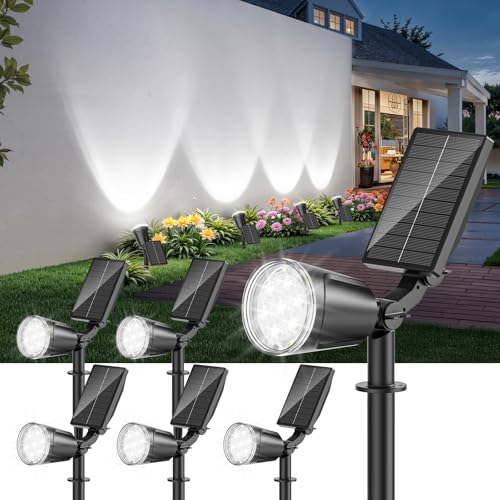
You want flower beds, shrubs, and a favorite tree to stay visible after sunset without running cable across the lawn. Bright spotlights and ground lights give you that accent light, and a warmer color temperature keeps foliage looking natural. For softer decorative options around planting, see our guide to the best garden solar lights alongside the brighter accent types covered here.
Households That Want a Brighter Yard Without Wiring
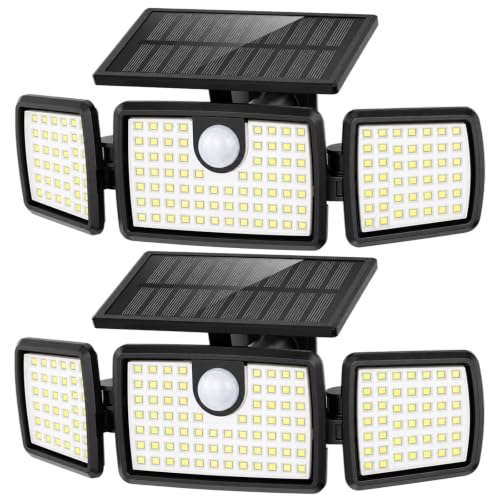
You need real coverage over a driveway, a side yard, or a back patio, but you do not want to trench cable or hire an electrician. Bright flood style and motion sensor lights cover wide areas and switch to full output when someone approaches. If whole yard coverage is your main goal, our guide to the best solar lights for yard covers layout planning in more depth.
Types of Bright Solar Lights Compared
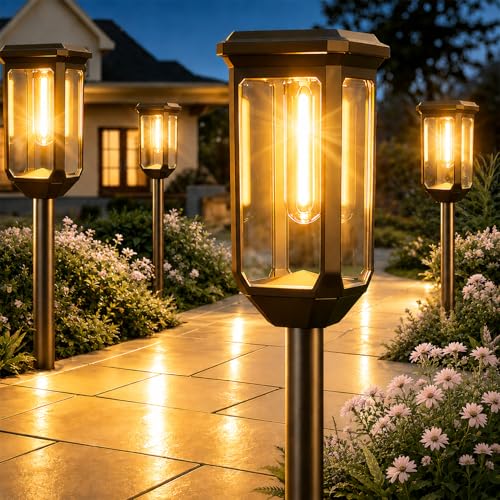
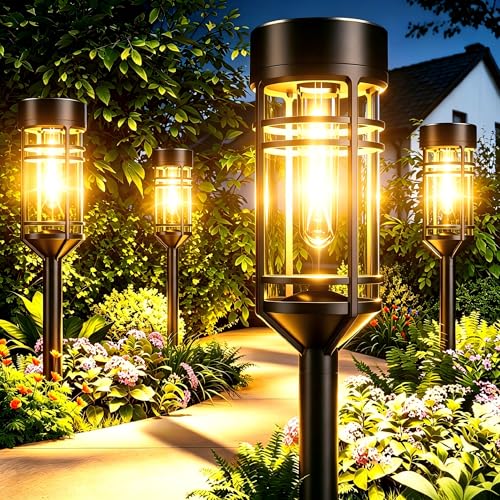
Pathway lights line a walk or a drive and usually give about 20 to 100 lumens each. One alone looks dim, but a row of them reads as bright because the light is close to the ground and repeated at short intervals. Our guide to the best pathway solar lights explains spacing and stake height for that type in detail.
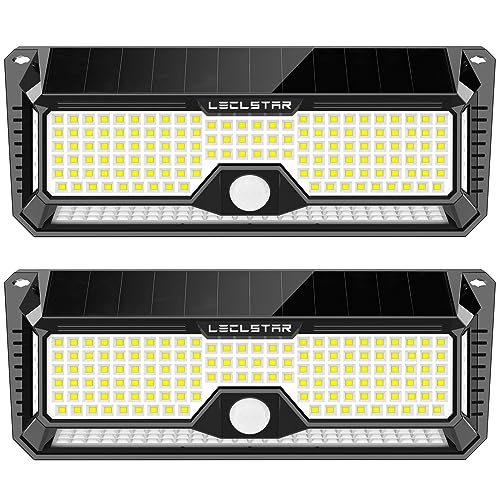
Spotlights and flood style lights are the brightest solar types. A spotlight focuses its output into a narrow beam for a tree or a house number, while a flood style fixture spreads light across a wall or driveway. Output often runs from about 200 to 1,000 lumens or more, so panel and battery size matter far more here than for pathway lights.
String lights, post cap lights, and fence lights sit at the lower end for brightness and work best as accent light over a deck rail or seating area. Wall lights and ground lights fall in the middle. Ground lights sit flush with soil or paving, while wall lights mount beside doors and gates. Match the type to the task first, then compare brightness within that type.
Key Features to Compare
Lumens and Color Temperature
Lumens tell you how much light a fixture gives off, and they are the fairest way to compare brightness across brands. For guidance, about 20 to 100 lumens suits a path marker, about 100 to 300 lumens lights a small area well, and 300 lumens or more is where area and security lighting begins. Color temperature shapes how that light feels. Warm light at about 2,700K to 3,000K looks soft and suits seating and planting, while cool light at about 4,000K to 6,000K looks crisper and helps you see detail on steps and driveways.
Panel Size and Battery Capacity
A bright light drains its battery fast, so the panel has to refill it during the day. Look for a panel that is large in proportion to the fixture and a battery with a stated capacity, often listed in milliamp hours. Separate panel designs help most in bright models, because you can place the panel in full sun while the light itself sits in shade. A small panel paired with a high lumen claim is a warning sign, since the light may run brightly for an hour and then fade for the rest of the night.
Motion Sensors and Lighting Modes
Motion sensing lets a light stay dim or off and jump to full brightness when it detects movement, which saves battery charge for the moments you need it most. Useful modes include a steady dusk to dawn setting, a dim plus bright motion setting, and an off plus bright motion setting for areas you rarely use. Check the detection range and angle in the listing, and note whether you can adjust how long the bright burst lasts after each trigger.
Build Quality, Style, and Finish
Bright fixtures often use larger housings, so material and sealing matter. Look for a stated weather rating such as IP65, which means the fixture resists dust and rain spray, and for housings in metal or sturdy plastic that will not crack after one season outdoors. Style and finish still count, since a large flood style unit looks out of place on a cottage path. Black and bronze finishes blend into planting, while stainless and white finishes suit modern paving and painted fences.
Installation Method
Most bright solar lights install in one of three ways. Stake lights push into soft soil and take minutes, but they can lean in loose ground. Screw mounted wall, fence, and flood style lights feel firmer and let you aim the head, though you need a drill and a solid surface. Ground lights that sit in a cutout or rest on paving need a level spot so they do not rock or collect standing water. None of these needs mains wiring.
How to Choose the Right Bright Solar Lights
Fixture Size and Placement
Bigger is not always brighter, but a larger fixture usually holds a larger panel and battery, which supports longer run time at high output. Place each light where its panel gets direct sun for most of the day, clear of shade from fences, shrubs, and porch roofs. Angle spotlights from the side rather than straight up a trunk, and keep bright beams out of bedroom windows to avoid glare.
Dimmable and Smart Options
Some bright models let you pick a brightness level or color setting from buttons on the fixture, and a smaller group adds a remote control for lights mounted out of reach. Color changing options suit parties more than task lighting. A few models link to an app for timers and grouping. For most homes, simple on fixture controls and a reliable dusk to dawn sensor matter more than app features.
How Much Should You Spend?
Expect to pay about $15 to $30 for a multi pack of bright pathway lights, about $25 to $50 for a single strong spotlight or wall light, and about $50 to $100 for large flood style units with big panels and batteries. Spending more should buy a larger battery, better sealing, and metal parts, not just a higher lumen claim. Treat extreme brightness claims from a tiny panel with caution.
Bright Solar Lights Compared With Standard Solar Lights
Standard solar lights favor a long, soft glow, while bright models trade some of that run time for stronger output. Bright types help where safety and tasks come first, such as steps, gates, and driveways. Standard types still win for mood lighting along borders and around seating. Many yards use both, with bright units at entries and softer units in planting.
Solar power also avoids cable runs, which makes changes easy when you replant a bed. If you are weighing power sources, our comparison of solar vs electric outdoor lights covers running costs and brightness limits.
Common Mistakes to Avoid
- Judging brightness by watt claims or bulb size instead of lumens, which leads to lights that look strong in photos and weak in your yard.
- Placing the panel in shade from a fence or shrub, so the battery never fills and the light fades early each night.
- Mixing warm and cool color temperatures along one path, which makes the route look patchy and uneven.
- Spacing pathway lights too far apart, so dark gaps remain between each pool of light on steps and edges.
- Mounting a motion sensor light where passing cars trigger it all night, which drains the battery before you need it.
- Buying stake lights for hard or stony ground, where the stakes bend or snap during installation.
How to Make Your Bright Solar Lights Last Longer
Wipe the panel with a soft, damp cloth every few weeks so dust, pollen, and water spots do not block charging. Our step by step guide on how to clean solar lights covers safe cleaning for cloudy lenses as well. Trim back plants that grow over a panel during summer, and check stakes and screws after storms so fixtures stay aimed where you set them.
Most models use a replaceable rechargeable battery, so swapping in a fresh battery of the same size and type often restores run time after a year or two of fading nights. Bring any fixture with a cracked lens inside, since water inside the housing shortens the life of the electronics.
FAQ
Are bright solar lights worth it for a small yard?
Yes, if parts of your yard are truly dark, because even one well placed bright unit can cover an entry or a side gate that several dim markers would leave unclear. In a small space, pick one or two brighter fixtures with adjustable heads instead of many low output lights. Adjustable heads let you bounce light off a wall or fence, which softens glare while lifting visibility across the yard.
How long do bright solar lights stay on each night?
Run time depends on the mode you choose more than on the lumen rating alone. A bright light on a steady high setting may run for about 4 to 6 hours after a full charge, while the same fixture on a dim plus motion setting can stay useful until dawn. Short winter days and cloudy spells reduce charging, so expect shorter nights of light in winter and position panels to catch low sun whenever you can.
Are expensive bright solar lights worth the extra cost?
They can be, when the higher price buys a bigger battery, a separate panel you can aim at the sun, and a metal housing with strong sealing. Those parts extend run time and service life in ways a lumen number alone cannot show. Paying more purely for app features or color effects adds little for task lighting, so weigh hardware first and extras second.
Can bright solar lights work in winter or in partial shade?
They can, but output and run time will drop because the panel collects less energy on short, cloudy days. Models with a separate panel cope best, since you can move the panel to the sunniest spot on a roof edge or fence top while the light stays where you need it. In deep shade under dense trees, even the brightest solar model will struggle, and a single wired fixture may serve that one spot better.
What should you check if a bright solar light stops working?
Start with the simplest causes before you replace the whole fixture. Confirm the power switch is on, since many models ship switched off, and peel off any protective film left on the panel. Then leave the light in direct sun for a full day with the switch on and test it in a dark room by covering the sensor. If it still fails, a worn out rechargeable battery is the most likely cause.
Final Thoughts
Start with the task, not the lumen claim. Match the type to the place, check that the panel and battery can support the brightness on offer, and pick a color temperature that suits the space. The product table above pulls those points together. Chosen with care, the best bright solar lights give you clear, useful light each night with no cable and very little upkeep.