Best 2 Gallon Air Compressor in 2026: Buying Guide and Top Picks
Disclosure: We may earn a commission when you buy through links on this page, at no extra cost to you. As an Amazon Associate I earn from qualifying purchases. Learn more

What to look for in the best 2 gallon air compressor: the main types, key features, realistic price ranges and mistakes to avoid before you order.
A small tank sounds simple until you compare pressure, airflow, noise, and recovery time side by side. Choosing the best 2 gallon air compressor means matching a compact tank to tools that work in short bursts, such as brad nailers, inflators, and blow guns. The product table below the intro lets you compare current models, and the sections that follow show how power and weight change your daily use.
This guide focuses only on what a 2 gallon unit can and cannot do well, and when a larger tank is the smarter buy.





Who Should Buy a 2 Gallon Air Compressor?
Homeowners With Inflation and Cleaning Tasks
You are a good match if your list is mostly car tires, bike tires, sports balls, pool floats, and dust blowing from workbenches. Those jobs draw air in brief bursts and give the motor time to refill the tank between tasks. A 2 gallon model stores enough air for this pattern without taking the floor space of a large shop tank, and it moves easily from garage to driveway.
Trim and Finish Workers Doing One Room at a Time
Pin nailers and brad nailers use very little air per shot, so a compact tank can keep pace during baseboard, casing, and cabinet trim work in a single room. You will hear the motor cycle often, but the tool will not starve for air if the airflow rating fits the nailer. This size suits small installs far better than framing or roofing, where nail guns fire faster and demand much more volume.
Small Garage Users Short on Storage Space
If your garage doubles as parking space, a compact compressor that fits under a bench or in a cabinet has real value. Many owners also weigh a broader best air compressor for home garage setup, but a 2 gallon tank wins when storage and carrying weight matter more than running several tools. You gain a unit you will actually pull out for quick jobs instead of leaving it buried behind larger gear.
Types Compared at a Glance
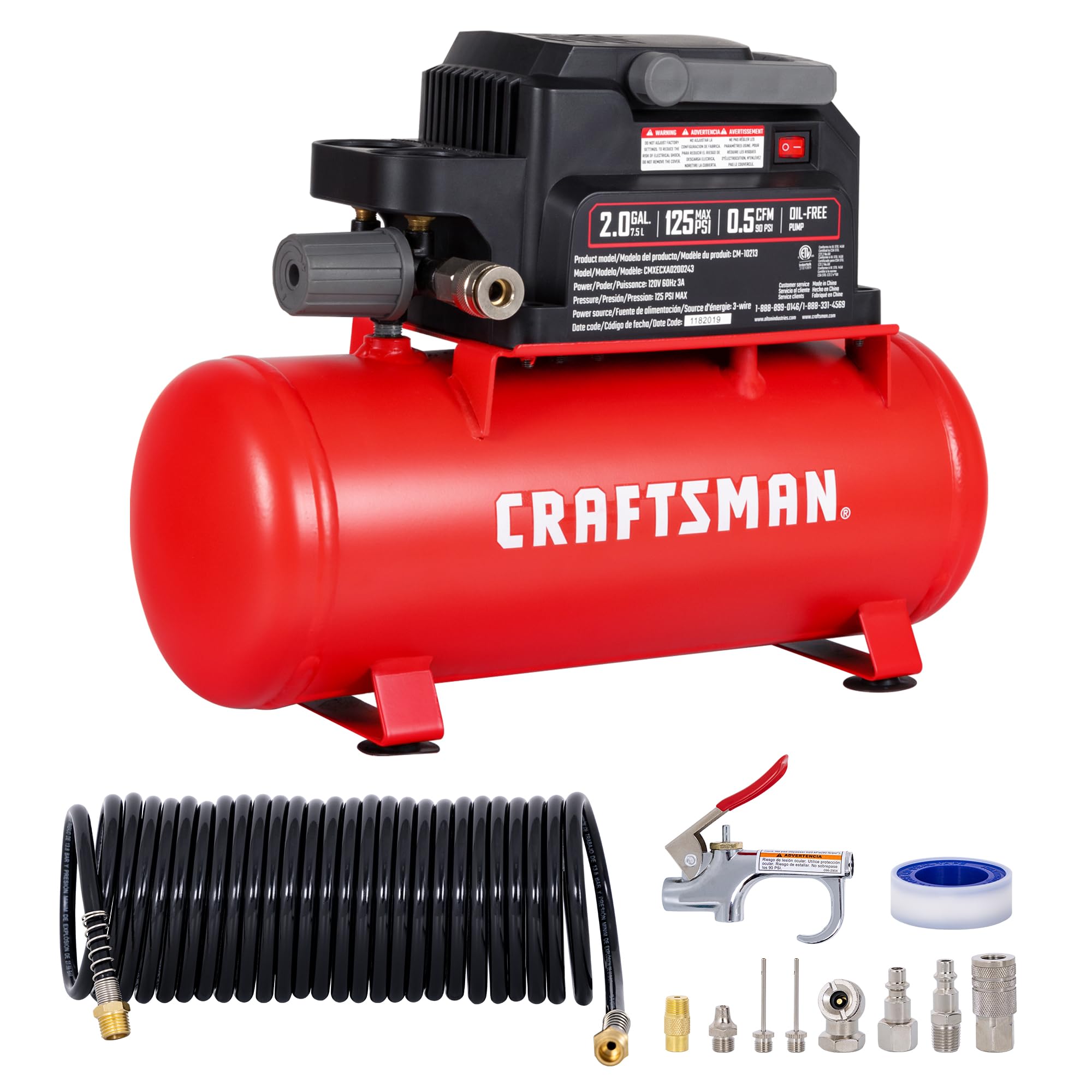
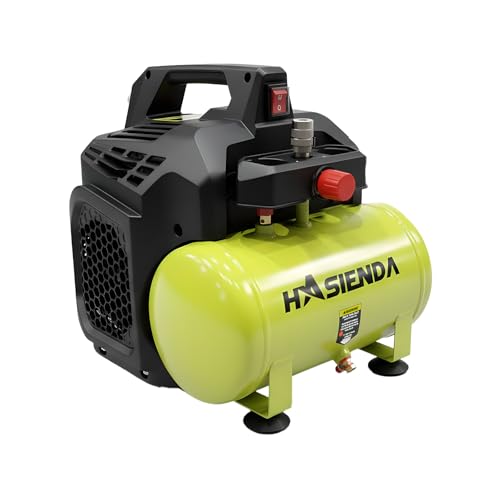
Two gallon compressors come in a few shapes, and shape affects stability, storage, and how the unit feels to carry. Tank shape does not change stored volume, but it does change footprint and balance. Our look at the pancake vs hot dog compressor shapes below will help you pick the footprint that fits your bench, truck bed, or closet. If the low round shape appeals to you, compare it with options in our guide to the best pancake air compressor category, where most models are a bit larger.
- Pancake style: Low and wide, so it resists tipping when a hose pulls sideways. It stores well on a low shelf and often has controls that face upward for quick reading.
- Hot dog style: Long tank that slides along a wall or behind a truck seat. Look for rubber feet set widely apart, since the narrow shape can tip more easily on rough ground.
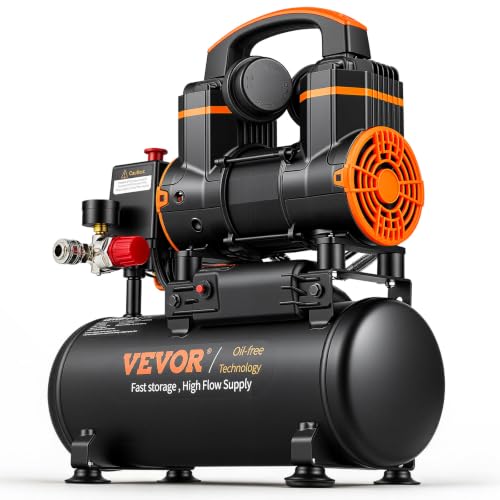
- Quiet style: Slower motor and oil free pump built to lower sound for indoor work, at the cost of a higher price and sometimes slower refill. Sound ratings vary a lot, so treat the decibel figure as a real buying factor.
Key Features to Compare
Pressure and Airflow
Pressure is listed in PSI and tells you the force stored in the tank, while airflow is listed in CFM or SCFM and tells you how much air the pump delivers at a set pressure. Most small nailers and inflators work near 90 PSI, so compare airflow at 90 PSI and not only the peak number in large print. A unit rated near 120 to 150 PSI max with about 2 to 3 SCFM at 90 PSI covers light tools well.
Recovery Time and Duty Cycle
Recovery time is how long the pump takes to refill the tank after pressure drops to the restart point. With only 2 gallons stored, recovery happens often, so a faster refill keeps work moving and limits waiting between nail sequences or tire fills. Duty cycle describes how long the pump can run within a set period before it needs rest to cool.
Noise and Motor Type
Standard small pumps are loud enough to push you toward hearing protection and closed doors. Quieter designs lower sound by using slower speeds and enclosed parts, trading some refill speed for comfort. Motor type also ties into upkeep, and our explainer on oil vs oil free compressor care covers the trade in detail. Oil free pumps need no oil changes and suit most home users, while oil lubricated pumps can run cooler and may last longer with regular oil care.
Weight and Ergonomics
Most 2 gallon units weigh about 20 to 35 pounds, light enough for most adults to carry with one hand for short trips. Look at handle shape, not just weight, since a thin handle digs into your palm on stairs. Rubber feet, a cord wrap, and gauges you can read while standing all reduce small annoyances that add up over years. If you will lift the unit onto a high shelf often, pick the lightest model that still meets your airflow needs.
Tank Build and Drain Design
Steel tanks are common in this size and hold up well to bumps, but they can rust inside if water sits in them. The drain valve sits at the lowest point of the tank and lets that water out after use. A valve you can reach without tipping the whole unit makes draining far more likely to happen. Also check the pressure relief valve for easy testing.
How to Choose the Right Air Compressor
Size and Form Factor
Start by listing your tools and how you use them in real sessions. Inflation, blowing, and finish nailing fit a 2 gallon tank because each use is brief and spaced out. Spray painting, sanding, grinding, and impact wrench work draw air without pause and will drain this tank in seconds, leaving the motor running nonstop and your tool weak. For those jobs you need a much larger tank, often 20 gallons or more.
Corded Power and Cordless Options
Most 2 gallon compressors plug into a standard home outlet and draw enough current that a long, thin extension cord can cause voltage drop and hard starts. Use a short, heavy cord or plug in directly when you can. Truly cordless compressors in this class are rare and usually pair a smaller tank with a battery platform you may already own, trading runtime for freedom from outlets. Gas powered models do not exist at this size for normal home use.
Features Worth Paying For
A second coupler lets you swap between a nailer and a blow gun without changing fittings, and a regulator with a large grip knob helps you set tool pressure accurately. A metal roll cage or sturdy shroud protects gauges during transport. Features you can skip include low quality accessory bundles you will replace anyway and digital gauges that add cost without adding air. Spend first on airflow, noise, and build quality, since those affect every job.
Accessories and Warranty
A good hose matters as much as the tank. Rubber and hybrid hoses stay flexible in cold garages, while cheap vinyl hoses coil and fight you. Quick connect couplers should match the plug style on your tools, and a basic kit with an inflator tip and blow gun covers most home tasks. Warranty length in this class often runs about one to three years.
How Much Should You Spend?
Basic models sell for under $100 and cover inflation and light nailing, though they tend to be louder and slower to refill. The middle ground of about $100 to $200 is where quieter motors and sturdier handles appear, and it fits most buyers best. Spending over $200 should buy clearly lower noise or standout build quality. If your budget passes that point, use a full best air compressor overview to see what larger tanks add.
Is a 2 Gallon Air Compressor the Right Size for You?
Answer three questions honestly. Do your tools fire or inflate in bursts, with pauses between uses? Will you store the unit in a tight space where a larger tank will not fit? Can you accept hearing the motor cycle every few minutes during a job? If you answered yes to all three, this size fits your life. Before your first job, review our walkthrough on how to use an air compressor so hose hookup and safe pressure release become routine habits. If you answered no to the first question, no feature list will fix the mismatch, and a larger tank is the better buy.
How to Make Your Compressor Last Longer
- Drain the tank after each day of use until air and water stop coming out, since trapped moisture rusts steel from the inside.
- Check the air filter monthly and clean or replace it when clogged, so the pump does not strain to pull air.
- Store the unit indoors with the drain valve left open and the cord loosely wrapped, which lets the tank dry fully.
- Test the pressure relief valve a few times a year by pulling its ring, and replace it if it sticks or leaks.
- Let the motor cool between long fill cycles and keep vents clear of dust.
FAQ
What is the best 2 gallon air compressor?
The right choice depends on your main concern, whether that is noise, weight, or refill speed. Pick the model whose airflow at 90 PSI clears your hungriest tool with room to spare, then choose shape by storage fit. One point buyers miss is coupler style, so confirm the outlet fittings match your hose plugs before ordering to avoid an extra adapter purchase.
What size air compressor do I need?
Add up the airflow needs of the tools you will run at the same time, then choose a compressor that delivers more than that total at 90 PSI. Tank size then decides how often the motor cycles. Burst tools forgive a small tank, while tools that spin or spray without stopping do not. If two people will ever work from one unit at once, plan for a larger tank.
How long does an air compressor last?
A home use oil free unit often serves for years of light duty, while an oil lubricated pump can last longer when its oil stays clean and at the right level. Life shortens fast when a small pump runs without pause on tools it was never sized for. Watch for slower refill than when new, air leaking at tank welds, or a motor that trips your breaker, and have a repair shop inspect it.
Is an air compressor worth it?
It earns its keep if you inflate tires often, run a nailer for home projects, or clean tools and benches with air on a regular basis. The time saved over hand pumping adds up across small jobs. It is harder to justify if your only use is one pool float each summer, in which case a simple hand pump or small battery inflator may serve you better for far less money and storage space.
How do you clean an air compressor?
Unplug the unit, release all tank pressure, and wipe the outside with a cloth dampened with mild soap and water, keeping water away from motor vents and electrical parts. Clean cooling fins with a soft brush so dust does not trap heat around the pump. Never spray the unit with a hose. A tidy outside also makes oil leaks or cracked hoses easier to spot early.
What is the most reliable air compressor brand?
No single brand wins for every buyer, and reliability in this size comes more from correct sizing and regular draining than from the badge on the tank. Look instead for signs a maker supports its products, such as parts lists you can view before buying, manuals with clear service intervals, and warranty service you can reach without shipping the whole unit far away.
Final Thoughts
A compact tank shines when your work comes in short bursts and storage space is tight. Match airflow at 90 PSI to your tools, pick a shape that fits your shelf, and weigh noise honestly if you work indoors. When those pieces line up, the best 2 gallon air compressor for your home will be the one you reach for weekly. Use the product table above to compare your finalists on pressure, airflow, and weight before you order.