Best 15 ft Above Ground Pools (2026): Buying Guide
Disclosure: We may earn a commission when you buy through links on this page, at no extra cost to you. As an Amazon Associate I earn from qualifying purchases. Learn more

What to check before you buy the best 15 ft above ground pool: wall height, pump size and frame type, and which type fits your home.
A 15 ft pool sounds simple until you compare wall depth, frame style, and pump strength. Pick on diameter alone and you can end up with shallow water, a weak pump, or a circle that crowds out your patio. This guide helps you find the best 15 ft above ground pool for your household by comparing types, materials, and running costs. Scan the comparison table below to see how the main options differ at a glance.
Diameter is only the starting point. Two pools with the same footprint can hold different amounts of water and ask for very different amounts of weekly care.



Who Should Buy a 15 ft Above Ground Pool?
Families Who Want Room to Play and Cool Off
A round 15 ft pool gives several children space to splash, float, and play short games without everyone ending up in the middle at once. Look for a wall height that lets younger swimmers stand with their heads clear of the water. A ladder with a barrier or a removable design also matters if children will be nearby when no adult is swimming.
Adults Who Want to Float and Move Gently
This size suits adults who want to cool down, stretch, and drift on a float more than swim laps. Deeper models feel far more relaxing because your knees and shoulders stay under water while you sit or float. If that is your main goal, read our guide to the best above ground pool for adults for depth and comfort points aimed at grown swimmers.
Yard Owners Who Want Real Swimming Space in a Modest Footprint
A 15 ft circle fits many suburban yards while still feeling like a pool rather than a plunge tub. You need the circle plus clear room for the ladder, pump, and walking access, so plan on a patch roughly 18 to 20 ft across. A sloping lawn, large tree roots, or a septic field may make the flat, clear patch the true limit, not the yard size on paper.
Types of 15 ft Pools Compared
Metal Frame Pools With a Vinyl Liner
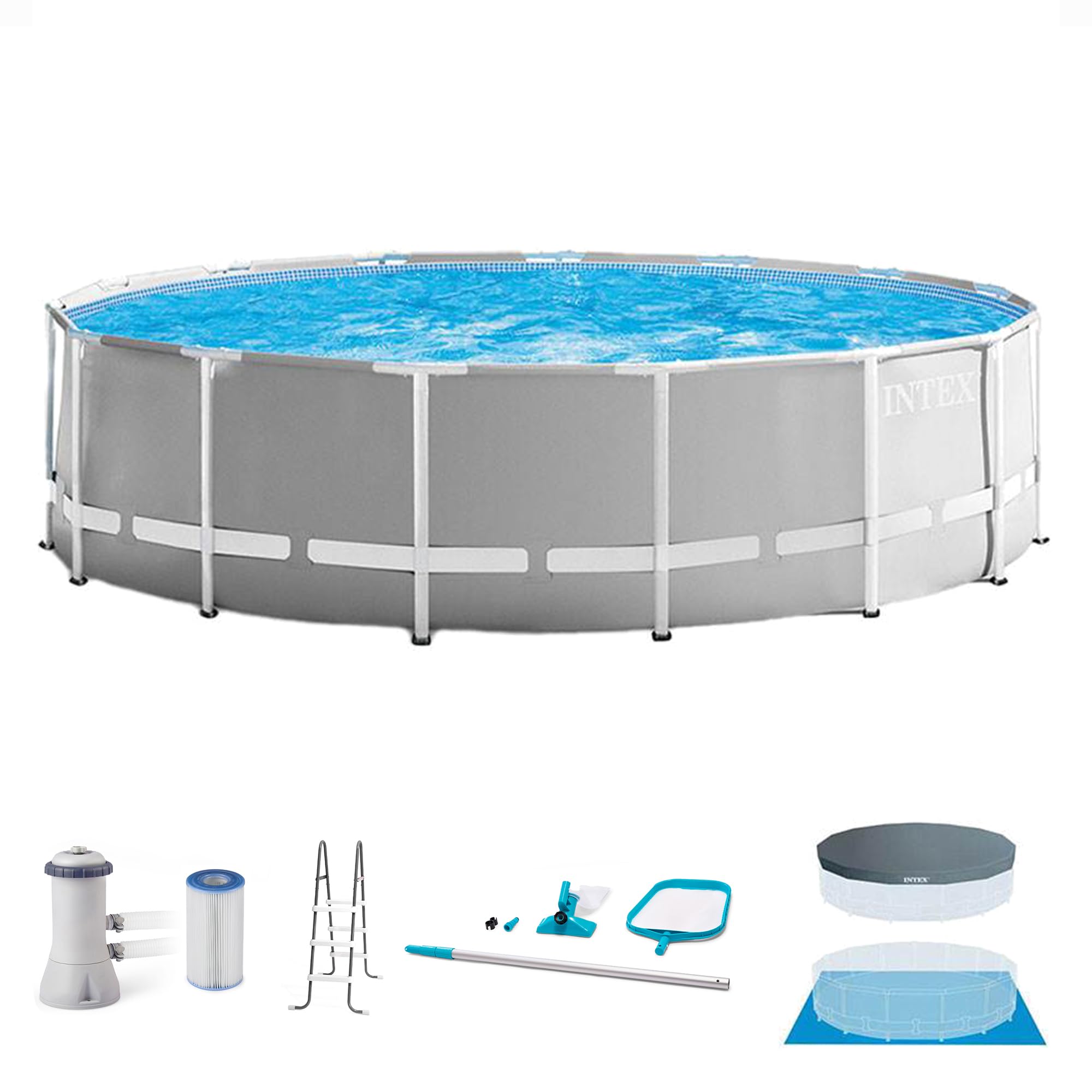
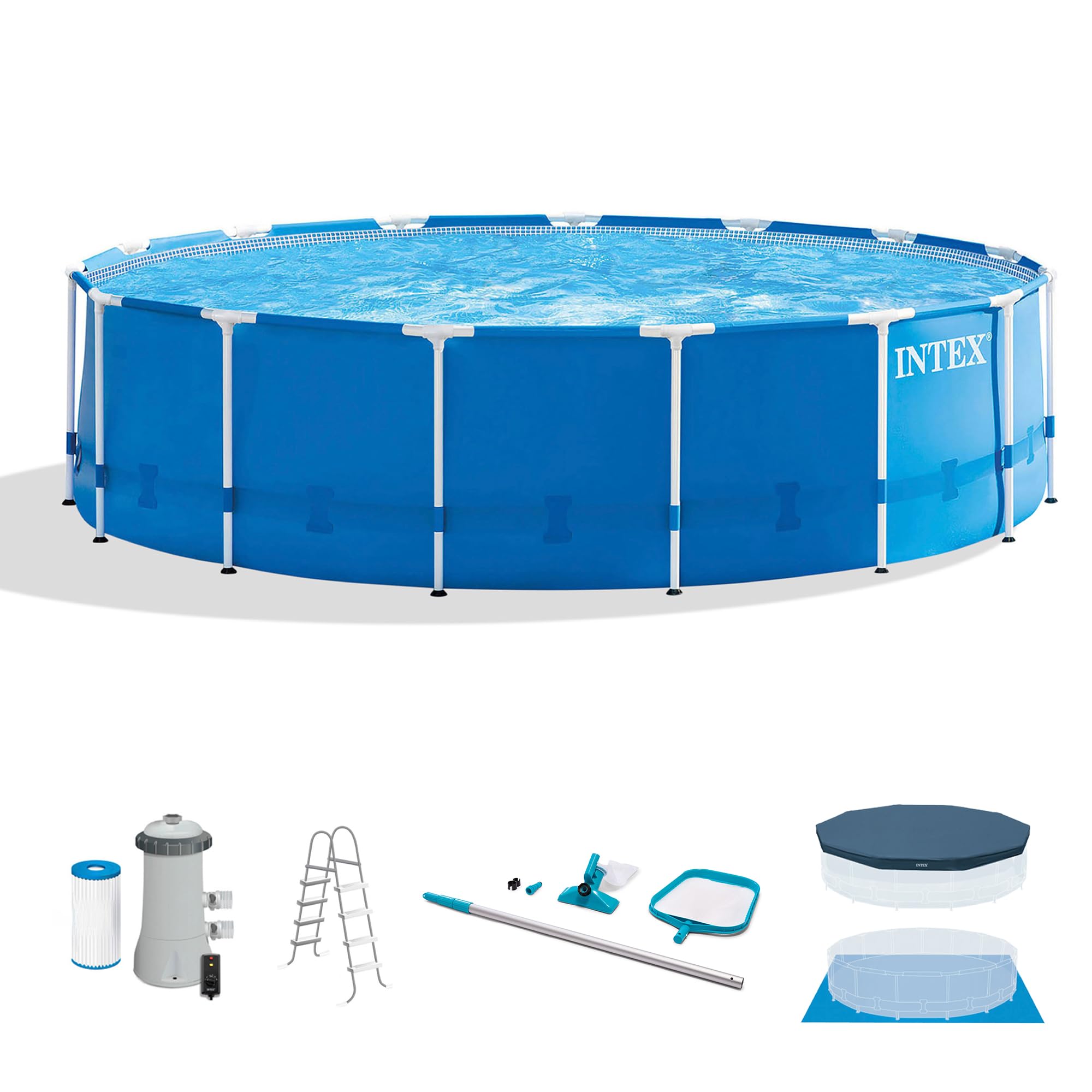
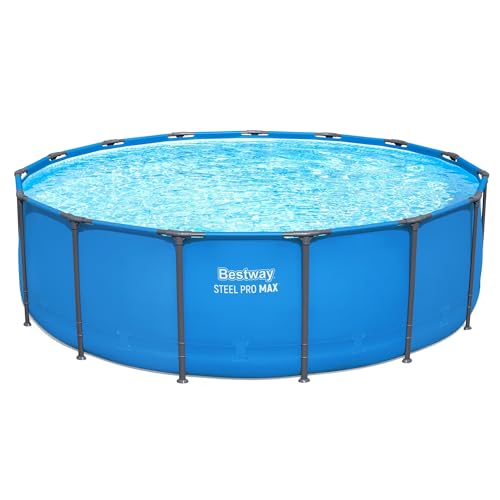
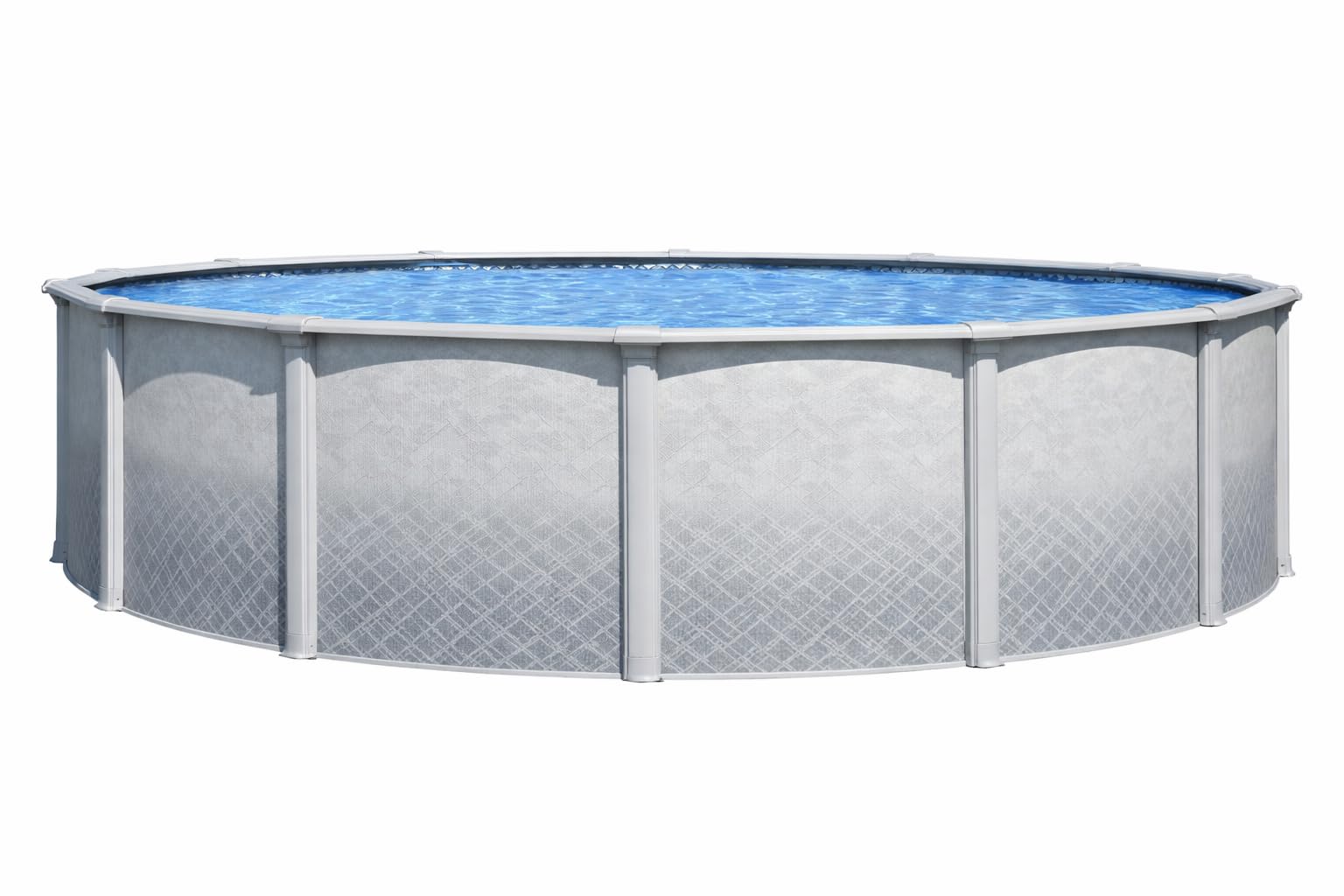
Frame pools use coated metal poles to hold a thick vinyl liner in shape. They are the most common choice at this size because they balance cost, strength, and storage. You can take one down for winter in many climates, and spare liners and poles are widely sold. The trade off is assembly time on your first build, plus feet that need a flat base so the frame does not twist under water weight.
Inflatable Top Ring Pools
These pools rise as you fill them, held up by an inflated ring at the top and water pressure against the walls. They cost the least and go up the fastest, with no poles to sort. Their limits show up in depth and toughness. The ring can lose air, the walls give when swimmers lean on them, and a slope of an inch or two can push the water to one side.
Steel Wall and Resin Frame Pools
Hard sided pools use a rolled steel wall set into a track, often with resin rails that resist rust. They stay up year after year, so they suit owners who do not want an annual build and teardown. They cost more and take longer to install, and they need a liner change rather than a full replacement when the inside wears.
Key Features to Compare
Build Materials and Weather Resistance
Look at the liner first. Thicker vinyl with several layers resists punctures from feet, toys, and small stones better than a thin single layer, and a coating that resists sun damage slows fading and cracking. Powder coated steel holds up well inland, while resin rails suit damp or coastal yards where rust starts fast.
Size, Depth, and Capacity
Wall height at this size often runs about 42 to 52 inches, but the water sits several inches below the rim, so usable depth is less than the number on the box. A round 15 ft pool holds roughly 4000 to 5300 gallons depending on depth. More water means more room to float and slower swings in temperature, but also higher chemical use, longer filter runs, and a bigger bill if you heat the water.
Pump and Filter System
The bundled pump is often the smallest unit that can do the job, so check its flow rate against the full volume of water. Cartridge filters are simple to rinse and swap, while sand filters need less frequent attention. A timer helps you run the pump daily. Plan to turn over the whole volume at least once a day in hot weather, when algae can take hold quickly.
Ladder, Cover, and Ground Protection
A ladder should feel solid under an adult, with wide steps and a way to block entry when the pool is not in use. A fitted cover keeps leaves out and slows water loss, while a ground cloth guards the liner against stones and roots. These extras are often sold apart, so add their cost before you compare two close options.
Warranty and Replacement Parts
Check what the warranty covers, since the liner, frame, and pump often carry different terms, and confirm that spare poles, cartridges, and liners for your exact size are easy to order. A model with parts in stock can stay in use for years, while an orphan model may need full replacement after one torn liner.
How to Choose the Right Above Ground Pool
Size for Your Space
Measure the flat area, then add room for the pump, ladder, and a clear path around at least part of the pool. Think about shape as well as diameter. If your clear patch is long and narrow rather than square, compare layouts in our guide to the best rectangular above ground pool before you commit to a circle. Keep the pool clear of overhead wires, septic lines, and roof runoff.
Assembly and Anchoring
Most frame pools at this size take two adults a few hours once the ground is level, and ground work is usually the longest part of the job. Never level a site by piling loose sand under one side, since it washes out and lets a leg sink. For site prep, leg placement, and filling checks, see how to assemble an above ground pool. Fill slowly at first and watch each leg as the weight settles.
How Much Should You Spend?
Basic top ring pools can cost under $200, while sturdy frame pools often fall between about $300 and $800 with a pump and ladder included. Hard sided pools and stronger sand filter setups can run about $1000 to $3000 once site work and extras are counted. Spend first on the frame, liner, and filter. Decorative lights can wait, but a good cover and a spare cartridge should be in the first order.
Is a 15 ft Above Ground Pool the Right Size for You?
Choose 15 ft if several people will be in the water at once and you have a flat patch with room to spare. Step down to 12 ft if your clear space is tight or only one or two small children will swim, and look at our guide to the best small above ground pool for compact options. Step up to 18 ft if teenagers and adults swim together often, since the extra width makes floating far less crowded.
Safety belongs in the size decision too. Check local rules on fences, gates, and alarms before you order. Young children need constant watching in any depth of water, and a locking ladder or fence is a cost to plan for. If anyone in the home has a health condition that affects balance or swimming strength, talk with their clinician about safe use first.
Common Mistakes to Avoid
- Setting up on unlevel ground, which strains one side of the frame and can lead to a wall failure under full water weight.
- Buying on diameter alone and ignoring wall height, so the water ends up too shallow for adults to sit and cool off.
- Running the bundled pump for only an hour a day, which lets the water turn cloudy and invites algae growth.
- Placing the pool under a large tree, where leaves and sap add daily skimming and stain the liner.
- Skipping a ground cloth, so a hidden stone or root works through the liner during the first week of use.
- Leaving the ladder in place and the cover off when no one is swimming, which invites unsupervised entry by children and pets.
Care and Off Season Storage
Skim the surface often, brush the walls each week, and test the water a few times a week in hot spells so chlorine and pH stay in the range your test kit marks as safe. Rinse or swap the cartridge on the schedule the maker gives. Small habits done on time prevent the costly green water rescue.
At the end of the season, decide whether your model can stay up through winter in your climate or should be drained, dried, and stored under cover. A liner stored indoors must be fully dry first, or mildew will mark it by spring. If your pool stays up, our guide to how to winterize an above ground pool covers the full order of work.
FAQ
What is the best 15 ft above ground pool?
The right choice depends on whether you value low cost, a deeper swim, or a pool that stays up all year. For most families, a metal frame model with a layered liner and a pump sized above the bare minimum gives the best balance. Check permit and fence rules before ordering, since a required fence can change your total budget more than any feature on the pool itself.
What size above ground pool do I need?
Count the swimmers who will be in the water at the same time, not the size of your whole household. Two or three people can share a smaller pool, while five or more feel crowded below 15 ft. Also measure your flat patch with any later deck or shade project in mind, since those footings cannot sit under the pool or its pump lines.
How long does an above ground pool last?
A frame pool liner often lasts about 5 to 8 years, and the frame can outlast the first liner if rust is treated early and joints are stored dry. Hard sided walls can last much longer, with liner changes along the way. Life shortens fast when a pool is left full on a slope or stored wet, because unbalanced water and damp storage attack both vinyl and metal parts.
Is an above ground pool worth it?
It is worth it if your household will swim several times a week and someone will own the weekly testing and cleaning, since the cost per swim then drops fast compared with travel to a public pool. It is a poor buy if the yard needs costly leveling work first.
How do you clean an above ground pool?
Start with the surface and the skimmer basket, then brush from the walls toward the floor so loose dirt moves toward the filter. A manual vacuum that connects to your pump suits this size well and costs far less than a robotic unit. Clean after a storm or a large swim day, since heavy use and wind blown debris push a clean pool toward cloudy water.
What above ground pool features help with dogs that swim?
If a dog will join you, look for a liner described as puncture resistant and a ramp a dog can climb without clawing the wall. A filter that can handle extra hair without clogging in a day also helps. Rinse the dog first to cut down on dirt and loose fur, and keep its nails trimmed. Never leave a dog in the water alone, since finding the exit can be hard for them.
Final Thoughts
A 15 ft pool feels generous without taking over the whole yard. Match the type to how long you plan to keep it up, size the pump for the full volume, and budget for the cover, ladder, and ground cloth. To compare across sizes, start with the product table above and our broader guide to the best above ground pool. Chosen well, the best 15 ft above ground pool for your home will earn its space every warm week.