Best 10x50 Binoculars for Stargazing: A Buyer Checklist for 2026
Disclosure: We may earn a commission when you buy through links on this page, at no extra cost to you. As an Amazon Associate I earn from qualifying purchases. Learn more

Best 10x50 binoculars for stargazing, judged on exit pupil, prism glass, coatings, eye relief and steady viewing so you can pick with confidence.
A 10x50 binocular gathers useful light, shows real detail, and still works without a mount. Choosing the best 10x50 binoculars for stargazing comes down to a short checklist, not to the boldest claims on the box. This guide walks through that checklist so you can judge any model in the comparison table below on the specs that change your view.
The numbers mean 10 times magnification and an objective lens of 50 mm on each side. Models that share those numbers can still differ in brightness, edge sharpness, comfort with glasses, and steadiness in your hands. The sections below explain each difference once and show what to favor for casual watching, for learning the constellations, and for longer sessions under dark skies.


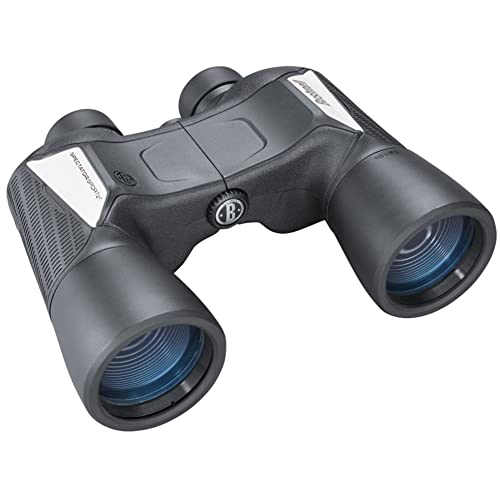

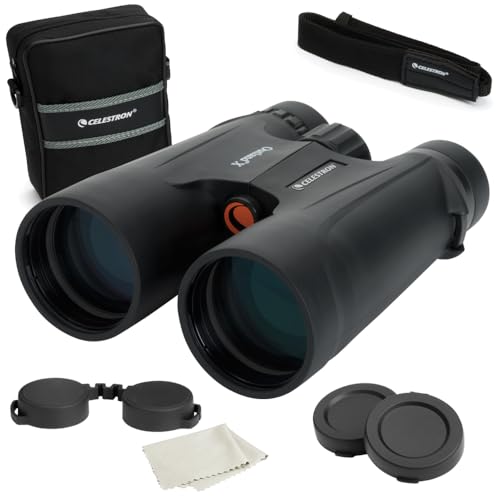


Key Features to Compare in 10x50 Binoculars
Start with the product table above and check each model against the five factors here before you look at price. If you are still weighing this size against other sizes, see our guide to the best binoculars stargazing for the broader picture. Many shoppers treat the best 10x50 binoculars for stargazing as a set of tradeoffs, and a weakness in one factor, such as short eye relief, can undo strong glass.
Exit Pupil and Low Light Brightness
The exit pupil is the width of the light beam that leaves each eyepiece. Divide the objective size by the magnification and a 10x50 gives 50 divided by 10, a 5 mm exit pupil. That suits most adults well, since pupils open to about 5 to 7 mm in darkness when young and often less with age.
Brightness also depends on how much light the glass passes through. Good coatings and prism glass raise that share, so two 10x50 models can differ clearly on faint stars, the Orion Nebula, and the Andromeda Galaxy.
Prism Design and Glass Quality
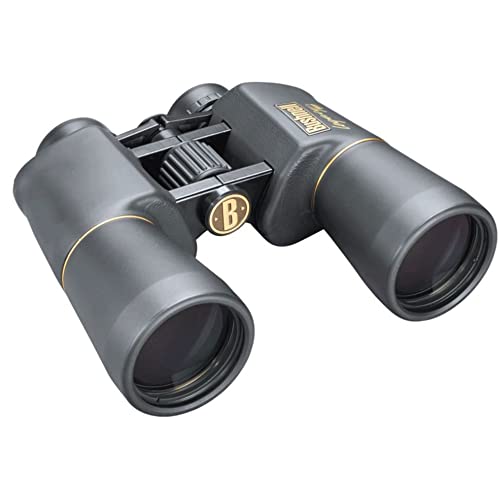
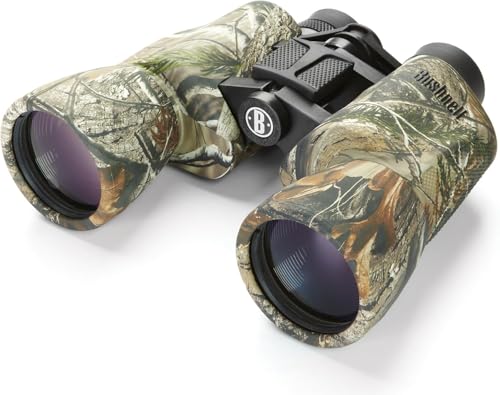
Most full size binoculars here use one of two prism layouts. Porro prism models have the familiar offset shape and cost less for the same glass quality. Roof prism models are slimmer, but they need extra prism coatings to match Porro sharpness, so low priced roof models often give up more at night. For stargazing on a budget, Porro is usually the smarter buy.
Inside either layout, look for BAK4 prism glass rather than BK7. BAK4 passes a rounder, cleaner beam, so edges stay brighter and stars near the edge look tighter. BK7 is common in cheap models and can show squared off shading at the edge of the exit pupil, a sign of lost light.
Lens Coatings and Contrast
Coatings are thin layers on the glass that cut reflections and let more light pass. The wording matters. Coated means at least one surface has one layer, fully coated means all air to glass surfaces have one layer, multi coated means some surfaces have many layers, and fully multi coated means every surface has many layers. For night use, fully multi coated is the level to aim for, since each weaker surface steals light and adds glare.
Contrast is where you notice coatings most. The Moon and bright planets scatter light inside a poorly coated binocular, washing out faint objects nearby. With good coatings, the sky looks darker, star colors separate more cleanly, and lunar shading is easier to follow, so the better coated model is usually worth the step up.
Field of View and Eye Relief
Field of view tells you how wide a slice of sky you see at once, listed in degrees or in feet at 1000 yards. Many 10x50 models offer about 5.5 to 6.5 degrees, wide enough to frame the Pleiades with room to spare and to follow the Milky Way in relaxed sweeps. A wider field makes finding targets easier, though very wide claims at low prices often come with soft stars near the edge.
Eye relief is the distance your eye can sit behind the eyepiece while still seeing the full field, and it matters most if you wear glasses. Look for about 17 mm or more if you observe with glasses on, and choose twist up eyecups that hold their position. For a deep sky angle on similar glass, see our guide to the best 10x50 binoculars for astronomy.
Build, Sealing, and Focus Control
Night air brings dew, so a stargazing binocular should be weatherproof enough to shrug it off. Models listed as waterproof and fogproof are sealed and filled with nitrogen, so the inside stays dry and free of fog when you return to a warm house. Rubber armor adds grip with gloves and some protection against bumps.
The center focus wheel should turn smoothly with a fingertip or two, without grit or loose spots, and be large enough for light gloves on cold nights. A diopter ring on one eyepiece matches focus to any difference between your eyes and should stay put once set. Check the interpupillary distance range too, since the barrels must match the spacing of your eyes.
Buying Guidance by Budget and Viewing Style
The next step is matching spending to how you will actually observe. Shoppers weighing general purpose use can see our guide to the best binoculars 10x50, and value focused readers can see our guide to the best 10x50 binoculars for the money. The three paths below replace any list of picks with guidance you can apply to whatever is in stock when you order.
Starting Out Without Overspending
A sensible first step is a Porro prism model at around $80 to $150 with BAK4 glass and fully multi coated lenses. That level usually buys honest specs, decent sealing, and eye relief that works for most people. Spending far less often means BK7 prisms, thinner coatings, and alignment that may not survive shipping. If your budget is tight, see our guide to the best budget binoculars for stargazing for ways to stretch it.
At this level, put money into glass and alignment rather than extras such as phone adapters or elaborate cases. A plain neck strap and a simple padded bag are enough to start. You can learn the sky and follow the moons of Jupiter if the basics are right, and a clear return window matters more than a long feature list.
Paying More for Coatings and Comfort
Moving up to about $150 to $300 mainly buys better coatings, better edge sharpness, and smoother mechanics. Stars stay tight farther from the center, the focus wheel feels more precise, and the diopter and hinge hold their settings with less fuss. Magnification and objective size stay the same, so the gain is comfort and a cleaner view, not a new class of target.
This step up makes sense if you observe often, wear glasses, or find that soft edges and glare bother you. It makes less sense if you only step outside a few times a year, or if heavy light pollution limits faint objects where you live.
Planning for Long Sessions and a Tripod
At 10 times magnification, the small movements of your hands are magnified too, and most 10x50 models weigh about 25 to 35 ounces, so fatigue builds during long looks. Bracing your elbows on a chair arm or a fence rail helps more than most people expect, and a reclining chair steadies the view further while saving your neck.
For studying one target, such as a cluster or the edge of light and shadow on the Moon, a tripod adapter changes the experience. Most Porro models accept a small adapter that screws into the front hinge cap and clamps to a standard photo tripod. A monopod is a lighter middle ground that takes the weight while letting you move freely.
A Quick Buyer Checklist Before You Order
Run through these questions for any model you are considering, using the product table above and the spec sheet on the listing. A good candidate should earn a yes on nearly every line.
- Does the listing name BAK4 prism glass rather than leaving the glass type unstated?
- Are the lenses fully multi coated on all air to glass surfaces?
- Is the field of view about 5.5 degrees or wider without wild claims?
- Is the eye relief about 17 mm or more if you wear glasses?
- Is the binocular listed as waterproof and fogproof with nitrogen filling?
- Does the weight feel manageable for your planned session length?
- Can the front hinge accept a tripod adapter if you want one later?
- Are the warranty terms and return window stated clearly?
Red Flags to Watch For
Some listings work hard to sound impressive while hiding weak basics. Watch for these warning signs before you spend anything.
- Vague coating language: phrases such as powerful coated optics with no level stated often hide the thinnest treatment.
- Inflated magnification bundles: sellers who push far higher power as a bonus ignore how shaky and dim such views become.
- No prism glass named: silence on BAK4 versus BK7 usually means the cheaper glass is inside.
- Missing eye relief or field numbers: honest makers publish both, because buyers need them to judge fit.
- Very short or unclear warranty: alignment faults often appear early, and weak cover leaves you paying for them.
Two or three red flags together are a strong reason to move on to a model that passes the checklist above.
Care and Maintenance for 10x50 Binoculars
Keep the lens caps on whenever the binocular is not in use, and store it in its padded case in a dry place at room temperature. If dew forms during a session, let the binocular dry fully at home with the caps off before you put it away, since trapped moisture can spot the outer glass.
Clean the lenses only when dust or smudges actually dull the view, since every wipe is a small risk to the coatings. Blow loose grit away first, then use a clean microfiber lens cloth with light circular strokes and no household cleaners. If both barrels no longer merge into one image after a drop, that is a job for the maker or a repair shop, not for home tools.
Frequently Asked Questions About 10x50 Binoculars
What features matter most in 10x50 binoculars for stargazing?
Exit pupil, prism glass, coatings, and eye relief matter most, because they decide brightness, contrast, and comfort. On your first night, add one check that spec sheets cannot show: look at a bright star and confirm that both sides merge into a single image without eye strain. Misalignment shows up within minutes as a headache or a doubled star, and a new binocular with that fault should go back while returns are still easy.
How much should I spend on my first 10x50 binoculars for stargazing?
Plan on about $80 to $200 for a first pair with the core specs covered well. Within that range, set a little aside for comforts that change how often you go outside, such as a wider strap that does not dig into your neck. Many new observers quit because carrying and holding the binocular felt awkward, not because the glass was weak. Spending a small share on comfort often does more for your hobby than spending it all on glass.
Is a smartphone enough instead of 10x50 binoculars for stargazing?
No, a smartphone is not enough on its own, because its tiny lens gathers far less light and its screen spoils the dark adaptation your eyes build up over about 20 to 30 minutes. A phone is still useful beside a binocular for star charts and for naming what you just found. Keep the screen dim and use a night mode with a red display if your app offers one. That pairing serves most beginners better than either tool alone.
What does 8x42 or 10x42 mean compared with 10x50 binoculars?
The first number is magnification and the second is the objective lens size in millimeters, so an 8x42 magnifies eight times with 42 mm lenses. Compared with a 10x50, an 8x42 gives a wider field and a steadier handheld view, which suits slow sweeps along the Milky Way where you want context more than reach. A 10x42 sits between the two, with a smaller exit pupil. Choose the 10x50 when faint targets matter most, and the 8x42 when steady, wide views are your priority.
Which binocular size is better for low light stargazing, a 10x50 or a 7x50?
A 10x50 is better for most people in most places, because its higher magnification darkens the sky background and raises contrast on faint objects. A 7x50 gives a 7.1 mm exit pupil, which helps only if your own pupils open that wide, a trait more common in younger observers under truly dark skies. In town skies, that extra beam often brightens the glow along with the target. Dark site campers are the group most likely to enjoy what a 7x50 does best.
Final Thoughts
The pattern in this guide is simple: honest glass, full coatings, and a fit that matches your eyes and hands matter more than headline claims. Use the checklist, check the product table above once more, and pick the model that passes with the fewest compromises for your budget. Chosen that way, the best 10x50 binoculars for stargazing for you will be the pair you reach for often, whenever the sky clears.