
Best 10x50 Binoculars for Astronomy: Matching the Right Binocular to Your Routine in 2026
Disclosure: We may earn a commission when you buy through links on this page, at no extra cost to you. As an Amazon Associate I earn from qualifying purchases. Learn more

Match the best 10x50 binoculars for astronomy to your routine, with exit pupil, coatings, true field, and holding weight explained for real night skies.
Shoppers asking which pair of best 10x50 binoculars for astronomy to buy usually receive a single answer, yet the right choice depends on where and how you observe. A suburban backyard, a dark rural field, and a reclined chair session place different demands on the same format. Ten power magnification through 50 millimeter objectives gathers serious light, but weight, coatings, and field width decide how much of that light you enjoy. This guide matches the specs to three common observing routines.
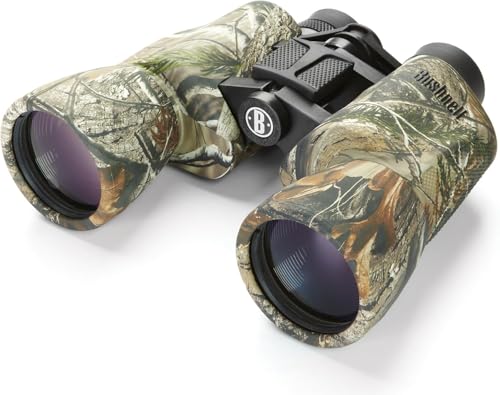
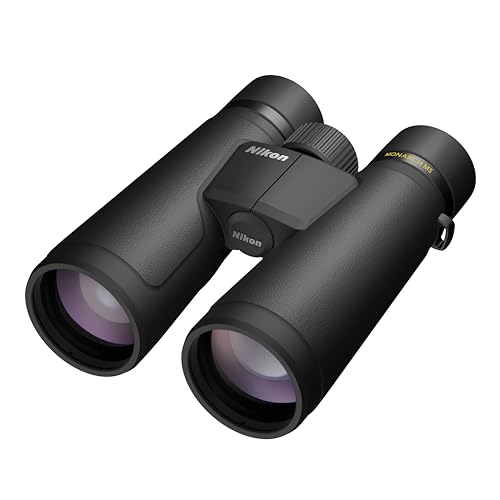
Start with the product table to see how current models divide by price and design, then use the routine sections to narrow the field. Astronomy binoculars reward patience and comfort more than any single headline spec. A pair you can hold steady for ten minutes reveals more than a brighter pair that makes your arms ache in two. Your routine, not a ranking, should make the final call.


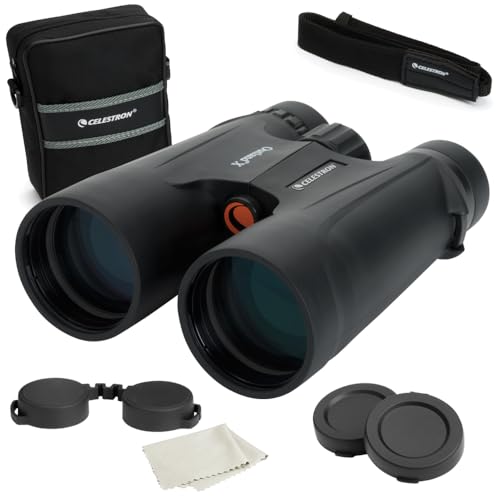
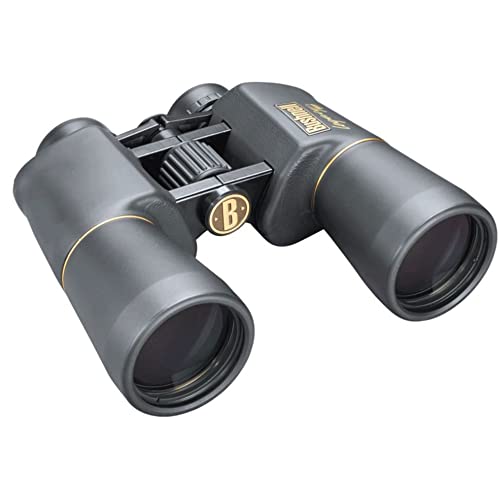
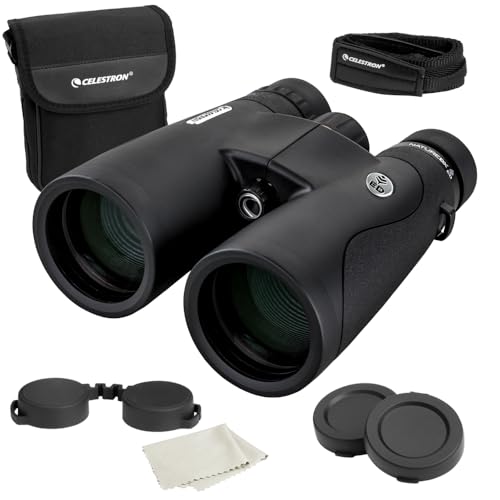
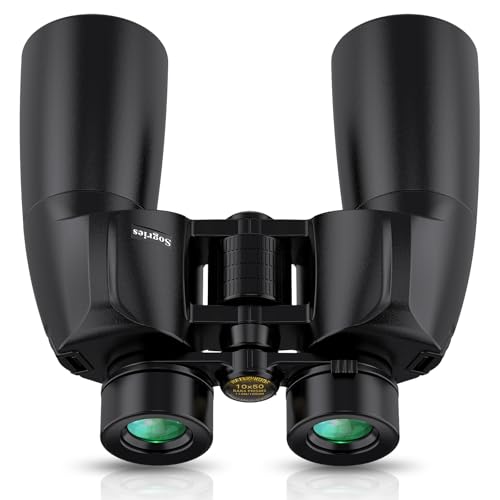


Who Should Buy Which 10x50 Binoculars?
For Backyard Scanners
If most of your observing happens from home under light polluted skies, your sessions run short and spontaneous, often squeezed between dinner and bedtime. Prioritize fully multi coated optics and a comfortable grip over maximum aperture bragging rights, because sky glow limits faint targets no matter what you spend. A mid priced porro prism model usually serves this routine well, and our guide to best 10x50 binoculars for the money compares the value end of the market. Store the binocular near the door so a clear half hour never goes to waste.
For Dark Site Travelers
Observers who drive to rural fields or star parties face the darkest skies and the longest nights, so their binocular should squeeze out every bit of contrast the site offers. Exit pupil and coating quality matter most here, along with a hard case that shrugs off dew, dust, and trunk travel. Center focus models suit shared viewing, while individual focus designs seal better against moisture for solo purists. Our guide to best 10x50 binoculars for stargazing goes deeper on planning around dark sites and new moon weekends.
For Long Session Observers
If your routine means an hour or more in a reclining chair sweeping the Milky Way, comfort outranks almost everything else. Look for generous eye relief, a balanced body that rests against your brow, and a tripod adapter socket so a monopod can take the weight when your arms tire. These observers benefit from a slightly heavier, better corrected glass because the support gear carries it. Sessions this long also justify a red light for charts, a blanket for dew season, and a simple log of what you find each night.
Key Features to Compare
Across the best 10x50 binoculars for astronomy market, five specifications do most of the work, and our general guide to best binoculars astronomy explains how the category divides by design. Shoppers comparing formats side by side can also consult our overview of best binoculars 10x50 for the wider field of choices. Read the sections below in order, because the first spec shapes all the rest.
Exit Pupil Governs Night Brightness
The exit pupil governs how bright extended objects like nebulae and galaxies appear, because it sets the width of the light beam entering your eye. On a 10x50 it measures about 5 millimeters, found by dividing the 50 millimeter objective by the ten power magnification. That size suits most adult eyes once dark adapted, and under bright town skies a smaller beam can actually look better by darkening the glowing background.
Under truly dark skies, the full 5 millimeter beam earns its keep on faint star clouds. Judge brightness claims against this number rather than against magnification alone.
Weight and How You Hold It
Weight is best read as a handheld versus tripod class, since a 10x50 typically runs about 28 to 40 ounces and your arms, not the optics, set the session length. Held freehand, ten power already shows shake, and a heavier glass tires shoulders within minutes unless you brace your elbows on chair arms or a car roof. A threaded socket for a tripod adapter solves the problem for long looks at one target.
Our guide to best handheld astronomy binoculars focuses on models shaped for steady freehand use. Try before you buy when possible, because balance in the hand varies more than weight on paper.
Coatings and Light Transmission
Coatings are best read as a light class, because their job is to stop reflections from stealing the faint glow you drove out to see. Fully multi coated means every air to glass surface carries multiple coating layers, and that is the standard to demand for night work. Roof prism models also need phase correction coatings to hold contrast, one reason classic porro designs remain popular and affordable for astronomy.
Broadband coatings on the objectives matter most at the dim blue end of the spectrum where many nebulae shine. A maker that will not state its coating scheme plainly is telling you something.
True Field and Finding Your Target
True field describes the slice of sky framed at once, and most 10x50 models show about 5 to 6.5 degrees. A wider field makes star hopping from a bright anchor star to a faint cluster far easier, and it turns Milky Way sweeping into the best show the format offers. Narrow fields feel like looking through a tunnel and punish beginners who lose their bearings.
Apparent field figures on the box inflate this number, so compare the true field or the width at a stated distance instead. When prices tie, choose the wider true field.
Eye Relief and Focusing at Night
Eye relief is best read as a glasses class for astronomy too, because observers who wear glasses need about 16 millimeters or more to see the whole field without pressing lenses against the eyecups. Twist up eyecups with firm stops help everyone share the binocular across a group. The center focus wheel should turn smoothly with bare fingers and with light gloves, since cold nights are prime observing time. A right eye diopter that locks or resists casual movement prevents the slow drift that softens one side of the view over a long session.
Common Mistakes to Avoid
- Chasing higher magnification, because a 15x or 20x model shakes too much by hand and narrows the field you need for finding targets.
- Ignoring the exit pupil, because a mismatched beam wastes either light or contrast depending on your sky.
- Judging brightness under store lighting, because bright showrooms flatter weak coatings that fall apart under a real night sky.
- Skipping the tripod socket, because long sessions on one cluster or comet demand support that arms cannot give.
- Buying a roof prism model at a porro price without phase coatings, because contrast on faint galaxies suffers first.
Care and Maintenance Tips
Clean the lenses only with a blower and a proper lens cloth, never a shirt tail, because grit dragged across coatings leaves fine scratches that scatter light. Keep both caps on whenever the binocular leaves your eyes, and store it in a dry, padded bag away from damp basements. After a dewy night, let the binocular warm up slowly inside its closed case indoors so moisture dries off the outside instead of condensing within. Check the hinge tension and diopter setting every few months, and your 10x50 will hold its alignment for years of seasons.
10x50 Binoculars: Your Questions Answered
What can I actually see through a 10x50 binocular at night?
You can see the four largest moons of Jupiter as tiny points, the Orion Nebula as a glowing fan, the Andromeda Galaxy as an oval smudge, and dozens of open clusters scattered like spilled salt. The Moon shows craters along the shadow line with real depth. What you will not see is color in most nebulae or detail on planets, because aperture, not magnification, sets those limits. Setting honest expectations keeps the hobby fun, and the product table shows models that suit different budgets and routines.
Is a 10x50 or a 15x70 better for astronomy?
A 15x70 gathers more light and shows fainter objects, but it weighs far more and needs a tripod for anything beyond a quick look, which changes the whole routine. A 10x50 works freehand, travels easily, and frames wide star fields that the bigger glass crops away. Many observers own the 10x50 first and add the larger pair later for a mounted setup. Choose by how you actually observe on a weeknight, not by the best night you hope for twice a year.
Do I need a tripod for 10x50 binoculars?
You do not need one for casual scanning, but any look longer than a minute at a single cluster, comet, or the Moon benefits from support. A monopod is the middle path, since it takes the weight while still letting you sweep. Lying back in a reclining chair with elbows braced also steadies the view surprisingly well. If you plan to sketch or to share the view with friends, a tripod with an adapter becomes close to essential equipment.
Why do stars look dimmer from town than from a dark site?
Streetlights and sky glow brighten the background sky itself, and faint objects drown in that glow even though the stars shine just as strongly. Your binocular gathers the glow along with the starlight, so contrast, not brightness, is what a dark site restores. This is also why a 10x50 can outperform a larger glass from a city yard on some nights. Driving even 30 minutes away from town lights often improves the view more than doubling your budget.
What does the 50 in 10x50 stand for?
The 50 is the diameter of the front objective lenses in millimeters, and it decides how much light the binocular collects. The 10 is the magnification, so the two numbers together also set the exit pupil at 5 millimeters. Bigger objectives mean brighter potential views and heavier glass, which is why 50 millimeters is a sweet spot for handheld astronomy. Going to 70 millimeters adds real light grasp but pushes the binocular into tripod territory for most observers.
The Bottom Line
Match the binocular to your routine first, then check the exit pupil and coatings, and only then compare prices. Backyard scanners do fine with a mid priced porro, dark site travelers gain from the best coatings they can afford, and long session observers should budget for support gear. Chosen that way, the best 10x50 binoculars for astronomy become the telescope you actually use on clear weeknights. Look back at the product table, pick the routine that sounds like yours, and wait for the next clear sky.


