Best 10x50 Binoculars: Types Compared and How to Choose for 2026
Disclosure: We may earn a commission when you buy through links on this page, at no extra cost to you. As an Amazon Associate I earn from qualifying purchases. Learn more

Compare the best 10x50 binoculars by prism design, brightness, field of view, and weather sealing to pick the right pair.
Shopping for the best 10x50 binoculars can feel confusing because every pair looks similar at first glance, yet the differences in prism design, glass coatings, and build change what you actually see in the field. This guide compares the main types side by side so you can match a pair to the way you plan to use it, whether that means scanning a shoreline at dawn or watching birds from a porch. Read through the comparison table below, then use the buying factors that follow to narrow the choice to one type.
A 10x50 pair gives you 10 times magnification through a 50 mm objective lens, which is a generous combination for low light viewing. That power also magnifies hand shake, so weight, balance, and grip matter as much as the optics. The sections below explain each type in plain terms, compare the two most common prism designs directly, and finish with the mistakes that most often lead to a return.




Types of 10x50 Pairs Compared
The table below gives a quick overview of the three main types you will meet when shopping. Each type suits a different kind of use, and the price bands are approximate guides rather than exact figures.
| Type | Best For | Pros | Cons | Typical Price |
|---|---|---|---|---|
| Porro prism pairs | General viewing on a budget | Wide field of view, strong depth perception, good value | Bulkier shape, heavier build | About $80 to $250 |
| Roof prism pairs | Travel and long carries | Slim straight barrels, compact shape, easy packing | Higher cost for equal glass quality | About $150 to $500 |
| Waterproof and marine pairs | Boats, rain, and rough weather | Sealed body, fogproof filling, grippy armor | Often heavier, fewer compact options | About $150 to $400 |
Porro Prism Pairs
Porro prism pairs use an offset barrel shape that most people picture when they think of classic binoculars. The offset design gives a wide field of view and a strong sense of depth, which helps when you follow a moving bird across a marsh or pick out a distant animal against a busy background. They also tend to cost less than roof prism pairs with similar glass, so they are a sensible choice when value matters more than a slim shape.
The trade off is size. Porro pairs are wider and often heavier, and they can feel awkward in a small day pack. If you plan to carry them for hours, check the weight and the neck strap before you decide, and look for a model with a comfortable grip shape.
Roof Prism Pairs
Roof prism pairs keep both barrels in a straight line, which makes a slimmer pair that slides easily into a pack or a jacket pocket. Travelers and hikers usually prefer this shape because it packs well and hangs comfortably for long periods. The straight design also makes one hand operation easier when you need a quick look.
The catch is cost. To match the image quality of a good Porro pair, a roof prism pair usually needs better glass and better coatings, which raises the price. At the lowest prices, roof pairs can look dimmer at the edges of the view, so compare the brightness and sharpness carefully rather than judging by size alone.
Waterproof and Marine Pairs
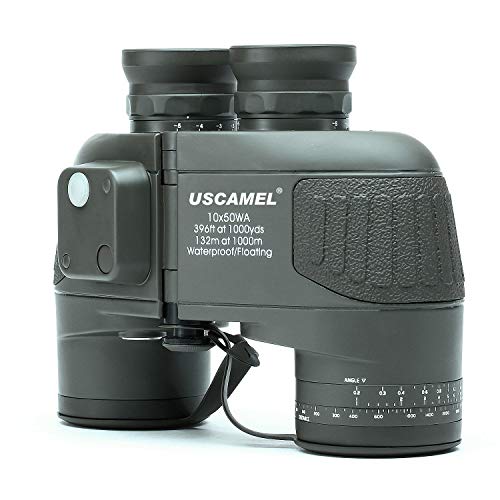
Waterproof pairs are sealed against rain, spray, and dust, and most are filled with nitrogen so the inside lenses stay fog free when the temperature changes. That sealing matters on a boat, near a shoreline, or on a rainy trail, where an unsealed pair can fog up just when you need it most. Rubber armor also protects the body from knocks and gives a secure grip with wet hands.
These pairs tend to be a little heavier because of the sealing and armor, and the most compact models are rare. If you spend most of your time near water, the extra weight is worth it. If you mostly watch from dry ground, a standard pair with good coatings may serve you just as well for less money.
Porro Prism vs Roof Prism: Which Should You Choose?
Choose a Porro pair when value and a wide view matter most and you do not mind the extra bulk. Choose a roof pair when you carry your binoculars all day, travel light, or want a pair that packs neatly. Both designs can give a bright, sharp image at 10x magnification, so the deciding factors are usually size, weight, and budget rather than the prism name alone.
Try to handle both shapes if you can, even briefly. The pair that feels balanced in your hands and sits comfortably against your eyes is the one you will actually use, and a pair left at home because it feels awkward is no bargain at any price. Remember also that you should never look at the sun through binoculars, since the magnified light can damage your eyes in an instant.
How to Choose the Right Pair
Magnification and Objective Size
The first number, 10, tells you the magnification, and the second number, 50, tells you the diameter of the front lens in millimeters. A 50 mm objective gathers more light than a smaller one, which helps at dawn, at dusk, and under tree cover. The 10x magnification brings distant subjects close, but it also magnifies the shake of your hands, so steady support matters.
Exit Pupil and Eye Relief
Divide the objective size by the magnification to get the exit pupil, which is 5 mm for a 10x50 pair. A 5 mm exit pupil suits most daylight and twilight use, though your own pupils shrink with age and in bright light. Eye relief is the distance from the eyepiece to your eye at which you see the full view, and it matters most if you wear glasses. Look for eye relief of about 15 mm or more if you keep your glasses on while viewing.
Field of View and Close Focus
Field of view tells you how wide a scene you see at a set distance, often stated in feet at 1,000 yards. A wider field makes it easier to find a moving subject and follow it without losing it. Close focus tells you the nearest distance at which the pair still gives a sharp image, and it matters if you also enjoy watching butterflies, flowers, or nearby birds at a feeder.
Durability and Weather Sealing
Waterproof and fogproof ratings protect your investment when the weather turns. A nitrogen purged body resists internal fogging when you move between warm and cold air, and sealed joints keep out rain and dust. Check the maker's description for the sealing standard rather than assuming every pair with rubber armor is fully waterproof.
Weight and Handling
A 10x50 pair is a full size instrument, so weight and balance deserve real attention. Heavier pairs tire your arms on a long walk, and that fatigue shows up as shake in the view. A padded neck strap spreads the load, and a tripod adapter lets you mount the pair for long, steady sessions such as astronomy. If you plan regular stargazing, see our guide to the best 10x50 binoculars for astronomy for advice on steady support and dark sky use.
Common Mistakes to Avoid
- Choosing magnification alone: higher power without steady support gives a shakier, less useful view.
- Ignoring eye relief: glasses wearers who skip this check often see only part of the field.
- Assuming all rubber armor means waterproof: armor protects against knocks, but only sealing keeps water out.
- Skipping the weight check: a heavy pair that stays home helps no one, however good its glass may be.
- Forgetting sun safety: never point binoculars at the sun, since the concentrated light can cause serious eye injury.
How to Make Your Pair Last Longer
Use a lens cloth, not your shirt, to clean the lenses, since fabric can drag grit across the coatings and leave fine scratches over time. Keep the pair in a dry, padded bag when you are not using it, and store it with the lens caps on so dust stays out of the barrels. If the pair gets wet, wipe the outside dry before you put it away, and let it air out rather than sealing it damp into a case.
Check the focus wheel and eyecups now and then for smooth movement, and avoid forcing any control that feels stiff. A little care goes a long way with a full size pair, and a well kept pair can serve you for many years of viewing. For tips aimed at a different kind of use, see our guide to the best 10x50 binoculars for birding, which covers field habits that also protect your optics.
10x50 Binoculars: Your Questions Answered
What does 8x42 or 10x42 mean?
Those numbers work the same way as the numbers in a 10x50 pair: the first number is magnification and the second is the objective lens diameter in millimeters. An 8x42 pair magnifies 8 times with a 42 mm objective, while a 10x42 pair magnifies 10 times with the same 42 mm objective. The 10x50 pair gathers more light than either one because of its larger 50 mm objective, but it is also bigger and heavier, so the right choice depends on how much light you need and how far you carry the pair.
Is a smartphone enough instead?
A smartphone is fine for quick snapshots and for identifying a subject after the fact, but it cannot match the real time detail of a 10x50 pair at distance. Digital zoom on a phone enlarges a small part of the sensor image, which quickly turns soft and noisy, while binoculars show you the scene through glass with no processing delay. Many viewers use both together, spotting with binoculars first and then reaching for the phone only when they want a record of what they found.
Which is better for low light?
A 10x50 pair is a strong low light choice because the 50 mm objective gathers plenty of light and the 5 mm exit pupil suits dim conditions. Glass coatings matter too: fully multi coated lenses lose less light at each glass surface than simpler coatings, so two pairs with the same numbers can still differ visibly at dusk. If most of your viewing happens in deep twilight, also consider weight and a tripod adapter, since a steady view reveals more detail than a shaky one.
How much should I spend on my first one?
Most first time buyers do well in the range of about $100 to $250, where you can find solid Porro and entry level roof pairs with decent coatings and sealing. Below that range, image quality and build often drop sharply, while above it you pay mainly for better glass, wider fields, and tougher sealing. Spend more only when you know which feature you are paying for, such as a wider field for fast moving birds or full waterproofing for boat use.
What specs matter most for beginners?
Start with magnification, objective size, eye relief, and weight, since those four shape every viewing session. Field of view comes next, because a wider view makes finding subjects much easier when you are still learning. Coatings and weather sealing matter once you know where you will use the pair most, and they are worth paying for if you view in rain, near water, or in humid air. Ignore exotic specifications until the basics feel right in your hands.
Final Thoughts
The best 10x50 binoculars for you are the pair whose type fits your use, whose weight you can carry comfortably, and whose view stays bright when the light fades. Porro pairs offer value and a wide view, roof pairs offer a slim shape for travel, and waterproof pairs offer peace of mind near water. Use the product table to compare the picks once more, check eye relief if you wear glasses, and never look at the sun through any pair you choose.