
Best 10x50 Binoculars for Birding in 2026: Which One Fits the Way You Use It?
Disclosure: We may earn a commission when you buy through links on this page, at no extra cost to you. As an Amazon Associate I earn from qualifying purchases. Learn more

The best 10x50 binoculars for birding depend on light, habitat and glasses use. Compare exit pupil, field of view, eye relief and weight.
A 10x50 binocular gives you strong reach and a wide front lens, but that pairing does not suit every kind of birding equally. The best 10x50 binoculars for birding for you depend on when you watch, how far you walk, and whether you wear glasses. A pair that feels perfect at a lake at dawn may feel heavy and narrow on a wooded trail.
This guide sorts the choice by use first, so start with your usual habitat and light, then compare the optics that serve it. Use the product table to compare field of view, eye relief, close focus and weight side by side. Readers who want a wider look across sizes can also see our guide to the best binoculars birding.


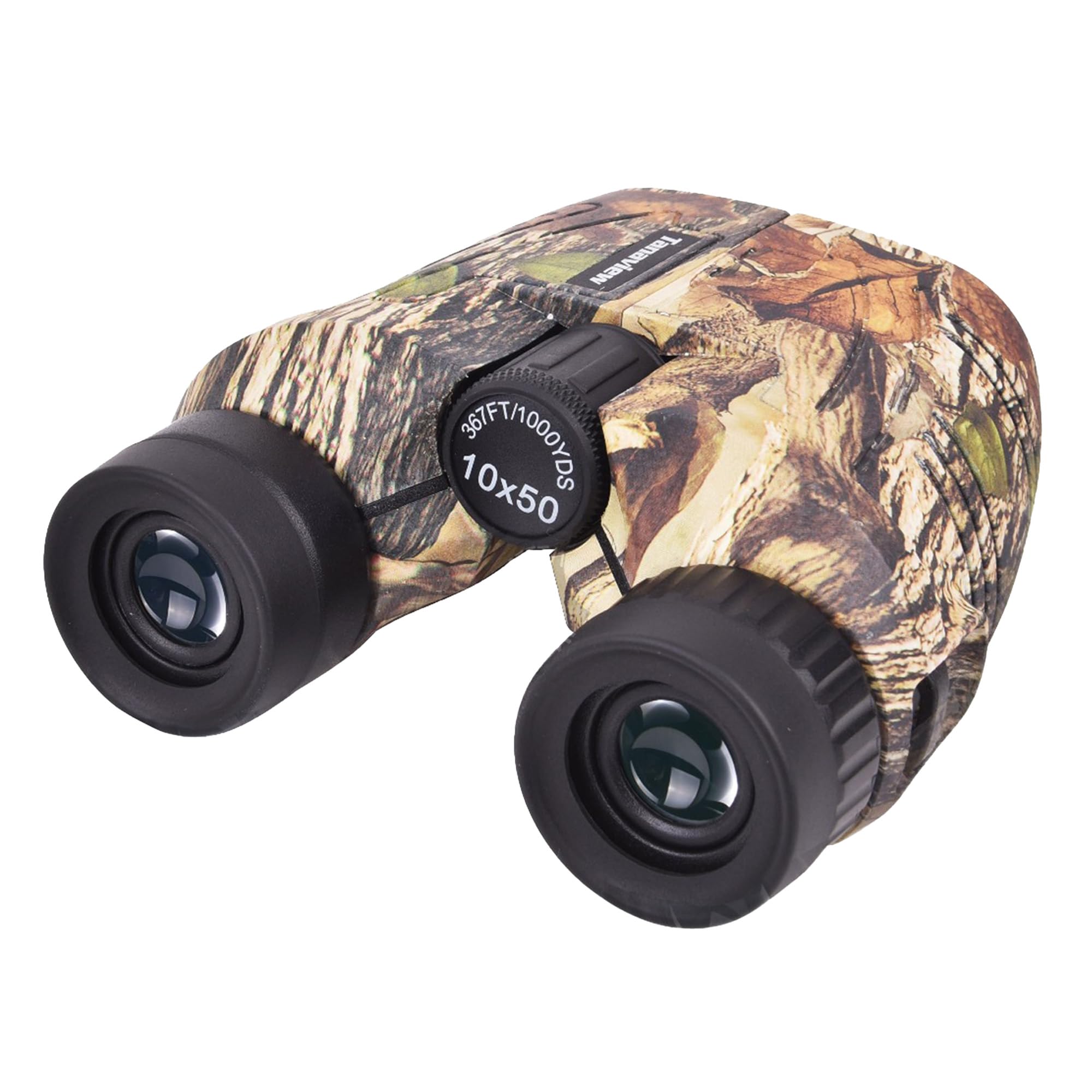
Who Should Buy Which 10x50 Binoculars?
For Dawn and Dusk Watchers at Marshes and Fields
You watch herons, owls and waterfowl when the light is low and the birds are far away, often while standing still or sitting in one spot. Put brightness first, with a full 5 mm exit pupil and coatings that keep the view clear in shade. Weight matters less for you because the binocular rests in your hands or on a support.
For Shoreline and Open Country Birders Who Scan Wide Areas
You follow shorebirds, gulls and raptors across water, mudflats and open sky, where a bird can cross your view in seconds. A generous field of view helps you pick the bird up again after each sweep, and a smooth focus wheel helps you track it as it climbs or drops. Balance matters too, because long scans with a front heavy pair tire your wrists.
For Trail Birders Who Walk Between Short Stops
You cover ground, stopping for a few minutes at each clearing, feeder or stream crossing before moving on. For you the ounces add up fast, so carry comfort, a secure strap and quick handling count as much as reach. Close focus helps with perched birds near the path. If your walks run long and your birds sit close, see our guide to the best small binoculars for birding.
Key Features to Compare
Objective Lens, Exit Pupil and Brightness at Dawn
The 50 in 10x50 is the width of the front lenses in millimeters, and a wider lens gathers more light than a 42 mm lens at the same magnification. Divide 50 by the 10x magnification and you get a 5 mm exit pupil, the beam of light that reaches your eye. Coatings decide how much of that light survives the trip through the glass, so lens size alone is not the whole story. That is why the best 10x50 binoculars for birding earn their place in dim light, not only at distance. Compare models in this format in our guide to the best binoculars 10x50.
Field of View for Finding and Following Birds
Field of view tells you how wide a scene you see at 1,000 yards, and many 10x50 models show about 300 to 360 feet across at that distance. A wider view makes it far easier to land on a bird after you spot it with your bare eyes, which is where beginners lose the most birds. Check the edges as well, because a view that stays sharp only in the middle forces you to recenter the bird every time it moves.
Close Focus and the Central Focus Wheel
Close focus is the nearest distance at which the image stays sharp, and it matters more than many buyers expect. Feeder birds and perched warblers often sit closer than a distant duck flock. Many roof prism models focus down to about 6 to 10 feet, while many Porro prism models need more room, so check the stated figure if near birds are your main subject. The wheel should turn smoothly without grit or slack, and still move freely when you wear light gloves.
Eye Relief, Eyecups and Diopter Adjustment
Eye relief is the distance your eye can sit behind the eyepiece while still seeing the whole view, and 10x50 models commonly offer about 15 to 20 mm. If you wear glasses, look toward the longer end of that range and turn the eyecups down so your lenses sit close enough. Without glasses, raise the eyecups so outside light stays out. The diopter dial, usually on one barrel, balances focus between your two eyes, which rarely match exactly.
Prism Design, Glass and Coatings
Porro prism models hold their barrels apart in a wide, offset shape, and they often deliver a bright, roomy view for the money, at the cost of extra bulk. Roof prism models run straight and slim, and they need phase coating on the prisms to keep contrast strong. Extra low dispersion glass, often shortened to ED glass, cuts the colored fringe you see around a backlit egret or a crow against bright sky. Fully multi coated lenses carry multiple coating layers on all air to glass surfaces. Value hunters who lean toward the Porro shape can see our guide to the best budget binoculars for birding.
Weight, Balance and Weather Sealing
Most 10x50 binoculars weigh about 28 to 36 ounces, so small differences show up over a full morning. A pair that balances near the focus wheel feels lighter than the number suggests, while a front heavy pair pulls your wrists down during long looks. Sealed, waterproof bodies with an inert gas fill resist internal fog when you step from a warm car into cold marsh air. Rubber armor adds grip with wet or gloved hands and softens knocks.
How to Set Up 10x50 Binoculars for Your Eyes Before a Walk
Two minutes of setup at home saves you the fumbling that costs you birds in the field. Do it in daylight, facing a distant sign, roofline or tree with clear edges.
- Fold or open the barrels until the two round views merge into one circle with no dark crescents at the sides.
- Set the eyecups down if you wear glasses and up if you do not, so the whole view stays visible.
- Cover the right front lens and focus on your target with the center wheel, then cover the left lens and turn the diopter dial until the right eye view is equally sharp.
- Note the diopter setting, so you can restore it at once if the dial gets knocked in your bag.
Common Mistakes to Avoid When Buying 10x50 Binoculars
- Choosing this size for magnification alone and ignoring field of view, which leaves you hunting for birds that your bare eyes already found.
- Assuming a 50 mm lens guarantees a bright image, when weak coatings can waste the extra light and leave the view dull.
- Picking a heavy pair for long trail walks, which turns into neck ache by midday and a binocular left behind in the car.
- Skipping the glasses check before you buy, when short eye relief can cut off the edges of the view you paid for.
- Overlooking close focus, which means the feeder birds closest to you stay blurred no matter how far the pair can reach.
Care and Maintenance for 10x50 Binoculars
Clean lenses only when they need it, and start dry. Blow or brush grit off the glass first, because wiping a dusty lens drags particles across the coating and can scratch it. Then use a clean lens cloth with light, small circles, and never use your shirt, which holds grit and oils.
After a wet outing, let the pair dry at room temperature before you close it in its case, and store it in a dry, padded bag away from direct heat. Check the strap and harness clips each season, because a failed strap over rocks or water is the most common way a sound pair gets ruined.
10x50 Binoculars for Birding: Your Questions Answered
What matters most in 10x50 binoculars for dawn and dusk birding?
Exit pupil size and coating quality matter most, because they decide how bright and clear the view stays as light fades. Look into shadow under trees or reeds, not at the bright sky, and pick the binocular that still shows feather detail in those dim corners.
How much should a birder spend on a first pair of 10x50 binoculars?
About $150 to $300 is a sensible first budget, because that range usually buys sound coatings, a smooth wheel and real weather sealing. Below around $100, expect a narrower view and softer edges. New buyers can also see our guide to the best birding binoculars for beginners for a wider starting point.
How do 10x50 binoculars compare with 8x42 and 10x42 binoculars for birding?
A 10x50 pair gives the strongest reach and the brightest low light view of the three, and it is also the heaviest. An 8x42 pair shows a wider, calmer view, which suits fast warblers in thick woods where birds appear close and vanish fast. A 10x42 pair keeps the same reach in a lighter body but gives up some brightness at dawn.
Can 10x50 binoculars be mounted on a tripod for steady birding?
Yes, many 10x50 binoculars hide a threaded socket under a small cap at the front of the hinge, and a simple adapter joins that socket to a standard tripod. Mounting pays off during long counts at a hawk watch or when you want to share one bird with a companion.
How steady are 10x50 binoculars when held by hand during birding?
A 10x view magnifies your hand movement along with the bird, so most people see some sway during long looks. Short looks of a minute or two are fine for most birders, and technique closes much of the gap. Tuck your elbows against your ribs, lean a shoulder against a tree or post, and hold the barrels near their balance point.
Wrapping Up
Start with your light and your landscape, then let the optics follow. Dawn and open water call for the full exit pupil and strong coatings, trail walking calls for restraint on weight, and glasses call for generous eye relief. Match the best 10x50 binoculars for birding to the place you watch most, then check your finalists in the product table above before you order.


