
Best 10x50 Binoculars under 100 in 2026: A Clear Guide for First Time Buyers
Disclosure: We may earn a commission when you buy through links on this page, at no extra cost to you. As an Amazon Associate I earn from qualifying purchases. Learn more

Shopping for the best 10x50 binoculars under 100 for the first time? Learn the terms, compare options, and avoid rookie mistakes with this easy guide.
A first pair of binoculars should feel simple, not like a puzzle. The best 10x50 binoculars under 100 dollars pair strong magnification with a large front lens, yet they stay within a starter budget. This guide walks you from the basic terms to a confident choice. You can then read the product table and know what each line means for your viewing.
Think first about where you will look most. A 10x50 model suits open views, dim evenings and the night sky better than a stadium seat. The sections below explain who this size fits, which specs deserve your money, and which corners get cut under $100.


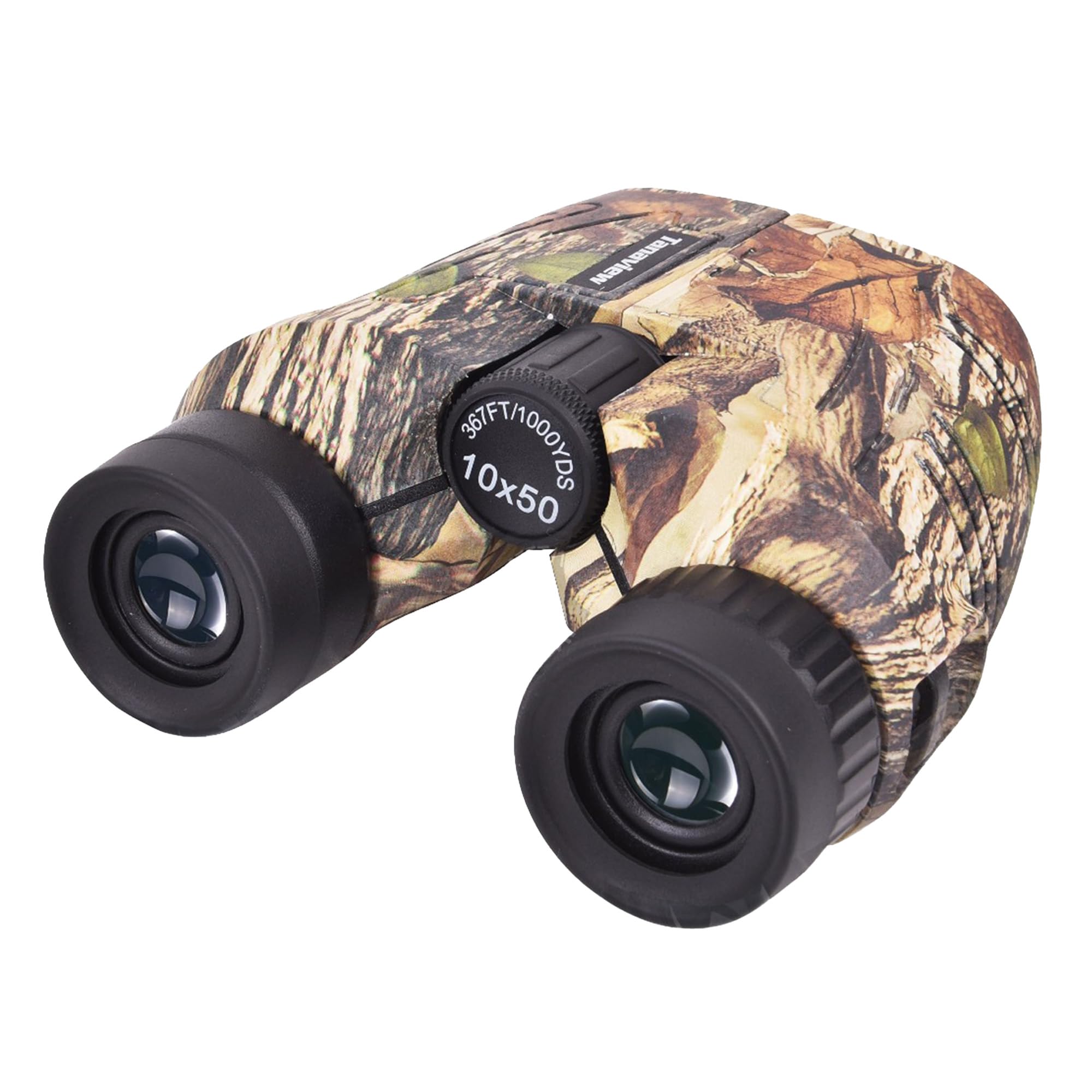


10x50 Binoculars 101: The Basics for First Time Buyers
The numbers name the two facts that shape everything else. Ten power magnification makes a distant subject look ten times closer. The 50 stands for the diameter of each front lens, 50 millimeters. Bigger front lenses collect more light, which is why this size has a loyal following for dawn, dusk and astronomy.
Hold a pair up and the shape tells you the design inside. Traditional Porro prism models look wide and stepped, because light folds through offset prisms to reach your eyes. Roof prism models look straight and slim. Under $100, most 10x50 models use the Porro layout, because it delivers a bright image for less money. See our guide to the best binoculars 10x50 to compare this size across a wider price range.
Who Should Buy a 10x50 Binocular Under $100?
This size rewards viewers who watch distant subjects in open places and can accept some weight.
Backyard Stargazers and Moon Watchers
A 50 millimeter front lens gathers far more light than compact models, so the Moon, bright planets and star clusters show real detail. Many 10x50 models include a tripod socket under a cap on the front hinge, and a simple adapter on a photo tripod turns short looks into long, relaxed sessions.
Birders and Wildlife Watchers in Open Country
Ten power reach helps with waterfowl on a lake, hawks over a field and deer at the edge of woods. The wide front lens keeps dim views usable. Readers who will spend most outings on birds can also see our guide to the best binoculars for birding under 100 for models chosen around birds alone. For close warblers in thick brush, a smaller size feels handier.
Boaters, Landowners and Scenic Viewers
If you watch a far shoreline, scan a large property or follow boats from a dock, distance matters more than close focus. A 10x50 gives you that reach in one simple tool, and rubber armor shrugs off bumps in a truck or boat locker. Choose a floating strap for open water, because a dropped pair sinks fast.
Key Features to Compare on 10x50 Binoculars Under $100
Read spec sheets in this order and price differences start to make sense.
What You Can Realistically Get for Under $100
Expect honest, simple optics rather than premium glass. At under $100 you can get bright Porro prism optics, multicoated lenses, rubber armor and a tripod socket. What usually gets cut is edge sharpness, waterproof sealing and fancy coatings. That trade space defines the best 10x50 binoculars under 100: a strong center image at a fair price. Treat extras like phone adapters as optional.
Magnification, Objective Lens and Exit Pupil
Divide 50 by 10 and you get a 5 millimeter exit pupil, the bright circle of light that reaches each eye. That generous size is why a 10x50 stays bright at dusk, when a 10x42 looks dimmer sooner. The cost of that light is bulk, because two 50 millimeter lenses need a bigger body. If most of your viewing happens in full daylight, that extra light matters less than size and weight.
Porro Prisms, Roof Prisms and Prism Glass
Prism glass shapes clarity and contrast. BaK 4 glass is the better grade and is common even under $100 in Porro designs, while BK 7 glass signals a budget shortcut. A Porro layout also gives a stronger sense of depth, because the front lenses sit wider apart than your eyes. Roof prism models exist, but at this price their internal coatings rarely match a good Porro image.
Lens Coatings and Field of View
Coatings cut reflections on glass surfaces, so more light reaches your eyes and the image keeps its contrast. Plain coated optics coat some surfaces, fully coated optics coat them all, and multicoated optics add layers where they help most. Field of view usually runs about 5 to 6.5 degrees, or roughly 260 to 340 feet at 1000 yards. A wider field makes scanning a flock easier, but the edges may soften on budget glass.
Eye Relief, Eyecups and the Focus Wheel
Eye relief near 15 to 19 millimeters lets glasses wearers see the full field. Twist up eyecups help, though many budget models use fold down rubber cups that work as well. The center focus wheel should turn smoothly with one finger and hold its setting. A diopter ring on one eyepiece balances focus between your two eyes, and a good one locks so it stays put in a bag.
Weight, Rubber Armor and Weather Sealing
Most 10x50 Porro models weigh about 28 to 36 ounces, enough to notice after ten minutes of holding them high. Rubber armor adds grip and guards against knocks. Read weather claims closely, because water resistant means the pair shrugs off light rain, while a truly weatherproof and fogproof pair is sealed and filled with nitrogen. At this price, sealed models are less common, so treat sealing as a bonus.
Getting Started: Setup and First Use of Your 10x50 Binoculars
Start by fitting the barrels to your eyes. Bend the hinge until the two views merge into one circle with no dark edges. Then set the strap so the pair hangs at chest height, where it swings less against fences and car doors.
Next, set the diopter once and leave it alone. Cover the right lens, focus the left eye with the center wheel on a distant sign, then cover the left lens and sharpen the right eye with the diopter ring alone. From then on, focus with the center wheel only. Clean each lens with a soft lens cloth, never your shirt, because gritty fabric can scratch coatings.
Rookie Mistakes to Avoid With a First Pair of 10x50 Binoculars
Each of these errors costs money or a clear view.
- Chasing higher magnification like 12x or 16x makes hand shake worse and the image dimmer, so the view looks worse than a steady 10x.
- Ignoring eye relief leaves glasses wearers seeing only the center of the field, like looking through a tunnel.
- Buying the cheapest no name pair with BK 7 glass gives up clarity you notice on every outing.
- Judging brightness in a bright store hides weak coatings, which show up at dawn or dusk when you need them most.
- Storing binoculars loose in a car trunk invites knocks, dust and heat that ruin alignment and coatings.
Care and Maintenance for 10x50 Binoculars
Keep the lens caps on whenever the pair is not at your eyes, and carry it in its case, not loose in a pack. Blow loose dust off the glass before you wipe, because wiping grit across a lens grinds the coating. Use a clean lens cloth with gentle circles from the center outward.
After a wet outing, let the pair dry at room temperature with the caps off before you store it. Keep it in a cool, dry place out of direct sun, and check the strap each season. If the barrels ever show a doubled image after a drop, that points to alignment damage a repair shop should handle.
Frequently Asked Questions About 10x50 Binoculars Under $100
Can you get a good pair of 10x50 binoculars for under $100?
Yes, you can get a genuinely good pair of 10x50 binoculars for under $100, especially in a Porro prism design. Expect a sharp, bright center of view and simpler build details. One point many first time buyers miss is the return window, so buy from a seller with easy returns and try your pair at dusk in the first week.
How do 10x50 binoculars differ from 8x42 and 10x42 binoculars?
A 10x50 binocular differs mainly in light and size. Its larger front lenses keep views brighter in dim light than a 10x42, and it magnifies more than an 8x42. The trade is weight and a longer close focus, which often starts around 15 to 25 feet. Garden birders who watch feeders up close may enjoy the smaller sizes more.
Which binocular size is better for low light viewing, 10x50 or 10x42?
For low light viewing, the 10x50 size is better because its bigger lenses deliver more light to your eyes at the same magnification. That edge matters most in the last half hour of daylight and under a dark sky. It matters much less at midday, when both sizes have more light than your eyes can use.
What specs matter most for first time buyers of 10x50 binoculars?
For a first pair, prism glass, coatings and eye relief matter most. BaK 4 prisms with at least fully coated optics give you the clearest image this budget allows. After that, check the focus wheel for smooth travel, because a stiff wheel frustrates every session. Skip bundle extras like tiny tripods when you judge value.
Are 10x50 binoculars too heavy to hold by hand for long viewing sessions?
A 10x50 binocular is heavy for long handheld sessions, but most people manage fine in bursts of a few minutes. Rest your elbows on a car roof, a fence rail or your knees and the shake drops a lot. For sky watching, lean back in a reclining chair so your arms stay low.
Final Thoughts
A first 10x50 does not need to be perfect, it needs to be bright, comfortable and honest about its limits. Match the size to open views and dim light, put your money into prism glass and coatings, and keep your expectations set for a starter budget. Use the product table above to compare weight, eye relief and field of view. Chosen that way, the best 10x50 binoculars under 100 dollars will show you more of the sky and the field than you expect.


