Austin Air HealthMate Review (2026): Is It Worth the Money?
Disclosure: We may earn a commission when you buy through links on this page, at no extra cost to you. As an Amazon Associate I earn from qualifying purchases. Learn more

Our Austin Air HealthMate review covers performance, design, cleaning, pros and cons, and who should buy it. Plus top alternatives. Updated 2026.
The austin air healthmate review question comes down to one trade off. This is a large steel box purifier built around a single oversized filter that pairs true HEPA media with a deep bed of activated carbon, and it asks a premium price for that durable formula. There are no apps, no air quality displays, and no automatic modes.
What you get instead is long filter life, strong odor and gas reduction, and a housing built to run for many years. The comparison table below puts the key figures side by side.

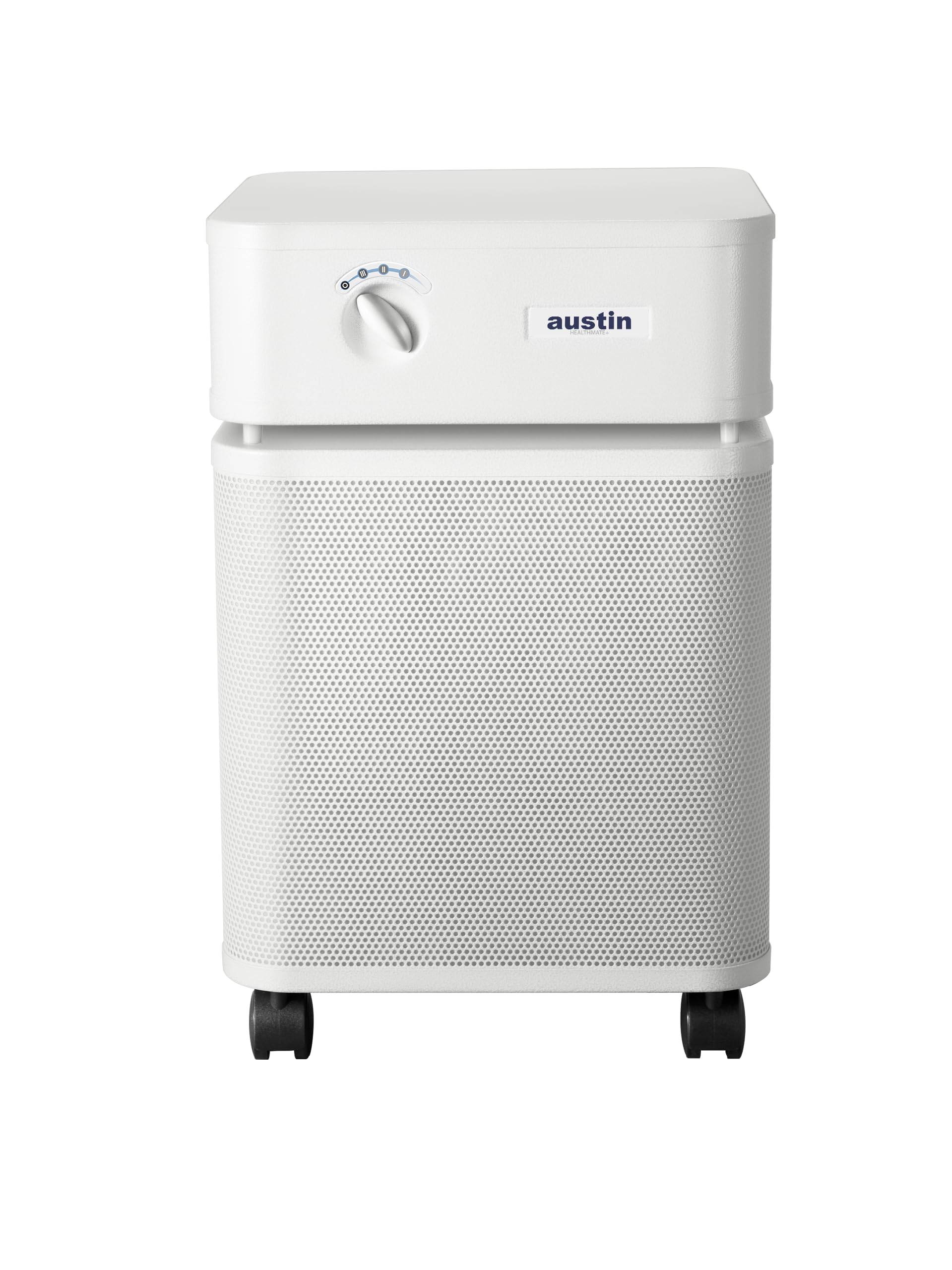
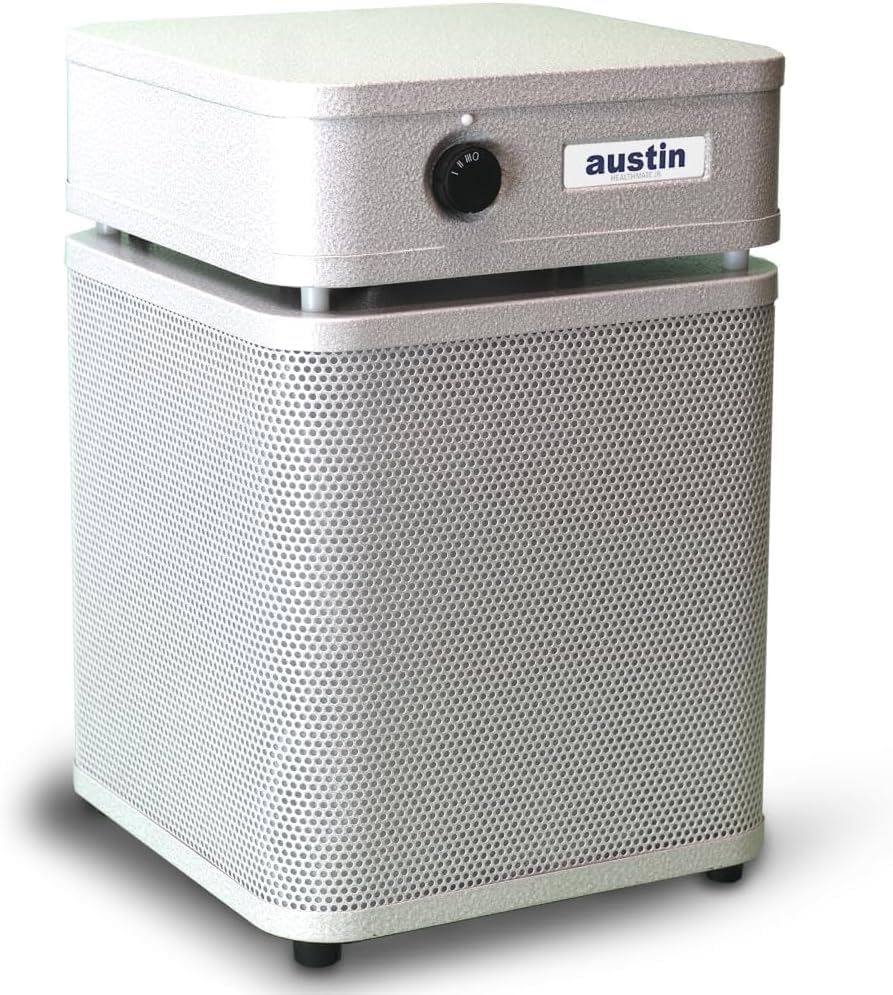


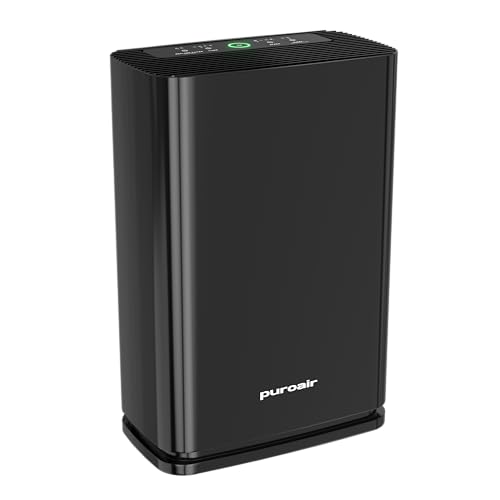


Austin Air HealthMate Specs at a Glance
The maker rates this unit for rooms up to about 1,500 square feet, a figure that assumes the high ceiling and open layout of a large living space. The filter combines true HEPA media with about 15 pounds of activated carbon and potassium iodide, and the maker rates that filter for up to five years of use. The body is steel with a powder coat finish, the fan offers three speeds, and air enters through perforations on all four sides, so placement is more flexible than with designs that pull air from one face only.
The warranty runs five years on the machine, and the filter carries a prorated guarantee over the same span. Weight is the figure many buyers overlook. At roughly 47 pounds, this is a move it once and leave it unit rather than something you carry between rooms each day.
Design and Build Quality
The housing is rolled steel rather than molded plastic, and that choice shapes everything about owning this purifier. Steel resists the dents, cracks, and yellowing that plastic shells pick up over years of sun and handling, and it gives the cabinet a rigid, rattle free feel at full fan speed. Casters on the base help you roll it across hard floors, though carpet slows it down.
The look is plain and boxy, closer to a small filing cabinet than to a modern appliance, and color choices are limited to a few neutral finishes. If you want a purifier that disappears into a styled room, this design will fight you. If you want a cabinet that still looks the same after a decade of service, the plain steel shell is exactly the point.
Performance
Coverage and Airflow
Coverage ratings assume a certain number of air changes per hour, and that detail matters more than the headline number. A rating of about 1,500 square feet usually assumes roughly two air changes per hour, which suits a living room or open plan space. For a bedroom where someone has asthma or strong allergies, health agency guidance favors four or more air changes per hour, so the same machine covers a much smaller room for that stricter goal.
In practice, this purifier suits one large zone rather than a whole multi room home. Doors, hallways, and walls block airflow, so a single unit in a living room will not clean a closed bedroom at the other end of the house. Plan on one unit for the space where you spend the most time, and treat the rest of the home as separate zones.
Filtration Performance
The filter does two jobs at once. The true HEPA stage traps fine particles such as pollen, dust, mold spores, and pet dander, which covers the needs of most allergy driven buyers. The deep carbon stage adsorbs gases and odors, including cooking smells, tobacco smoke, and vapors from paints, cleaning products, and new furniture. Most compact purifiers carry a thin carbon sheet that saturates in weeks. A bed of about 15 pounds lasts far longer, and that depth is the main reason buyers choose this machine.
This strength has a limit worth knowing. Carbon handles gases at the filter, but it cannot fix a source problem. A home with an ongoing moisture issue needs the leak or damp fixed first, since a purifier treats the air, not the cause. If a musty smell keeps returning, or mold growth is spreading across a wall, have the home checked by a professional.
Noise Level
With a three speed fan and no fine grained controls, your noise choices are broad steps rather than small adjustments. On the lowest speed the sound is a soft fan hum that most people can sleep beside. On the highest speed it is clearly audible across a room, closer to a window fan, and that is the speed that delivers the rated cleaning power. Many owners run the unit high while out of the room and drop it to low when they settle in.
Energy Use
The motor draws roughly the power of an older incandescent bulb on high, and far less on the low setting most owners use overnight. Run around the clock on low, the electricity cost stays modest, generally a few dollars a month depending on your local rate. The bigger running cost is the replacement filter, covered in the maintenance section below.
Key Features
The feature list is short on purpose. A single combined filter means one part to track, order, and change, instead of a stack of prefilters, carbon pads, and HEPA panels on separate schedules. The wrap around intake pulls air from every side, so the unit keeps working when it sits closer to a wall or a sofa than a one sided design would allow.
The control is a single dial for fan speed. There are no timers, no remote, no WiFi, and no sensors. For some buyers that absence is the appeal, since there is nothing to update, pair, or troubleshoot. For others it means no automatic response when cooking smoke or a visiting dog raises particle levels. Decide which camp you are in before you buy, because owners tend to love or regret that same simplicity.
Ease of Use, Cleaning and Maintenance
Daily use could not be simpler. Turn the dial to a speed and leave it there. There is no filter light to reset and no app asking for attention. Cleaning the outside takes a wipe with a damp cloth, and vacuuming the exterior prefilter wrap every few weeks keeps dust from loading the main filter early. That prefilter is a simple foam layer you can rinse or vacuum, and keeping it clear is the cheapest way to protect the filter inside.
When the main filter reaches the end of its life, changing it means removing the bottom plate, lifting the old drum out, and seating the new one. Expect the replacement to cost a few hundred dollars. Spread over up to five years, that works out to a modest yearly cost, which compares well with compact purifiers that need a new filter every six to twelve months. The math only favors this machine if you keep it long enough to use that full filter life.
Austin Air HealthMate Pros and Cons
- Pro: A deep carbon bed gives odor and gas control that thin carbon sheets cannot match for long.
- Pro: A filter life of up to five years means little upkeep and a low cost per year of filtration.
- Pro: The steel cabinet and simple dial control avoid the failures that touch screens and app links can bring.
- Con: The size, weight of about 47 pounds, and boxy look make it hard to hide or move between rooms.
- Con: There is no automatic mode, no air quality readout, and no timer, so the fan never adjusts on its own.
- Con: The purchase price and the replacement filter cost are both high, so a short ownership period makes it poor value.
Who Should Buy the Austin Air HealthMate (and Who Shouldn't)
Buy it if chemical sensitivity, smoke, or stubborn household odors are your main problem, since the carbon capacity is the reason this design exists. It also suits owners who want to set a purifier in one main living space or bedroom and ignore it for years. Households dealing with wildfire smoke seasons, a smoker, or a nearby road will value the gas and particle coverage in one box.
Skip it if you need a unit you can carry between rooms, since the weight works against that plan. Skip it if you want an automatic mode that reacts to air quality on its own, or a display that reports particle counts. Shoppers still weighing the wider field can start with our guide to the best air purifier to see how this style compares with lighter designs.
Austin Air HealthMate vs Alternatives
The most useful comparison is by type rather than by badge. Compact tower purifiers with small combined filters cost far less up front and suit single bedrooms well, but their thin carbon layers give up on odors quickly and their filters need changing often. Reading a levoit core 300 review shows that compact approach at its clearest, with modest coverage for one small room.
At the other end, sealed system designs promise that you never buy a replacement filter at all. A shark neverchange air purifier review covers that model of ownership in detail. The HealthMate sits between these poles. You pay more up front and once every few years for a filter, and in return you get the deepest carbon bed in its class and a cabinet built to last rather than a disposable appliance.
Where to Buy and Best Price
Expect to pay about $650 to $900 for this unit depending on the finish and the retailer, so it sits firmly at the premium end of home purifiers. Seasonal sales events can trim that figure, and it is worth checking the austin air healthmate price across a few sellers before ordering. Factor the replacement filter into your budget from day one, and confirm the seller is an authorized dealer so the five year warranty stays valid.
FAQs
Is the Austin Air HealthMate worth it?
It is worth it when odor and gas control matter as much as particle removal, and when you plan to keep the same machine for many years. The value rests on the long filter life spreading the high purchase price across a decade of use. If you expect to move soon or replace appliances often, a cheaper compact unit will return more of your money before you part with it.
What are common Austin Air HealthMate problems?
The complaints that come up most involve expectations rather than defects. Owners are surprised by the weight when the box arrives, by fan noise on the highest speed, and by the lack of any automatic setting. A smaller group reports a stale smell when a saturated carbon filter stays in service past its useful life, which is a sign to replace the filter rather than a fault with the machine.
How long does the Austin Air HealthMate last?
The steel cabinet and simple motor design are built for long service, and the maker backs the machine with a five year warranty. The filter is the consumable part, rated for up to five years in typical home conditions. Homes with heavy smoke, many pets, or construction dust will shorten that span, since the carbon fills faster under a constant load.
What is a cheaper alternative to the Austin Air HealthMate?
A compact tower purifier is the usual cheaper route, costing a fraction of the price and covering one bedroom well. What you give up is carbon depth, so odors return sooner, and filter changes come two or more times a year. If gases and smoke are your main concern, a mid priced unit with a genuinely thick carbon filter is the smarter step down.
How do you clean the Austin Air HealthMate?
Wipe the steel cabinet with a damp cloth and vacuum the outer prefilter wrap every few weeks to keep dust from reaching the main filter. The main filter itself is sealed and never washed, since water would damage the HEPA media and ruin the carbon. Always unplug the unit before removing the bottom plate to check the filter.
Final Thoughts
This purifier asks a lot of money for a metal box, a dial, and one very large filter, and for the right home that bargain makes sense. If odors, smoke, or chemical sensitivity drive your search and you want years of service with almost no upkeep, the austin air healthmate review verdict from long term owners is that the machine earns its keep. Check the product table above against your room size and budget before you decide.