Airthings vs Awair: Which Is Better in 2026?
Disclosure: We may earn a commission when you buy through links on this page, at no extra cost to you. As an Amazon Associate I earn from qualifying purchases. Learn more

Airthings vs Awair: we compare the key differences, pros and cons side by side so you can decide which one is right for you. Updated for 2026.
If you are weighing airthings vs awair, the quick answer is this. Choose Airthings if radon is on your worry list or if you want a battery powered unit you can move from room to room. Choose Awair if you want one simple score that sums up your air and a unit that stays plugged in and watching all the time. The comparison table below lays out the main contrasts in one place.
Both brands sell indoor air quality monitors, but they grew from different starting points. Airthings built its name on radon, a gas most monitors ignore completely. Awair built its name on a single easy to read score drawn from chemicals, fine dust, and carbon dioxide. That difference in focus shapes everything else, from which sensors you get to how the app presents your readings.



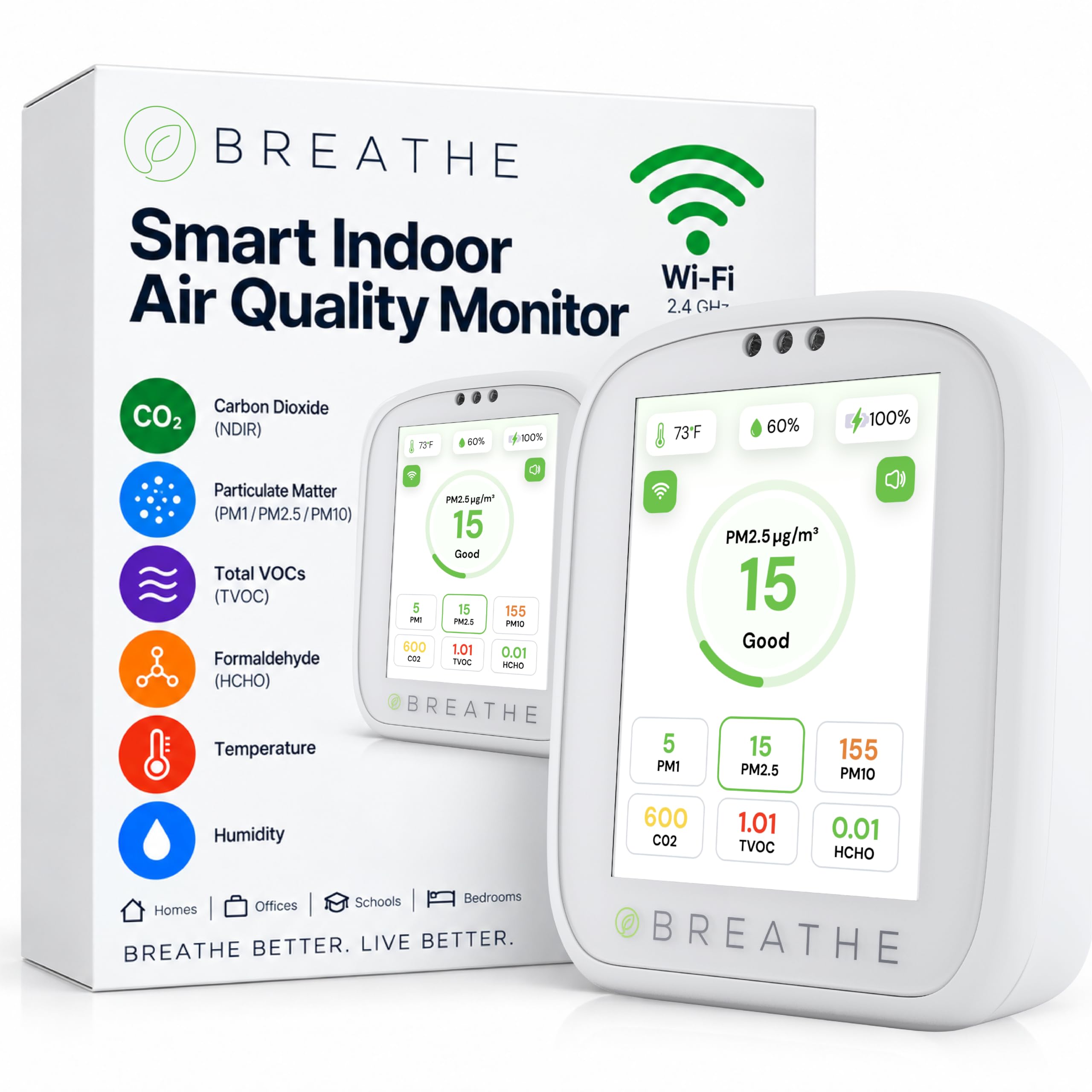
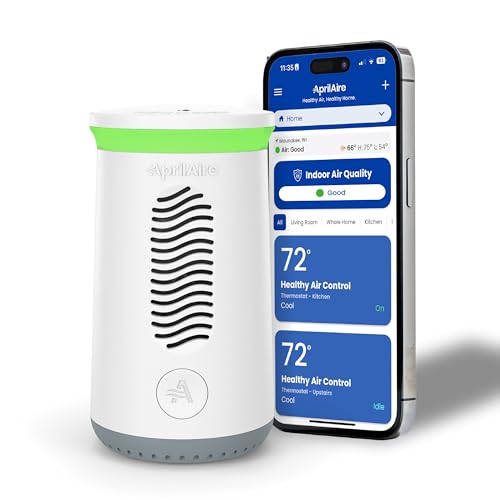
Airthings vs Awair: Comparison Table
The table below sums up how the two ranges differ at brand level. Exact sensors vary by model, so treat this as a guide to each brand's strengths rather than a promise about any single unit.
| Criterion | Airthings | Awair | Edge |
| Main focus | Radon plus core air factors | Combined air score | Depends on your goal |
| Sensors | Radon on key models, plus carbon dioxide, chemicals, humidity, temperature | Chemicals, fine dust, carbon dioxide, humidity, temperature | Airthings for radon, Awair for dust |
| Power | Battery on many models, mains on display models | Mains power on home models | Airthings for placement freedom |
| Display | On some models, app on others | Score shown on the unit and in the app | Even |
| Ongoing cost | No fee for core app use | No fee for core app use | Even |
Two points stand out from that summary. First, radon is the clearest dividing line, because one brand measures it and the other does not. Second, fine dust sensing tilts the other way, since Awair includes it across its home range while only some Airthings models measure particles. Your own home decides which of those matters more.
What Is Airthings? What Is Awair?
Airthings Overview
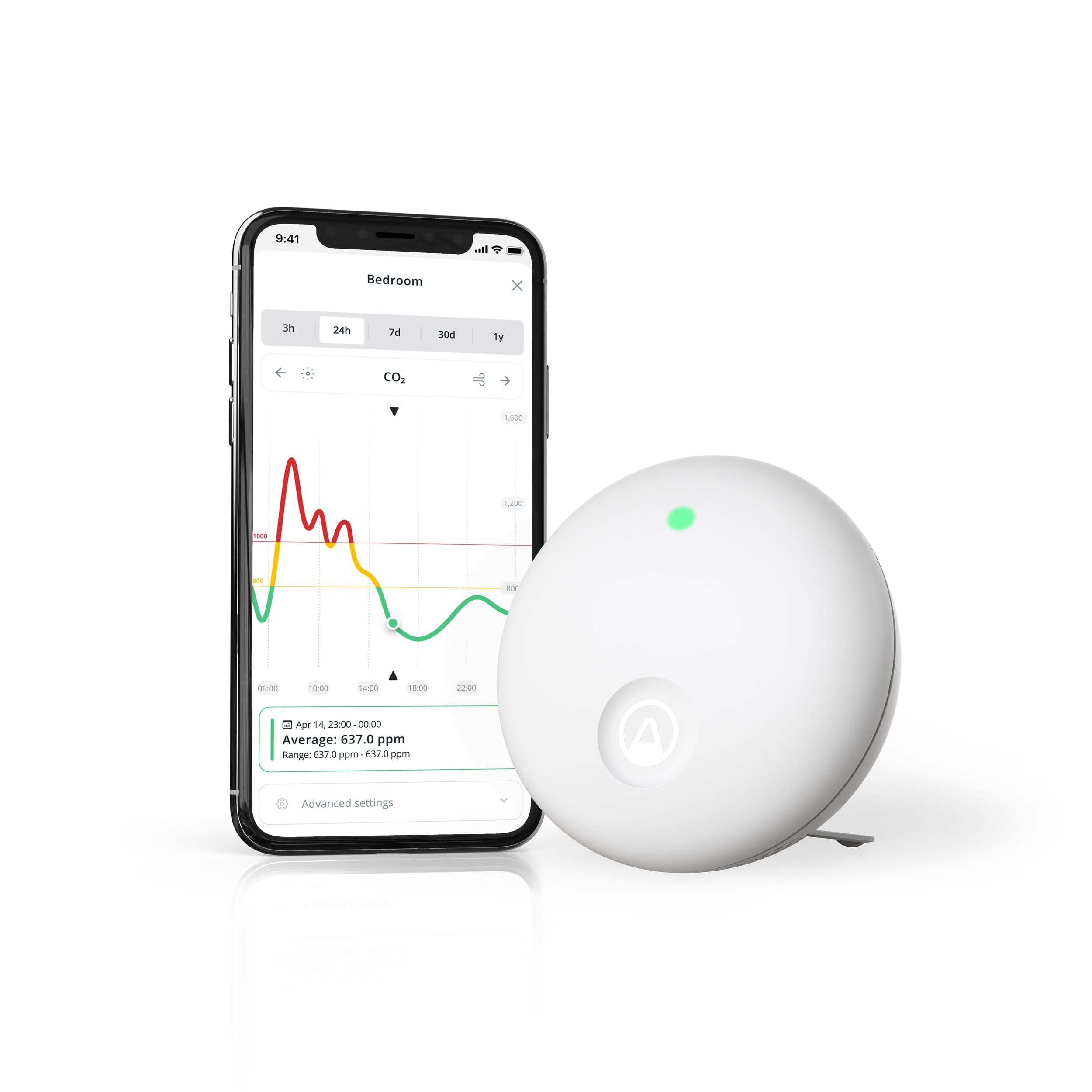
Airthings is a Norwegian company best known for bringing radon measurement into ordinary homes. Radon seeps up from soil and rock, collects in lower rooms, and varies a lot from one house to the next, so a monitor that tracks it over weeks gives you a picture a single short test cannot. The range also covers temperature, humidity, carbon dioxide, airborne chemicals, and air pressure, though no single model carries every sensor. If you want readings at a glance without opening an app, our airthings view plus review covers a display equipped model in the range.
Awair Overview
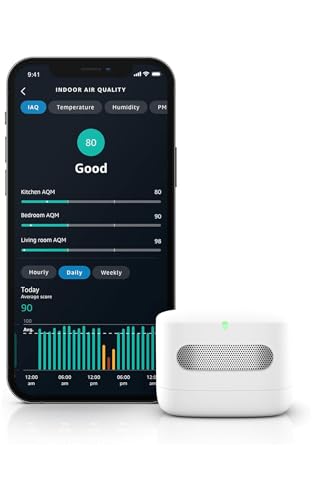
Awair takes a different route. Its home monitors report temperature, humidity, carbon dioxide, airborne chemicals, and fine dust particles, then blend those readings into one score. A good score tells you the air is fine without asking you to learn what each gas or particle count means. That suits you if you want a quick daily signal, for example a falling score that prompts you to open a window or run a purifier. The trade off is that radon is absent, and the combined score can hide which single factor is driving a poor result until you open the detail view.
Key Differences
The sections below work through the factors that should actually drive your choice. Sensor coverage comes first, because a monitor can only warn you about what it can measure.
Reliability and Accuracy
Both brands use consumer grade sensors, so read their numbers as trend guides rather than lab grade truth. Carbon dioxide and chemical sensors drift over time and rely on clean air exposure and internal correction to stay sensible. Radon sensing is slower by nature, since readings settle over days, and Airthings leans into that with long term averages. Awair updates its score more quickly, which feels responsive when cooking fumes spike, but fast movement is not the same as precision. Placement matters for both. Keep any unit away from direct sun, vents, and steamy bathrooms, or the readings will reflect that spot instead of the room.
Compatibility With Smart Home Systems
Both brands connect to popular voice assistants, so you can ask for a reading or build simple routines around one, such as a prompt to ventilate when carbon dioxide climbs. Support for Apple homes and for newer shared standards varies more by model and by generation, and it has changed over time as product lines were updated. Check the exact model listing before you buy if one platform matters to you, and do not assume a feature on one unit in a range appears on every unit. App quality is part of compatibility too. Both apps show current readings and history graphs, and both let you set alerts when a value crosses a level you choose.
Installation and Placement
Setup for both brands is mostly about the app. You create an account, connect the unit to your WiFi, and place it in the room you care about most. The power source is where they part ways. Many Airthings units run on batteries, so you can start in a basement, move to a bedroom later, and skip the hunt for a free outlet. Our airthings wave plus review looks at one such battery powered model. Awair home units plug in, which limits placement to spots near outlets but means the fan driven dust sensor can run constantly without battery concerns.
Subscription Costs
For home use, neither brand locks your basic readings behind a paywall. You can view current values, look back over your history, and receive alerts through the standard app without a monthly fee. Both companies also sell services aimed at offices, schools, and landlords, and those business offerings carry their own pricing and dashboards. If you are buying for a single home, those tiers should not affect you, but confirm the app terms for the exact model you pick, since software offerings change more often than hardware does. Budget your money for the unit itself rather than for ongoing access.
Privacy and Security
An air monitor reveals more about your household than you might expect. Carbon dioxide patterns show when rooms are occupied, when you sleep, and when the house sits empty. Both brands send readings to cloud accounts so the app can store history and send alerts, which means that pattern data lives on company servers. Read the privacy policy for how long data is kept, whether you can export or delete it, and who it is shared with. A unit with a display gives you a basic reading at home without opening the app at all, which some buyers prefer for bedrooms and for rooms used by children.
Price and Value
Home models from both brands commonly sit at about $100 to $300, with cost rising as sensor count and display features grow. A radon sensor, a particle sensor, and a built in screen each add to the price, so compare units with similar sensor sets rather than comparing headline prices across the ranges. Value also depends on fit. Paying extra for radon sensing is wasted money in an upper floor apartment with no soil contact, while skipping it in a house with a basement and known radon in the area saves little and leaves the main risk unmeasured. Buy the sensor set your home actually needs.
Which Should You Buy?
There is no single winner here, because the two brands answer different questions. Match the brand to the question you are asking about your home.
Choose Airthings If
- Your home has a basement or ground floor rooms in an area where radon is common.
- You want to test different rooms over time with a battery powered unit.
- You prefer separate readings for each factor over one combined score.
- You want long term radon averages to guide a decision about mitigation work.
On radon, one practical note. The US Environmental Protection Agency publishes an action level for long term radon, and a monitor that logs for months gives you the steady average that guidance is based on. If your readings stay near or above that level, talk with a qualified radon professional about mitigation rather than relying on ventilation alone.
Choose Awair If
- You want one score you can grasp at a glance each morning.
- Fine dust from cooking, traffic, or wildfire smoke is your main concern.
- Your home has no basement and radon is not a local issue.
- You prefer a unit that stays in one room and runs on mains power.
Awair also suits shared spaces, since visitors and family members can read a single score without learning what each sensor means. That simplicity is a real benefit in living rooms and nurseries, where the person checking the air may not be the person who set the unit up.
Other Options to Consider
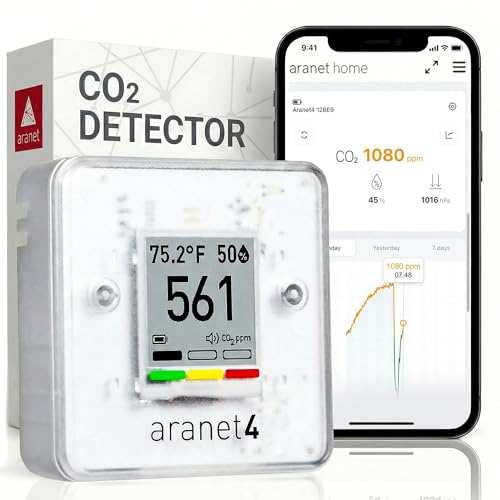
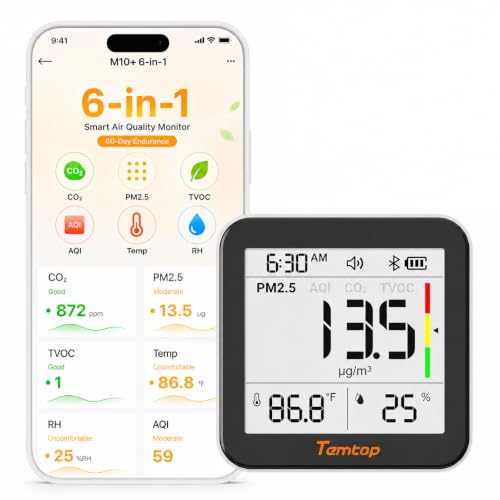
If neither brand fits, start from the wider field. Our guide to the best air quality monitor compares monitors by sensor set, power source, and app features, which helps if you need a mix these two brands do not offer. One narrower path is a carbon dioxide only meter, covered in our aranet4 review, which suits you if stuffy rooms and ventilation timing are your only concern. A carbon dioxide only unit costs less and runs for a long time on batteries, but it tells you nothing about chemicals, dust, or radon, so it answers a smaller question.
FAQ
Is Airthings better than Awair?
Neither brand is better for every home. Write down your top concern before you shop. If radon leads the list, Airthings is the only one of the two that measures it, so the contest ends there. If daily dust and a child friendly summary lead the list, Awair fits better. A useful tie breaker is a trial mindset. Pick the unit that measures your top concern well, live with its readings for a few weeks, and judge it on whether the data changed a habit, such as airing rooms or using a cooker hood.
What is the main difference between Airthings and Awair?
The main difference is what each brand puts at the center of the screen. Airthings leads with individual readings, and its app home view lists each factor on its own, so you scan gas, humidity, and radon values separately. Awair leads with one combined score and colors it to show status at a glance, and you tap through to see the parts behind it. Alert styles follow the same split. Airthings alerts tend to name the factor that crossed its limit, while Awair alerts often start from the score dropping.
Which is easier to clean, Airthings or Awair?
Both are simple to clean, and neither uses a filter you must wash or swap. Wipe the casing with a dry or slightly damp cloth, and keep dust out of the sensor openings with a soft brush or a gentle vacuum from a distance. Never spray cleaner directly onto a unit, since liquid near a sensor opening can damage it and distort readings for days. Awair units with fan driven dust sensing benefit from a quick dusting more often, because dust settling around the intake can add noise to particle counts.
Which lasts longer, Airthings or Awair?
Expect several years of service from either brand, with no consumable parts in normal home use. Battery powered Airthings units need fresh batteries now and then, which is the only routine cost most owners meet. Mains powered units avoid that task, though fan driven particle sensors can wear and grow less accurate with age. Chemical sensors in both brands slowly lose sensitivity over the years, so treat an aging unit as a trend guide and compare its readings against a newer meter if a decision worth real money depends on the numbers.
Final Thoughts
The honest answer to airthings vs awair is that your home picks the winner. A house with a basement and radon risk points to Airthings, while a dust prone apartment where everyone wants one simple score points to Awair. Before you order, check the sensor list of the exact model, confirm its power source suits the room, and look back at the product table above to see how the two ranges line up. Then give your chosen monitor a few weeks in place, because steady trends tell you far more about your air than any single reading.