Best Air Quality Monitor for Wildfire Smoke in 2026: Buying Guide
Disclosure: We may earn a commission when you buy through links on this page, at no extra cost to you. As an Amazon Associate I earn from qualifying purchases. Learn more

The best air quality monitor for wildfire smoke tracks PM2.5 and alerts you when smoke rises. Compare sensors and alerts.
Wildfire smoke can turn a clear morning hazy with almost no warning, and the part that matters most for your lungs is invisible. The best air quality monitor for wildfire smoke tracks PM2.5, the tiny particles that dominate smoke, and turns readings into clear decisions about windows, purifiers, and time outdoors. This guide covers monitor types, accuracy, and alerts so you can act quickly when conditions change.
Start with the product table, which lists current options. For broader background, our guide to the best air quality monitor covers general indoor monitoring, while this article stays focused on smoke events and fast particle spikes.


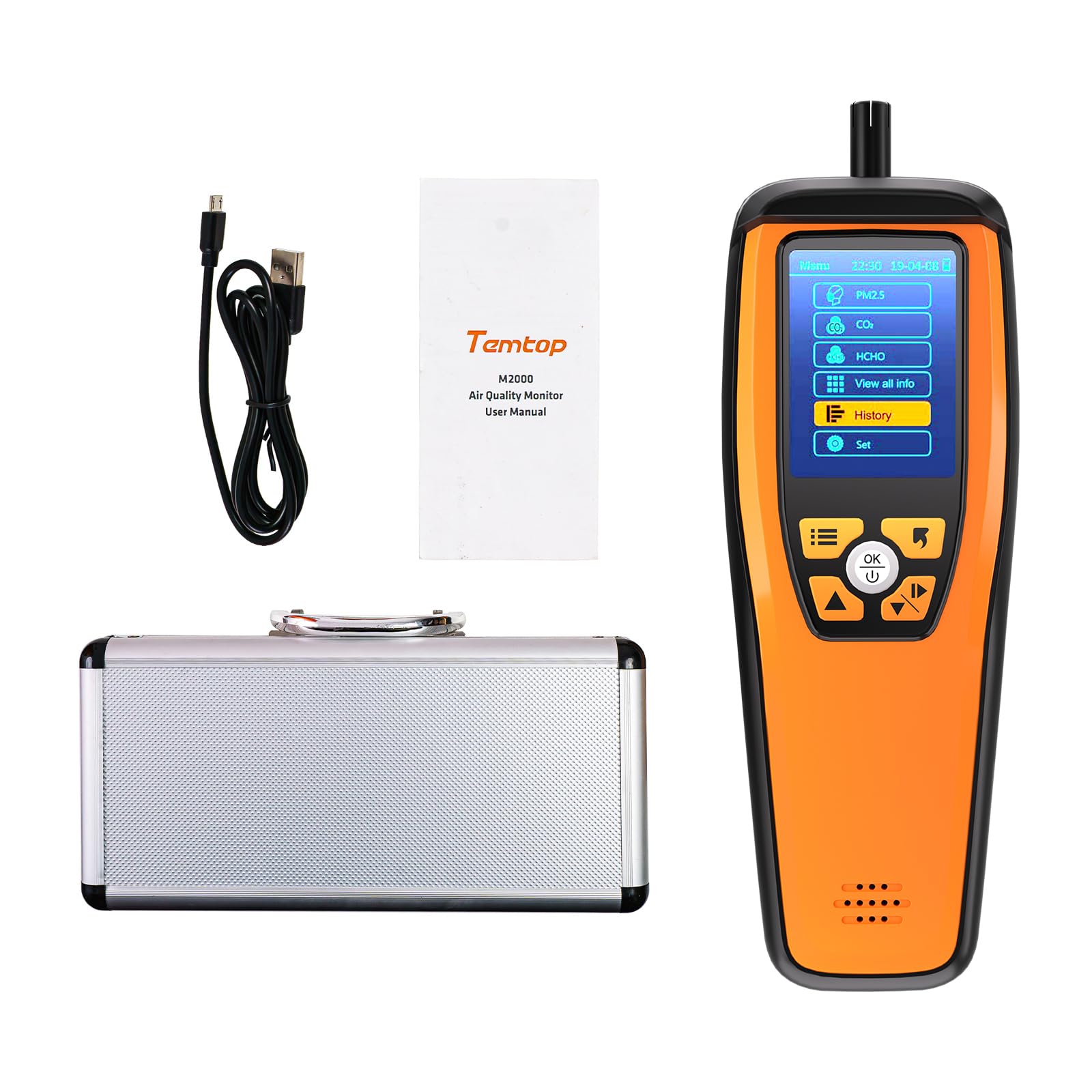
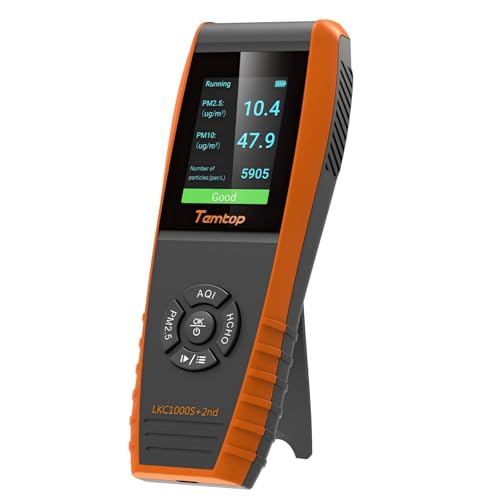
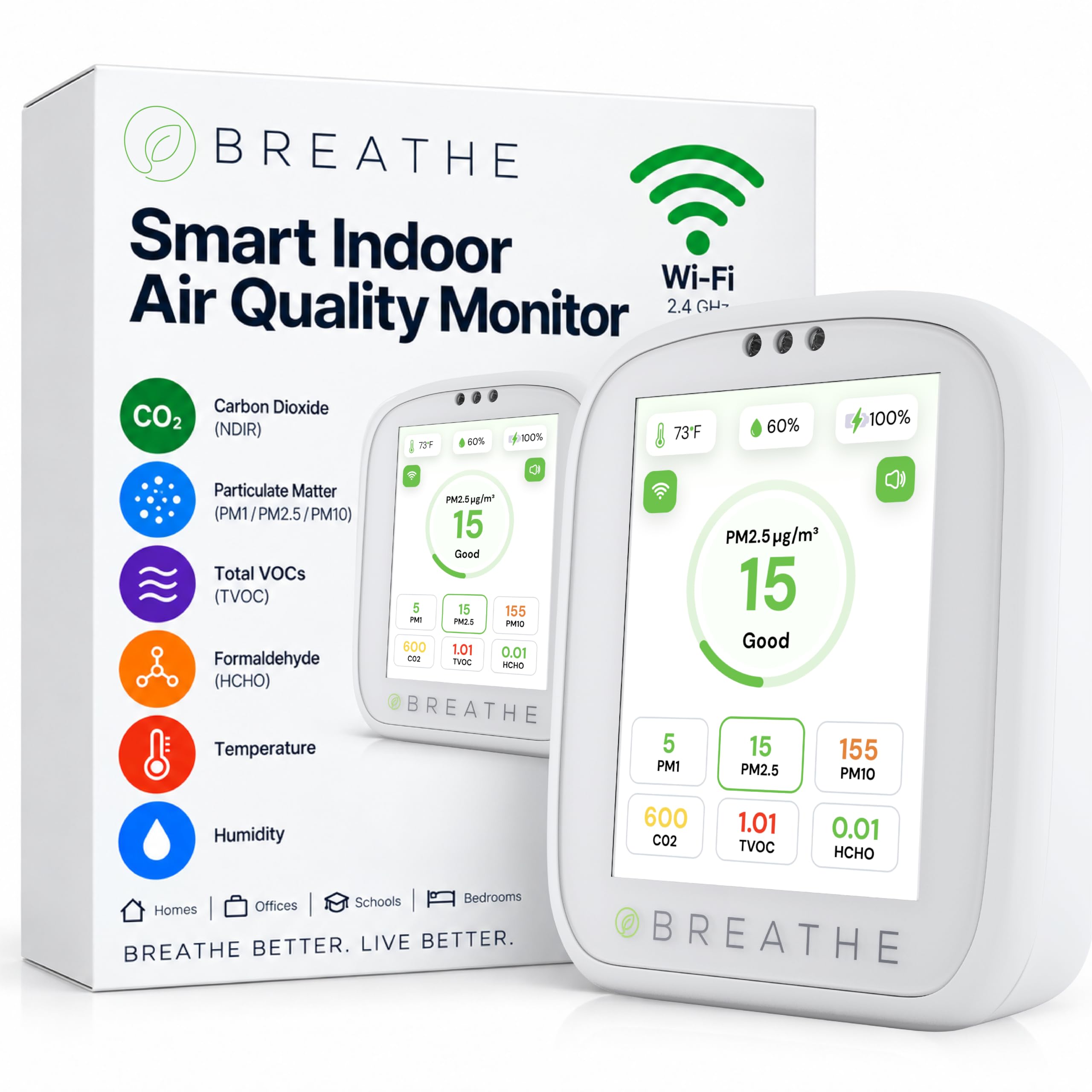
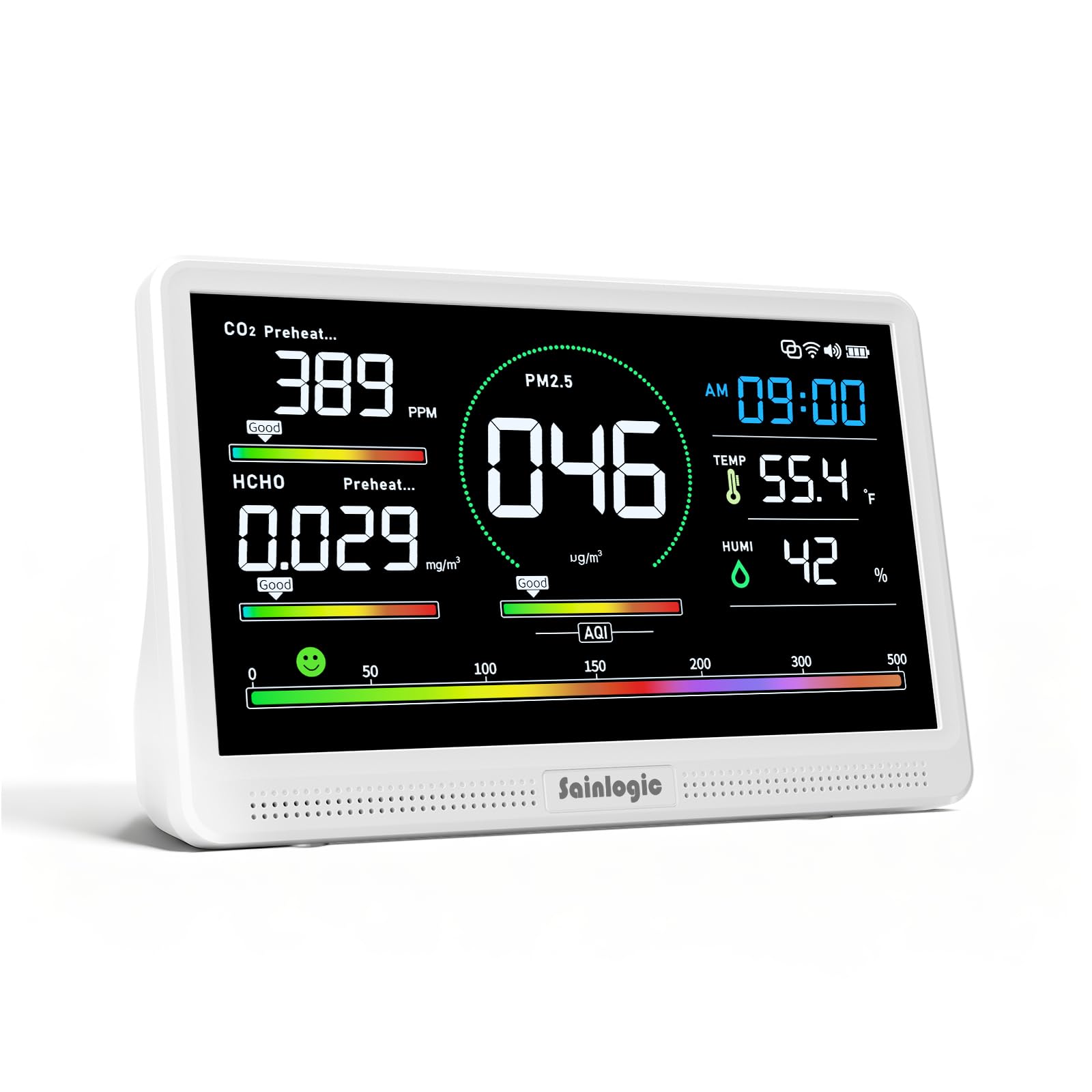
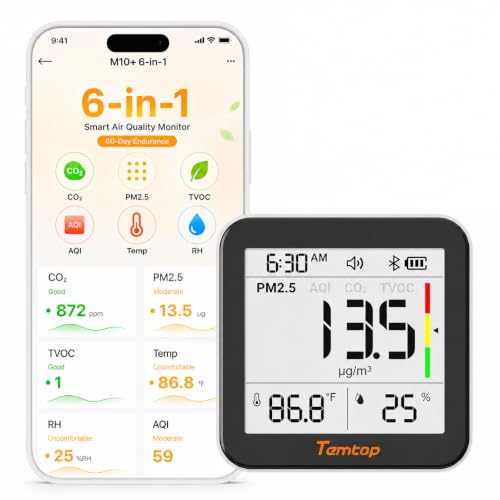
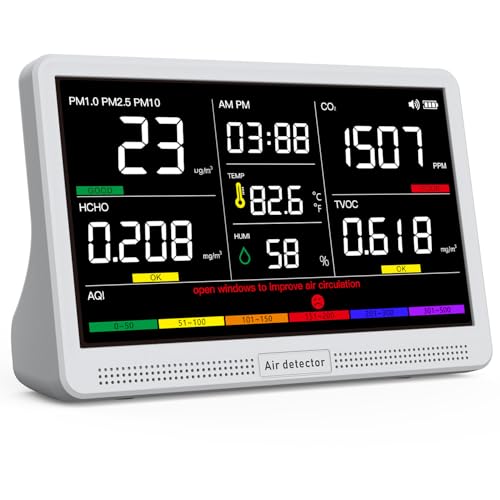
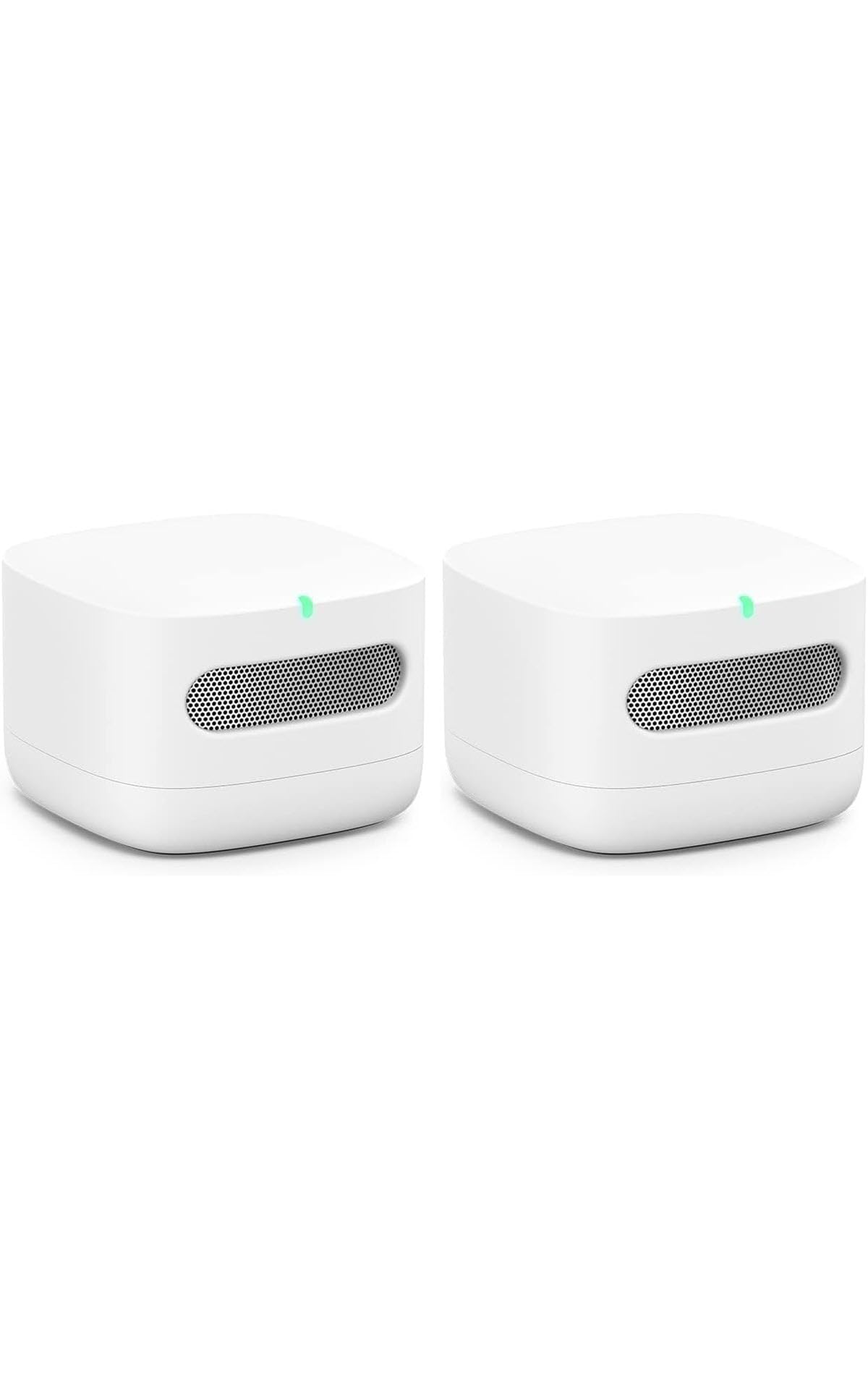

Monitor Types Compared for Wildfire Smoke
Types are more useful than individual names here, since needs vary by home and exposure. The three types below cover nearly every smoke situation, from a single bedroom to a house facing weeks of drifting smoke each year.
Dedicated Particle Monitors
A dedicated particle monitor does one job simply. It measures PM2.5, often PM10 as well, and shows the result as a number, a color, or an air quality index value. These models suit readers who want a fast glance check before opening windows or starting a purifier. The limit is scope. You get no carbon dioxide or chemical readings and often no history graph.
Smart Multi Pollutant Monitors
A smart multi pollutant monitor pairs a particle sensor with added sensors for gases, humidity, and temperature, then sends readings to an app with graphs and alerts. This type fits homes facing repeated smoke episodes that want a record of how indoor air changed hour by hour. App alerts matter, since smoke can rise while you sleep. You pay more, but you gain context that shows whether sealing and filtering are working.
Portable Monitors for Moving Between Rooms and Places
A portable monitor runs on a battery and moves with you. That helps renters and travelers check the room where they spend the most time rather than a fixed spot. If portability is your main need, see our guide to the best portable air quality monitor for travel focused advice. Portable models trade screen size and battery life for mobility.
How to Evaluate Monitors for Smoke Use
Judge every model on five points. First, reliability and accuracy of the particle sensor, since that reading drives every decision. Second, compatibility with your phone and smart home system, including Alexa, Google, HomeKit, and Matter where offered. Third, installation. Fourth, subscription costs and whether history stays available without paying. Fifth, privacy and security.
Who Should Buy a Monitor for Wildfire Smoke?
Homes Near Fire Prone Land
If smoke arrives most summers where you live, a monitor becomes part of your seasonal routine. You need a display everyone in the house can read, alerts that reach your phone away from home, and a sensor you can trust across a whole season. A smart model with history graphs suits this group best.
Families Managing Asthma or Other Breathing Conditions
For households where someone has asthma, chronic lung disease, or heart disease, particle readings guide daily choices with real health weight. A monitor in the bedroom and a clear alert threshold matter more than extra gas sensors. Talk with your clinician about which particle levels should change your plans. Seek medical care promptly for trouble breathing, chest pain or pressure, confusion, or lips that look blue or gray, and do not let a home reading delay that care.
Renters and Apartment Dwellers
Renters often cannot change windows, vents, or building systems, so a monitor shows what you can control, such as running a purifier or choosing the cleanest room for sleep. A compact or portable model makes sense here. If damp rooms worry you in other seasons, our guide to the best air quality monitor for mold explains the humidity side of that choice.
How to Choose the Right Air Quality Monitor for Wildfire Smoke
Type
Start by naming the pollutant you need to track. For smoke, that is PM2.5, particles 2.5 micrometers across or smaller that can reach deep into the lungs. PM10 adds larger dust and ash. Carbon dioxide readings tell you about ventilation and stuffiness, not smoke. Chemical sensors can react to smoke gases, yet their readings are broad and harder to act on. Radon has no link to smoke at all. A good smoke monitor leads with particles and treats the rest as support.
Ecosystem Compatibility
Compatibility decides how a monitor fits the tools you already use. An app only model works fine if you are happy checking your phone. Voice and smart home links through Alexa, Google, HomeKit, or Matter add hands free checks and simple routines. Check that the listing names your system directly rather than promising broad smart support.
Wired vs Battery Power
Power choice shapes placement more than most buyers expect. A wired monitor can run its fan and sensor continuously. A battery model frees you from outlets and travels well, but the sensor may sample less often to save power, and a dead battery during a smoke event leaves you blind. For primary smoke protection, steady plugged in power is usually the safer default.
Subscriptions and Local Storage
Ask what the price includes after the box arrives. Some monitors show live readings free forever but charge for long history, detailed reports, or extra app features. Others store data on the device or in the app with no ongoing cost. Check how much history stays free, whether you can export your data, and what happens to past readings if you cancel a plan.
Privacy and Security
A connected monitor reports on your home around the clock, so read the privacy terms before you buy. Look for clear statements about what data leaves your home, whether readings stay local or go to a company cloud, and whether data is sold or shared for advertising. If a brand cannot explain its data practices in plain language, treat that as a reason to choose a different model.
How Much Should You Spend?
Budget shapes sensor quality and features in predictable steps. Models under $50 usually give a rough particle estimate with a small display and little app support, fine for a quick glance but risky as your only guide. Spending about $100 to $200 typically buys a more trustworthy particle sensor, an app with alerts, and useful history. Our guide to the best air quality monitor for home can help you weigh whole home options at each level.
What Matters Most in an Air Quality Monitor for Wildfire Smoke
Smoke changes the job of a monitor in three ways. Speed matters, because outdoor conditions can shift within an hour as wind moves a plume, and a sensor that updates every few seconds or minutes lets you react while a slow average still looks calm. Range matters too, so check that the model reports clearly at the high particle levels smoke produces rather than topping out early. Thresholds matter as well. A display that converts particle counts into the air quality index gives you a shared language with weather reports and public health advice.
Placement completes the picture. Put the monitor in the room where you sleep or spend the most time, at about breathing height, away from purifier output, a cooking stove, or an open window, since each of those spots skews the reading. Give it a day of normal use first to learn your baseline, which makes a later spike obvious.
Common Mistakes to Avoid
- Buying a carbon dioxide only monitor for smoke, which leaves you with no particle reading when smoke arrives.
- Placing the monitor next to a purifier output, which makes the whole room look cleaner than it is.
- Trusting a single calm reading during a smoke event, when levels can climb again within the hour.
- Ignoring alert setup, so the app records a bad night of air that nobody noticed until morning.
- Choosing by added sensors alone, when particle accuracy and range matter more for smoke decisions.
- Forgetting to check subscription terms, then losing access to history you expected to keep free.
Care and Cleaning for Smoke Season Use
Particle sensors draw air through a small inlet, and ash and dust from smoke season can coat that path over time. Keep the inlet clear by wiping the case with a dry or slightly damp cloth and clearing vents with a soft brush or gentle canned air, following the maker guidance for your model. Never spray cleaner into the inlet. If readings look stuck or oddly flat, clean the inlet first, then check maker support pages for recalibration guidance.
FAQ
What is the best air quality monitor for wildfire smoke?
The best choice is the monitor whose particle sensor, alerts, and power setup fit your home, rather than a single model for everyone. Start with the best air quality monitor for wildfire smoke criteria in this guide, namely accurate PM2.5 readings, a clear display or app alert, and steady power in the room you use most.
What should I look for in an air quality monitor for wildfire smoke?
Look first for a particle sensor with a stated range that covers heavy smoke levels and a display or app that shows the air quality index alongside raw PM2.5 numbers. One point buyers miss is the alert threshold setting. The ability to set your own alert level, instead of accepting a fixed one, lets a household with asthma react earlier than a household tracking general comfort.
How long does an air quality monitor last?
Most monitors last several years, but the particle sensor is the part that ages. Laser based sensors can drift as dust builds up inside, and makers often rate sensor life in years of typical use rather than promising a fixed date. Keeping the inlet clean slows that drift and extends useful life.
Is an air quality monitor worth it for wildfire smoke?
Yes, if smoke reaches your area even once or twice a year, because the monitor turns guesswork into specific actions. Without one, people often run purifiers on low or open windows on a hazy morning that looks mild but carries high particle levels. With a reading in hand, you can time ventilation for the cleanest hour of the day, which outdoor forecasts alone cannot pinpoint for your street.
How do you clean an air quality monitor?
Clean the outside and the sensor inlet only, and keep liquids away from the openings. Clean the inlet at the start of fire season and again after any heavy smoke week, since ash load builds fastest then. If your model has a removable cover over the inlet, take it off for cleaning and refit it fully before use, because a loose cover can distort readings.
What is the most reliable air quality monitor brand?
Reliability comes from sensor quality and honest support more than from a name, so judge brands by evidence you can check. Look for published accuracy information, a clear warranty, app updates that continue after launch, and support pages that explain cleaning and recalibration. Brands that hide sensor details or never update their apps are poor bets for a device you may rely on for years.
Final Thoughts
Smoke season rewards preparation, and a monitor you trust makes every other step, from sealing windows to running a purifier, easier to judge. Use the product table above to compare types again before you order, and choose the best air quality monitor for wildfire smoke setup that fits your home, your health needs, and your budget.