Above Ground Pool Buying Guide: How to Choose the Right One in 2026
Disclosure: We may earn a commission when you buy through links on this page, at no extra cost to you. As an Amazon Associate I earn from qualifying purchases. Learn more
Our above ground pool buying guide explains types, sizes, materials, features and prices so you can choose with confidence.
Buying an above ground pool sounds simple until you face the real choices: frame or rigid wall, round or oval, cartridge or sand filtration. This above ground pool buying guide walks you through each decision in the order you will make it, from measuring your yard to planning winter storage. Use the comparison table below to see how the main types stack up before you read the details.
The right pool depends on three things: the space you can give it, the swimmers who will use it, and the upkeep you are willing to do each week. A pool that fits all three gets used for years, so decide each point before you look at prices.




Quick Checklist
- Measure the flat area you can spare, plus room to walk around the pool.
- Check local rules on fences, barriers, and property line distances.
- Pick a type that matches how long the pool will stay up.
- Choose a size your swimmers can enjoy without crowding the yard.
- Plan filtration first, since clear water depends on it most.
- Budget for the ladder, cover, and test supplies too.
Types Explained
Six designs cover nearly every yard and budget. The key split is whether the pool comes down each fall or stays up all year.
Metal Frame
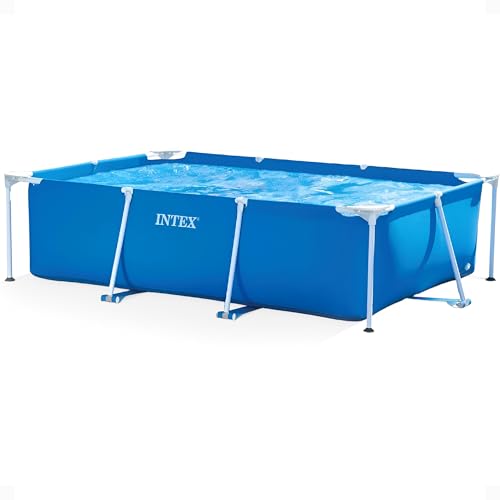
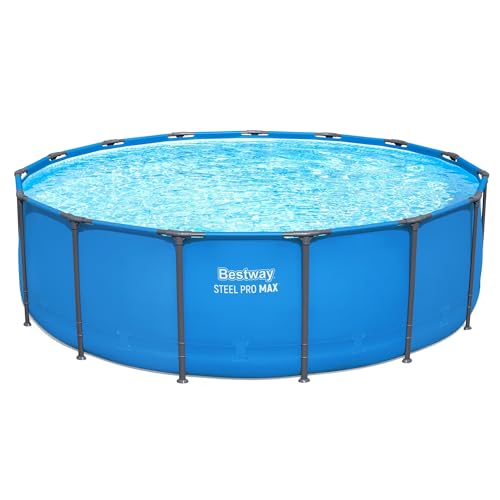
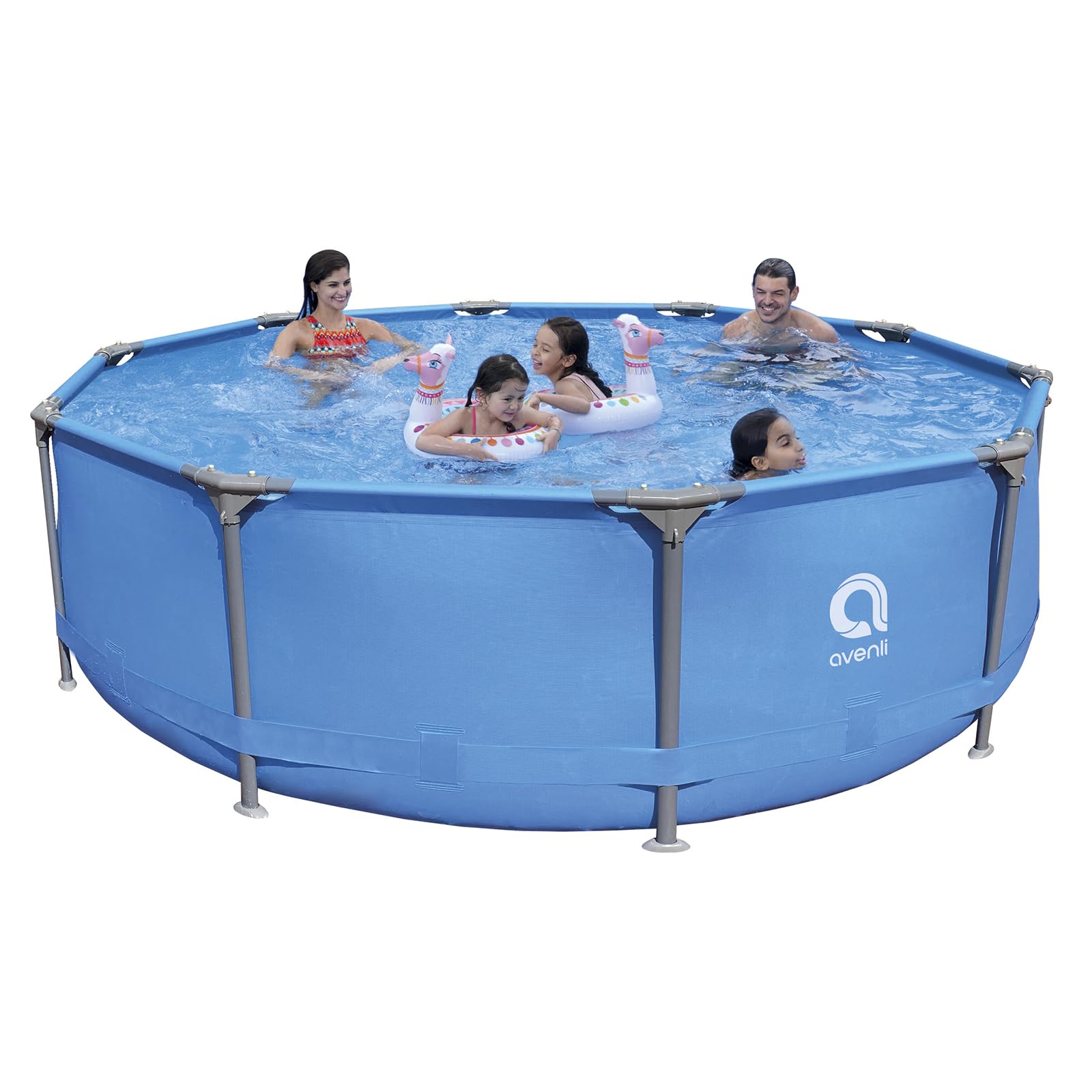
A metal frame pool holds its liner up with a skeleton of coated steel tubes that click or pin together, with no rigid wall. Most are round, about 10 to 24 feet across. You assemble one in an afternoon, drain it in the fall, and store the liner indoors. Choose this type for a real swimming pool at a modest price if you accept taking it down each year.
Inflatable
An inflatable ring pool is the smallest and shallowest option, suited to toddlers splashing under close watch. Filtration is minimal or absent, so the water needs changing often. Treat an inflatable as a seasonal toy rather than a swimming pool, and never leave children in one unattended.
Steel
A steel pool has a rigid wall rolled from one sheet of coated steel, joined at a seam and set into rails and uprights. It stays up all year and feels far more solid than a frame pool when swimmers push off the sides. Steel is strong and usually the lowest priced rigid option. Its weakness is rust, which starts where the coating gets scratched, so inspect the wall near the skimmer each spring.
Resin
A resin pool replaces some or all metal parts with molded plastic components, including top rails, uprights, and sometimes the wall itself. Resin cannot rust, stays cooler to the touch in strong sun, and holds up well in coastal air. It costs more than a comparable steel pool. Choose resin near salt water, or if you dislike watching steel for corrosion.
Hard Sided
Hard sided is the umbrella term for rigid wall pools, both steel and resin, built once and left standing through winter. The fixed structure needs a carefully leveled pad and a full weekend of assembly. In return you get the deepest water, the longest service life, and a pool that feels permanent. Study this category if you plan to swim in the same spot for a decade.
Semi Inground
A semi inground pool has a reinforced wall built to be buried partway into the ground, usually on a slope where a full pool would look awkward. Burying the wall partway softens the height and lets you add decking at a comfortable level. The trade off is cost and work: excavation, drainage planning, and often a contractor.
Choosing the Right Size
Diameter decides how the pool feels more than any other number. A 12 foot pool suits one or two adults cooling off or small children playing within reach, and it fits compact yards. Pools of 15 to 18 feet are the popular middle ground for families, giving children room to swim short laps. A 24 foot pool swims like a small lake by backyard standards, but it needs a large level area and far more water, chemicals, and cleaning time.
Shape matters when the yard is narrow. Round pools give the most water for the money and the simplest frame. Oval pools stretch the swim lane and tuck against a fence, though they need side supports that widen the footprint. Wall height runs about 48 to 54 inches on larger pools, and the water sits a few inches below the rim, so check that shorter swimmers can stand with their heads above the surface.
Features Worth Paying For
Pump and Filter
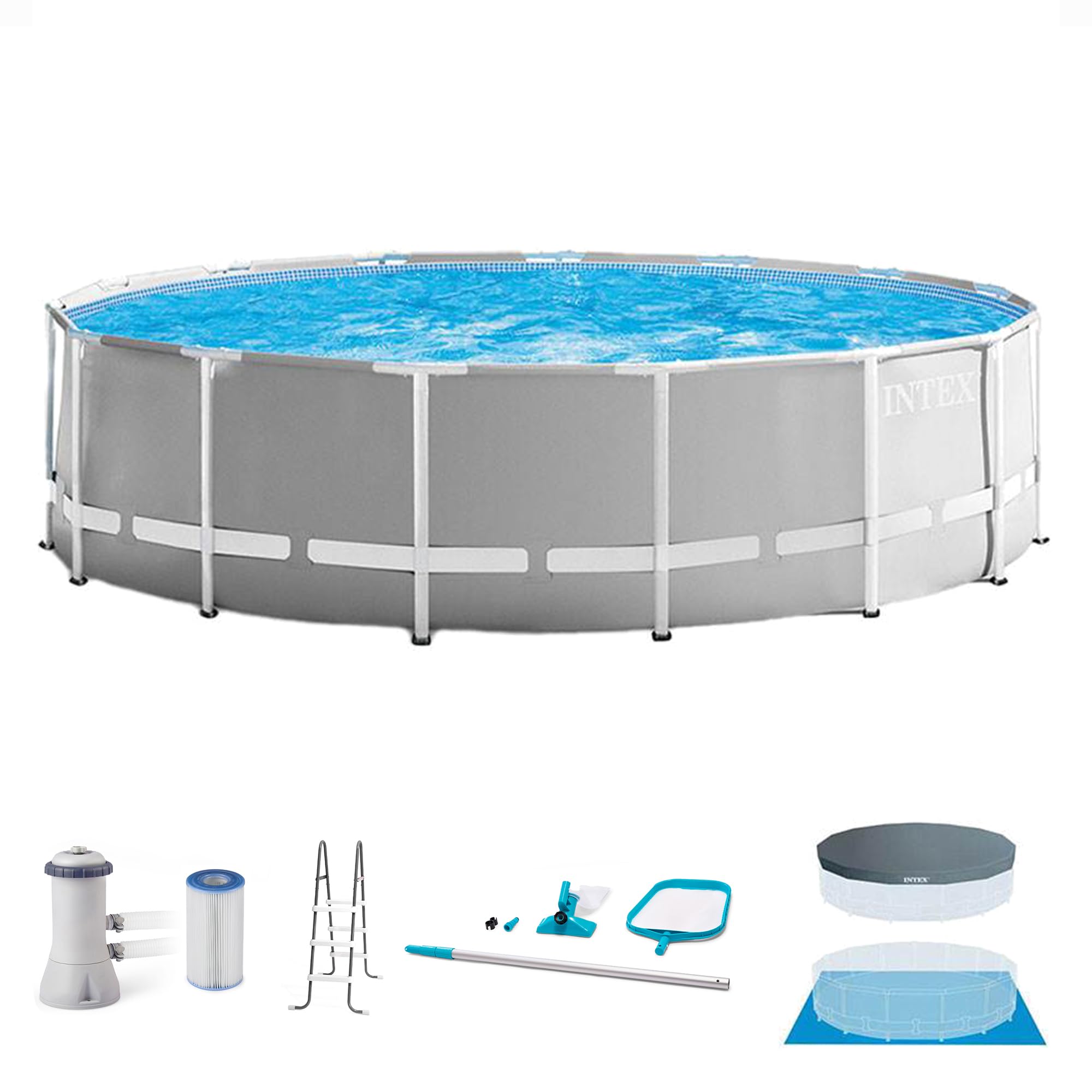
Circulation keeps water clear, so size the pump to turn over the full volume of the pool at least once a day, and twice in hot spells. Small pools ship with cartridge units that work if you rinse the cartridge weekly. Avoid an undersized pump paired with a big pool, a common cost cut that shows up as cloudy water by midsummer no matter how much chlorine you add.
Ladder
Entry and exit deserve real attention, because a wobbly ladder is where most backyard pool injuries start. A frame ladders straddle pools without decks, while deck ladders bolt to a platform. Look for wide treads, a weight rating above your heaviest swimmer, and a design that swings up or locks so small children cannot climb in alone.
Cover
A solar cover floats on the water, warms the top layer in the sun, and slows evaporation and chemical loss overnight. A winter cover is heavier, anchors at the edges, and keeps leaves and debris out during the off season. Remember that no standard cover is a safety device: a child can slip under a loose cover, so supervision and a locked ladder still do the real safety work.
Sand Filter
A sand filter pushes water through a bed of graded sand that traps dirt down to fine particles, and you clean it by reversing the flow in a backwash cycle that takes a few minutes. The sand itself lasts about five years before it rounds off and channels. Sand suits owners who want filtration they can mostly forget between backwashes. It uses more water during cleaning than a cartridge setup, which matters if your yard drains poorly.
Weather Resistant Materials
Sun and moisture decide how long a pool stays sound. Ultraviolet light slowly weakens liner vinyl, so a thicker liner with UV protection earns its price in sunny yards. Steel parts need intact coatings; touch up chips near the ground line, where splash water and soil meet. In cold regions, choose a wall and liner rated to stay up through freezing weather if you plan to winterize in place.
Size for Your Space
Start with the true footprint, not the water diameter. Add about 3 feet of clear working room on every side for assembly, cleaning, and the pump, then measure again. The ground must be level within about an inch across the whole footprint, because water weight finds any slope and strains one side of the wall. Put the pump on a ground fault protected outlet, and plan where the water will drain at the end of the season.
Assembly and Anchoring
Good assembly is mostly ground work. Clear every stone and root, level the soil rather than filling low spots with loose dirt that will settle, and lay a sand or foam base inside the footprint. Rigid walls need two or three adults to unroll and seat in the bottom rail without kinking the sheet. A filled pool anchors itself by weight, but an empty one can lift in wind, so never leave one drained and uncovered in storm season. For the full sequence, see our guide on how to assemble an above ground pool before your build weekend.
Care and Off Season Storage
Weekly care is simple and short: skim the surface, brush the walls, vacuum the floor, and test the chlorine and pH so the water stays balanced. Keep the filter running daily, since still water turns green faster than any chemical lapse. When the season ends, frame and inflatable pools come down, dry fully, and store indoors where rodents cannot reach the folded liner. Rigid wall pools stay up with the water lowered and the plumbing drained, and our guide to how to winterize an above ground pool covers that sequence in detail. Care habits set the lifespan ceiling, and our breakdown of how long does an above ground pool last shows what wears out first.
How Much to Spend
Prices spread widely by type. Inflatable pools cost under about $100. Frame pools run about $200 to $800 depending on diameter. Rigid wall pools run about $800 to $3,000 for the kit, with professional installation adding more, and semi inground projects reach several thousand dollars once digging and decking are included. Keep a reserve beyond the sticker: chemicals, test supplies, and electricity for the pump add a steady yearly cost. Spending more mainly buys a sturdier wall, better filtration, and a longer warranty.
What to Check Before You Trust a Brand
Brand lists age fast, so judge makers by support instead of fame. Look for a warranty that names the frame, wall, and liner separately, with a clear number of years for each. Check that replacement liners, pump parts, and connectors are sold as standard spares, because a pool you cannot reline has a fixed expiration date. Prefer standard fitting sizes over proprietary ones, so hoses and filters from other makers fit later.
From Guide to Shortlist
Narrow your choices in a fixed order: confirm the space, pick the type that matches your winters, settle the size, then choose filtration strong enough for that volume. Only then compare prices, since a cheap pool with a weak pump costs more to run clear. When you are ready to compare actual models, our best above ground pool roundup gathers the current options worth your shortlist.
FAQs
How to winterize an above ground pool?
Start by balancing the water and cleaning the pool fully, then lower the level to below the skimmer opening. Add a winterizing chemical kit, place an air pillow in the center so ice expands against it instead of the wall, and fit the winter cover tightly. Drain and store the pump and hoses indoors.
How to assemble an above ground pool?
Plan on two or three adults and most of a day for a rigid wall pool, or an afternoon for a frame pool. The order never changes: level the ground, lay the base, build the frame or wall, seat the liner without wrinkles, then fill slowly while smoothing the floor. Stop at a few inches of water to check for leaks and level before you commit to a full fill.
How long does an above ground pool last?
A frame pool typically gives about 5 to 10 seasons before the liner and joints tire, while a rigid wall pool can serve 10 to 20 years with a liner change partway through. Inflatable pools often last only a few seasons. Sun exposure, winter storage, and balanced water move any given pool toward the top or bottom of its range more than the original price does.
How to clean an above ground pool?
Work from the surface down: skim leaves, brush the walls toward the floor, then vacuum the settled dirt. Shock the water after heavy use or a storm, and clean the filter whenever the return flow weakens. A pool cleaned a little each week rarely needs the full drain and scrub that neglected green water demands.
Do you need a permit for an above ground pool?
Many towns require a permit or a barrier fence for pools above a set depth, often around 24 inches of water, and rules on setbacks and electrical work vary widely. Semi inground and rigid wall pools are the most likely to be treated as permanent structures. Call your local building office before you buy, since a permit question answered early is cheap, while moving an installed pool is not.
Final Thoughts
Choosing well comes down to matching the pool to your yard, your swimmers, and the upkeep you will honestly do. The product table above shows how the types compare at a glance. Measure carefully, buy filtration a size up rather than a size down, and plan winter storage before the first swim. Follow this above ground pool buying guide in order and your pool will earn its place in the yard for many summers.