Best Solar Ground Lights: A Complete Buying Guide
Disclosure: We may earn a commission when you buy through links on this page, at no extra cost to you. As an Amazon Associate I earn from qualifying purchases. Learn more

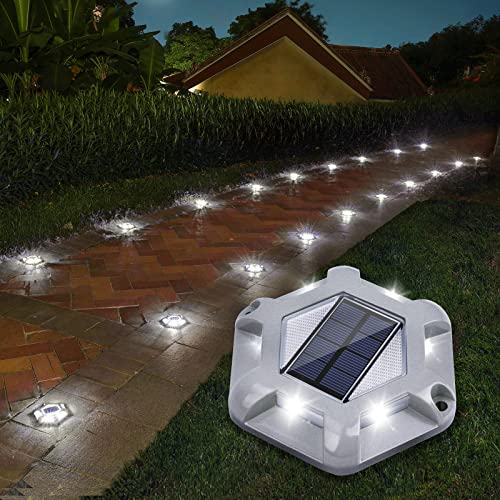
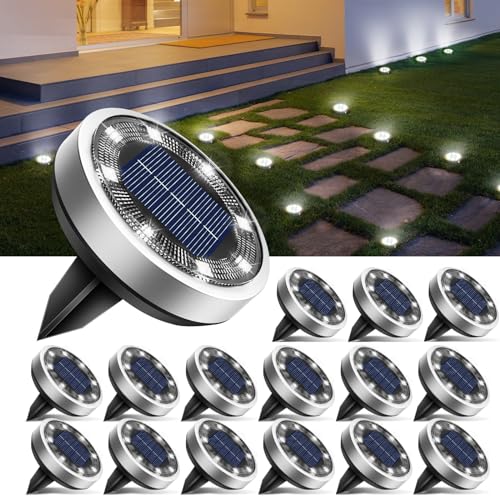
A flat stone path, a mulch ring around a tree, the seam where a patio meets the lawn: these spots don't need a light standing up out of the ground. They need one that disappears into the surface and still throws a usable glow after dark. That's the whole point of a flush-mount ground disc.
Solar ground lights get lumped in with generic solar stake lights all the time, but the two solve different problems. A stake light pokes up a few inches and casts a pool of light straight down a walkway. A ground light sits at or below grade, angled to wash light sideways or upward across grass, gravel, or stone. Picking the right one starts with understanding where a disc actually belongs and where it doesn't.
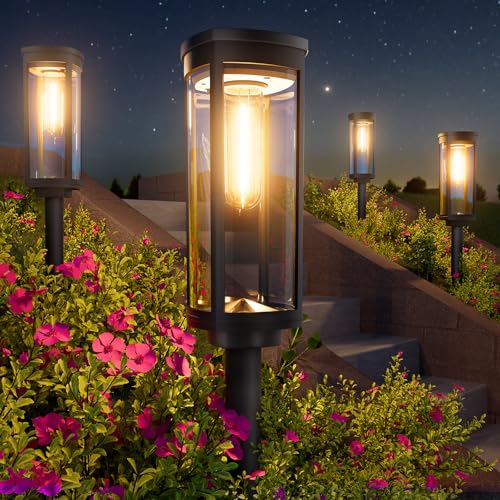
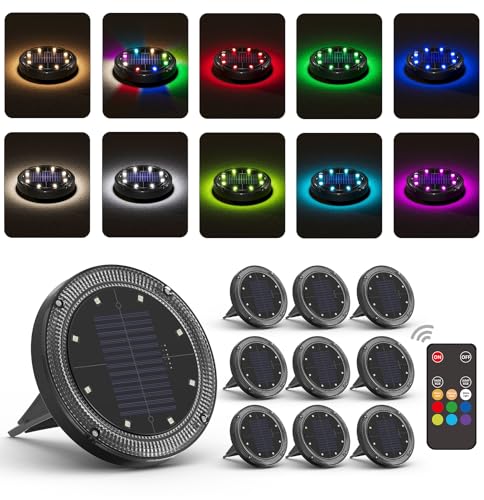
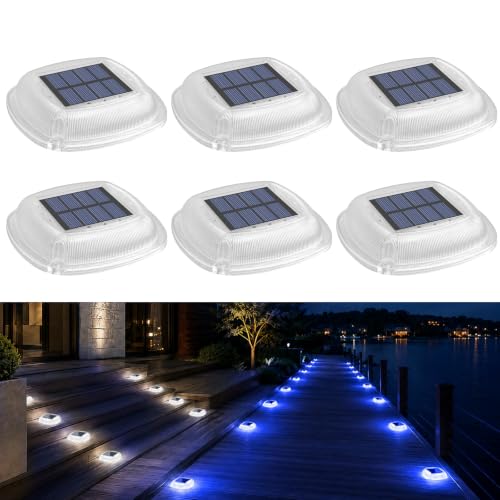
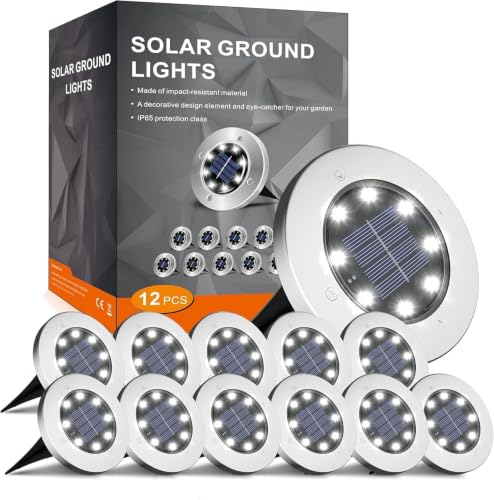
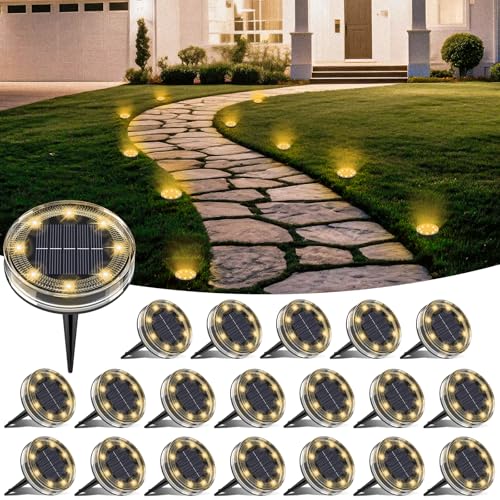


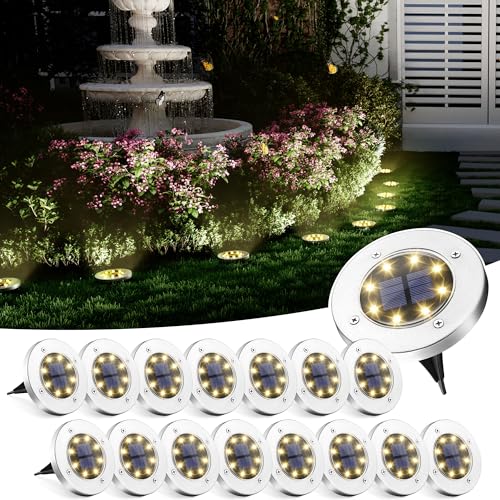
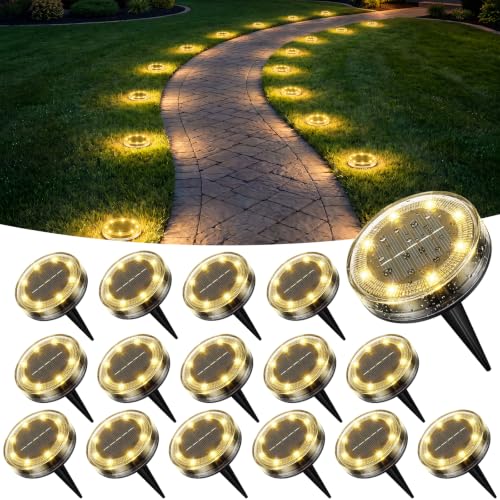
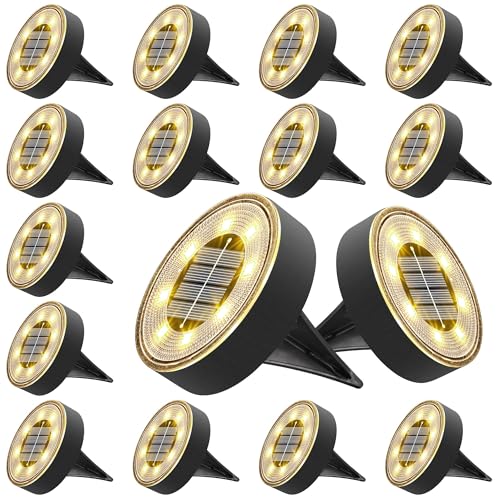
What Flush-Mount Ground Lights Are Actually Good For
Ground discs earn their keep at transitions and edges rather than along a full route. A ring of mulch around a tree trunk, the border between a flowerbed and lawn, the seam where a paver patio meets grass, a low retaining wall base: these are places where a visible fixture would look out of place, but a flush glow reads as intentional.
They also handle uplighting duty for smaller features that don't need a fully adjustable fixture. A single shrub, a birdbath, a low garden statue, or a mailbox post can all get a soft upward wash from a disc set a foot or two away at the base. For taller trees or architectural features where the beam needs to be aimed and refocused as the plant grows, a solar landscape spotlight gives more control than a fixed disc will.
Ground lights are one piece of a much bigger category of solar outdoor lighting, and most yards end up mixing two or three fixture styles rather than relying on ground discs alone.
Keeping Grass, Mulch, and Soil From Swallowing the Light
This is the complaint that shows up most once a disc has been in the ground a season: it looked great on install day and now half the beam is gone. Grass grows up around the rim, mulch settles over the edge, or soil washes onto the lens after a hard rain, and the light output drops without the fixture actually failing.
The fix is mostly maintenance rather than a different product. Keep a small buffer of bare soil, gravel, or a hard edging ring around each disc so grass can't creep across the lens. Check discs set in mulch beds after storms, since mulch shifts and can bury a low-profile fixture completely within a few weeks.
The solar panel matters even more than the lens here. A disc can be perfectly clean on top and still dim at night if the panel itself sits in a spot that gets shaded by a growing perennial or an overhanging branch for part of the day. Reposition or trim back anything that starts casting shade on the panel rather than assuming the light itself has worn out.
Matching the Mount to the Surface
Ground lights come with three basic mounting styles, and picking the wrong one for the surface is where a lot of installs go sideways. Spiked bases push into soil or turf and work fine for beds, borders, and lawn edges. Socket-mount versions drop into a pre-cut hole in a paver or deck board and sit flush with the surrounding surface, which looks cleaner but requires cutting the socket during patio or deck construction rather than after the fact.
Surface-mount discs screw or adhere directly onto concrete, stone, or existing pavers without any cutting, which is the option for retrofitting lights onto a patio or steps that are already built. On genuinely hard or rocky soil, soaking the spot with water for a few minutes before pushing in a spiked base makes a real difference, since forcing a spike into dry, compacted dirt is what snaps the stake.
None of the standard mounting styles above are built for vehicle weight. If the goal is lining a driveway edge or parking pad where tires will actually roll over the fixture, look at dedicated solar driveway lights instead, which use reinforced housings rated for that load.
Why Water Finds Its Way Into Ground-Level Fixtures
Ground level is the wettest spot in the yard. Sprinkler heads spray directly across low fixtures, rain pools in slight depressions, and snowmelt sits against the housing for days at a time. An IP rating that would be fine on a wall-mounted light isn't necessarily enough down here.
Look for IP65 as a baseline and IP67 or IP68 if the spot tends to collect standing water after storms. Seams around the button or the panel edge are common failure points on cheaper units, since water can wick in through the gap over repeated wet-dry cycles even when the main housing is sealed well. A bead of clear silicone over a suspect seam is a reasonable fix once a light starts dimming or flickering after rain, though it's a workaround rather than a substitute for buying a properly sealed unit in the first place.
Brightness, Beam Spread, and Getting the Look Consistent
Ground discs are accent lighting, not security lighting. A cluster of discs along a bed edge might put out 10 to 40 lumens each, which reads as a soft glow rather than usable illumination for seeing where to step. For anywhere that needs real visibility at night, a motion-activated fixture covers that job far better than any low-profile disc.
Beam angle matters more than raw lumens for how a set of discs actually looks once it's dark. A narrow beam throws a tight column, useful for uplighting one specific object. A wider beam spreads softer light across a broader patch of ground, better suited to marking an edge or border. Mixing warm white (roughly 2700 to 3000K) and cool white (5000K and up) fixtures in the same bed is the fastest way to make an otherwise nice setup look mismatched once the sun goes down, so stick to one color temperature per zone.
Housing and Lens Materials Worth the Extra Cost
Ground lights take more physical abuse than almost any other solar fixture in the yard. They get stepped on, mowed near, hit by trimmer string, and left sitting in wet mulch for months. Thin plastic housings are the first thing to fail, cracking under a foot or fogging and yellowing from UV exposure within a season or two.
Stainless steel rims paired with tempered glass or thick polycarbonate lenses hold up noticeably better against all of the above. Solar panels themselves can discolor or haze over with age too, which quietly cuts charging efficiency even if nothing looks obviously broken. A quick wipe-down of both the lens and the panel every month or so during the growing season keeps output closer to what the fixture is actually capable of.
Ground Light Questions, Answered
Can solar ground lights be walked on?
Most garden-grade discs handle occasional foot traffic fine, but they're not designed for repeated heavy stepping or anything with wheels. Check the listed load tolerance if the spot sees regular traffic.
Do they still work once grass grows over the edges?
The housing can sit flush with grass without an issue, but the panel needs to stay uncovered. Trim back grass or mulch that starts creeping over the panel itself rather than just the rim of the fixture.
How far apart should ground lights be spaced along a bed?
A rough spacing of 3 to 6 feet works for most accent setups, though narrower beam angles need tighter spacing to avoid dark gaps between fixtures.
Why did a light that worked fine last year go dim this year?
Panel haze, a shaded panel from summer plant growth, or a battery nearing the end of its life are the three usual causes, roughly in order of how often each one turns out to be the culprit.
Do ground lights need to be removed for winter?
In regions with hard freezes, pulling spiked units before the ground freezes solid prevents frost heave from pushing them loose. Socket-mounted and surface-mount discs can typically stay in place year-round.
The right ground light depends less on brand and more on matching mount style, waterproofing, and housing material to the actual spot: a shaded flowerbed edge has different needs than a sunny paver seam or a mulch ring around a young tree. Get those three details right and a set of ground discs will still be doing quiet work at the edges of the yard long after the first season.