
Best Solar Landscape Spotlights: Complete Buying Guide
Disclosure: We may earn a commission when you buy through links on this page, at no extra cost to you. As an Amazon Associate I earn from qualifying purchases. Learn more
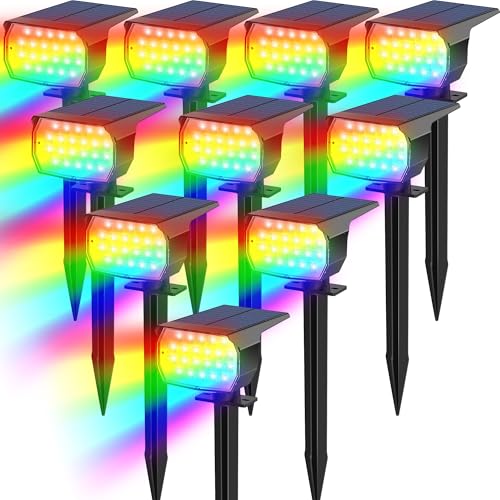
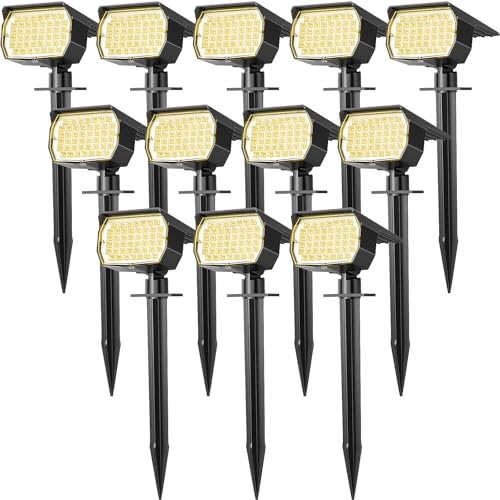
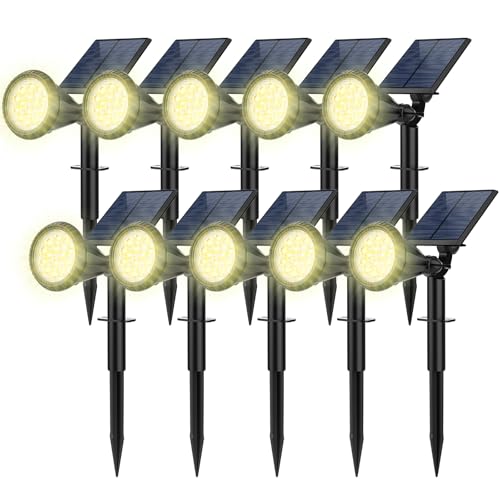
A solar spotlight has one job that other yard lights don't: throw a directed beam onto something specific, whether that's a maple tree, a stone chimney, or a flag that needs to stay visible after dark. That single-purpose design is also why so many buyers end up disappointed. The fixture looks capable in a product photo, but once it's staked in the ground, the beam is either too weak to reach the canopy or too wide to avoid spilling light across the whole bed. Getting a spotlight that actually does its job means understanding a few things the spec sheet rarely explains clearly: how uplighting techniques differ, why lumen ratings on the box rarely match reality, and why panel placement matters more than almost anyone expects going in.
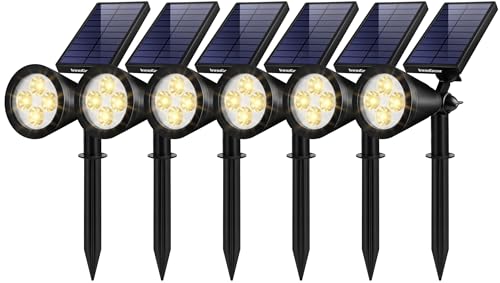
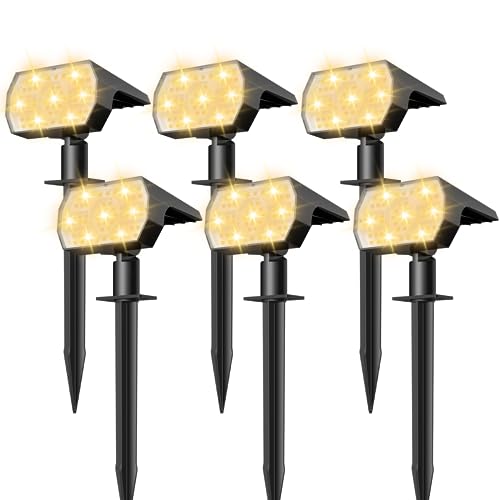
![Tadyreal Solar Spot Lights Outdoor 10 Pack, [46 LED/3 Modes] Solar Landscape](https://images-na.ssl-images-amazon.com/images/I/51OTo4FGzWL.jpg)



The Real Difference Between a Spotlight, a Path Light, and a Ground Light
Shoppers often land on a spotlight when what they actually need is something else, and the mismatch shows up fast once the fixtures are installed. Path lights and disc-style solar ground lights point down and outward, marking a route or edging a bed with a soft glow at ankle height. A spotlight does the opposite. It sits low and throws its beam up or across, which is what makes it the right tool for a tree trunk, a garden statue, or a section of wall, but the wrong tool for lighting a walkway someone needs to see underfoot.
That distinction matters because a lot of underwhelming spotlight reviews online come from people who bought the fixture for the wrong job. A spotlight aimed at soil instead of a vertical feature just lights up mulch. Before comparing lumen counts or beam angles, it helps to confirm the goal is genuinely directional, upward-facing accent lighting rather than general yard illumination.
Four Uplighting Techniques Worth Knowing Before You Buy
Professional landscape lighters rely on a handful of named techniques, and knowing them changes how you shop, because each one calls for a different beam width and fixture placement.
Spotlighting
This is the most literal use of the fixture: a single, fairly narrow beam trained directly on one object, like a specimen tree, a sculpture, or a flagpole. It creates a strong focal point and works best with a beam in the 10 to 45 degree range so the light stays concentrated rather than fading into the surrounding lawn.
Wall-Washing
Instead of a tight beam, wall-washing spreads light evenly across a broad vertical surface, like a stretch of siding or a stone facade, using a wider beam angle positioned close to the base. It reads as soft, ambient brightness rather than a single hot spot, which suits large flat surfaces better than a narrow spotlight ever could.
Silhouetting
Here the fixture sits behind a feature rather than in front of it, aimed at a blank wall or fence so the object in front, often an ornamental grass or a small tree with an interesting shape, appears as a dark outline against the lit background. It's a technique that depends more on placement than on any particular spec.
Shadowing
Shadowing places the light low and in front of a feature so its shadow gets cast large and soft onto a nearby wall or fence, an effect that reads best on plants with distinct branch structure. It's the reverse of silhouetting and tends to look most dramatic on textured surfaces that catch the shadow shape well.
Most of the best solar landscape spotlights on the market are built for straightforward spotlighting and wall-washing. Fixtures capable of silhouetting or shadowing usually need more precise aim and a slightly longer stake to sit far enough from the feature, so it's worth checking a product's adjustability range before assuming it can pull off every technique.
Why Lumen Numbers on the Box Rarely Match What You See Outside
Marketing copy tends to quote lumens generously, and real-world brightness often lands well below the printed number once a fixture has been outside for a season. Two things drive that gap. First, a lot of budget spotlights list combined output across multiple LEDs rather than usable beam brightness, so a fixture rated at several hundred lumens might only project a fraction of that onto the actual target. Second, solar output degrades with the battery, and a fixture that looked strong in week one can visibly dim within a year as the cell loses capacity.
A more reliable approach is to think in ranges rather than trusting a single number. Small ornamental trees, shrubs, and modest wall sections generally look right somewhere between 150 and 300 real lumens. Taller trees, wide facades, or flagpoles usually need 300 to 600, sometimes achieved by pairing two fixtures rather than relying on one. If a listing doesn't specify lumens at all, or only lists LED count, treat that as a fixture to skip rather than one to guess about.
Beam angle matters just as much as brightness, and the two specs work together rather than separately. A narrow 10 to 30 degree beam concentrates limited lumens into a tight column, which can make a modest fixture look brighter on a single trunk than a wider, higher-lumen model spread across the same area. Fixtures with an adjustable lens or a rotating collar that shifts between spot and flood give the most flexibility, since a single fixture can then handle a narrow tree trunk in one spot and a wider planting bed somewhere else in the yard. Anyone needing to wash a large area rather than pick out a single feature is usually better served by a dedicated solar flood light, which is built for broad coverage in a way a narrow-beam spotlight isn't.
Panel Placement Decides Whether the Light Works at All
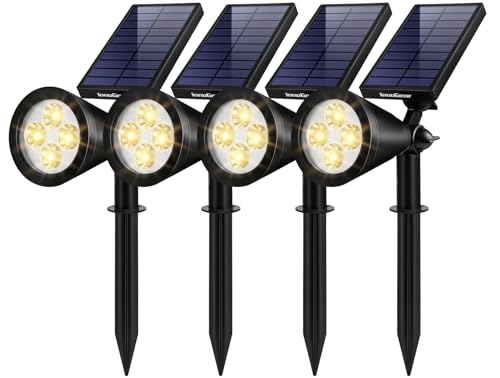
A spotlight is only as good as the charge it collects during the day, and this is where the built-in versus separate panel decision actually matters. Fixtures with the solar cell built into the light head force the panel to face whatever direction the beam is aimed, which is rarely the sunniest angle available. Point the light up into a tree canopy and the panel often ends up shaded by the same branches it's supposed to illuminate at night.
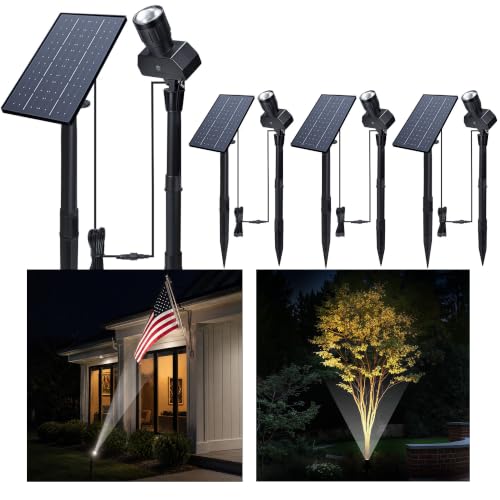
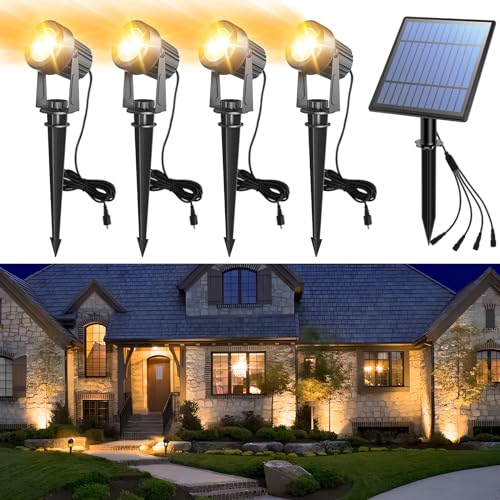
A detached panel on a cable solves that conflict directly. The panel can sit in an open, south-facing spot nearby while the light head stays aimed at the tree, wall, or flag it's meant to highlight. This setup costs a bit more effort to install, usually a longer cable run and a second stake or mounting bracket, but it consistently produces more reliable output through fall and winter, when the sun sits lower and shade patterns shift across a yard. Anyone lighting a feature under a mature tree canopy or close to a building's shadow line should treat a separate panel as close to mandatory rather than a nice extra. For anyone weighing a spotlight against a broader security fixture instead, a motion-activated security light solves a different problem and shouldn't be judged by the same accent-lighting standards.
Color Temperature Changes How the Feature Actually Reads at Night
Two spotlights with identical lumen output can look completely different once installed, and color temperature is usually why. Warm white, generally in the 2700K to 3000K range, renders stone, brick, and bark in tones close to how they look under porch light or firelight, and it's the temperature most landscape designers default to for trees, facades, and architectural accents because it reads as inviting rather than clinical.
Cooler temperatures, closer to 4000K and up, throw a bluer, crisper light that tends to make foliage look more vivid and stands out more sharply from a distance, which is part of why it shows up more often on security-oriented fixtures than on accent lighting. For most residential uplighting jobs, warm white is the safer default, and it's worth checking a spotlight's rated Kelvin temperature rather than assuming "white LED" means the same thing across every product listing.
Getting the Beam to Actually Land Where You Aimed It
Even a well-specced fixture underperforms if it's positioned poorly, and small adjustments in distance and angle change the result more than most buyers expect. For a tree, start with the fixture roughly one to two feet from the trunk, angled up into the lower canopy rather than straight up the bark, since bark alone rarely looks as good as branches catching light. Taller or fuller trees usually look more balanced with two fixtures placed on opposite sides rather than a single one, which avoids the flat, one-sided shadow a lone spotlight tends to create.
Flags need steady, even coverage rather than a dramatic beam, so a narrower angle positioned close to the pole base works better than a wide wash that only catches part of the fabric. Facades and stone walls generally benefit from grazing light at a slight angle instead of hitting the surface straight on, since a grazing angle brings out texture that direct light tends to flatten. Fence posts and gate columns are a special case worth calling out separately. If the goal is simply marking a post rather than uplighting a feature behind it, a dedicated solar post cap light usually installs faster and looks more intentional than repurposing a spotlight for that job.
Whatever the target, plan on adjusting the angle over a couple of nights before it looks right. Daytime testing and photos rarely predict how a beam reads once it's actually dark, and even a few degrees of tilt can be the difference between a feature that glows and one that looks like it's being lit from the wrong side.
Frequently Asked Questions
How many lumens does a solar spotlight need for a tree?
Small ornamental trees generally look right around 150 to 300 real lumens. Taller or fuller trees often need 300 to 600, sometimes split across two fixtures aimed from opposite sides rather than relying on one light for the whole canopy.
Is warm white or cool white better for uplighting?
Warm white, around 2700K to 3000K, is the standard choice for trees, stone, and facades because it renders natural materials closer to how they look under ambient light. Cooler temperatures tend to suit security-focused fixtures better than accent lighting.
Why does my solar spotlight seem dimmer than advertised?
Printed lumen figures often reflect combined LED output rather than usable beam brightness, and battery capacity fades with age regardless of brand. A fixture that looked strong when new can visibly dim within a year, which is normal wear rather than a defect in most cases.
Should the solar panel be attached to the light or separate?
A separate panel on a cable is worth the extra installation effort whenever the light needs to be aimed somewhere shaded, like under a tree canopy. It lets the panel sit in full sun while the light stays pointed at the feature.
How far from a tree trunk should I place a solar spotlight?
Roughly one to two feet from the base, angled up into the lower canopy rather than straight up the bark. For taller trees, two fixtures on opposite sides usually look more balanced than one.
Can a solar spotlight silhouette or wall-wash instead of just spotlighting?
Some fixtures can, but it depends on beam adjustability and stake length. A tight, narrow beam suits straightforward spotlighting, while wall-washing and silhouetting need a wider beam or specific placement behind or beside the feature rather than in front of it.