Best Refrigerator Thermometers: Types Compared and How to Choose (2026)
Disclosure: We may earn a commission when you buy through links on this page, at no extra cost to you. As an Amazon Associate I earn from qualifying purchases. Learn more

Fridge and freezer thermometers compared by type, from battery free dials to wireless alarms and WiFi monitors.
The dial on your refrigerator only sets cooling power; it does not tell you the real temperature inside. A cheap thermometer closes that gap, but the choices range from simple dial models to digital displays, wireless alarm systems and WiFi monitors that send alerts to your phone. This guide to the best refrigerator thermometers compares each type side by side so you can pick the right one for your kitchen, garage freezer or small business.
Food safety agencies such as the FDA recommend keeping the refrigerator at or below 40°F and the freezer at 0°F. A reliable thermometer is the easiest way to confirm that, spot a failing appliance early and know whether food is safe after a power outage.



Types of Refrigerator Thermometers Compared
| Type | Best For | Pros | Cons | Typical Price |
|---|---|---|---|---|
| Analog dial | Every fridge, backup checks | No batteries, cheap, durable | Harder to read precisely, no alerts | Around $7 to $13 |
| Digital LCD | Easy daily reading | Clear numbers, max and min memory | Needs batteries, no remote view | Around $14 to $17 |
| Wireless alarm system | Checking from outside the fridge | Outside display, audible alarms | Batteries in sensors and display | Around $22 to $40 |
| WiFi smart monitor | Garage freezers, vacation homes, businesses | Phone and email alerts, data logs | Costs more, needs WiFi | Around $56 to $80 |
Analog Dial Thermometers
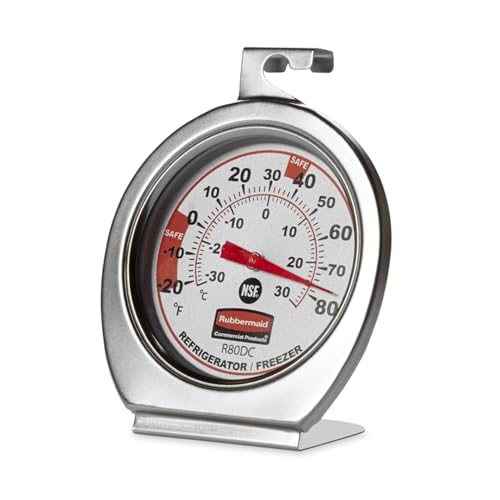
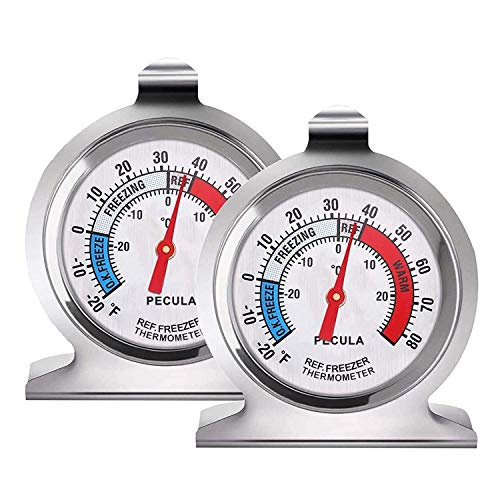
Dial thermometers use a mechanical sensor that moves a needle, so they need no batteries and work in any fridge, freezer or cooler. The Taylor analog thermometer has a 3 inch dial with printed FREEZER, REF and DANGER zones, a stainless steel case, NSF certification and a 1 year limited warranty. The Rubbermaid Commercial thermometer is another NSF certified stainless model with a shatter proof lens, and the PECULA two pack offers a large dial with red and blue zones at a very low price.
Dial thermometers are affordable, tough and ideal as a simple daily check. The tradeoff is precision; it can be hard to read a needle to the exact degree. They suit every household as a basic or backup thermometer.
Digital LCD Thermometers
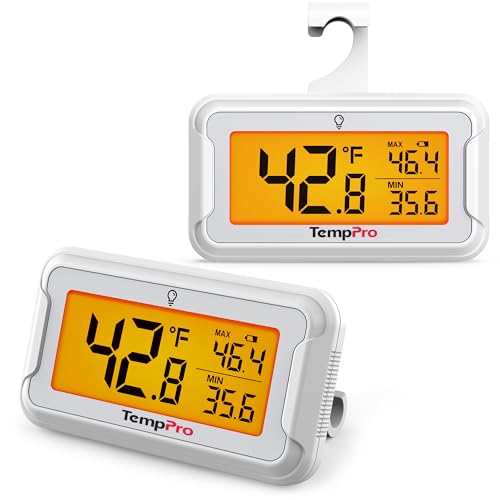
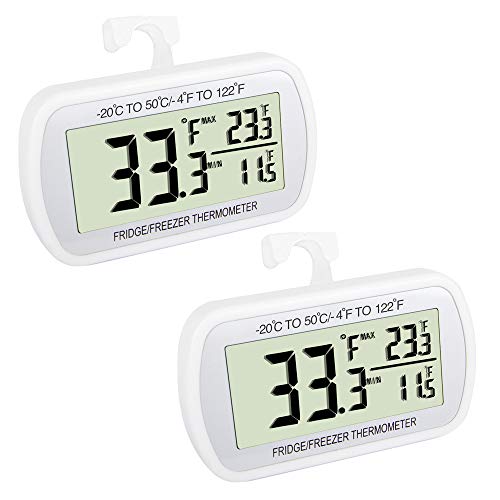
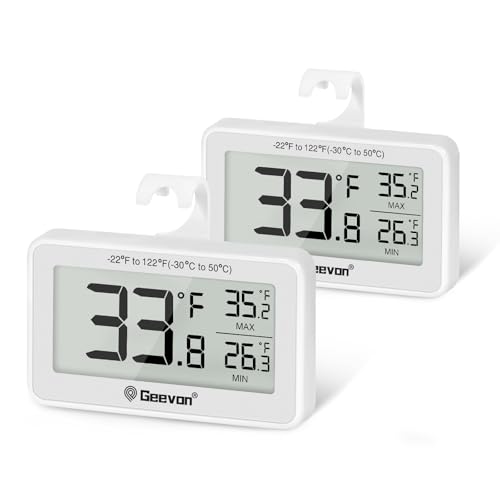
Digital thermometers use an electronic sensor and show the temperature as numbers on a screen. The TempPro TempAir two pack has a large backlit LCD, ±1.8°F stated accuracy, an IPX6 waterproof rating, max and min recording over the past 24 hours and a coin twist battery cover. The VOULOIR thermometer has a 2.56 inch LCD showing current, max and min temperatures at once, ±2°F accuracy and three placement options. The Geevon two pack adds IP65 water resistance and a magnetic back.
Digital models are easy to read and the max and min memory shows if the temperature rose while you were away. They need batteries and still require opening the door to check.
Wireless Alarm Systems
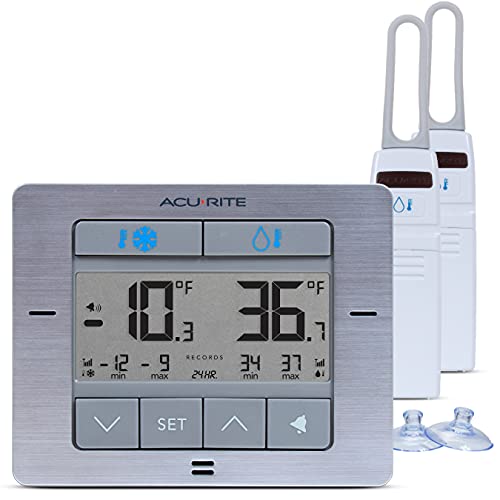
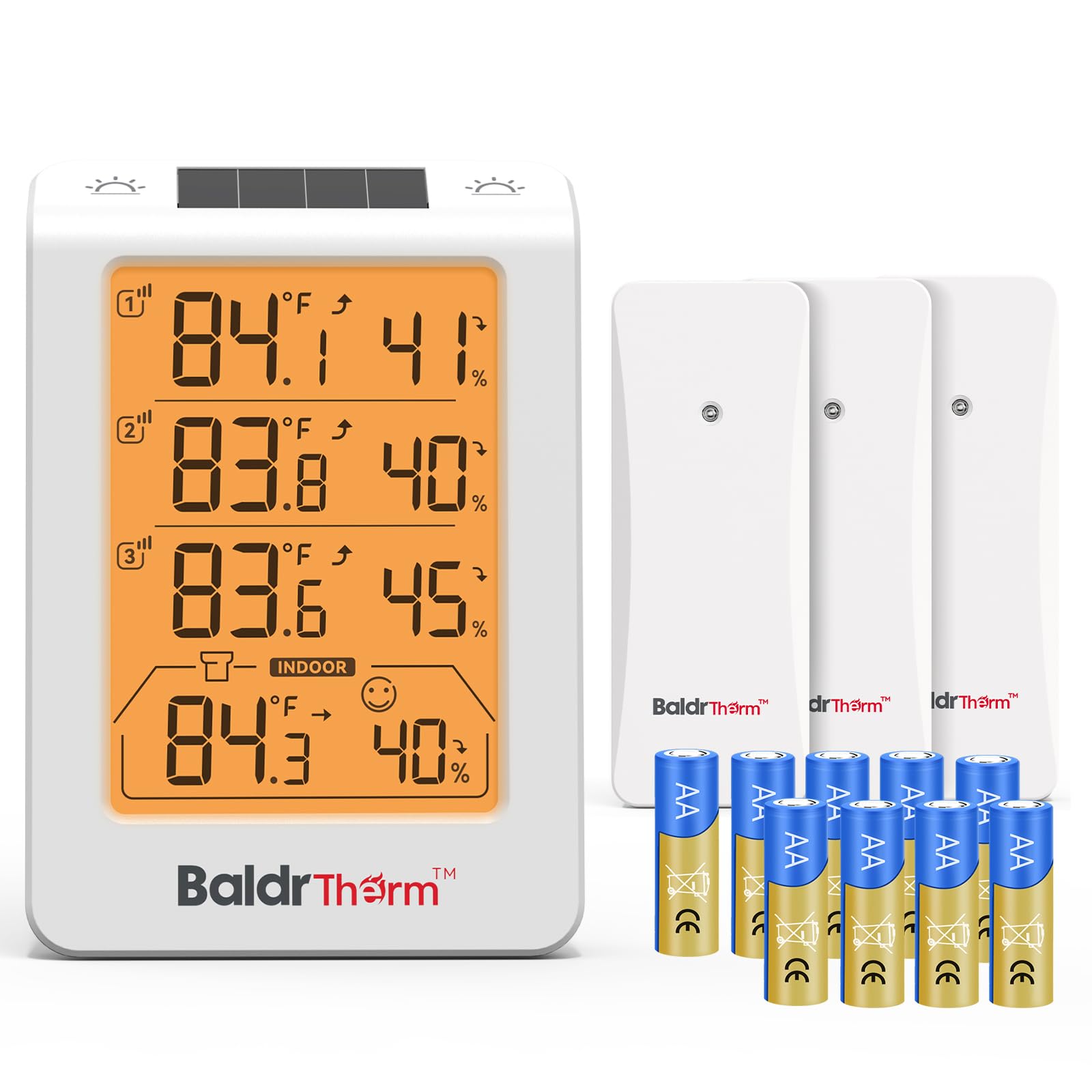
Wireless systems place sensors inside the fridge and freezer and send readings to a display outside. The AcuRite 00515M includes one refrigerator sensor and one freezer sensor with a digital display, customizable temperature alarms and silicone sensor straps for wire shelves. Budget kits like the three sensor wireless thermometer offer a 328 foot transmission range, min and max memory and a backlight.
These let you check temperatures without opening the door and sound an alarm if a door is left open or an appliance fails. They suit families, people with chest freezers and anyone who wants alerts at home.
WiFi Smart Monitors
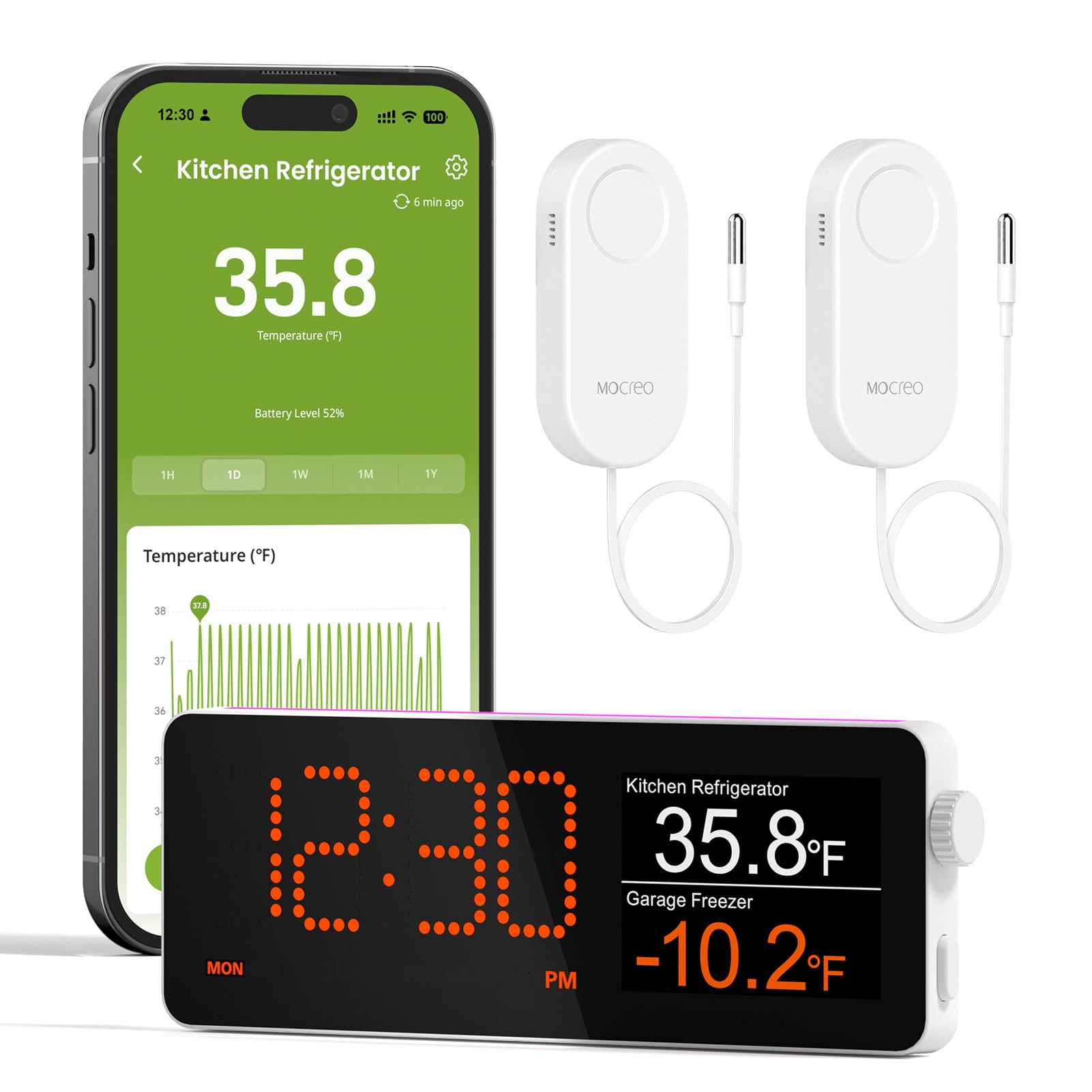
WiFi monitors connect sensors to a hub that sends readings to a phone app. The MOCREO WiFi freezer thermometer includes two sensors, app and email alerts, 2 years of data export and no subscription fee, while the MOCREO long range model adds IP66 sensors and up to a third of a mile range. They cost more but alert you anywhere, which suits garage freezers, rental homes and small food businesses.
Analog Dial vs Digital LCD: Which Should You Choose?
Comparing the two most popular basic types on the points that matter most:
- Power: Dial models need no batteries; digital models need occasional battery changes.
- Readability: Digital displays show exact numbers, often with a backlight, while dials need a closer look.
- Memory: Digital models record max and min temperatures; dials show only the current reading.
- Durability: Stainless dial models resist drops and moisture well, and many digital models carry IPX ratings.
- Price: Dial thermometers often cost less per unit, especially in multi packs.
Choose a dial model for a simple, battery free check in every appliance. Choose a digital model if you want exact readings and a record of temperature swings.
How to Choose From the Best Refrigerator Thermometers
Accuracy and Temperature Range
Look for stated accuracy around ±2°F or better, such as the ±1.8°F listed for the TempPro TempAir. The range should cover at least -4°F to 50°F so one thermometer works in both the fridge and freezer; most models in the table read from about -20°F or lower to 80°F or higher. NSF certification, found on the Taylor and Rubbermaid models, shows the thermometer meets food equipment standards for quality and cleanability.
Alerts and Monitoring
Alarms matter most for chest freezers, garage fridges and anyone storing a lot of food. Wireless systems like the AcuRite sound an alarm when temperatures rise beyond your set limits, while WiFi monitors like MOCREO send phone and email alerts anywhere. For a kitchen fridge you check daily, a simple digital or dial thermometer is enough. Data logs help small businesses keep temperature records.
Display and Readability
A large dial or LCD makes daily checks quicker. Backlit screens, as on the TempPro TempAir, help in dark freezers. Color zones on dial models, like the Taylor's FREEZER and DANGER markings, make it clear at a glance when temperatures drift. Older users and busy households benefit most from large, simple displays.
Placement and Mounting
Good thermometers offer more than one way to place them. Most digital models include a stand, hook and magnetic back, and dial models can hang from a wire shelf or stand on their own. Place the thermometer in the middle of the fridge, away from the door and vents, for the most representative reading. Wireless sensors with straps or suction cups make placement easier in crowded fridges.
Durability and Water Resistance
Fridges and freezers are damp, so look for stainless steel bodies, shatter proof lenses or IP ratings on digital models. The TempPro carries IPX6, the Geevon IP65 and the VOULOIR IPX3. Freezer use is hard on batteries, so models with easy coin twist covers make replacements simple.
Price and Multi Packs
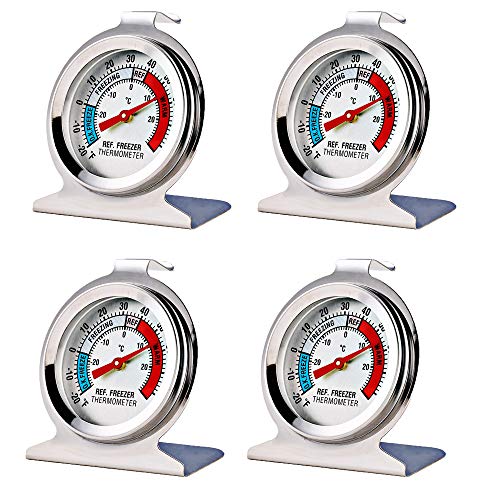
Most homes need one thermometer per fridge and freezer, so multi packs, like the PECULA two pack or LinkDm four pack, offer good value. Basic dial and digital thermometers cost around $7 to $17, wireless alarm systems around $22 to $40 and WiFi monitors around $56 to $80. Spend more only if you need remote alerts.
Setup and Care Tips
- Follow the manual's setup routine. Let the thermometer sit in the fridge for several hours before trusting the reading.
- Check at the same time each day. Morning checks before the door is opened often give the most stable reading.
- Adjust in small steps. If the fridge reads above 40°F or the freezer above 0°F, adjust the control slightly and recheck the next day.
- Keep a record. Note readings on a chart or app, which helps spot a failing appliance early.
- Replace batteries yearly. Cold drains batteries faster, so swap them before they die.
Frequently Asked Questions
What temperature should my refrigerator be?
Keep your refrigerator at or below 40°F, as recommended by the FDA, and your freezer at 0°F. Many people set fridges around 37°F for a safety margin without freezing produce. Use a thermometer to confirm, since the appliance dial does not show the actual temperature.
Where should I put a refrigerator thermometer?
Place it on a middle shelf near the center of the fridge, away from the door and vents. That spot gives the most typical reading. Avoid the door, which warms each time it opens, and the area near cold air vents, which can read colder than the rest of the fridge.
How accurate are home fridge thermometers?
Most quality home models are accurate within about ±2°F, which is enough for food safety. You can check accuracy by placing the sensor in a glass of ice water, which should read close to 32°F. Replace any thermometer that is far off.
How do I know if food is safe after a power outage?
The USDA advises that a closed refrigerator keeps food safe for about 4 hours, and a full freezer about 48 hours. Check the thermometer when power returns; discard perishable food that has been above 40°F for over 2 hours. Max and min memory and alarms help here. For backup power, see our emergency generator guide.
Do I need a separate thermometer for the freezer?
Yes, it helps to keep one in each. Fridge and freezer temperatures differ, and a separate thermometer shows each clearly without moving it. Multi packs and wireless systems with two sensors, like the AcuRite, make this easy.
Can I use a meat thermometer in the fridge?
An instant read food thermometer can check the temperature of a glass of water left in the fridge, but it is not made for constant monitoring. A dedicated fridge thermometer stays inside all the time. See our food thermometer guide for cooking options.
Our Verdict
Three things matter most: accuracy within about ±2°F, a range that covers both fridge and freezer and the right level of monitoring for your needs. A battery free dial thermometer like the Taylor or Rubbermaid works in every home, a digital model like the TempPro TempAir makes daily checks easier, and wireless or WiFi systems from AcuRite and MOCREO protect garage freezers and businesses with alerts. Add one to your emergency preparedness supplies, then check the product table above to choose from the best refrigerator thermometers for your kitchen.