
Best Food Thermometer: A First Time Buyer's Guide for 2026
Disclosure: We may earn a commission when you buy through links on this page, at no extra cost to you. As an Amazon Associate I earn from qualifying purchases. Learn more

A first buyer guide to the best food thermometer: instant read vs leave in probes, accuracy, calibration and safe temperatures.
A food thermometer takes the guesswork out of cooking. Instead of cutting into a chicken breast to check for pink or hoping a roast is done because the timer went off, you get a number that tells you exactly where your food stands. If you are buying your first one, though, the options can be confusing: instant read pens, folding probes, leave in thermometers with cables, wireless probes and oven thermometers. This beginner guide to the best food thermometer explains the basics in plain English, so you can choose the right type and use it with confidence.
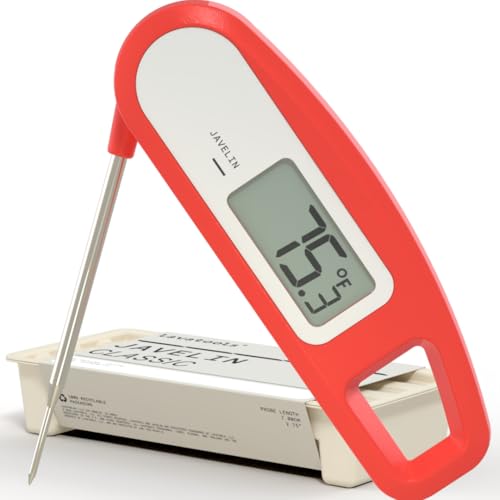
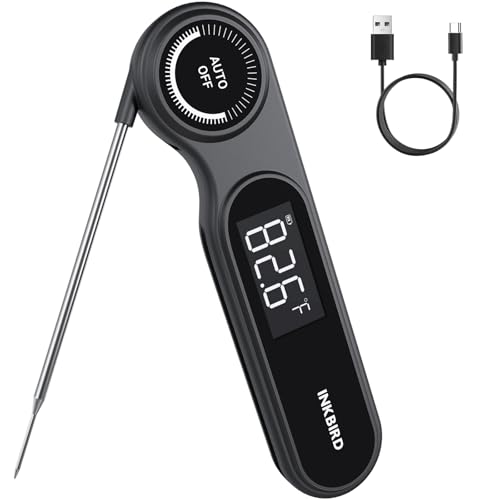
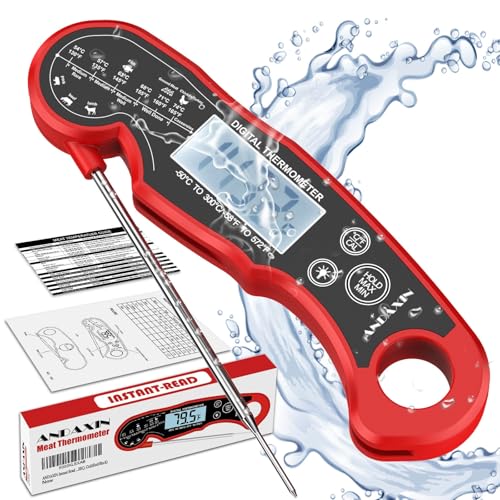
We cover how food thermometers work, the specs that matter, the rookie mistakes that lead to wrong readings and a simple setup routine. The product table above lists popular options from TempPro, Alpha Grillers, Lavatools, Typhur, ThermoMonster, Inkbird and others, all sold new on Amazon US.





Food Thermometers 101: The Basics
A food thermometer tells you when food is safely cooked by measuring its internal temperature. That is the most reliable way to know when meat, poultry, fish and baked goods are cooked safely and to your preferred doneness. Color and texture can mislead; a burger can brown before it reaches a safe temperature, and a roast can look done outside while the center is undercooked.
The USDA publishes safe minimum internal temperatures: 165 degrees Fahrenheit for poultry, 160 degrees for ground meats, and 145 degrees for whole cuts of beef, pork, veal and lamb, followed by a three minute rest, as well as for fish. A thermometer lets you hit those targets without overcooking, so food stays juicy.
There are three main types. Instant read thermometers, the most popular, have a probe you insert to get a reading in about one to three seconds. Leave in probe thermometers stay in food while it cooks in the oven or smoker and display the temperature on an outside unit, often with alarms. Wireless and app connected probes send readings to your phone. Oven and refrigerator thermometers measure air temperature rather than food.
For most home cooks, a good instant read thermometer is the best first purchase, since it handles stovetop cooking, grilling, roasting and baking. Add a leave in probe later if you smoke meat or roast large cuts often.
Thermometers also help beyond meat. Bakers check bread, which is usually done when the center reaches around 190 to 210 degrees Fahrenheit depending on the recipe, and candy makers track sugar syrup stages precisely. Home cooks use thermometers to warm milk for yogurt, proof yeast in water at the right temperature and confirm that oil is hot enough for frying. Reheating leftovers to 165 degrees is another safety habit a thermometer makes easy.
Inside, most digital thermometers use either a thermistor or a thermocouple sensor near the probe tip. Thermocouples tend to respond fastest and are common in premium instant read models, while thermistors are accurate and affordable. Either type can work well for home cooking when the probe is placed correctly and the thermometer is calibrated.
Food Thermometers: Key Specs Explained in Plain English
Thermometer listings are full of numbers. Here is what each important spec means and how much weight to give it.
Accuracy and Calibration
Accuracy is the most important spec. Good digital thermometers list accuracy within about plus or minus 1 to 2 degrees Fahrenheit across their working range. Look for a stated accuracy figure rather than vague claims. Some thermometers carry NSF certification, which indicates the design meets food equipment standards for materials and cleanability.
Calibration lets you adjust a thermometer that drifts over time. Many models include a calibration feature or button. You can check accuracy at home with an ice water bath, which should read 32 degrees Fahrenheit, or boiling water, which reads about 212 degrees at sea level and lower at higher elevations.
Remember that a one or two degree error rarely matters for a weeknight chicken breast, but it matters more for precise jobs like candy making, tempering chocolate or hitting a medium rare steak. If you cook those foods often, choose a model with tight stated accuracy and a simple calibration routine, and repeat the ice water check whenever readings seem off.
Probe Length and Tip Size
Probe length determines how deep you can reach. Longer probes, around 4 to 5 inches, keep your hand away from hot grills and reach the center of thick roasts. Shorter probes are fine for burgers, chicken breasts and stovetop cooking.
A thin, tapered tip creates a small hole, which means less juice escapes and the sensor responds faster. Folding probes protect the tip and turn the thermometer on and off automatically when you open and close them, which many cooks find convenient.
For thin foods like fish fillets and pork chops, a fine tip is essential, because the sensor must sit in the middle of the food rather than poke out the other side. Insert the probe sideways into thin cuts so more of the sensor sits in the center. For whole turkeys and large roasts, a longer probe lets you reach the deepest point near the thigh or the center of the roast without burning your knuckles.
Power and Portability
Most instant read thermometers run on coin cell or AAA batteries, while newer models use rechargeable batteries with USB-C charging. Battery life is usually long, but rechargeable models save money on replacements. Auto shutoff features preserve battery when you forget to turn the thermometer off.
Portability matters for grilling, camping and tailgating. Compact folding thermometers fit in a drawer or apron pocket, and many include magnets so you can stick them to the fridge or grill. Water resistance, often rated IP65 to IP67, protects the electronics when rinsing.
Warranty and Customer Support
Warranty coverage on food thermometers ranges from one year to several years, and some brands offer lifetime guarantees. A strong warranty is useful because probes and displays can fail after drops or water exposure.
Responsive customer support matters if you need calibration help or a replacement. Brands that publish clear manuals and calibration instructions make it easier to keep the thermometer accurate over years of use.
Ease of Use and Display
Speed is a key ease of use feature: readings in one to three seconds keep your hand away from heat and let you check several spots quickly. A large, backlit display is easy to read in dim kitchens or outdoors at night, and auto rotating displays flip the numbers for left handed cooks or awkward angles.
Simple controls, such as a single button to switch between Fahrenheit and Celsius, make the thermometer easy to learn. Hold functions freeze the reading so you can check it after removing the probe from a hot oven.
Some models add a motion sensing wake feature, which turns the display on when you pick the thermometer up, and a lock function that keeps the last reading on screen. Others include a bottle opener, a lanyard hole or a protective sheath. These touches are not essential, but they make a thermometer more pleasant to use every day, which means you will actually reach for it.
Memory, Alarms, and App Sync
Leave in and wireless thermometers add features like target temperature alarms, timers and app connectivity. They alert you when food reaches your chosen temperature, so you do not need to keep opening the oven or smoker. Multi probe models track several pieces of meat or the grill temperature at once.
Instant read thermometers rarely need memory or apps. If you often smoke brisket or roast large cuts, a leave in or wireless probe with alarms is worth considering as a second thermometer.
Wireless probes vary in range. Bluetooth models typically reach across a kitchen or patio, while models with Wi-Fi or a repeater base let you monitor a smoker from farther away. Check whether the app works without an account, how many probes it supports and whether the probe can handle the heat of searing, since some wireless probes have limits on ambient temperature.
Best Food Thermometers for Specific Needs
Different cooking styles call for different thermometers. Here is how to match the tool to your kitchen.
Best Food Thermometers for Grilling
Grilling calls for speed and reach. A fast instant read thermometer with a long probe keeps your hand away from flames, and a backlit display helps when you cook after dark. Waterproof models handle rinsing at an outdoor sink. If you cook thick steaks or whole chickens on the grill, a leave in probe with a grill clip lets you track the internal temperature and the grill temperature at the same time, which makes indirect cooking more predictable.
Best Food Thermometers for Smoking and Barbecue
Low and slow barbecue can take many hours, so smokers benefit from multi probe leave in thermometers or wireless systems with alarms. One probe tracks the pit temperature while others monitor brisket, pork shoulder or ribs. Look for heat resistant cables, sturdy probes and a receiver or app with a reliable range. An instant read thermometer remains useful for checking several spots on a large cut before you pull it.
Best Food Thermometers for Baking and Candy
Bakers want a thermometer with a wide range and good accuracy at high temperatures. Candy and deep frying thermometers clip to the side of a pot and read up to 400 degrees Fahrenheit or more, which helps you hit soft ball, hard crack and frying temperatures. A thin instant read probe also works well for checking bread, custards and cheesecakes without leaving a large hole.
Best Food Thermometers for Ovens: Tips for First Time Buyers
For oven cooking, a leave in probe thermometer with a heat resistant cable lets you monitor roasts and turkeys without opening the door, which keeps the oven temperature steady. Set a target temperature alarm a few degrees below your final goal, since meat keeps cooking as it rests. An instant read thermometer is still useful for double checking several spots before serving. Separately, an inexpensive oven thermometer helps you confirm your oven heats accurately, since many ovens run hotter or cooler than the dial shows.
Rookie Mistakes to Avoid
- Measuring the wrong spot. Insert the probe into the thickest part of the food, away from bone, fat and gristle, which can give misleading readings.
- Not waiting for a stable reading. Hold the probe in place until the number stops changing, even with fast thermometers.
- Skipping calibration checks. Check accuracy occasionally in ice water, especially after drops.
- Submerging non waterproof models. Many thermometers handle rinsing but not full immersion; follow the care instructions.
- Forgetting carryover cooking. Large roasts keep rising several degrees while resting; remove them slightly before your target.
Getting Started: Setup and First Use
Unbox your thermometer, install or charge the battery and clean the probe with warm soapy water. Do an ice water check: fill a glass with ice, add cold water, stir and wait a minute, then insert the probe without touching the glass. It should read 32 degrees Fahrenheit; if not, follow the calibration instructions.
For your first cook, try a simple chicken breast or pork chop. Insert the probe horizontally from the side into the thickest part, wait for the reading to settle and compare it with the safe minimum temperature. Wash the probe after each use, especially when moving between raw and cooked foods, to prevent cross contamination.
Store the thermometer in its case or with the probe folded, away from heat sources. Keep a spare battery on hand if your model uses coin cells.
Keep a small chart of target temperatures on your fridge or inside a cabinet door, so you can check doneness quickly. Many thermometers include a printed guide, and the USDA publishes a free safe minimum temperature chart. Over time, you will learn your own preferences, such as pulling steak at a lower number for medium rare or cooking pork shoulder well beyond the safe minimum so it becomes tender.
Food Thermometers: Your Questions Answered
Instant read or leave in probe: which is better?
Instant read thermometers are better for most home cooks, since they check burgers, chicken, steak and baked goods quickly. Leave in probe thermometers are better for long cooks like roasts, turkeys and smoked meats, because they monitor temperature continuously and alert you when food is ready. Many cooks eventually own both.
Do I need a certified thermometer?
Home cooks do not need a certified thermometer, but certifications such as NSF can indicate a design suitable for food contact and easy cleaning. What matters most is a stated accuracy, a way to check calibration and a probe that reaches the center of your food. Restaurants may need thermometers that meet local health code requirements.
How often should I check readings?
Check food temperature near the end of the expected cooking time, then again in a different spot to confirm doneness. Check calibration every few months, after drops, or if readings seem off. For large roasts, check a few degrees before your target and allow for carryover cooking while resting.
How accurate are home thermometers?
Good digital home thermometers are typically accurate within about 1 to 2 degrees Fahrenheit when used correctly. Accuracy depends on probe placement, waiting for a stable reading and keeping the thermometer calibrated. Inexpensive dial thermometers can be less precise and slower, so many cooks prefer digital models.
Can I leave an instant read thermometer in the oven?
No, most instant read thermometers are not designed to stay in a hot oven or grill, since the display and body can melt or fail. Use a leave in probe thermometer with a heat resistant cable for monitoring food while it cooks. Insert the instant read thermometer only briefly to check temperatures.
Final Thoughts
The best food thermometer for beginners is a fast, accurate instant read model with a clear display and easy calibration, such as the TempPro TempSwift, Alpha Grillers or Lavatools Javelin in the table. Add a leave in or wireless probe if you roast or smoke often. Use your thermometer with USDA safe minimum temperatures, check calibration occasionally and clean the probe after every use.
For related kitchen tools, see our guides to the best meat thermometer for grilling, the best refrigerator thermometers, the best food vacuum sealers and the best quality food processors. Then compare current prices in the product table above.


