Best Nonstick Crepe Pan: Complete Buying Guide for 2026
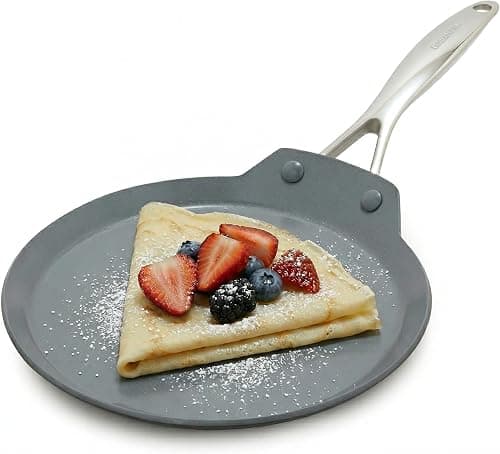
Achieving a perfectly thin, golden, lacy crepe at home comes down to one piece of equipment more than any other: the pan. The right nonstick crepe pan spreads batter evenly across a wide, flat surface, releases the delicate crepe cleanly without tearing, and distributes heat uniformly so every part of the crepe browns at the same rate. The wrong pan, on the other hand, creates hot spots that burn the center before the edges set, causes batter to stick and tear during flipping, and turns what should be a satisfying weekend breakfast into a frustrating mess.
In 2026, the American market offers a wider range of nonstick crepe pans than ever before, spanning traditional PTFE nonstick coatings, ceramic nonstick alternatives, and naturally nonstick materials like carbon steel and cast iron that develop their own seasoning over time. This guide covers every material type in depth, explains the key design features that separate a great crepe pan from an average one, and walks through everything you need to know to choose the right pan for your cooking style, your stovetop, and your kitchen.

What Makes a Crepe Pan Different from a Regular Frying Pan
At first glance, a crepe pan might look like a slightly flattened skillet, but its specific design features are what make it genuinely suited to crepe making in ways that a standard frying pan is not. Understanding these differences helps explain why dedicated crepe pans consistently outperform general-purpose skillets for this specific task.
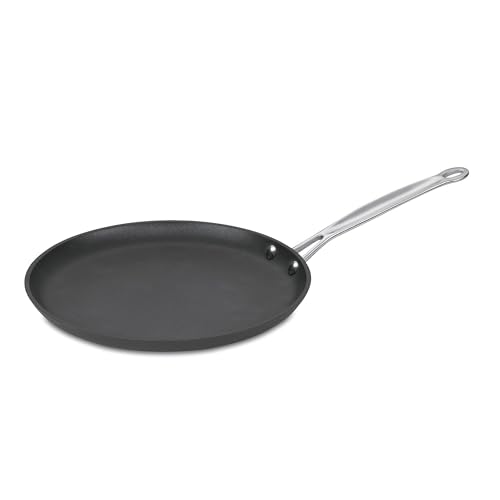
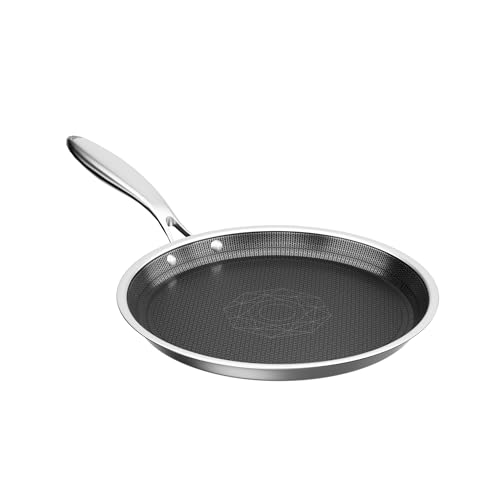
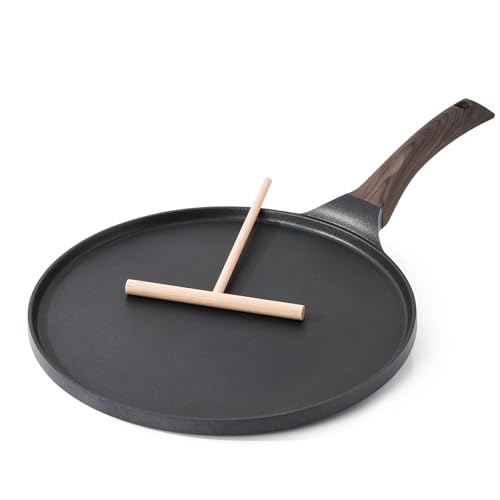
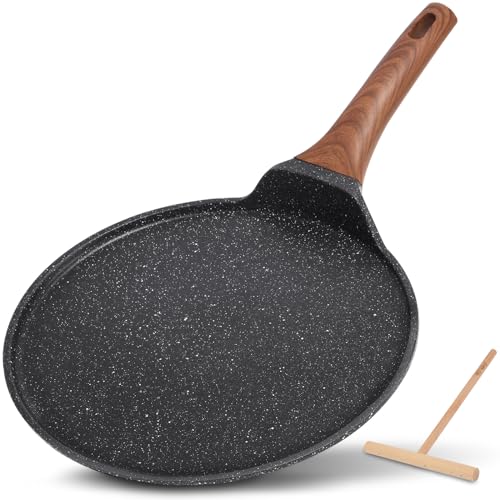
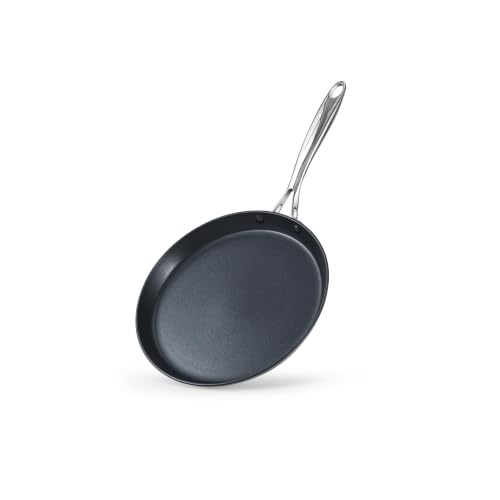
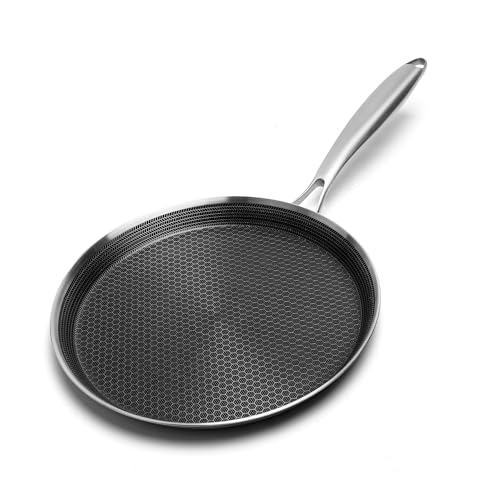
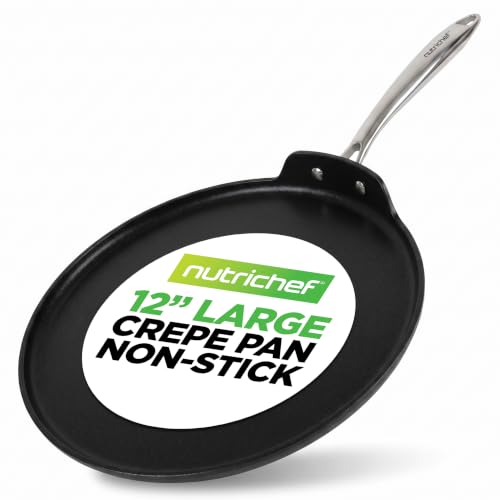
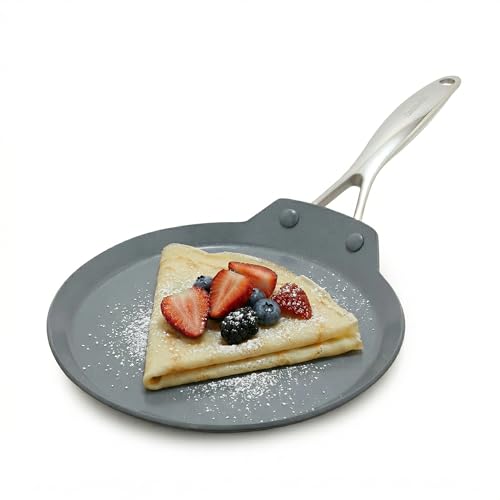
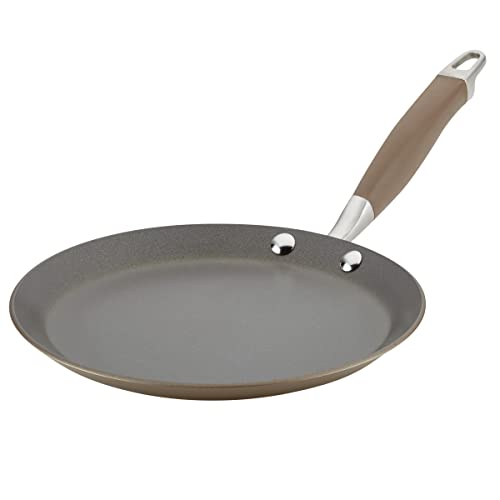
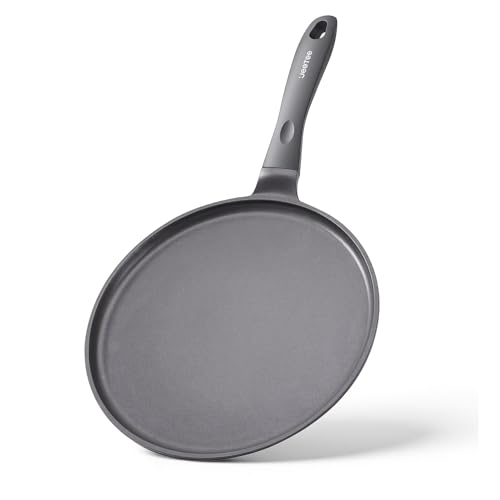
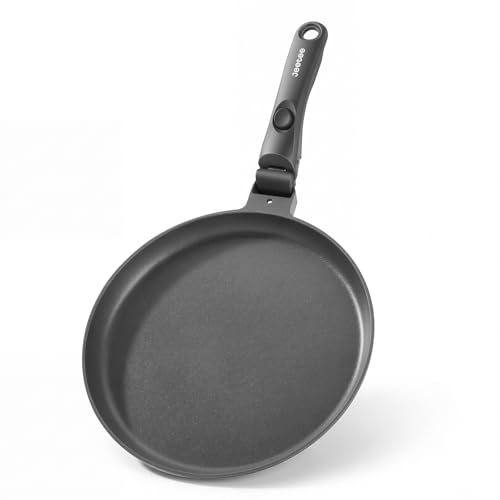
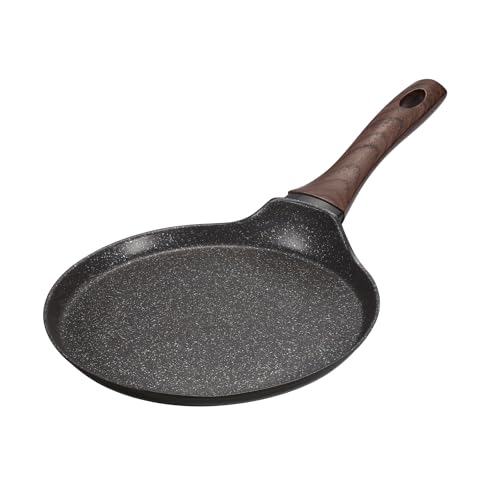
The most defining characteristic of a nonstick crepe pan is its extremely low sidewall height, typically between half an inch and one inch. This nearly flat profile is essential for two reasons. First, it allows a crepe spreader or the back of a ladle to be drawn across the entire batter surface without the tool catching on a raised wall, which is how thin, even crepes are achieved. Second, the low sides make it significantly easier to slide a spatula completely under the crepe for flipping without bending or tearing the delicate structure. A standard skillet with walls two or three inches tall makes both of these actions awkward and inconsistent.
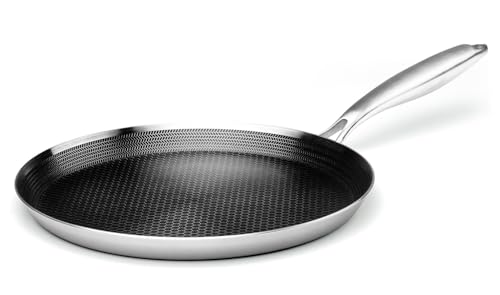
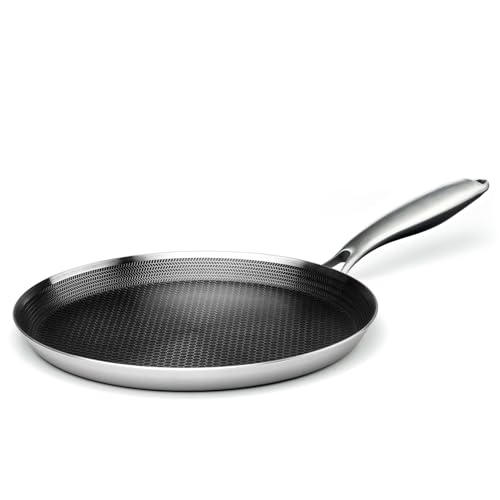
A crepe pan also typically features a perfectly flat bottom with no textured surface, since any raised pattern or uneven cooking surface prevents the batter from making uniform contact with the heat source, resulting in unevenly cooked crepes with raw patches or overcooked spots. The wide diameter of most crepe pans, ranging from 9.5 to 12 inches, provides enough cooking surface for a full-size restaurant-style crepe rather than the smaller rounds that a compact skillet would produce.
Nonstick Coating Types: A Detailed Comparison
PTFE Nonstick Coating
PTFE nonstick coating, widely known by the brand name Teflon, is the most common coating type found on nonstick crepe pans in the American market. PTFE produces an extremely slick, low-friction cooking surface that releases crepe batter cleanly from the very first use without any seasoning or preparation required. This immediate out-of-the-box performance is one of the primary reasons PTFE remains the dominant coating choice in the budget and mid-range cookware market.
Modern PTFE coatings on reputable cookware brands are manufactured without PFOA, a chemical previously used in the production process that raised health concerns. PFOA-free PTFE is the current industry standard across all established US cookware brands, and when used within the recommended temperature limits, it is considered safe for everyday food preparation.
The key temperature to understand is that PTFE begins to degrade at temperatures above approximately 500 degrees Fahrenheit, at which point the coating can release fumes that are harmful when inhaled. For normal crepe cooking at medium heat, this threshold is not a concern, but it does mean that PTFE nonstick pans should never be preheated empty on high heat, which is the most common cause of coating degradation in home kitchens.
The primary limitation of PTFE nonstick coatings is longevity. Even high-quality multilayer PTFE coatings will eventually wear down with regular use, typically showing signs of degradation in the form of reduced nonstick performance and visible scratching after two to five years of daily home use, depending on care habits. Once a PTFE coating shows signs of flaking or peeling, the pan should be replaced rather than continued in use.
Within the PTFE category, there are meaningful quality differences worth understanding. Standard single-layer PTFE coatings offer basic nonstick performance and the shortest lifespan. Multi-layer PTFE coatings, where two or three layers of the material are built up over a primer layer, provide better scratch resistance and improved durability. Titanium-reinforced PTFE coatings incorporate titanium particles into the coating structure to create a harder, more scratch-resistant surface that holds up better to regular spatula contact and extended daily use.
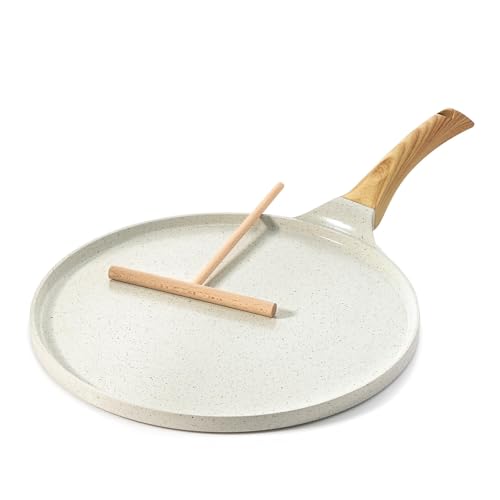
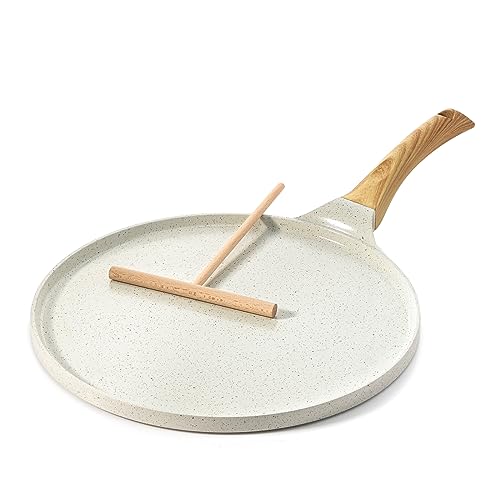
Granite-infused nonstick coatings, sometimes marketed under names like Swiss granite or stone coating, use mineral particles embedded in the nonstick layer to create a visually distinctive speckled surface with improved scratch resistance compared to standard PTFE.
Ceramic Nonstick Coating
Ceramic nonstick coatings have grown significantly in popularity in the American cookware market in recent years, primarily because they are manufactured without PTFE, PFOA, lead, or cadmium, making them appealing to health-conscious buyers who want a nonstick cooking surface without any fluoropolymer compounds. Ceramic coatings start with a metal base, typically aluminum, and apply a sol-gel-derived silica-based layer that creates a smooth, slick cooking surface.
A new ceramic nonstick crepe pan typically offers excellent release performance from the first use, with batter sliding cleanly across the cooking surface with minimal oil required. The aesthetic appeal of ceramic coatings is also notable, since they are available in a wider range of colors and finishes than standard PTFE options, including white, cream, and various earth tones that some buyers find more visually appealing in a modern kitchen.
The primary limitation of ceramic nonstick coatings compared to PTFE is durability under high heat. Ceramic coatings perform best at low to medium temperatures, and repeated exposure to high heat can accelerate the breakdown of the coating's nonstick properties faster than comparable PTFE alternatives. For crepe making, which is typically done at medium heat, this limitation is less of a concern than it would be for high-heat searing tasks. However, it does mean that ceramic-coated crepe pans require more careful temperature management than PTFE alternatives to achieve a full lifespan from the coating.
Pan Material: The Base That Carries the Coating
Aluminum
Aluminum is the most common base material for nonstick crepe pans at every price point, and for good reason. Aluminum heats up quickly and distributes heat evenly across the cooking surface, which is precisely what crepe making requires. Hot spots that develop in poorly conducting pan materials cause batter to cook unevenly, producing crepes with overcooked patches alongside raw, pale areas. A well-made aluminum nonstick crepe pan reaches cooking temperature rapidly and spreads that heat uniformly to every part of the flat cooking surface, giving the batter consistent contact with even heat from the moment it touches the pan.
The gauge or thickness of the aluminum base matters significantly for performance. Thinner aluminum heats up very quickly but is also prone to developing hot spots and warping over time, particularly when exposed to repeated high heat or rapid temperature changes like running a hot pan under cold water. Heavier gauge aluminum provides more even, stable heat distribution and resists warping far better over its lifespan. For a crepe pan that will see regular use, a heavier gauge base is worth the modest additional cost it usually implies.
Hard-Anodized Aluminum
Hard-anodized aluminum undergoes an electrochemical process that hardens the outer layer of the aluminum significantly, creating a base material that is much more durable and scratch-resistant than standard aluminum while maintaining the same excellent heat conductivity that makes aluminum the preferred material for nonstick cookware. Hard-anodized nonstick crepe pans are also less reactive than untreated aluminum, which matters for acidic ingredients that could theoretically interact with a bare aluminum surface. This base material is most commonly found in mid-range and premium nonstick pans and is generally associated with longer-lasting performance.
Cast Aluminum
Cast aluminum crepe pans use a casting process rather than stamping to form the pan body, which results in a thicker, more uniform base that distributes heat even more evenly than a standard stamped aluminum pan. The heavier construction also improves stability and reduces the risk of warping over time. Cast aluminum is often found in higher-quality ceramic-coated crepe pans and produces noticeably more consistent results across the entire cooking surface compared to thinner stamped alternatives.

Pan Size: Choosing the Right Diameter
Choosing the correct diameter for your nonstick crepe pan is more important than most buyers initially realize, since the pan size directly determines the size and thickness of the crepes you can produce. Crepe pans are generally available in diameters ranging from 8 inches to 13 inches, with each size suited to different use cases.
An 8-inch crepe pan is the smallest practical option for traditional French-style dessert crepes and produces compact, restaurant-style portions that are well suited to single servings. This size is also the most maneuverable and easiest to control during the spreading and flipping process, making it a popular choice for beginners who are still developing their technique.
A 10 to 11-inch crepe pan is the most versatile size for home kitchens and the most commonly recommended diameter by professional cooks and cooking publications across the US market. This size produces full-size crepes large enough to fold into quarters with ample filling, suits both sweet and savory preparations equally well, and still fits comfortably on standard home stovetop burners without overlapping adjacent burners. If you plan to own only one crepe pan, a 10 to 11 inch option is the most practical all-purpose choice for most households.
A 12 to 13 inch crepe pan is the choice for cooks who want restaurant-scale results or who regularly prepare savory galettes and large crepes meant to be rolled around substantial fillings like chicken, vegetables, or smoked salmon. This larger size requires a burner capable of delivering even heat across the wider cooking surface, and the additional weight and diameter can make the spreading and flipping process more demanding, particularly for beginners.
Handle Design and Heat Safety
The handle of a nonstick crepe pan affects comfort, control, and safety in ways that go beyond simple aesthetics. Since crepe making involves a continuous wrist-tilting motion to spread batter across the pan immediately after pouring, a handle that sits at a comfortable angle and provides a secure, ergonomic grip is a genuine functional consideration rather than a minor detail.
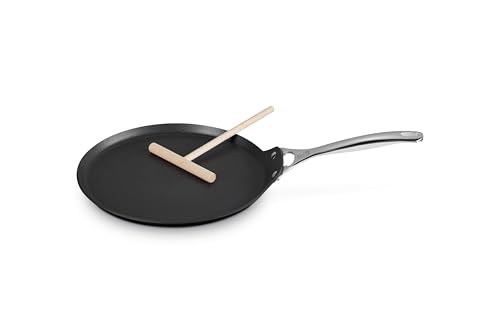
Stay-cool handles made from Bakelite, silicone, or other heat-insulating materials prevent heat from conducting up the handle during cooking, which allows you to maintain control of the pan throughout the entire crepe-making process without oven mitts or kitchen towels. Metal handles, by contrast, conduct heat from the pan body and become hot during extended cooking sessions, requiring protective hand coverings that reduce dexterity during the delicate spreading and flipping process.
Handle length also matters more than many buyers anticipate. A longer handle gives you greater leverage and keeps your hand farther from the heat source when working over a burner, which is a practical safety advantage during an activity that requires you to tilt and maneuver the pan repeatedly while batter is spread across a very hot cooking surface.
Induction Compatibility
Not all nonstick crepe pans are compatible with induction cooktops, which require cookware with a ferromagnetic base material to generate heat through magnetic induction rather than direct flame or electric resistance. Standard aluminum pans are not induction compatible, since aluminum is not magnetic. Manufacturers produce induction-compatible versions of aluminum nonstick pans by bonding a stainless steel or magnetic base plate to the bottom of the pan, which activates on an induction cooktop while the aluminum body still provides even heat distribution across the cooking surface.
If you cook on an induction stovetop, confirming induction compatibility before purchasing any crepe pan is essential, since a non-compatible pan will simply not heat on an induction surface regardless of its quality. Look for explicit labeling that states induction-compatible or all stovetops, including induction in the product specifications, since some pans are sold in both induction and non-induction versions that appear visually identical.
Health and Safety Considerations: PFOA, PFAS, and Non-Toxic Coatings
For health-conscious buyers, understanding the safety certifications associated with different nonstick coatings is an increasingly important part of the purchasing decision. PFOA was a processing chemical historically used in the production of PTFE nonstick coatings that raised health concerns and has since been phased out of manufacturing by all major cookware producers. All current PTFE nonstick pans sold by reputable brands in the United States are manufactured without PFOA, and PFOA-free labeling on packaging reflects this standard rather than indicating any special distinction from competitors.
PFAS is a broader category of fluorinated compounds that includes PTFE itself, and some buyers specifically seek out cookware that is entirely free from all PFAS compounds, including the PTFE coating. For these buyers, ceramic nonstick crepe pans labeled as PTFE-free, PFOA-free, lead-free, and cadmium-free represent the most comprehensively non-toxic nonstick option currently available in the mainstream market. Carbon steel pans, which develop a natural nonstick seasoning from polymerized cooking oils rather than any synthetic coating, are also an entirely PFAS-free option for buyers who are willing to invest time in seasoning and maintenance.
Spreader Tools and Accessories
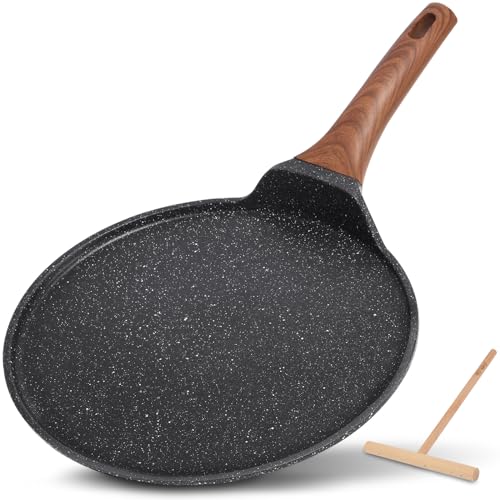
A crepe spreader, sometimes called a rozell or a T-shaped wooden spreader, is the tool used to distribute batter across the surface of the pan immediately after pouring, drawing it outward in a thin, even layer before it sets. Many nonstick crepe pans sold in the US market include a spreader tool as part of the package, which is a practical convenience since the spreader needs to be sized appropriately for the specific pan diameter to work effectively.
Wooden spreaders are the most traditional and widely recommended option for nonstick pans because wood does not scratch nonstick coatings the way metal tools can. For PTFE nonstick pans in particular, avoiding metal utensils is one of the most important care habits for extending coating lifespan. Silicone spreaders are a synthetic alternative that is also safe for nonstick surfaces and easier to clean than wood since they do not absorb food odors or stain over time.
A thin, flexible offset spatula is the best tool for flipping crepes cleanly, since its angled blade allows you to slide fully under the entire crepe without bending or tearing the delicate structure. For PTFE and ceramic nonstick pans, use a silicone or nylon offset spatula rather than a metal one. For carbon steel pans, a thin metal offset spatula is perfectly safe and often preferred for the clean, precise flip it allows.
Caring for Your Nonstick Crepe Pan
The lifespan of any nonstick crepe pan is directly determined by how well it is cared for between uses. A few consistent habits make a significant difference in how long the coating maintains its performance.
Always preheat a nonstick pan gradually over low to medium heat rather than placing it on a high burner immediately, since sudden high heat is one of the fastest ways to degrade any nonstick coating. Never preheat a nonstick pan empty, since without food or liquid to absorb the heat, the surface temperature can exceed safe coating limits very quickly. For crepe making specifically, a medium heat setting that allows batter to set gradually and evenly is both the correct cooking temperature and the most protective approach to the coating.
Use only silicone, nylon, or wooden utensils on PTFE and ceramic nonstick surfaces, since metal tools scratch and abrade the coating with repeated contact, accelerating its deterioration. Hand washing is preferable to dishwasher cleaning for most nonstick pans, even those labeled dishwasher safe, since the harsh detergents and high water pressure of a dishwasher cycle gradually degrade nonstick coatings faster than gentle hand washing with warm water and a soft sponge. Store your nonstick crepe pan with a cloth, paper towel, or pan protector between it and other stacked cookware to prevent the cooking surface from being scratched by contact with other pans during storage.
Nonstick Crepe Pan vs. Carbon Steel: Which Is Right for You
While this guide focuses specifically on nonstick crepe pans, it is worth briefly addressing the carbon steel alternative since it frequently appears alongside nonstick options in best-of lists and professional recommendations. A seasoned carbon steel crepe pan develops a naturally nonstick cooking surface through repeated use as polymerized cooking oils build up in the iron grain of the metal, eventually creating a release surface that approaches the slickness of PTFE without any synthetic coating.
Carbon steel performs at its best after several seasoning sessions and becomes increasingly nonstick with each use, which means it genuinely improves over time rather than degrading. It is also safe for metal utensils, oven use at any temperature, and can be reseasoned if the surface is ever damaged. The trade-off is that carbon steel requires more upfront investment in seasoning, is not dishwasher safe, must be dried immediately after washing to prevent rust, and delivers inconsistent release performance during the initial break-in period.
A nonstick crepe pan with a PTFE or ceramic coating provides excellent release performance from the very first use with zero seasoning required, cleans up in seconds, and is more forgiving of cooking technique variations during the batter-spreading process. For beginners, occasional crepe makers, or anyone who prefers straightforward low-maintenance cookware, a quality nonstick pan is the more practical everyday choice. For dedicated cooks who make crepes regularly and are willing to invest time in building and maintaining a seasoned surface, a carbon steel pan offers longer potential lifespan and superior high-heat performance.
Final Thoughts
The best nonstick crepe pan for your kitchen is the one that matches your stovetop type, your preferred crepe size, your coating preferences around PTFE or ceramic, and the level of maintenance you are willing to commit to. For most American home cooks, a 10 to 11-inch nonstick crepe pan with a multi-layer PTFE or ceramic coating on a heavy-gauge aluminum base, combined with a stay-cool handle and an induction-compatible base if needed, covers every practical crepe-making scenario with minimal fuss and easy cleanup.
Prioritizing heavier-gauge construction over lighter budget alternatives, confirming PFOA-free certification on any PTFE pan, and committing to gentle hand washing and proper storage will ensure your nonstick crepe pan delivers consistent, clean-releasing results for years of weekend brunches, savory galettes, and classic French dessert crepes.