
Best Non-Stick Wok: A Complete Buying Guide for Home Cooks
Disclosure: We may earn a commission when you buy through links on this page, at no extra cost to you. As an Amazon Associate I earn from qualifying purchases. Learn more

A non-stick wok promises the easiest version of stir-fry night: no seasoning ritual, no rust worries, food that slides off the surface instead of welding itself on. That promise is real, but it only holds up if you understand what the coating on the pan can and cannot do. Unlike a carbon steel or stainless wok, where the metal itself is the whole story, a non-stick wok lives and dies by a thin layer bonded to the surface, and that layer changes how hot you can cook, how you clean up, and how long the pan stays useful. This guide focuses specifically on that coating: what it is made of, how much heat it tolerates, and what actually shortens or extends its life.
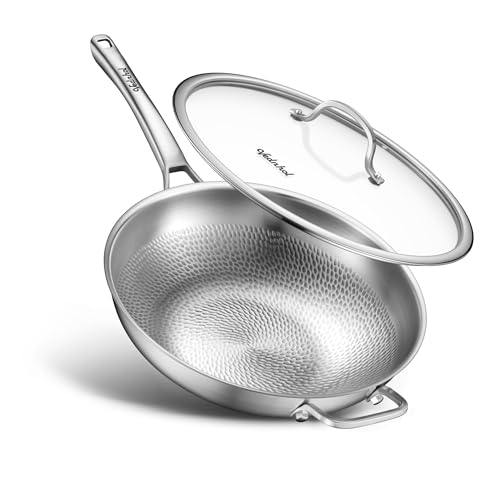
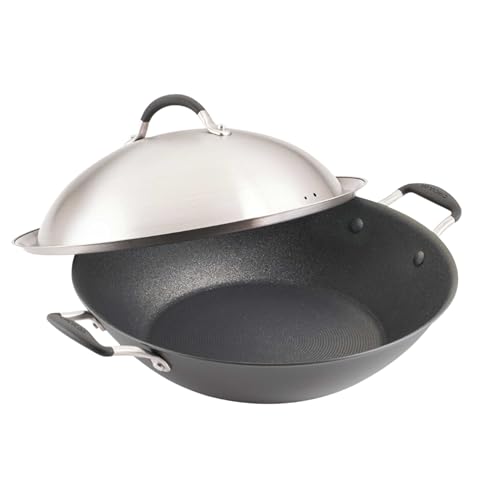
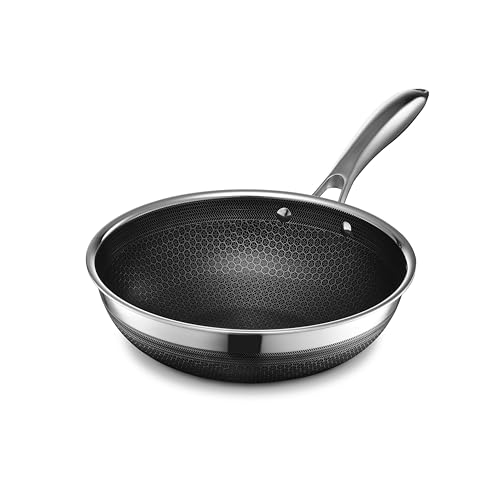
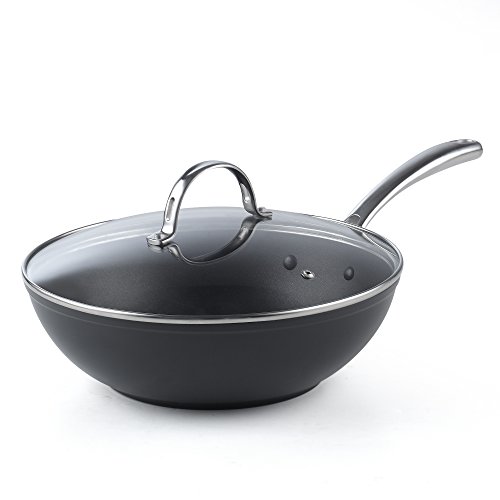
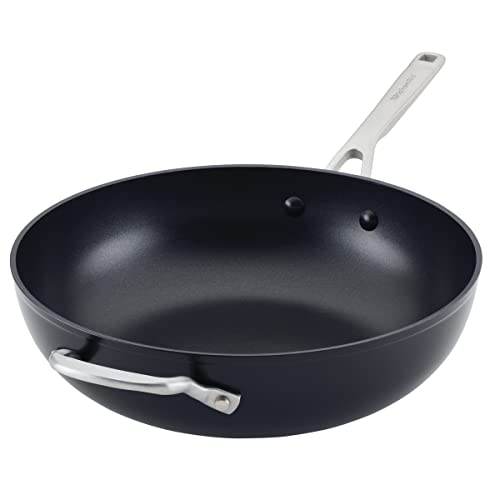
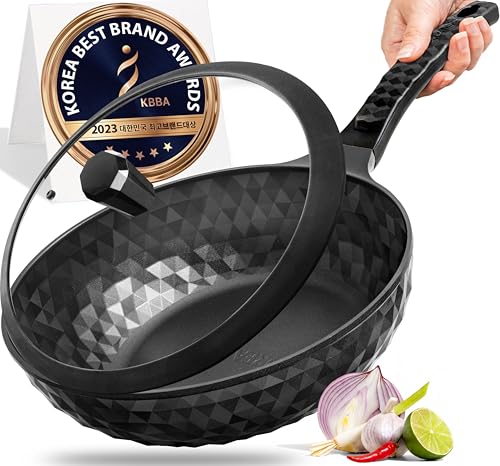
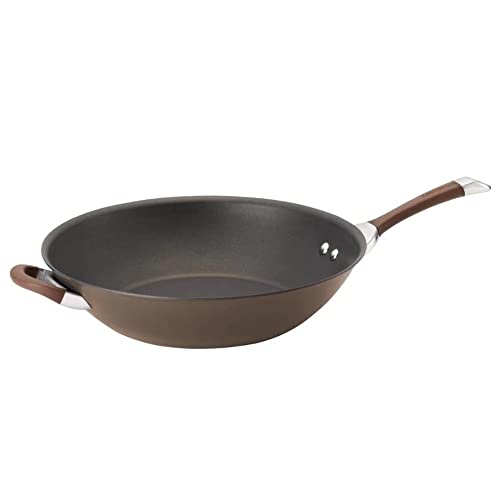
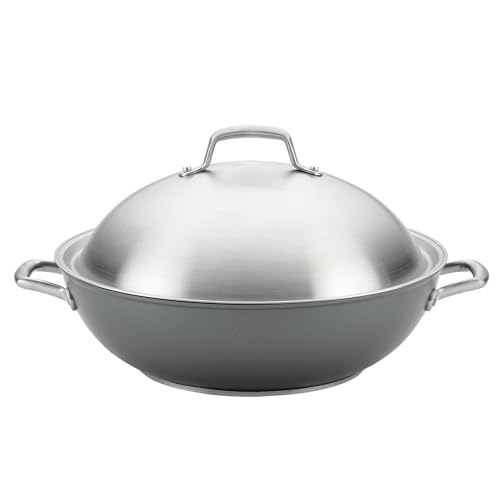
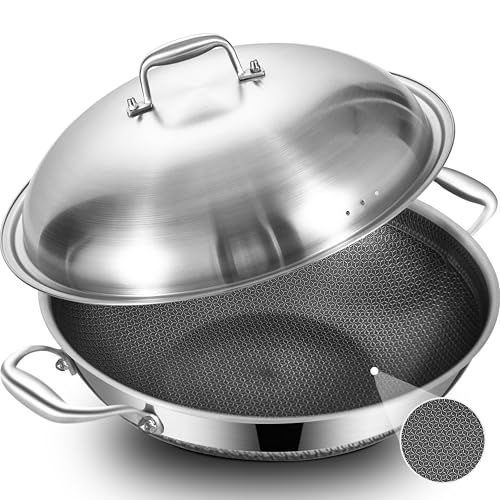
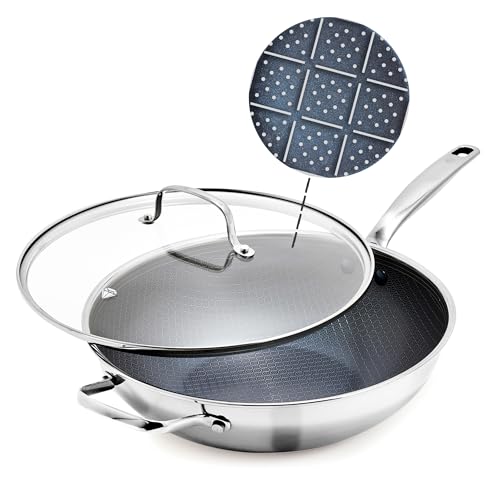
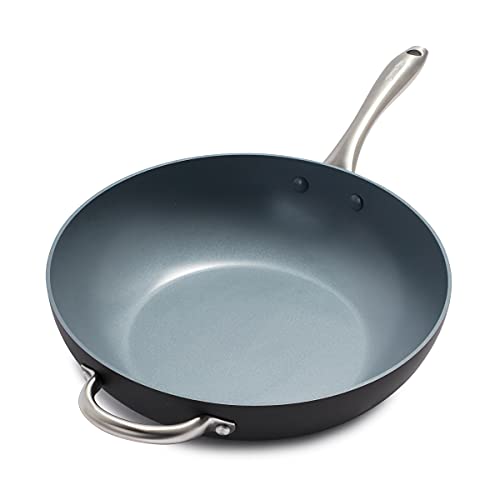
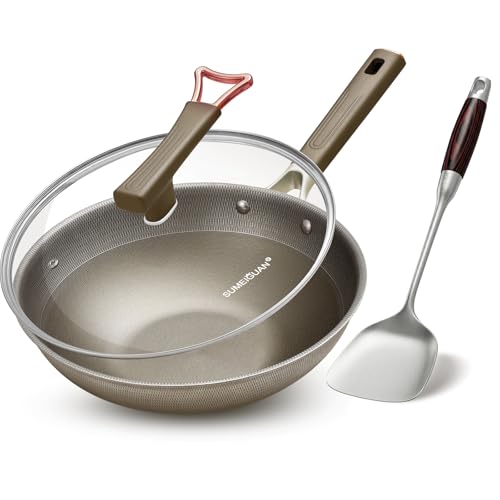
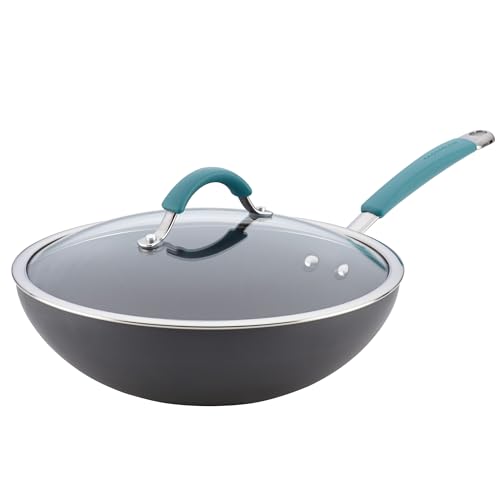
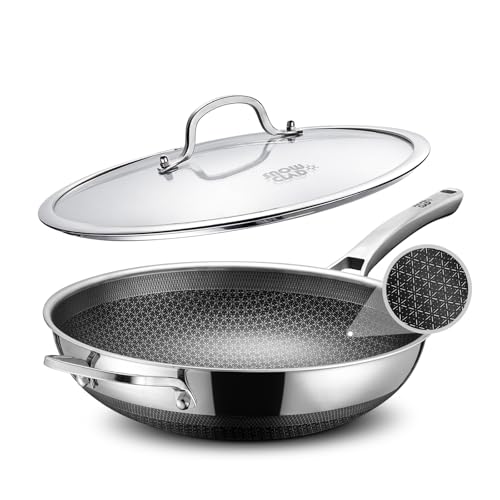

PTFE vs Ceramic: Choosing the Right Non-Stick Coating
Most non-stick woks use one of two coating families, and the choice between them matters more than base thickness or handle style. PTFE, commonly known by the brand name Teflon, is the older and still more common option. It has an extremely low surface friction, which is why eggs and delicate fish slide right off it, and it tends to hold that slickness through years of normal cooking as long as it isn't scratched or overheated. Every PTFE coating sold today is PFOA-free, since that particular manufacturing chemical was phased out industry-wide years ago, so the lingering health worries some shoppers still carry over from older PTFE cookware don't really apply to what's on shelves now.
Ceramic coatings are the newer alternative, made from a silica-based mineral compound cured at high heat rather than a synthetic polymer. They're marketed heavily as PTFE-free and PFAS-free, which appeals to cooks who want to avoid that entire chemical family on principle, and a lot of shoppers pick ceramic for that peace of mind alone. The trade-off is durability: ceramic coatings generally lose their slick surface faster than PTFE, often within one to three years of regular use, even with careful handling. If chemical-free coating matters more to you than long-term slickness, ceramic is worth the swap. If you want a coating that stays reliably non-stick for the longest stretch of time, PTFE is still the more proven performer, and it pairs well with a broader nonstick cookware set if you're outfitting more than just the wok.
The Heat Ceiling: Why a Coated Wok Can't Chase High-Heat Wok Hei
Traditional stir-frying leans on blistering heat to get that charred, smoky flavor cooks call wok hei, and that technique is where a non-stick coating runs into a hard limit. PTFE stays chemically stable at normal cooking temperatures, generally under 450°F, but it starts breaking down as heat climbs past 500°F, and can release fumes strong enough to cause flu-like symptoms once a pan crosses into the 570°F range. Ceramic coatings tolerate high heat a bit better in short bursts but degrade faster overall with repeated exposure to it.
The part that trips people up isn't usually the cooking itself, it's the habit of preheating an empty pan the way carbon steel wok recipes instruct. An empty non-stick wok can reach 500°F in roughly two minutes on a hot burner, well before you'd notice anything wrong, which means the classic "get the wok screaming hot first" technique is actively harmful to a coated pan. The safer approach is to add oil right after a brief, moderate preheat rather than letting the empty pan sit on high heat, and to accept that a non-stick wok is built for medium to medium-high stir-frying rather than restaurant-style blasting.
No Seasoning Required (And What That Trade-Off Costs You)
One of the biggest reasons people choose a non-stick wok over carbon steel or stainless in the first place is that it skips seasoning entirely. There's no building up a patina over months of cooking, no re-oiling after every wash, and no worrying about a flash of rust after the pan air-dries overnight. Right out of the box, a non-stick wok releases food the way a carbon steel wok only does after a season of consistent use.
That convenience comes at a cost the coating eventually has to pay. Carbon steel and stainless woks essentially get more durable with age and heavier use, since a well-seasoned or well-conditioned surface holds up to hard scrubbing and high heat indefinitely. A non-stick coating moves in the opposite direction: every year of use, every metal utensil scrape, and every high-heat session wears it down a little more, and there's no way to restore a worn coating the way you can re-season steel. If your priority is a pan that improves with age and can take abusive heat, a stainless steel wok is the better fit. If you'd rather trade some long-term durability for zero maintenance and instant non-stick performance, the coated version wins.
Induction Compatibility Comes Down to the Base, Not the Coating
It's easy to assume the coating determines whether a wok works on induction, but the coating has nothing to do with it. Induction cooktops need a magnetic field to generate heat, so what matters is whether the wok's base has a layer of magnetic steel or iron built in underneath the non-stick surface. A lot of budget non-stick woks are made from plain aluminum with no magnetic layer at all, and those simply won't heat up on an induction burner no matter how good the coating on top is.
Before buying, check the product specs specifically for induction compatibility rather than assuming it, since this detail is easy to miss when a listing focuses on the coating instead of the base construction. A flat, reasonably thick base also matters for even heating on induction and electric coil ranges alike, since a wok that only makes partial contact with the heating surface will develop hot spots that stress the coating unevenly over time. Shoppers building out a full induction cookware collection should treat the wok's base material as a separate checkbox from its coating type.
Washing, Storing, and Reading the Signs a Coating Is Done
Hand washing with a soft sponge and mild soap is the standard advice for a reason: dishwasher detergent and heat both accelerate coating breakdown, and stacking other pans directly on top of a non-stick wok in storage creates fine scratches that add up over time. A thin pan protector or a folded kitchen towel between stacked cookware costs nothing and meaningfully extends how long the surface stays smooth. Wooden or silicone tools protect the coating far better than metal spatulas, and pairing the wok with a dedicated set of wooden kitchen utensils is one of the simplest habits that actually pays off long term.
Knowing when to retire the pan matters just as much as caring for it. Deep scratches that expose the metal underneath, visible flaking or peeling, and dark, sticky discoloration from burnt-on residue are all signs the coating is compromised and shouldn't stay in rotation. A simpler test: if food that used to slide off, like a fried egg, suddenly starts sticking in specific spots, the coating has thinned past the point of reliable performance there. Light surface scuffing alone isn't necessarily a dealbreaker, but once flaking starts, small bits of the coating can end up in food, and that's the point to stop using the pan rather than pushing it further.
Frequently Asked Questions
Is PTFE or ceramic coating better for a wok?
PTFE generally stays non-stick longer and handles regular use more consistently, while ceramic appeals to cooks who specifically want to avoid PTFE and PFAS chemicals, even though it tends to wear out faster. Neither is objectively better; the choice depends on whether coating longevity or chemical-free peace of mind matters more to you.
Can a non-stick wok handle high heat?
Not the way carbon steel can. PTFE starts breaking down above roughly 500°F and can release fumes at higher temperatures still, so a non-stick wok is meant for medium to medium-high stir-frying rather than the extreme heat traditional wok hei technique calls for.
Do I need to season a non-stick wok?
No. Seasoning is a carbon steel and cast iron process that builds a natural non-stick patina over time. A coated wok already has that slick surface applied at the factory, which is the main convenience trade-off against the coating's shorter overall lifespan.
Will a non-stick wok work on an induction stove?
Only if it has a magnetic steel or iron layer built into the base, which is separate from the coating on top. Check the product specs for induction compatibility directly, since plenty of aluminum non-stick woks don't include that magnetic base.
How do I know when to replace a non-stick wok?
Watch for deep scratches down to the base metal, flaking or peeling coating, dark burnt-on discoloration, and food sticking in spots where it never used to. Any of those are signs the coating has worn past the point of safe, reliable use.
Is it safe to use a scratched non-stick wok?
Light, superficial scratching usually isn't an immediate safety issue, but once the coating flakes or peels, small particles can end up in food and the pan should be retired. When in doubt, a pan that no longer releases food the way it used to has already told you it's time.
Final Thoughts
A non-stick wok trades the long-term toughness of carbon steel and stainless for genuine day-one convenience, and that's a fair trade as long as you respect what the coating can handle. Keep the heat moderate, skip the empty-pan preheat habit, wash by hand, and pay attention to how the surface is aging, and the coating will do its job for years instead of months.


