Best Mountain Bikes Under $1000: A Complete Buying Guide

A mountain bike under $1000 sits in an odd spot. It is real money for most people, yet it is also the entry price where actual trail-ready bikes start showing up next to bikes that only look like them. The gap between a well-spent $1000 and a poorly-spent $1000 is enormous, and almost none of it comes down to paint color or marketing copy on the box. It comes down to a handful of parts choices that manufacturers make behind the scenes, and knowing what those choices are lets you shop with a lot more confidence.


Where Your $1000 Actually Goes on a Mountain Bike
Every bike at this price is a budget allocation problem before it is anything else. A frame, a fork, a drivetrain, brakes, wheels, and tires all have to fit under one number, so brands prioritize the parts that affect ride quality the most and trim everything else. That is why two bikes with nearly identical spec sheets can feel completely different on the trail.
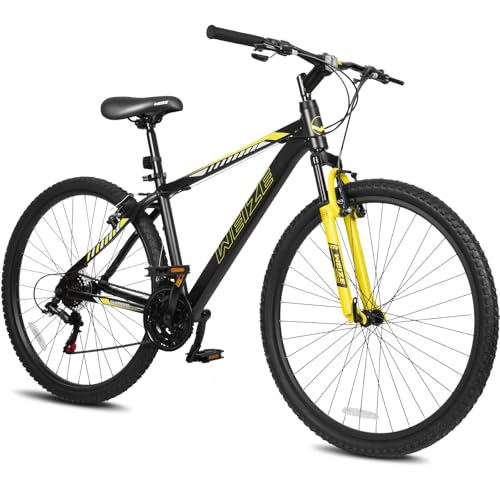
The fork usually gets the biggest share of attention because it does the most work absorbing hits on rough ground. A fork with 100mm of travel and some form of lockout or preload adjustment will ride noticeably better than a bargain fork that just bounces without control. After that, the drivetrain and brakes matter most. Expect Shimano-level groups such as Tourney, Altus, or Acera in a 1x8, 1x9, or 2x8 layout, paired with mechanical disc brakes rather than hydraulic ones. None of that is a downgrade to be embarrassed about; it is simply how a $1000 budget gets spent responsibly.
Wheels and tires tend to absorb whatever is left. Heavier rims and firmer, less grippy rubber compounds are common ways to shave cost, and they are usually the first upgrade riders make once they know what they like. Pedals are another quiet cut corner; many bikes in this range ship without them entirely, so budget separately for a decent set of flat bike pedals if the listing does not mention any.
Why Hardtails Win Under $1000 (Full Suspension Rarely Does)
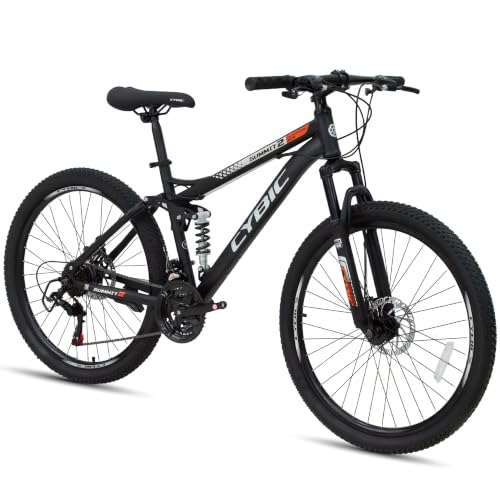
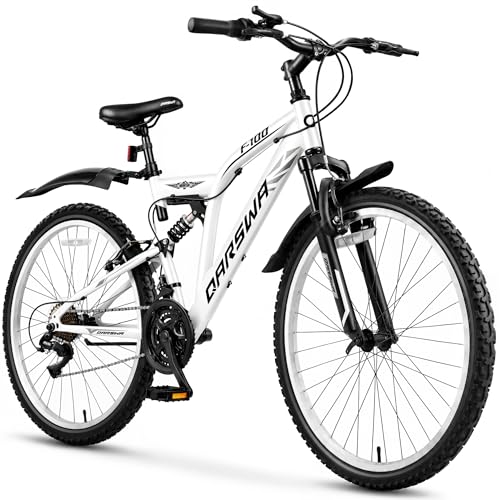
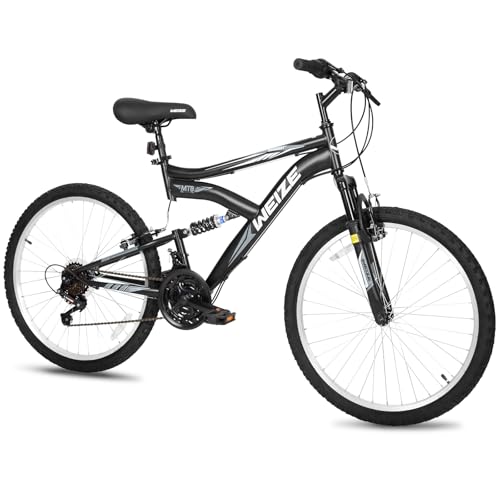
A hardtail has a suspension fork up front and a rigid rear end. A full suspension bike adds a rear shock, pivots, and linkage hardware, all of which cost real money to build well. At $1000, there simply is not enough budget left over to do both a decent fork and a decent rear shock, so something has to give.
In practice, that means most full suspension bikes at this price compensate by fitting a weaker fork, a basic unadjustable rear shock, and lower-tier brakes and drivetrain parts just to hit the number. A hardtail sold at the same price puts that entire savings into one good fork and a stronger overall build. The result is a bike that rides more predictably, climbs more efficiently, and needs less maintenance since there is no rear shock or extra pivot bearings to service.
There are a few full suspension exceptions that show up in review roundups, and they can be fun for casual, low-speed trail use. But if durability and a build you will not outgrow in a season matter more to you than the look of a rear shock, a hardtail is the safer call at this budget. Full suspension becomes a genuinely good option once the budget moves closer to the $2000 range, where the frame and shock quality catch up.
New or Used: Which Stretches a $1000 Budget Further
Buying used is the single biggest lever for stretching this budget, and it is worth taking seriously. A used bike from an established bike brand, sold by someone who actually rode and maintained it, can put you on a noticeably higher tier of components than a new bike at the same price. It is common to find a used bike that originally retailed well above $1000 selling for close to half that once it is a couple of years old.
The catch is risk. Evaluating a used mountain bike means checking the frame for cracks or dents around welds, feeling for play in the headset and bottom bracket, and inspecting brake pads, chain wear, and tire tread. If you do not have that experience yourself, bring along someone who does, or budget for a shop inspection before you commit. Buying new removes that guesswork entirely. You get a warranty, no unknown wear history, and a bike sized and set up specifically for you, which matters a lot if this is your first mountain bike and you are still learning what proper fit feels like.
A reasonable rule of thumb: if you know exactly what to check and have the patience to wait for the right listing, used stretches your money further. If you would rather ride sooner and skip the inspection homework, new at this budget is still a very capable option.
The Big-Box Trap: Why a "Similar" $400 Bike Isn't the Same Bike
Scroll through a big-box retailer and you will find bikes advertised with aluminum frames, front suspension, and disc brakes for $300 to $400, which can make a proper $1000 mountain bike feel like overkill. It rarely is. Those cheaper bikes typically use unsealed, poorly greased bearings in the headset and bottom bracket, suspension forks that are little more than a spring with no damping control, and frames sized as one-size-fits-most based on wheel diameter rather than real geometry.
They also usually arrive partially assembled and adjusted by store staff rather than a trained bike mechanic, so brakes, gears, and headsets are often not dialed in correctly out of the box. A bike from an actual cycling brand, even at the low end of its lineup, is designed as a system by people who build bikes for a living, and it is typically assembled and tuned by a shop before it reaches you. That difference shows up fast once you hit real singletrack instead of a flat parking lot.
None of this means big-box bikes are worthless. They can be fine as casual pavement or light gravel transportation. It just means comparing one to a true trail-ready bike under $1000 is comparing two different products that happen to share a category name.
When It's Time to Save Up for the Next Tier
A well-chosen $1000 hardtail is genuinely capable on rutted singletrack, loose gravel, and moderate climbs, and plenty of riders stay happy on one for years. But there are clear signs it is worth saving a bit longer instead of buying now. If you already know you want full suspension for aggressive, rocky, or steep terrain, waiting until you can afford a properly built full-suspension frame will save you from replacing a compromised one later. If you are shopping for someone who already rides regularly and knows exactly what components they want, the entry-level groupsets common at this price may frustrate rather than satisfy them.
If either of those describes your situation, it is worth comparing this budget against our guide to the best mountain bikes under $2000, where full-suspension builds and higher-tier drivetrains start to make real sense. For most first-time trail riders, though, a solid $1000 hardtail remains the smarter starting point: it teaches you what you actually value in a bike before you spend twice as much finding out.
Whichever budget you land on, do not forget the gear that keeps you safe and mobile once the bike arrives. A properly fitted helmet from our mountain bike helmet guide is non-negotiable, and if you plan to drive to trailheads, a rack from our roundup of bike racks for cars is worth sorting out before your first ride day.
Quick Answers
Is a $1000 mountain bike actually good enough for real trails?
Yes, for the vast majority of everyday trail riding. A properly built aluminum hardtail in this range handles rooty, rocky singletrack and moderate climbs without issue. It will not match a $3000 bike on technical descents, but that gap only matters once you are riding at a level that demands it.
Should I get a hardtail or full suspension under $1000?
Choose a hardtail. At this price, a full suspension frame usually forces cuts to the fork, brakes, and drivetrain that a hardtail avoids entirely, so you end up with a stronger overall bike for the same money.
What drivetrain and brakes should I expect at this price?
Entry-level Shimano groups like Tourney, Altus, or Acera in a 1x8, 1x9, or 2x8 setup are typical, paired with mechanical disc brakes. Hydraulic brakes are less common until you move closer to the $2000 mark.
Is it smarter to buy a used mountain bike instead?
It can be, if you or someone helping you can properly inspect the frame, bearings, and drivetrain for wear. A used bike from a real bike brand often outperforms a new $1000 bike, but a new bike removes that risk and adds a warranty and correct sizing.
Why shouldn't I just buy a cheaper big-box bike instead?
Big-box bikes in the $300 to $400 range often use unsealed bearings, undamped forks, and one-size-fits-most sizing, and they are rarely tuned by a trained mechanic before sale. They can work for casual riding but are not built for real singletrack the way a purpose-built trail bike is.