Best Landscape Lighting: A Complete Buying Guide
Disclosure: We may earn a commission when you buy through links on this page, at no extra cost to you. As an Amazon Associate I earn from qualifying purchases. Learn more
Finding the best landscape lighting for your yard starts with a simple question: what do you actually need it to do? A few path lights along a walkway solve a completely different problem than well lights aimed up at a mature oak tree, and a homeowner chasing curb appeal has different priorities than one focused on nighttime safety. Landscape lighting today spans solar-powered stakes, low-voltage wired systems, and line-voltage setups, each with its own installation demands, brightness ceiling, and long-term cost. This guide walks through the fixture types, the technical specs worth checking, and the layout math that turns a pile of lights into a cohesive, well-balanced yard.
Solar, Low-Voltage, or Line-Voltage: Picking the Right Power System
The power source behind your fixtures affects almost everything else, from installation cost to how bright the light actually gets. Solar landscape lights are the simplest option: no wiring, no transformer, and no trench digging, since each fixture charges its own battery during the day. They work well for accent lighting and secondary paths, but output drops in shaded yards or during long stretches of cloudy weather, and most solar fixtures can't match the punch of a wired spotlight.
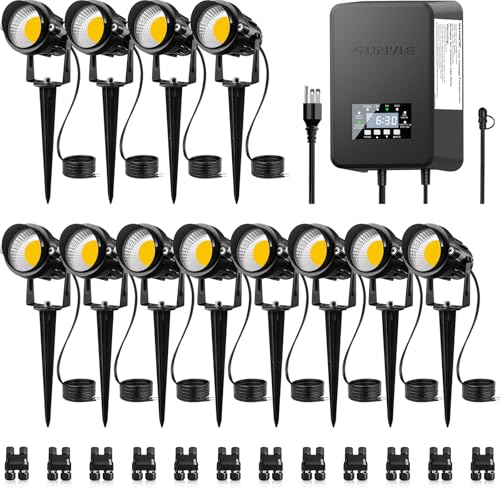
Low-voltage wired systems run on a transformer that steps household current down to a safer 12 volts, then distributes it through burial-rated cable to each fixture. This is the standard choice for most residential projects because it's brighter and more consistent than solar, relatively easy to install without a permit in most areas, and flexible enough to add or move fixtures later. Line-voltage (120-volt) systems produce the most light and can run longer distances without power loss, but they require conduit, a licensed electrician in many jurisdictions, and carry a real shock risk if wiring degrades underground. If you already know you want a solar-only setup, best solar landscape spotlights narrows that choice down to spotlight-specific picks.
Path Lights, Spotlights, and Well Lights: Choosing the Right Fixture for Each Spot
Once you've settled on a power system, the fixture type determines how the light actually behaves in the yard. Most residential setups combine two or three of the following, rather than relying on just one.
Path Lights
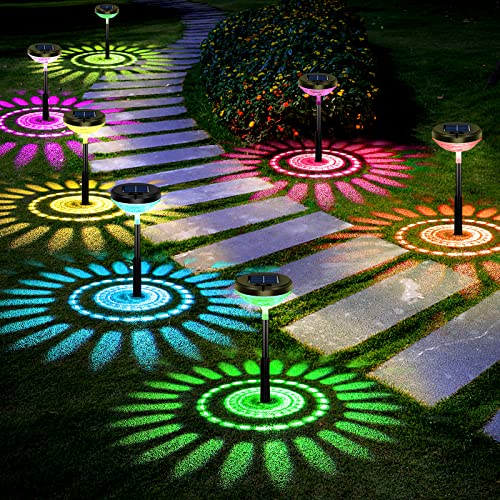
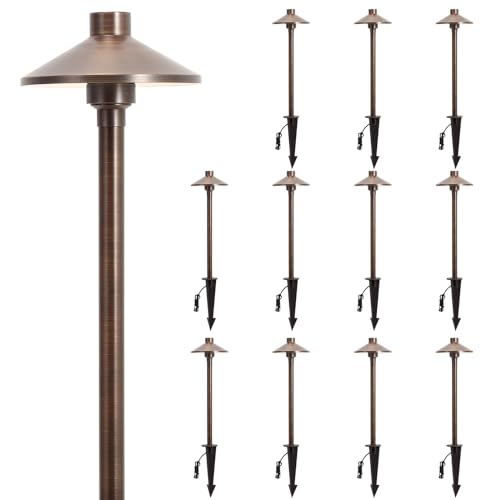
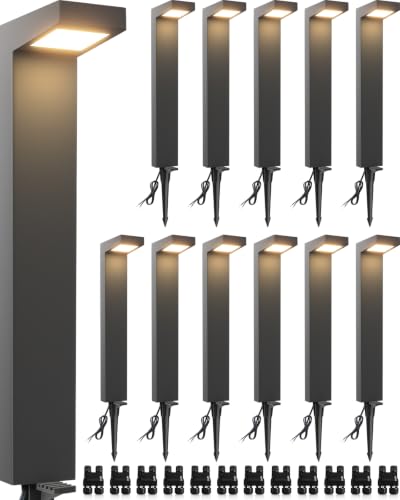
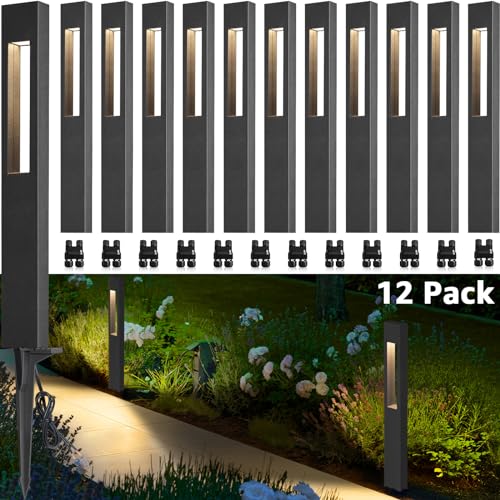
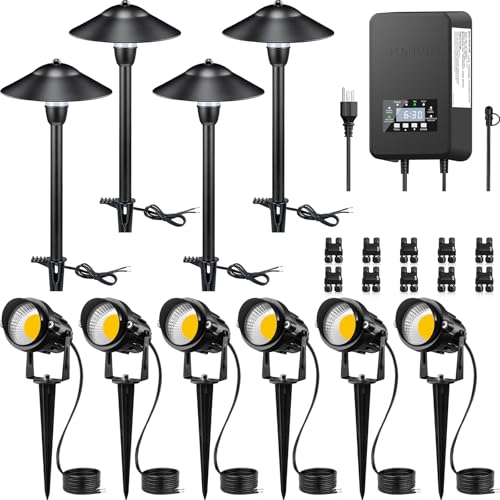
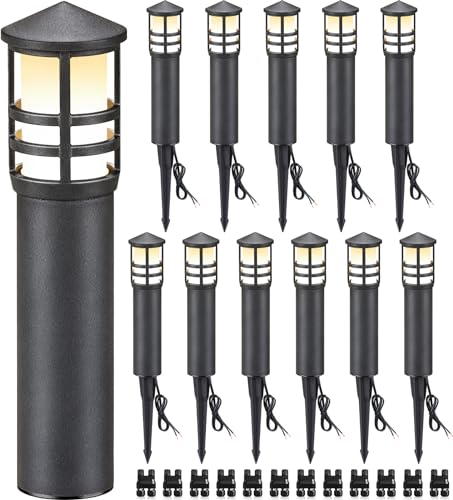
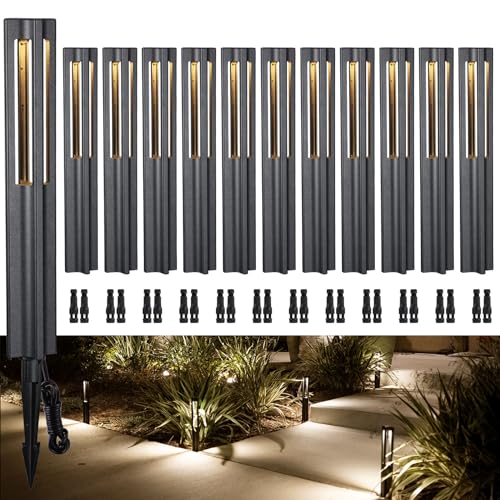
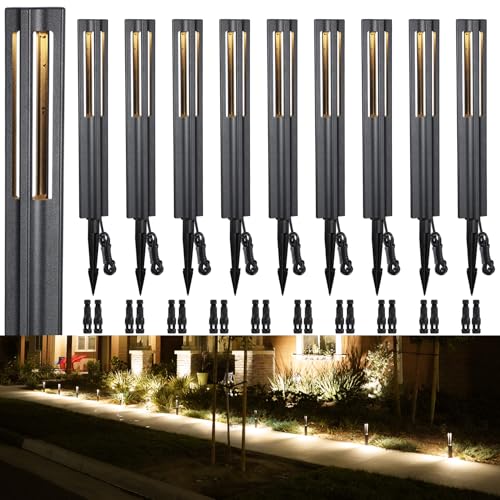
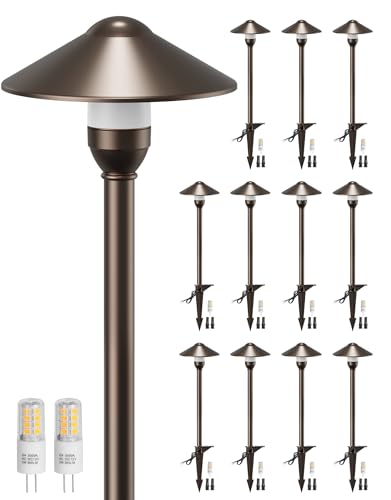
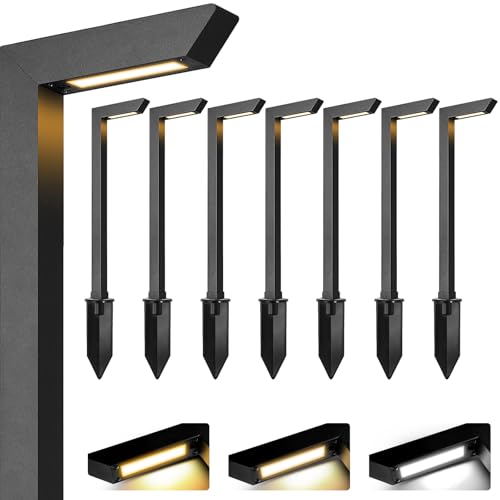
Path lights sit low to the ground and cast a downward pool of light, guiding foot traffic along walkways, driveways, and garden borders without glaring into anyone's eyes. They're the backbone of most safety-focused lighting plans.
Spotlights and Uplights
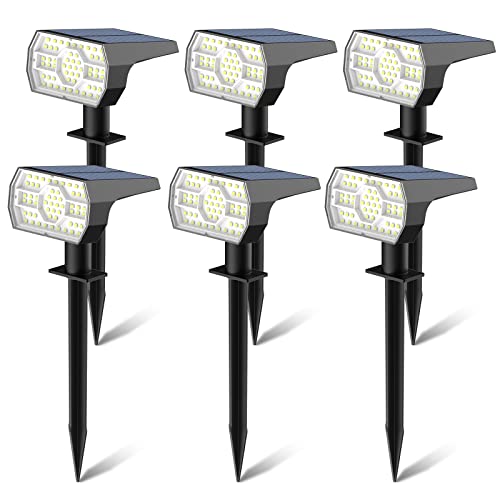
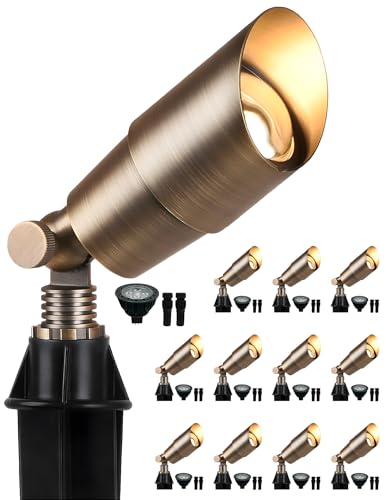
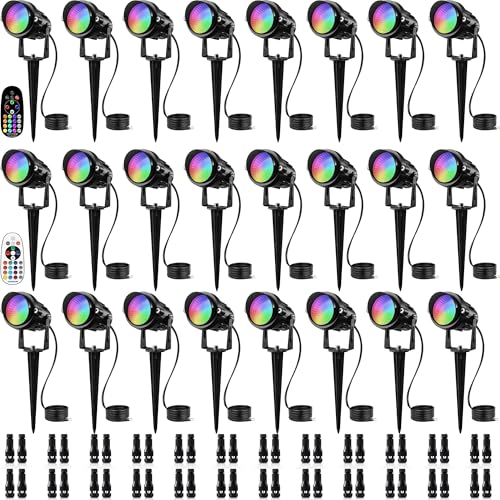
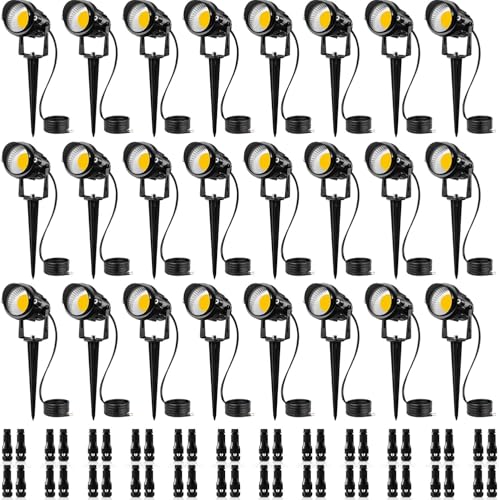
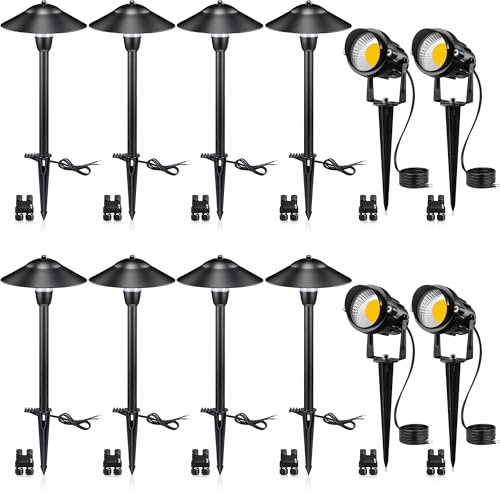
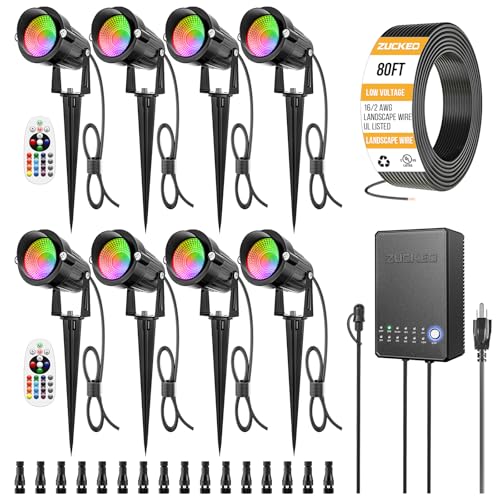
Mounted on a stake with an adjustable head, spotlights aim upward or outward to highlight trees, columns, or architectural features. Because the fixture itself is visible, placement and angle matter more here than with any other type.
Well Lights
Recessed flush into the ground, well lights disappear during the day and throw a tight beam straight up at night. They're a good match for uplighting trees or walls in a lawn area where a visible stake would get in the way of mowing.
String Lights
String lights add ambient, wide-area glow over patios, pergolas, and outdoor dining spaces rather than functional task light. They're less about safety or accenting a single feature and more about making an outdoor room feel finished after dark.
Brightness, Beam Angle, and Weather Resistance: What to Check Before You Buy
Lumens matter more than watts when comparing fixtures, since LED output doesn't scale with power draw the way older halogen bulbs did. For pathway lights, aim for roughly 100 to 200 lumens per fixture; anything brighter tends to create glare instead of gentle, even guidance along the walkway. Spotlights used for uplighting trees or facades can run higher, often 200 to 500 lumens, since that light needs to travel further and compete with the darkness around it.
Beam angle shapes how the light spreads. A narrow beam, in the 15 to 30 degree range, throws a tight, dramatic column that suits a single tree trunk or a tall column. A wider beam, 60 degrees or more, spreads light across a broader area and works better for washing a wall or a wide planting bed. Weatherproofing is non-negotiable outdoors: look for a fixture with a clear water-resistance rating, corrosion-resistant housing (stainless steel, brass, and heavy-duty composite all hold up well), and sealed wiring connections, since exposed connectors are the most common failure point in an otherwise decent system.
Planning Fixture Count and Spacing for Your Yard
Even with the best landscape lighting fixtures, a common planning mistake is buying a fixed multi-pack and spacing everything evenly without considering the actual layout. Pathway lights generally work best spaced 6 to 10 feet apart, with tighter spacing near steps, corners, or uneven ground where visibility matters most. A dimmer 100-lumen fixture calls for closer spacing, while a brighter 200-lumen path light can stretch toward the wider end of that range without leaving dark gaps.
For a typical suburban front yard, that often works out to somewhere between six and twelve path lights for the main walkway, plus two to four spotlights for a tree, entry feature, or house facade. Larger properties or long driveways need proportionally more fixtures, but resist the urge to line every foot of edge with light. Leave some darkness between lit areas. It reads as more natural and lets the highlighted features actually stand out, rather than flattening the whole yard into one even wash of brightness.
Avoiding the Over-Lit Yard: Mistakes That Hurt More Than Help
Over-lighting is the single most common mistake in residential landscape lighting. More fixtures and higher lumens don't automatically make a yard look better; past a certain point they wash out shadows and depth, making the whole space look flat and commercial instead of inviting. Start with fewer fixtures than you think you need, live with the layout for a few nights, then add.
Mixing color temperatures is another frequent misstep. Combining warm white (around 2700 to 3000K) fixtures with cooler, bluer ones in the same yard creates a mismatched, patchwork look even if each individual fixture is well made. Pick one color temperature and stay consistent across the whole property. Finally, matching the wrong fixture to the job causes ongoing frustration: using a spotlight where a well light would stay hidden, or a narrow-beam fixture where a wide wash was needed, means redoing work that a bit of upfront planning would have avoided.
Frequently Asked Questions
Is solar or low-voltage landscape lighting better?
Low-voltage wired lighting is generally brighter and more consistent, since it doesn't depend on stored solar charge. Solar is easier to install and has no ongoing electricity cost, which makes it a reasonable choice for secondary paths or accent spots that don't need maximum brightness.
How many lumens do I need for landscape lighting?
Pathway lights typically work best in the 100 to 200 lumen range, enough to guide the eye without creating glare. Spotlights used to uplight trees or facades can run higher, often 200 to 500 lumens, since that light has to travel farther to be effective.
How far apart should landscape lights be spaced?
Most path lights are spaced 6 to 10 feet apart, with closer spacing near steps or uneven terrain. Brighter fixtures with a wider beam angle can be spaced farther apart without leaving noticeable dark gaps.
Do I need a permit to install landscape lighting?
Low-voltage systems generally don't require a permit in most areas since they run on a safe 12 volts, though local codes vary. Line-voltage installations are treated as standard electrical work and typically do need a permit along with a licensed electrician.
What's the difference between a well light and a spotlight?
A well light is recessed into the ground and disappears during the day, throwing a tight beam straight up at night. A spotlight sits above ground on a visible stake with an adjustable head, which makes it easier to aim but also more visible when the light is off.
Can I install landscape lighting myself?
Low-voltage systems are largely DIY-friendly since the wiring runs at a safe 12 volts and doesn't require conduit in most cases. Line-voltage systems carry real shock risk and usually call for a licensed electrician, so most homeowners stick with low-voltage or solar for do-it-yourself projects.
What color temperature works best for outdoor lighting?
Warm white, roughly 2700 to 3000K, is the standard choice for residential landscapes because it reads as natural and inviting rather than clinical. Mixing warm and cool fixtures in the same yard tends to look disjointed, so it's best to pick one temperature and use it throughout.
Getting the Right Mix for Your Yard
The best landscape lighting setup for any given yard rarely comes down to one product category. It's usually a mix: low-voltage path lights for safety, a few well-placed spotlights or well lights for accent, and solar fixtures tucked into spots that don't need much brightness. Start with the areas that matter most for safety, live with that layout for a few nights, then layer in accent lighting once the functional groundwork is solid.