Best Hybrid Mattresses
Disclosure: We may earn a commission when you buy through links on this page, at no extra cost to you. As an Amazon Associate I earn from qualifying purchases. Learn more

Choosing between a mattress that hugs your body and one that keeps you cool and supported does not have to be an either-or decision. A well-built combination of coils and foam layers gives you both, which is exactly why this category has grown so popular in recent years. The best hybrid mattresses combine the responsive support of a coil system with the pressure relief of foam, without leaning too far into either extreme.
Below, we cover what actually makes a mattress hybrid rather than just labeled that way, and how to judge quality before you commit to one for years of sleep.






What Makes a Mattress Truly Hybrid
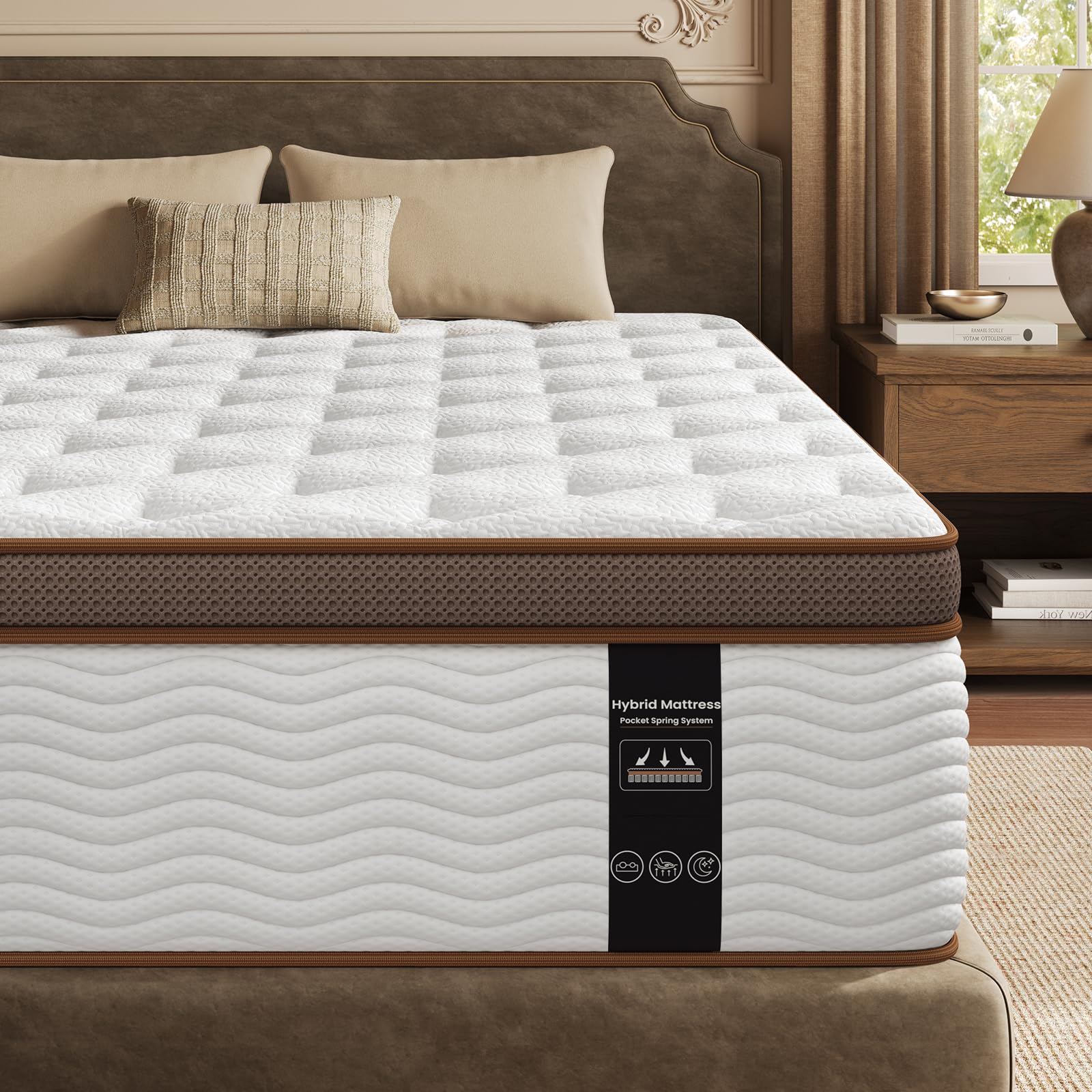
A genuine hybrid mattress pairs a coil support core with a meaningful layer of foam on top, usually at least two to three inches, rather than a thin foam skin over springs. Some mattresses marketed loosely as hybrid barely qualify, using a token layer of foam that behaves almost identically to a traditional innerspring bed.
The balance between coil and foam thickness determines how the mattress actually feels. More foam on top leans the feel closer to a foam mattress, with deeper contouring and slower response, while a thinner foam layer over a robust coil system keeps more bounce and a firmer overall feel.
Knowing which balance you prefer matters more than chasing a specific brand or marketing term, since "hybrid" alone does not guarantee any particular feel.
Coil Systems and What They Do for You
Pocketed coils, individually wrapped springs that move independently rather than as one connected unit, are the standard in quality hybrid mattresses. This design is central to how hybrids achieve motion isolation, since a coil moving under one person's weight does not pull on the coils beside it the way old-style connected coil systems did.
Coil count and gauge affect support level and durability. A higher coil count generally means more precise contouring across the body, while coil gauge, essentially the wire thickness, affects firmness and how long the coils hold their shape under years of nightly weight.
Edge support also depends heavily on coil design. Reinforced coils around the perimeter keep the mattress edge from collapsing when you sit down to put on shoes, which matters more in a hybrid than a pure foam bed since foam alone tends to compress more at the edges.
Foam Layers and Comfort Feel
The foam layers sitting above the coils determine most of what you feel when you first lie down. Memory foam offers deep, slow-recovering contouring that cradles pressure points, while responsive foams like latex or gel-infused varieties offer contouring with a quicker bounce-back and often better temperature regulation.
Layer order matters as much as material choice. A transition layer between the topmost comfort foam and the coil base prevents you from feeling the springs directly, smoothing out the shift between soft cushioning and firmer support underneath.
Thicker comfort layers generally suit side sleepers and lighter body types better, since they need more give to cushion shoulders and hips, while firmer, thinner comfort layers tend to suit back and stomach sleepers who need less sinkage to stay properly aligned.
Hybrid vs Pure Foam: Knowing the Trade-offs
Deciding between the best hybrid mattresses and an all-foam mattress comes down to a handful of real differences worth weighing directly. Pure foam mattresses typically contour more deeply and isolate motion exceptionally well, but they can trap more body heat and feel slower to move on, which some sleepers find restrictive when changing positions during the night.
Hybrid mattresses generally sleep cooler thanks to airflow around the coil layer, and they offer more bounce and easier movement, which benefits combination sleepers who shift positions often. What hybrids sometimes give up is the same deep, isolated contouring that a thick all-foam mattress delivers, since the coil layer underneath changes how pressure distributes compared to foam all the way through.
Neither option is universally better. Sleepers who run hot or share a bed and want responsive movement tend to prefer hybrids, while sleepers who prioritize maximum contouring and quiet, motion-free sleep often lean toward all-foam construction instead.
Care Tips to Protect the Investment
Rotating a hybrid mattress every three to six months helps distribute wear evenly across the coil and foam layers, particularly if you tend to sleep in the same spot every night. Unlike flippable older mattresses, most modern hybrids are one-sided, so rotation rather than flipping is the maintenance step that actually matters.
A quality mattress protector guards both the coils and foam from moisture damage, which affects foam layers more severely than coils since foam can retain moisture and develop odor or mildew over time. Avoid letting the mattress sit directly on a solid, non-breathable base, since airflow underneath helps foam layers stay fresh and supportive longer.
FAQ
How is a hybrid mattress different from a pure innerspring mattress?
A hybrid adds a substantial foam comfort layer on top of coils, while a traditional innerspring typically has only a thin quilted layer with minimal contouring or pressure relief.
Do hybrid mattresses sleep cooler than all-foam mattresses?
Generally yes. The coil layer allows more airflow through the mattress core, which helps dissipate heat compared to dense all-foam construction.
How long should a good hybrid mattress last?
With proper care and regular rotation, a quality hybrid mattress typically performs well for seven to ten years before support noticeably declines.
Are hybrid mattresses good for couples?
Yes, particularly for motion isolation from pocketed coils and the added bounce that makes changing positions and getting in or out of bed easier.
Do hybrid mattresses need a special foundation?
Most work well on a slatted base or foundation with proper support spacing. Check the manufacturer's specific requirements, since gaps that are too wide can affect support.
Is a higher coil count always better?
Generally it improves contouring precision, but coil gauge and foam quality matter just as much for overall comfort and long-term durability.
How often should a hybrid mattress be rotated?
Every three to six months is a reasonable schedule for most hybrid mattresses, which helps prevent uneven wear from consistent sleeping positions.
Settling on the Right Hybrid
The right hybrid mattress comes down to the balance between coil support and foam comfort that matches how you actually sleep, not just the label on the listing. Pay attention to coil type, foam thickness, and how the two layers work together rather than assuming all hybrids feel the same.
Once you know whether you lean toward more contouring or more responsiveness, narrowing down the best hybrid mattresses for your bedroom becomes a much more straightforward decision.
Related reading: best mattresses for lower back pain and best mattresses for side sleepers.