Best Garage Storage Systems: A Complete Planning Guide
Disclosure: We may earn a commission when you buy through links on this page, at no extra cost to you. As an Amazon Associate I earn from qualifying purchases. Learn more

A garage that starts the season organized rarely stays that way. Bikes end up blocking the workbench, seasonal bins get stacked three deep in front of the tools you actually use, and within a few months you're back to digging through clutter to find a wrench. The fix usually isn't one product, it's a full plan.
Good garage storage systems combine a few different pieces, cabinets, shelving, a dedicated work area, and overhead space, arranged around how you actually use the garage. This guide focuses on that whole-space approach: how to zone the room, which storage types fit which items, and what to look for so the system holds up under real weight. If you're specifically deciding between wall-mounted rail or slat panels versus other wall storage options, that comparison gets its own dedicated coverage; here we're building the bigger picture around it.

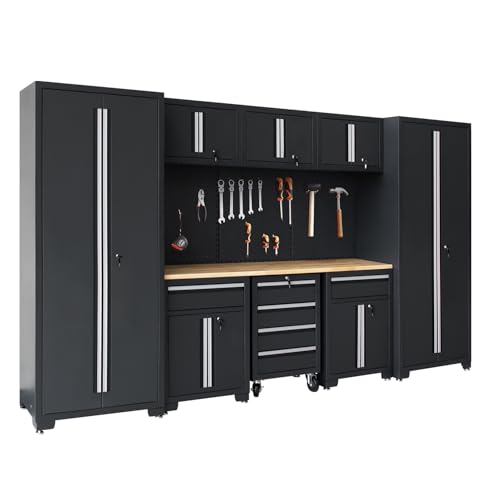
By the end, you'll know how to plan a layout, choose between cabinets and open shelving, judge weight capacity and materials, and carve out room for a workbench and overhead storage.
Plan Your Garage Storage Layout Before You Buy Anything
The single biggest mistake people make is buying storage pieces before deciding what the garage is actually for. A cabinet that looks great in a showroom photo might be the wrong shape for your space, or it might solve a problem you don't have while ignoring the one you do.
Start With Zones, Not Products
Walk through the garage and group everything into rough categories: yard and garden tools, automotive supplies, sports and seasonal gear, hand and power tools, and household overflow. Each category becomes a zone with its own corner or wall section. Once the zones exist on paper, it's much easier to see whether you need tall cabinets, wide shelving, or a mix of both, instead of guessing.
Measure Before You Shop
Measure wall length, ceiling height, and the clearance you need to still open car doors and walk around comfortably. Garages that lose too much floor space to bulky units end up with a car that barely fits and a system nobody wants to use. Leave real walking paths between zones, not just gaps between boxes.
Cabinets, Shelving, or a Mix: Matching Storage Type to What You Own
Most garage storage systems lean on two core building blocks, closed cabinets and open shelving, and the right mix depends entirely on what you're storing and how often you need to grab it.
Closed Cabinets for Chemicals, Tools, and Anything You Want Out of Sight
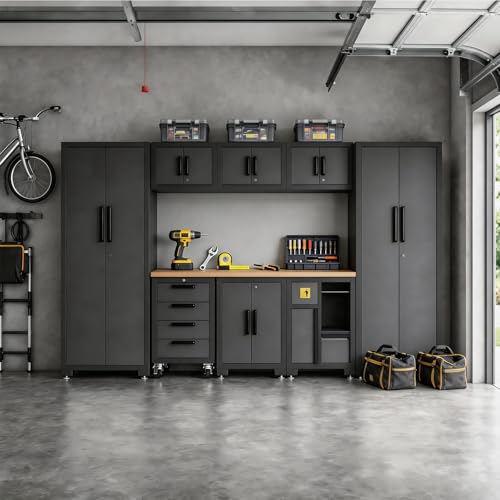
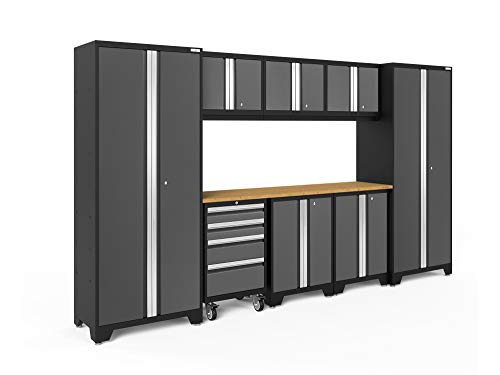
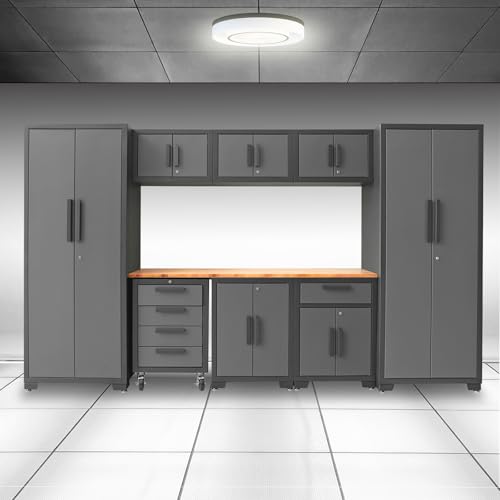
Cabinets keep dust, sunlight, and curious kids or pets away from chemicals, sharp tools, and small parts. They also make the garage look tidier at a glance since clutter disappears behind doors. The trade-off is cost per square foot of storage, cabinets generally hold less volume than open shelving of the same footprint.
Open Shelving for Bins, Bulk Items, and Easy Access
Open shelving is cheaper, faster to load, and easier to see what's on it, which makes it a good fit for labeled bins, bulk supplies, and anything you reach for often. If wall space is limited but you still want vertical storage without eating into cabinet budget, a wall-mounted rail or panel setup is worth a look, and since that's a deep enough topic on its own, our guide to garage wall storage systems covers slat and rail panels in detail. For this overall plan, treat wall storage as one more zone option alongside cabinets and shelving, not the whole solution.
Weight Capacity and Material: What Actually Holds Up
Nothing undermines a garage storage system faster than a shelf that sags or a bracket that pulls out of drywall. Checking weight capacity before you buy saves you from replacing everything a year later.
Floor-Mounted vs Wall-Mounted Load Limits
Freestanding, floor-mounted units generally carry far more weight because the load transfers straight into the concrete slab rather than the wall. That makes them the better choice for heavy items like car parts, large tool chests, or bags of concrete mix. Wall-anchored pieces depend on hitting studs and using the right hardware, and their real-world capacity is usually much lower than a floor unit of similar size.
Steel, Resin, or Wood
Heavy-duty steel handles the most weight and resists warping but costs more and can dent. Reinforced resin or plastic shrugs off moisture and rust, which matters in humid or unheated garages, though it typically holds less weight per shelf. Wood looks nicer and works fine for light, dry storage, but it's the least forgiving option if the garage sees temperature swings or dampness.
Making Room for a Workbench Zone and Overhead Storage
Once cabinets and shelving are placed, the leftover space determines whether the garage still functions as a workspace or just becomes another storage room.
Keep the Workbench Clear
Reserve a section of wall and floor near an outlet purely for work, with storage kept close but not on top of the surface itself. A rolling tool box parked underneath keeps frequently used tools within reach without permanently occupying the bench.
Use the Ceiling for Off-Season Gear
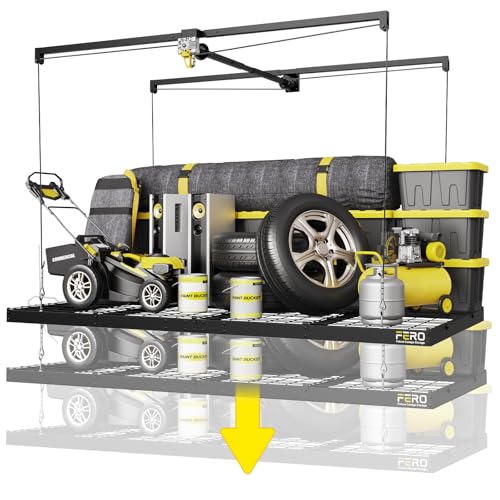
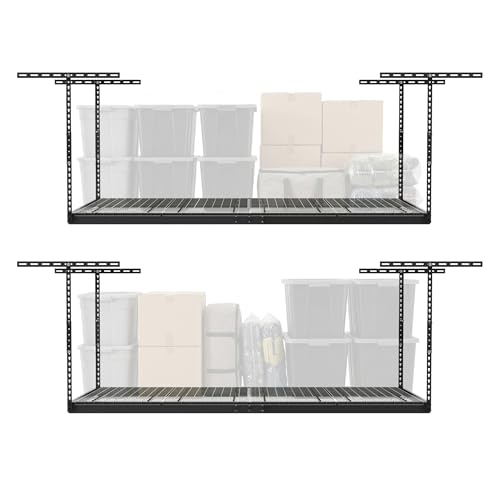
Overhead racks turn unused ceiling space into storage for items you touch only a few times a year, holiday decorations, camping gear, or spare parts. It's also a sensible spot for bulky seasonal items like a wheel and tire storage rack setup if you swap tires seasonally, since those take up floor space you'd rather keep clear the rest of the year. Just confirm the ceiling structure can support the rated load before hanging anything heavy.
Frequently Asked Questions
Where should I start when organizing a garage?
Start by sorting everything into zones, tools, automotive, sports and seasonal gear, and household overflow, before buying any storage. Measure your available wall and floor space next, then choose cabinets or shelving based on what each zone actually needs.
Are garage cabinets or shelving better?
Neither wins outright, they serve different needs. Cabinets are better for items you want hidden or protected, while open shelving is cheaper and faster for things you grab often, so most well-planned garages use both.
How much weight can garage shelving hold?
It varies widely by design, but floor-mounted steel shelving typically holds far more per shelf than wall-mounted options, since the weight transfers into the floor rather than relying on wall anchors. Always check the manufacturer's rated capacity per shelf, not just the unit total.
Is overhead garage storage worth it?
For seasonal or rarely used items, yes, ceiling storage frees up valuable floor and wall space for things you need regularly. It's less practical for heavy or frequently accessed items since getting them down takes extra effort.
What's the best material for garage cabinets, steel or plastic?
Steel handles more weight and lasts longer under heavy use, while reinforced resin resists moisture and rust better in humid or unheated garages. The right choice depends more on your garage's conditions than on price alone.
Can I add to a garage storage system later?
Many systems are designed to be modular, so you can add cabinets, shelves, or wall panels over time rather than buying everything at once. Sticking with pieces designed to work together from the start makes it much easier to expand later without mismatched styles or wasted wall space.
Building a System That Actually Grows With You
The garages that stay organized long-term aren't the ones with the fanciest single product, they're the ones planned around real zones, sized correctly for what's actually stored, and built with materials that match the space. Start with the layout, pick cabinets and shelving to match how you use each zone, and leave room to add more as your needs change.