Best Framing Hammers of 2026: Complete Buying Guide
Disclosure: We may earn a commission when you buy through links on this page, at no extra cost to you. As an Amazon Associate I earn from qualifying purchases. Learn more

The best framing hammers from Estwing and Vaughan, plus a guide to head weight, face style, handles and shock control.
A framing hammer is the heavy hitter of the hammer family, built to drive 16d nails into studs, plates and joists with as few swings as possible. Head weight, handle length, face texture and how much shock reaches your elbow all decide whether a hammer helps you or wears you out by lunchtime. This guide to the best framing hammers explains the features that matter, the common mistakes to avoid and our top picks so you can buy with confidence.
We start with three short picks, then cover how to choose, the main hammer types, care tips and common questions. Always wear safety glasses when framing, since nails and wood chips can fly; never strike two hammers together or hit hardened steel; and retire any hammer with a cracked, chipped or loose head.



Our Top 3 Picks at a Glance
Our picks are the Estwing E3-22SM 22 oz Framing Hammer as the best overall, the Estwing 20 oz Framing Hammer as the best value and the Vaughan Titanium Framing Hammer as the best premium pick.
We compared head weight, handle length and material, face style, claw design, shock reduction, nail starters, warranty and price, along with the overall pattern in owner feedback. We did not swing these hammers ourselves; the notes reflect maker specifications.
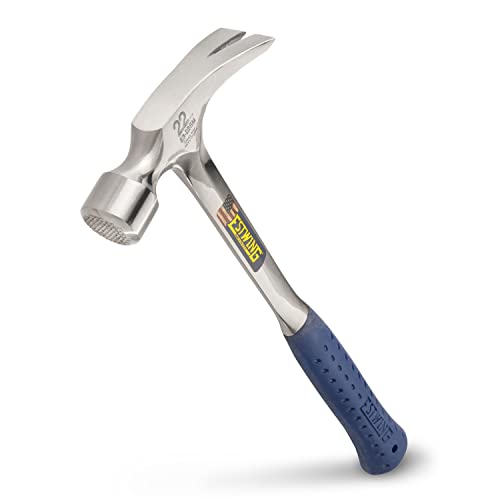
Best Overall: Estwing E3-22SM 22 oz Framing Hammer
The Estwing E3-22SM suits framers, remodelers and serious DIYers who want one durable hammer for everyday framing, at around $31. Estwing lists a 22 oz head, a long handle with a straight rip claw, a milled face that grips nail heads and Estwing's patented Shock Reduction Grip. Estwing forges its hammers from a single piece of solid steel, says the grip reduces impact vibration by 70% and has made its tools in Rockford, Illinois since 1923.
Two strengths stand out: one piece steel construction that will not loosen and a weight that balances driving power with control.
The limitation is a steel handle, which transmits more shock than titanium or fiberglass designs despite the grip.

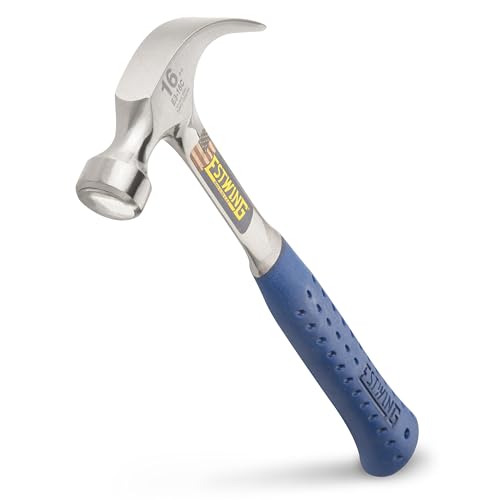
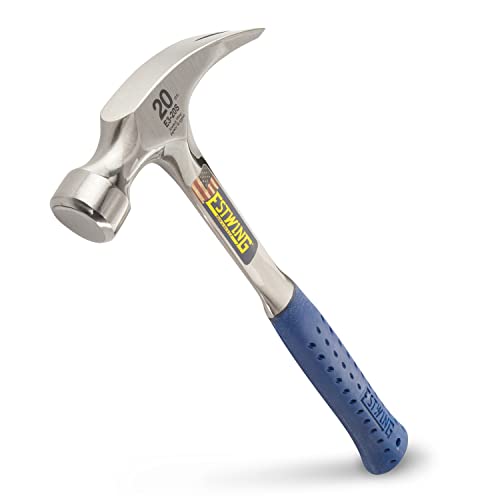
Best Value: Estwing 20 oz Framing Hammer
The Estwing 20 oz hammer suits DIYers and lighter framing work, at around $30. Estwing lists a rip claw for pulling nails, prying boards, demolition and splitting wood, a longer handle for striking power, one piece forged steel construction and the same Shock Reduction Grip that reduces impact vibration by 70%. It is made in the USA.
Its strengths are a lighter head that is easier on the arm and a very large owner review count for a framing hammer.
The trade off is less driving power per swing than 22 to 28 oz hammers when sinking big nails.

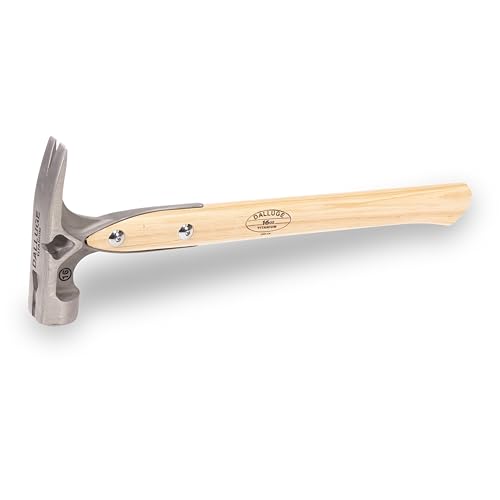
Best Premium Pick: Vaughan Titanium Framing Hammer
The Vaughan Titanium Framing Hammer suits professional framers who swing all day and want maximum power with less weight and fatigue, at around $156. Vaughan lists a precision cast titanium head of 16 oz that delivers powerful swings with less effort, a magnetic nail holder for one handed nail starting, a 17 inch hickory handle and smooth or milled face options.
The appeal is titanium's ability to hit like a heavier steel hammer with less weight, plus a hickory handle that absorbs shock.
The limitation is a high price and a wood handle that can break with missed strikes.

How to Choose the Best Framing Hammers: Buying Guide
Choose by head weight and material first, then handle length, face texture, claw and shock control.
Intended Use and Who It's For
Framing hammers drive large nails into dimensional lumber. Professional framers often choose 20 to 28 oz steel or 14 to 16 oz titanium. DIYers building a shed or deck do well with a 20 to 22 oz steel hammer like Estwing's. If you mostly hang pictures or do trim, a lighter claw hammer or finish hammer is a better fit.
Among the best framing hammers, a 22 oz milled face model covers the widest range of jobs.
Head Weight and Material
Head weight drives nails. Steel heads range from 20 oz, like Estwing's value pick, to 22 oz, like Estwing's E3-22SM and DEWALT's DWHT51064, and up to 25 and 28 oz, like Estwing's E3-25SM and E3-28S. Titanium heads, like Vaughan's 16 oz, hit about as hard as heavier steel. Estwing's AL-PRO uses forged aircraft aluminum at 14 oz with dead blow shot inside the head.
Face Style: Milled vs Smooth
Milled or waffle faces, like Estwing's E3-22SM and E3-25SM, grip nail heads and reduce glancing blows, ideal for framing. They leave a pattern on wood, so avoid them for finish work. Smooth faces, like Estwing's E3-28S, leave clean surfaces and suit general carpentry. Vaughan offers both options.
Handle Length and Material
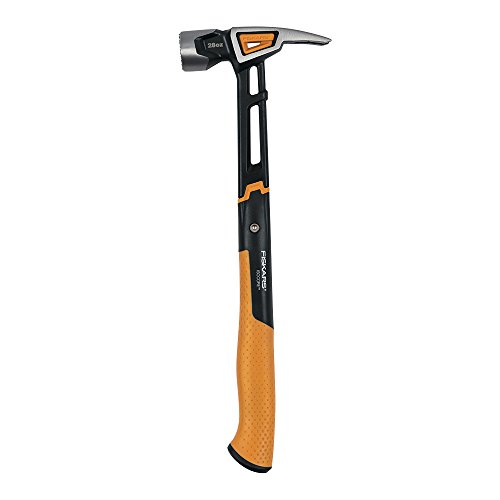
Longer handles add leverage and power. Fiskars' Pro IsoCore uses a 16 inch handle, Vaughan's titanium hammer a 17 inch hickory handle and Estwing's Sure Strike wood handle hammer an 18 inch overall length.
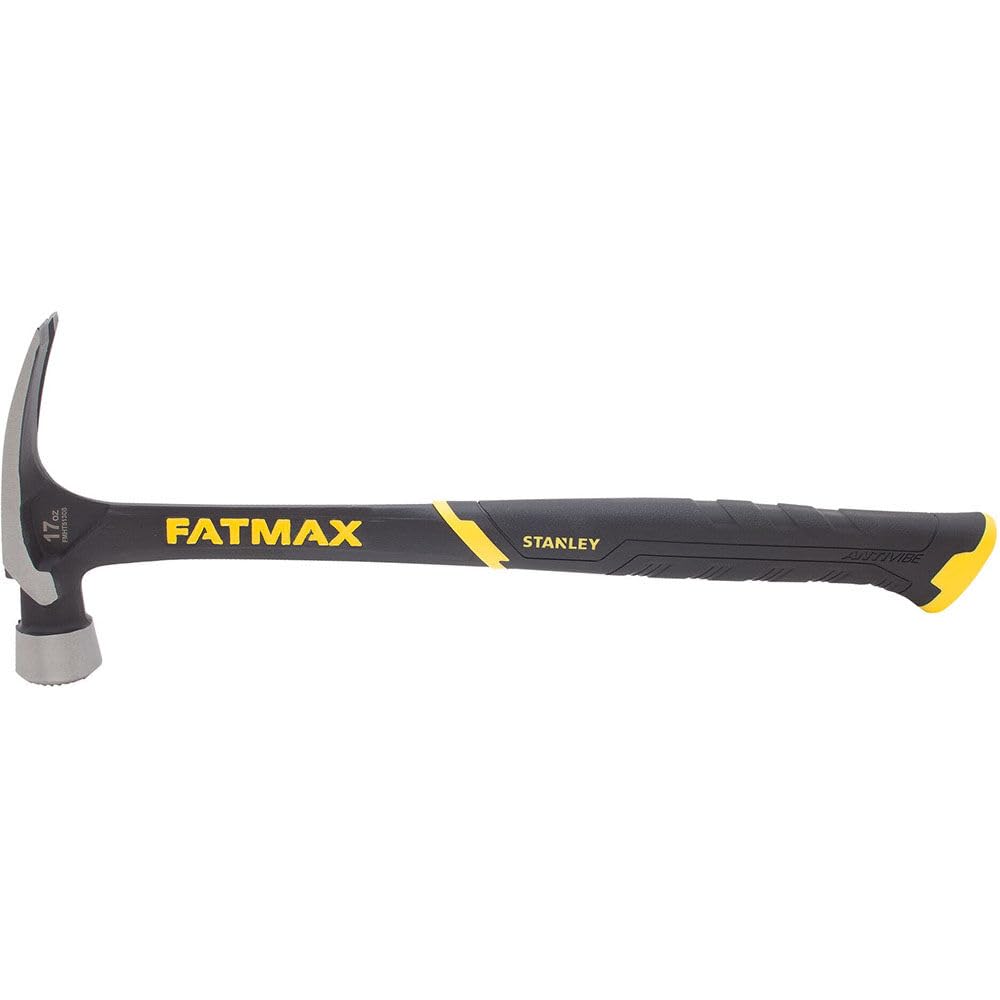
One piece steel, like Estwing's, is nearly indestructible. Hickory, like Vaughan's and Vaughan and Bushnell's, absorbs shock naturally. Graphite and fiberglass, like Stanley's 22 oz graphite hammer, balance weight and comfort.
Shock Reduction and Comfort
Repeated swings stress your elbow and wrist. Estwing says its Shock Reduction Grip reduces impact vibration by 70%. Fiskars says its patented IsoCore system transfers 4 times less shock and vibration than wood handles, with an insulation sleeve that captures strike shock. Titanium heads also transmit less shock than steel.
Claw Design and Nail Starters
Straight rip claws, like Estwing's and Fiskars', pry boards apart and split wood. Magnetic nail starters, like Vaughan's, Estwing's AL-PRO and Vaughan and Bushnell's VW18, hold a nail so you can start it one handed overhead. Vaughan and Bushnell adds a Sidewinder side nail puller for tight spots.
Size, Weight, and Fit for Your Body
The right hammer feels balanced in your hand and lets you swing without straining. Stronger, experienced users can control 25 to 28 oz steel heads, while smaller framed users and beginners often do better with 20 to 22 oz steel or a light titanium or aluminum head. Try a few swings at waist and shoulder height; if your wrist bends or the head wobbles at the end of the swing, choose a lighter hammer or a shorter handle.
Price vs Value
Steel framing hammers cost around $30 to $53, like Estwing, DEWALT and Stanley. Hickory and fiberglass designs cost around $38 to $98, like Fiskars and Vaughan and Bushnell. Aluminum and titanium hammers cost around $109 to $156. Fiskars lists a full lifetime warranty on its Pro IsoCore hammer.
Types of Framing Hammers
Here are the main types and who each suits.
Premium Titanium and Aluminum
Titanium hammers, like Vaughan's, and aluminum hammers, like Estwing's AL-PRO, deliver strong strikes with light weight and low shock. They suit pros who swing all day. They cost several times more than steel.
Mid Range Shock Control Designs
Hammers with advanced shock systems or hickory handles, like Fiskars' Pro IsoCore and Vaughan and Bushnell's VW18, suit frequent framers who want comfort without titanium prices. They balance weight, power and vibration control.
Classic One Piece Steel
One piece steel hammers, like Estwing's E3 series and DEWALT's 22 oz model, are tough, affordable and long lasting. They suit DIYers and pros who want a hammer that will never loosen. Steel transmits more shock than other designs.
Tips to Get the Most From Your Framing Hammer
Hold near the end of the handle. This adds power with less effort.
Let the head do the work. Swing from the elbow and shoulder, not just the wrist.
Start nails with light taps. Then drive with full swings.
Use the right face. Milled faces for framing, smooth faces for visible work.
Wear safety glasses. Protect eyes from flying nails and chips.
Framing Hammers: Your Questions Answered
Are expensive framing hammers worth it?
Expensive framing hammers are worth it for professionals who swing all day. Titanium hammers like Vaughan's reduce weight and shock, which helps prevent elbow strain. For DIY projects, a steel hammer like Estwing's E3-22SM at around $31 performs very well.
How long does a framing hammer last?
A one piece steel hammer like Estwing's can last decades with basic care. Wood handled hammers may need new handles after missed strikes or years of use. Replace any hammer with a cracked, chipped or mushroomed face.
What features matter most when buying framing hammers?
Head weight, face style, handle material and shock reduction matter most. A 20 to 22 oz steel or 14 to 16 oz titanium head, a milled face, a comfortable shock absorbing handle and a straight rip claw suit most framing work.
How much should I spend on a framing hammer?
Most buyers should spend around $30 to $55 for a quality steel framing hammer like Estwing's. Spend around $40 to $100 for advanced shock control or hickory designs, and around $109 to $156 for aluminum or titanium.
How do I maintain a framing hammer?
Wipe the head clean and dry after use to prevent rust, and lightly oil steel heads before storage. Check wood handles for cracks and tighten or replace loose heads. Store hammers in a dry toolbox or on a wall rack.
Wrapping Up
The best framing hammers balance head weight, comfort and durability for the work you do. Estwing's E3-22SM is the best overall for its one piece steel build and milled face, Estwing's 20 oz hammer is the best value for lighter framing and Vaughan's titanium hammer is the premium pick for all day pros.
For more tool guides, see the best carpenter hammer, the best dead blow hammers, the best nail gun for framing and the best cordless framing nailer. Then compare current prices in the product table above.