The Best Fillet Knives: Buying Guide and Top Picks
Disclosure: We may earn a commission when you buy through links on this page, at no extra cost to you. As an Amazon Associate I earn from qualifying purchases. Learn more

The best fillet knives: HOSHANHO, Dexter-Russell and BUBBA picks plus blade, steel and care tips.
A fillet knife has one job that ordinary kitchen knives handle poorly: gliding along a fish's backbone and under its skin to remove clean, boneless fillets without wasting meat. That takes a long, thin, flexible blade, a sharp edge and a handle that stays secure when wet and slippery. Anglers cleaning a cooler of fish at the dock, home cooks breaking down a whole salmon and hunters trimming game all benefit from the right fillet knife. This guide to the best fillet knives explains what to look for and shares three picks for different cooks and anglers.
We start with our top picks, then cover a full buying guide, the main types of fillet knives, care tips and answers to common questions. Every knife in the table above is sold new on Amazon US. Fillet knives are extremely sharp: cut away from your body, use a cut resistant glove when filleting large amounts of fish, store knives in sheaths or blocks and keep them away from children.





Our Top 3 Picks at a Glance
Our picks are the HOSHANHO 9 inch Japanese fillet knife for most cooks and anglers, the Dexter-Russell 7 inch Narrow Fillet Knife for value and the BUBBA Li-Ion Cordless Electric Fillet Knife as the best electric pick for anglers who clean lots of fish.
We compared blade length and flexibility, steel, edge retention, handle grip when wet, sheaths and storage, maintenance and price, along with the overall pattern in owner feedback. We did not fillet fish with these knives ourselves; the notes reflect maker specifications.
Best Overall: HOSHANHO 9 Inch Japanese Fillet Knife
The HOSHANHO 9 inch fillet knife suits home cooks and anglers who want a sharp, versatile knife at a moderate price, at around $38. HOSHANHO lists Japanese 10Cr15CoMoV high carbon stainless steel for hardness and durability, a long thin blade for slicing, boning, trimming, skinning and butterflying fish and meat, a flexible, lightweight blade and an ergonomic pakkawood handle.
Two strengths stand out: a 9 inch length that handles medium and large fish like salmon, trout and bass, and a hard Japanese steel that holds a keen edge. The pakkawood handle looks good in the kitchen and offers a comfortable grip.
The limitation is that pakkawood and harder steel need more careful hand washing and drying than all synthetic fishing knives. Skip it if you want a knife to leave in a wet tackle box.

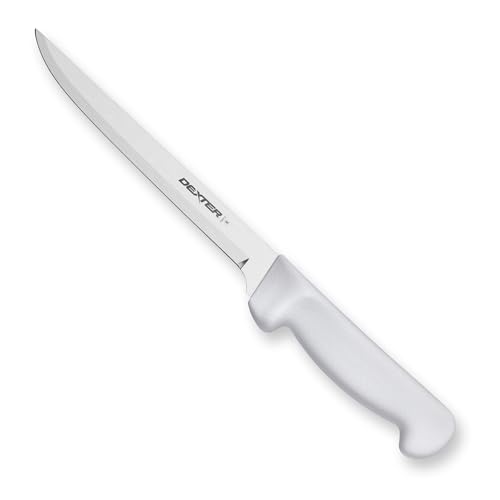
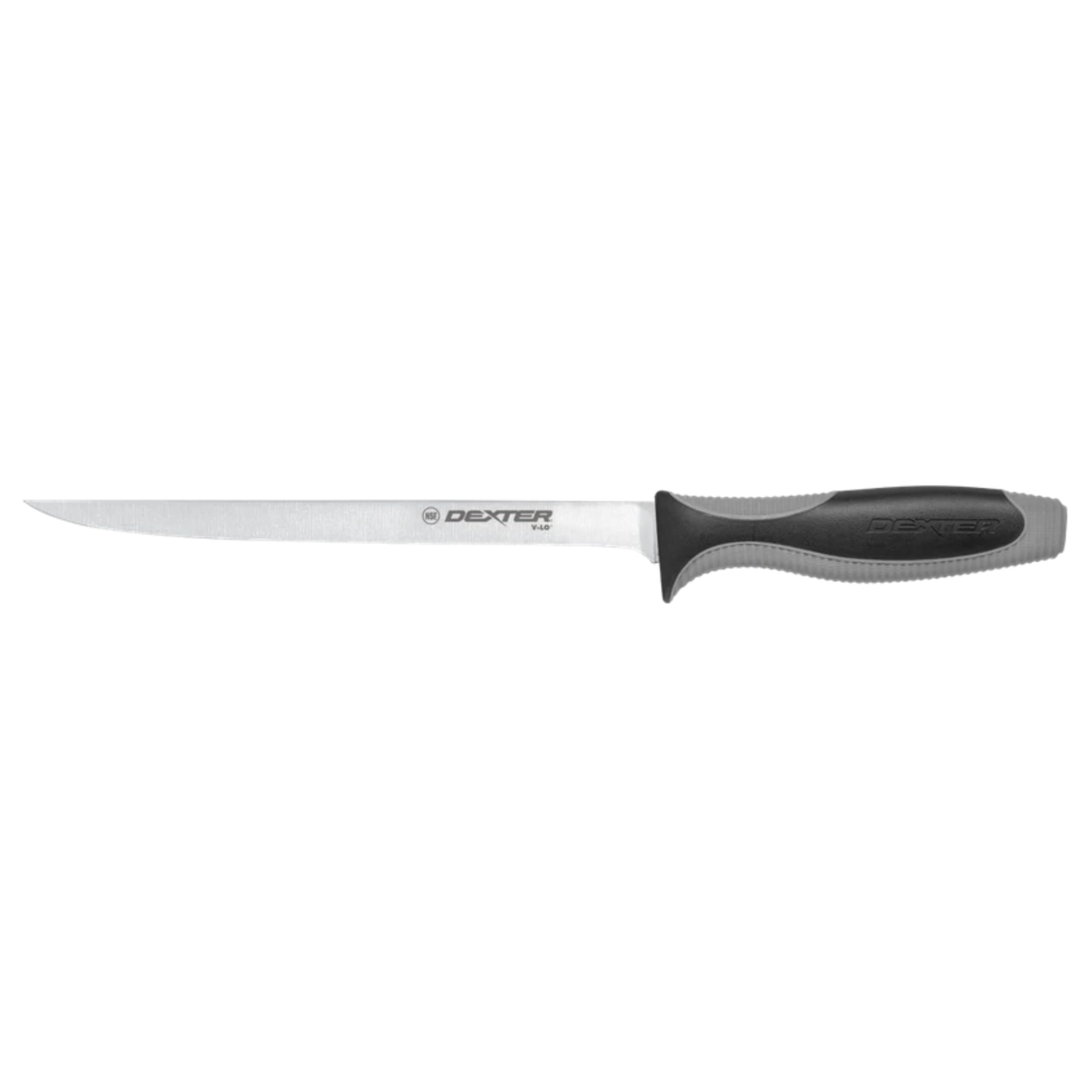
Best Value: Dexter-Russell 7 Inch Narrow Fillet Knife (P94812)
The Dexter-Russell 7 inch Narrow Fillet Knife is for anglers and cooks on a budget who want a proven, no frills tool, at around $16. Dexter-Russell lists a slender, flexible 7 inch blade for clean, accurate cuts, stain free high carbon steel for edge retention and corrosion resistance and a textured polypropylene handle that grips securely even with wet or oily hands.
Its strengths are price, a slip resistant handle that suits boats and docks and Dexter-Russell's long reputation in professional kitchens and fish markets. The 7 inch size handles panfish, trout and smaller fish with control.
The trade off is plain styling and no sheath included. Skip it if you regularly fillet large fish like salmon and striped bass, where a 9 inch blade helps.

Best Electric Pick: BUBBA Li-Ion Cordless Electric Fillet Knife
The BUBBA Li-Ion Cordless Electric Fillet Knife suits anglers who clean large catches and want speed, at around $170. BUBBA lists a non slip grip handle with a trigger guard, four TiN coated stainless steel reciprocating blades, removable blades for easy cleaning, an LED battery indicator, a zippered storage case and a 1 year limited warranty. The handle is 8.5 inches long and the knife weighs 1.11 pounds.
The appeal is fast, consistent cuts through many fish without hand fatigue, which matters on charter trips and after big days on the water. Interchangeable blades handle different fish sizes.
The limitation is price and weight compared with manual knives. Skip it if you fillet only a few fish at a time.

How to Choose the Best Fillet Knives: Buying Guide
The best fillet knives match the fish you clean, stay sharp and grip securely when wet. Here is what to compare.
Blade Length and Flexibility
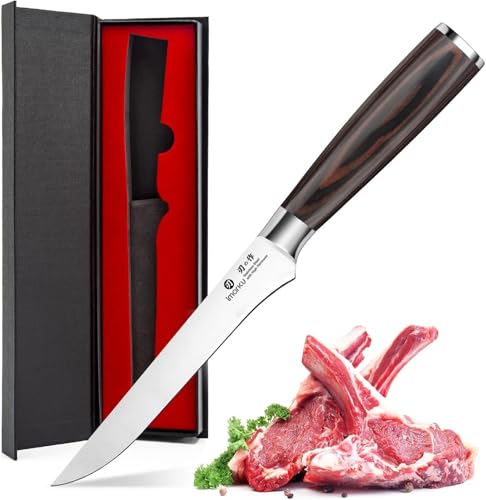
Blade length should match fish size. Six to 7 inch blades, like the imarku 6 inch and Dexter-Russell 7 inch, suit panfish, trout and small fish. Eight to 9 inch blades, like the HOSHANHO 9 inch and Dexter-Russell Sani-Safe 9 inch, suit salmon, bass and larger fish. Flexible blades bend along the backbone and under the skin, while stiffer blades suit trimming meat.
Flexibility is a balance: very flexible blades follow curves and skin fish easily but can feel wobbly when cutting through rib bones, while medium flex blades handle both tasks. Many anglers prefer a flexible 7 inch for panfish and a medium flex 9 inch for larger fish.
Blade Steel (German vs Japanese, Carbon vs Stainless)
High carbon stainless steel balances sharpness, edge retention and corrosion resistance. German steel, like imarku's at 56 Rockwell hardness, is tough and easy to sharpen. Japanese steel, like HOSHANHO's 10Cr15CoMoV, is harder and holds a finer edge but can chip if twisted. Saltwater anglers should rinse and dry any knife promptly.
Dexter-Russell's DEXSTEEL is a high carbon, high alloy stain free steel made in the USA, and many professional fish cutters rely on it because it sharpens quickly and resists corrosion in busy, wet kitchens.
Handle Material and Grip
Fishing knives need handles that stay secure when wet and slimy. Textured polypropylene, like Dexter-Russell's Sani-Safe handles, and rubberized grips resist slipping and clean easily. Pakkawood, like on HOSHANHO and imarku knives, feels warm and looks attractive but needs more care.
Handle shape matters too. A slight guard or finger notch keeps your hand from sliding onto the blade, and a full grip handle offers control when pressing the blade along bones.
Sharpening and Maintenance Needs
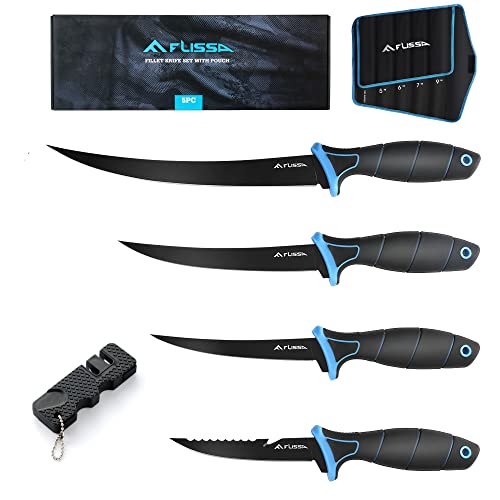
Fillet knives need a keen edge. Hone before each use and sharpen when the knife starts tearing rather than slicing. Sets like FLISSA's 4 piece fillet set include a sharpener and protective sheaths. Electric fillet knives use replaceable blades.
Use a sharpener that suits thin blades, such as a ceramic rod or fine whetstone, and maintain the original edge angle. Pull through sharpeners can remove too much metal from thin fillet blades if used aggressively.
Sheath and Storage
A sheath protects the blade and your hands in tackle boxes and boat compartments. FLISSA's set includes protective sheaths with a belt clip. In the kitchen, a block or magnetic strip keeps the edge safe. Never toss a fillet knife loose in a drawer.
Drain holes in sheaths let water escape so blades do not sit wet, which helps prevent rust and odors. Always dry the blade before sheathing it after a fishing trip.
Manual vs Electric
Manual knives offer control and quiet, low cost operation. Electric fillet knives, like BUBBA's cordless and 110V models and the WORKPRO 12V cordless knife at around $76, speed through large catches with less effort.
Electric knives work best for skinning and removing fillets quickly, while manual knives still handle fine trimming and removing pin bones. Many anglers use an electric knife for the main cuts and a manual knife to finish.
Certification and Hygiene
NSF certified knives, like the Dexter-Russell Sani-Safe 9 inch, meet sanitation standards for professional kitchens and are easy to clean thoroughly, which matters for food safety.
White or brightly colored handles, like Dexter-Russell's Sani-Safe, also make it easier to see dirt and find the knife on a crowded cleaning table or boat deck.
Types of Fillet Knives
Fillet knives fall into four types. Here is who each suits.
Choose the type based on where and how often you fillet: a dock or boat calls for durable synthetic handles and sheaths, while a home kitchen allows nicer handles and blocks.
Professional Grade Manual Knives
Professional knives, like Dexter-Russell's Sani-Safe and V-Lo models, offer NSF certified hygiene, slip resistant handles and durable steel at modest prices. They suit fish markets, kitchens and serious anglers.
Japanese and Premium Kitchen Knives
Japanese style and premium knives, like HOSHANHO's 9 inch and imarku's German steel boning knife, add harder steel, polished handles and gift ready packaging for home cooks.
Fillet Knife Sets
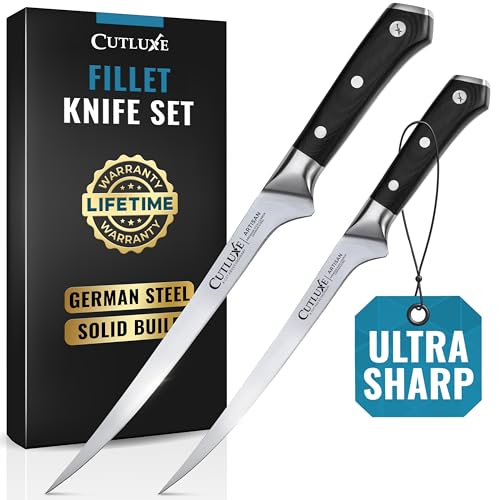
Sets, like the Cutluxe 7 and 9 inch set and FLISSA's 4 piece set with sharpener and sheaths, give you multiple lengths for different fish.
Cutluxe's 7 and 9 inch set, at around $50, gives home cooks a smaller knife for trout and panfish and a longer one for salmon. FLISSA's set, at around $36, adds sheaths and a sharpener for the tackle box.
Electric Fillet Knives
Electric knives, like BUBBA and WORKPRO models, suit anglers cleaning many fish at once.
Corded models like the BUBBA 110V cost less but need an outlet.
Care and Maintenance Tips
Rinse the knife with fresh water right after use, especially after saltwater fish, then wash with mild soap and dry completely. Hand washing protects the edge and handle; imarku notes dishwashing may damage the edge.
Hone the blade before each session and sharpen as needed. Store in a sheath, block or magnetic strip. Remove and clean electric knife blades after each use and recharge batteries before trips.
Wipe a thin coat of food safe mineral oil on pakkawood handles occasionally to keep them from drying out. Inspect electric knife blades for bends and replace dull blades rather than forcing them.
Fillet Knives: Your Questions Answered
What size fillet knife do I need?
A 6 to 7 inch blade suits panfish, trout and small fish, while an 8 to 9 inch blade suits salmon, bass, walleye and larger fish. Many anglers keep both sizes.
Can fillet knives go in the dishwasher?
Hand washing is best. Dishwasher heat and detergents dull edges and can damage wood and pakkawood handles. Rinse, wash and dry by hand right after use.
How often should I sharpen a fillet knife?
Hone before each use and sharpen whenever the knife starts tearing flesh instead of slicing cleanly. Anglers who clean fish often may sharpen every few outings.
A quick check is slicing a sheet of paper: a sharp fillet knife cuts cleanly without snagging.
Are electric fillet knives worth it?
Electric fillet knives are worth it for anglers who clean large numbers of fish, since they save time and reduce hand fatigue. For occasional use, a sharp manual knife works well and costs less.
Can I use a fillet knife for meat?
Yes, fillet knives trim meat, remove silver skin and debone poultry well. Stiffer boning knives handle heavier meat cuts better.
Flexible or stiff: which fillet knife should I choose?
Choose a flexible blade for most fish, especially for skinning and following the backbone of trout, panfish and walleye. Choose a stiffer blade for large, firm fish and for trimming meat, where control matters more than bend.
Do I need a cut resistant glove?
A cut resistant glove on the hand holding the fish adds protection, especially when cleaning many fish on a slippery surface. It is a small, inexpensive safety step that many anglers and fish cutters use.
The Bottom Line
The best fillet knives are sharp, flexible and safe to grip when wet. The HOSHANHO 9 inch is our best overall pick for home cooks and anglers, the Dexter-Russell 7 inch Narrow Fillet Knife is a proven budget workhorse and the BUBBA Li-Ion Cordless Electric Fillet Knife speeds through big catches. Keep your knife sharp, rinse it after every use and store it safely.
For more kitchen guides, see the best knife sets, the best japanese chef knife, the best knife sharpeners and the best magnetic knife holders. Then compare current prices in the product table above.