Best Cordless Vacuum Cleaner: A Complete Buying Guide
Disclosure: We may earn a commission when you buy through links on this page, at no extra cost to you. As an Amazon Associate we earn from qualifying purchases. Learn more
Dragging a corded vacuum from room to room, hunting for the nearest outlet, and untangling the cord around furniture legs gets old fast. That is exactly the hassle a good cordless vacuum eliminates, letting you grab it off the wall mount and start cleaning right away. Finding the best cordless vacuum cleaner for your home comes down to more than raw suction power. Battery runtime, charging speed, weight distribution, and how easily the unit switches into handheld mode all shape how much you actually enjoy using it day to day. This guide walks through what matters most when comparing cordless and stick vacuums, from real-world battery life to dust cup capacity, so you can pick a model that fits your space and your cleaning habits.


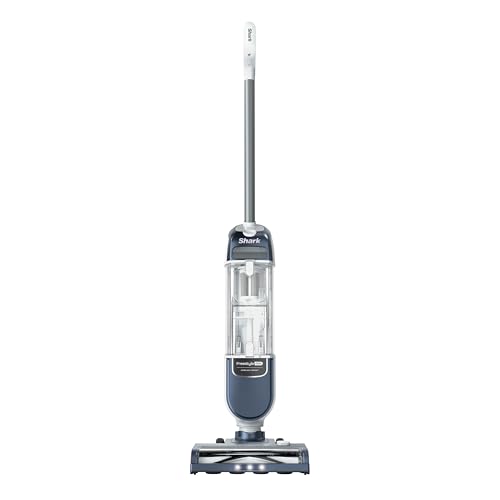


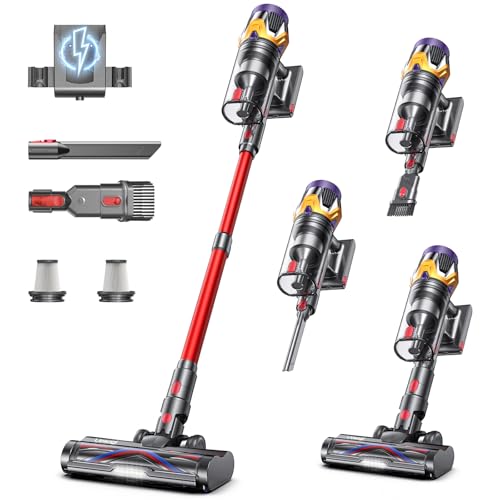
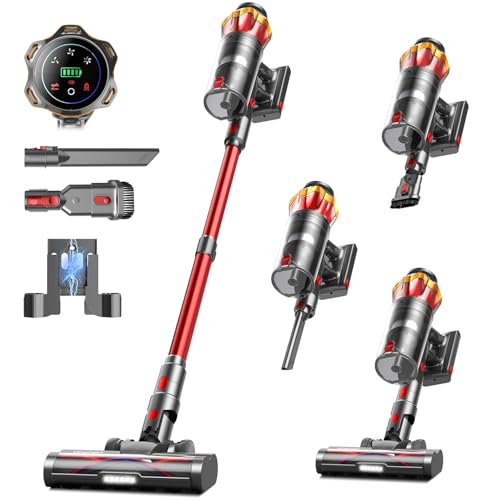

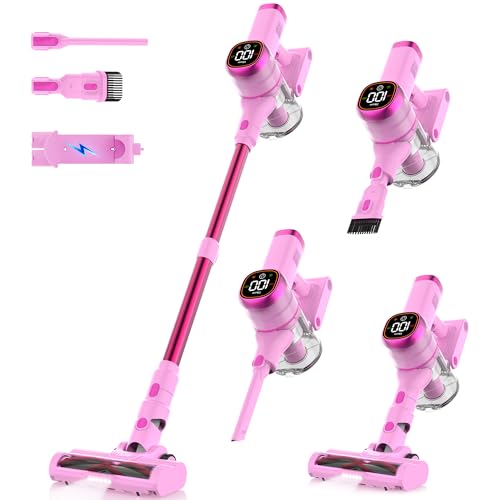

What to Look for in the Best Cordless Vacuum Cleaner
Battery Runtime and Real-World Battery Life
Most cordless models run somewhere between 20 and 60 minutes on a single charge, though that number depends heavily on which power mode you use. Budget vacuums typically deliver 20 to 30 minutes, while mid-range and higher-end models tend to land in the 30 to 50 minute range. Here is the catch: advertised runtime almost always reflects the lowest power setting. If a spec sheet claims 60 minutes, assume you will get closer to half that in standard or medium mode, which is what most people use for everyday cleaning.
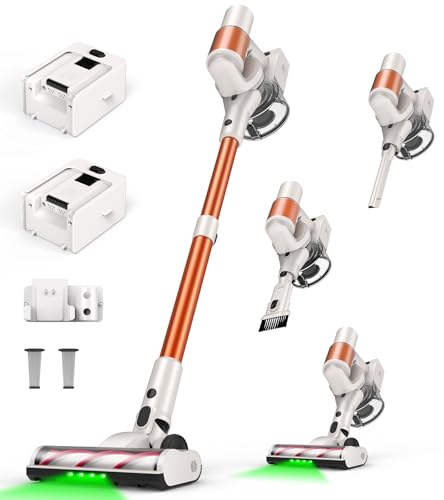
Match the runtime to how you actually clean. A one-bedroom apartment might only need 15 minutes of continuous suction, while a multi-level house could require closer to 40. A removable, swappable battery pack is worth prioritizing if you have a larger home, since you can charge a spare while the other is in use. Before buying, confirm the manufacturer still sells replacement batteries, since that affects how long the vacuum stays useful once the original battery starts to fade.
Charging Time and Charging Options
A full charge on most cordless vacuums takes anywhere from two to five hours, though some newer models offer a quick-charge feature that delivers a partial charge in under an hour for a fast top-up. Wall-mounted charging docks are common and double as storage, keeping the vacuum upright and out of the way between uses. If you tend to clean in short bursts throughout the week rather than one long session, a model with fast partial charging will fit your routine better than one built purely around maximum runtime. That balance of runtime and recharge speed is often what separates the best cordless vacuum cleaner for your household from one that constantly interrupts a cleaning session.
Weight and Balance
Cordless vacuums are lighter overall than upright or canister models, but total weight only tells part of the story. Much of that weight sits near the handle and motor housing rather than the base, which means your arm does more work during longer sessions or when cleaning overhead, like ceiling fans or curtain rails. A vacuum that feels light when you pick it up in a showroom can feel noticeably heavier after ten minutes of use at an angle. When comparing specs for the best cordless vacuum cleaner, look for how the weight is distributed along the wand, not just the total figure listed in the description.
Suction Power and Cleaning Modes
Cordless vacuums typically offer two or three power modes: eco for quiet, battery-saving cleaning on hard floors, standard or auto for everyday use, and a boost or max setting for stubborn dirt and thicker carpet. Some models include an auto-sensing mode that reads debris density and adjusts suction automatically, which helps balance cleaning performance against battery drain without you having to switch modes manually. Mid-range suction is generally enough for hardwood, tile, and laminate, but homes with thick carpet or shedding pets benefit from stronger suction ratings paired with a motorized brush roll, a combination that often defines the best cordless vacuum cleaner for pet owners. If pet hair on rugs and upholstery is a recurring issue in your home, it is worth reading our guide to the best pet carpet cleaner options alongside your vacuum research, since the two often work best together.
Dust Cup Capacity
Because cordless vacuums are built to be compact and light, their dust cups are noticeably smaller than what you would find on a bagged or bagless upright. That means more frequent emptying, especially in larger homes or households with pets and kids. A small dust cup is not necessarily a dealbreaker for the best cordless vacuum cleaner, but it is worth checking the listed capacity and thinking about how often you are willing to stop and empty it mid-clean. If dust cup design and emptying hygiene are a priority for you, our breakdown of the best bagless vacuum cleaner options covers cyclonic separation and bin capacity in more depth.
Handheld Conversion: Why It Matters
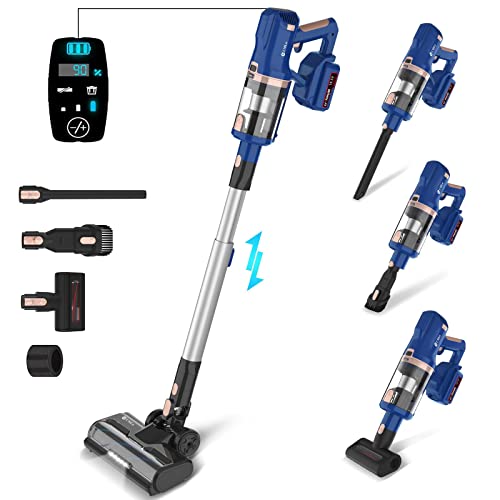
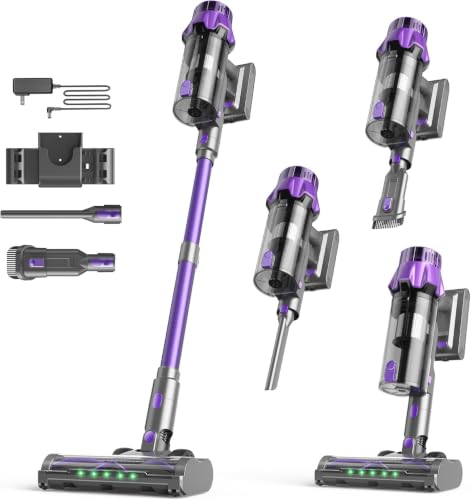
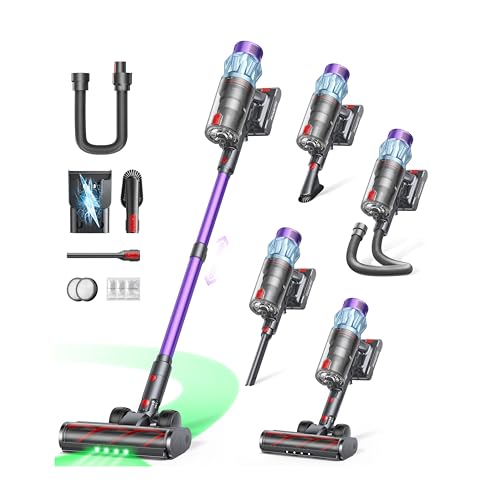
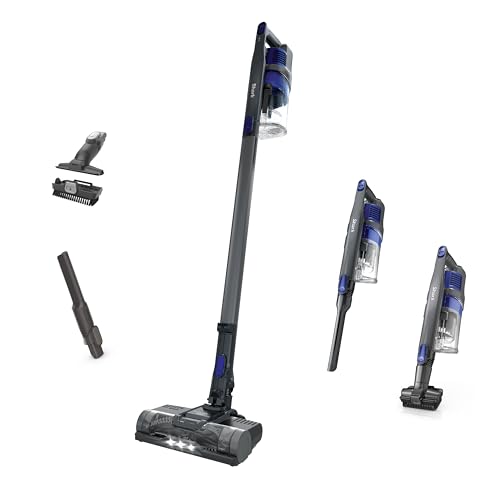
One of the biggest advantages of a cordless stick vacuum is its modular design. Most models let you detach the extension wand and floor head, turning the main unit into a compact handheld cleaner in seconds. This is where a cordless model earns its keep beyond the living room floor: stairs, upholstery, car interiors, and tight corners near ceilings are all easier to reach without dragging a full-size vacuum around. When you are shopping to find the best cordless vacuum cleaner for a household with stairs or a car that needs regular cleanouts, pay close attention to how quickly and securely the handheld mode locks into place, since a loose or fiddly conversion gets skipped after the first few uses. If handheld cleaning is your main use case rather than an occasional bonus, it is worth comparing dedicated options in our guide to the best hand vacuums as well.
Cordless vs Corded Upright: Key Tradeoffs
Portability and convenience are the clear wins for cordless models. There is no cord to trip over, no outlet to hunt for, and storage is usually as simple as a wall mount. Corded uprights give up that freedom in exchange for unlimited runtime, generally larger dust bins, and suction that does not taper off as a battery drains. For a large home with heavy carpeting throughout, or for anyone who dislikes managing battery charge cycles, a traditional upright may still make more sense. Our guide to the best upright vacuum cleaner options is a useful comparison point if you are weighing continuous cleaning time and bin capacity against the flexibility a cordless model offers. For many households, the best cordless vacuum cleaner is simply the one that gets pulled out of the closet without hesitation, rather than the one with the highest number on a spec sheet.
Battery Care and Maintenance
Extending Battery Lifespan
Lithium-ion batteries, the type used in nearly all cordless vacuums, typically last between two and five years depending on how often you use the vacuum and how you charge it. Expect roughly 20 percent capacity loss per year of regular use. You can slow that decline by avoiding letting the battery sit fully drained for long periods and by not leaving it on the charger indefinitely once it hits full charge. If you are storing the vacuum for an extended stretch, such as over a season you rarely clean as much, it helps to store the battery at a partial charge rather than fully empty or fully full.
When to Replace the Battery
A good rule of thumb is that once runtime drops below about 60 percent of what it delivered when new, or the vacuum starts shutting off well before the advertised time, the battery is due for replacement. Look for models where the manufacturer sells official replacement packs, or where reputable third-party batteries are widely available, so the vacuum does not become disposable the moment the original battery wears out.
Common Mistakes to Avoid
- Overfilling the dust cup past the fill line, which restricts airflow and quietly kills suction performance long before the cup looks full.
- Ignoring filter maintenance, since a clogged filter forces the motor to work harder and shortens both battery life and motor lifespan.
- Running exclusively in boost or max mode out of habit, which drains the battery far faster than necessary for routine cleaning.
- Choosing a model based on advertised runtime alone without checking what power mode that number reflects.
- Overlooking brush roll compatibility with your flooring, since a roller built for carpet can perform poorly, or even scratch, on hardwood.
Frequently Asked Questions
How long do cordless vacuum batteries typically last?
Most lithium-ion batteries in cordless vacuums last two to five years with regular use before needing replacement. Heavy daily use tends to shorten that window, while lighter, occasional use can stretch it closer to the higher end.
Is a cordless vacuum as powerful as a corded one?
Top-tier cordless models can rival corded uprights on hard floors and light carpet, but sustained suction on thick carpet still generally favors corded units, since they are not limited by battery output.
How often should I charge a cordless vacuum?
Charging after each use is the simplest routine and keeps the vacuum ready whenever you need it. Most docks are designed for the vacuum to sit on the charger between cleaning sessions rather than being charged only when depleted.
Can I leave a cordless vacuum on the charging dock all the time?
Yes, most modern models include circuitry that stops charging once the battery is full, so leaving it docked between uses will not overcharge or damage the battery under normal conditions.
What is a good runtime for a cordless vacuum?
For most homes, 30 to 40 minutes in standard mode is a comfortable target for the best cordless vacuum cleaner. Larger homes or households that clean less frequently may want to look toward the higher end of that range, or consider a model with a swappable battery.
Do cordless vacuums work well on carpet, especially with pets?
Yes, provided the model has strong suction ratings and a motorized brush roll designed to handle pet hair without tangling. Auto-sensing modes also help by boosting power automatically on thicker carpet sections.
Can I replace the battery myself if it stops holding a charge?
In most cases, yes. Many manufacturers sell official replacement battery packs, and installation is usually a simple click-in process similar to swapping a spare battery for extended cleaning sessions.
Final Thoughts
Finding the best cordless vacuum cleaner comes down to matching runtime, weight, and dust cup capacity to how you actually clean, not just chasing the highest suction number on the box. Pay attention to real-world battery life in standard mode, how comfortable the handheld conversion feels in practice, and how often you are willing to empty a smaller dust cup. Get those basics right and you will end up with a vacuum you reach for daily instead of one that sits in the closet after the first month.