Best Compact Jump Starter for 2026: Types, Power and How to Choose
Disclosure: We may earn a commission when you buy through links on this page, at no extra cost to you. As an Amazon Associate I earn from qualifying purchases. Learn more

The best compact jump starter lives in your glove box until you need it; here is how to compare types by engine fit, starting power and safety features.
A flat battery rarely gives you warning, and it often happens in a parking lot, at school pickup, or on a cold morning when no other driver is around to help. A compact unit solves that problem by living in your glove box or trunk until you need it. If you are shopping for the best compact jump starter for your vehicle, this guide compares the main types by engine fit, starting power, and ease of use. The product table lists current models, and the sections below explain how the types differ.
Compact models trade some brute force for size, so the right choice depends on your engine, your climate, and how much extra gear you want the unit to carry.



Compact Types Compared
Compact jump starters fall into three broad types, and the differences matter more than case size alone. If you want the wider category view first, our guide to the best jump starter covers full size options as well. Here, the focus stays on packs small enough for daily carry in a car.
Basic Lithium Packs
The smallest type is a plain lithium pack with two clamps and little else. It suits small gas engines, short trips around town, and drivers who want the lightest possible kit. Because there is no compressor or large screen, the case stays slim and the price stays low.
The limit is reserve capacity. A small pack may start a healthy engine with ease yet struggle when the battery is deeply drained or the weather turns very cold.
Compact Packs With Extra Ports and Lights
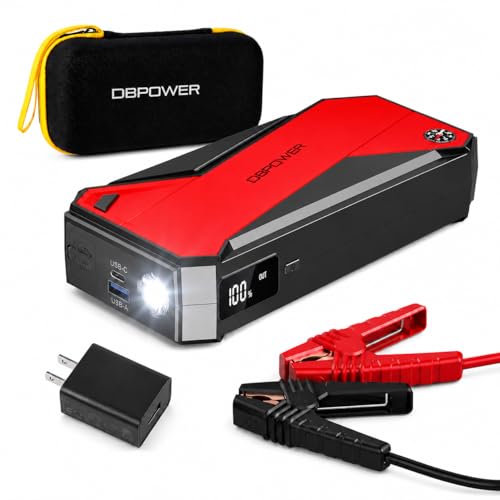
The next type adds USB ports, a built in flashlight, and sometimes a small display that shows charge level. These extras add modest bulk but real convenience during a night start or a long wait for help. The flashlight helps you find the battery terminals in a dark engine bay, and the ports can keep a phone alive while you call for assistance. Check that the added features do not shrink the clamp size or shorten the cables.
Compact Packs With an Air Compressor
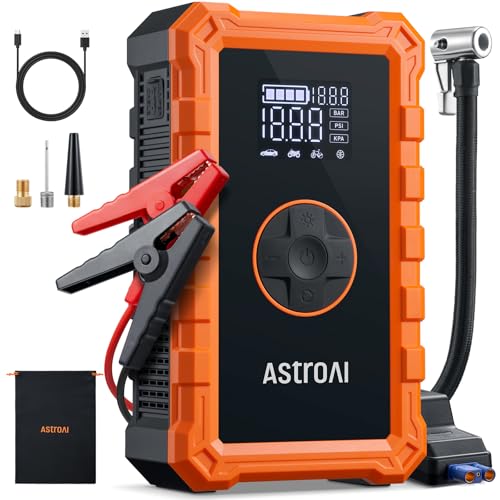
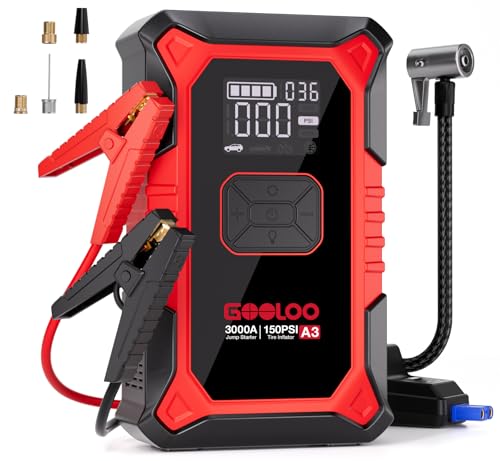
The largest compact type pairs the starter with a small compressor for topping up tires. It weighs more and needs more trunk room, yet it covers the two most common roadside problems in one case. If that pairing appeals to you, see our guide to the best jump starter with air compressor for a fuller comparison. For this guide, note that compressor models draw on the same battery, so a low tire session leaves less charge in reserve for starting.
How to Evaluate Compact Jump Starters
Judge every compact model on the same five points: fit for your vehicle, starting power, ease of use, durability, and warranty cover. Start with the maker spec sheet, which lists the engine sizes and battery types the unit supports. Then read buyer reports for patterns about clamp quality, charge retention, and cable length rather than single glowing or angry reviews. A model that loses charge while stored will fail you when you reach for it, so storage behavior deserves as much weight as headline power figures.
How to Choose the Right Jump Starter
Work through the factors below in order. Vehicle fit comes first, because a pack that cannot turn your engine over is useless no matter how small or clever it is.
Type
Most compact units use lithium ion cells, which store a lot of energy in a light case and hold charge well between uses. Older portable boxes use sealed lead acid batteries. They are heavier and larger, but they tolerate rough handling and deep discharge with patience.
Supercapacitor units are different again. They draw a small charge from your weak battery and release it in one burst, so they need no advance charging, though they can fail when a battery is fully dead. For most car owners, lithium ion gives the best balance of size, weight, and readiness.
Features Worth Paying For
Pay for safety features first. Reverse polarity protection warns you or blocks current when the clamps sit on the wrong terminals, and spark proof clamps reduce risk during connection. A clear charge indicator is worth having because a stored pack you cannot read is a pack you cannot trust. After that, rank the extras by your habits.
A flashlight with a strobe mode helps on unlit roads. USB ports help if you travel far from services. Jumper cables deserve a close look too. Short, thin cables force awkward clamp angles and can heat up under load, so look for sturdy clamps with a wide jaw opening.
Vehicle Compatibility
Match the pack to your engine before anything else. Makers rate compact units by engine size in liters and by engine type, and diesel engines need more cranking force than gas engines of the same size. A rating that covers a 6.0 liter gas engine may only cover a much smaller diesel.
Battery voltage matters as well. Nearly all cars use a 12 volt system, while large trucks and some commercial vehicles use 24 volt systems that a compact car pack cannot serve. If you drive a typical sedan or small SUV, our guide to the best jump starter for cars explains car specific fit in more depth.
Installation and Use
A compact pack needs no fixed installation, but correct use follows a strict order. Park safely, switch off the engine and lights, and find both battery terminals. Connect the red clamp to the positive terminal first, then the black clamp to an unpainted metal point on the engine away from the battery.
Switch the pack on, start the car, then remove the clamps in reverse order. Our walkthrough on how to use a jump starter covers the full sequence with safety notes. Never let the two clamps touch each other while the pack is live.
Power and Performance
Two numbers describe starting strength. Peak amps is the highest burst the pack can deliver, while cranking amps reflects the sustained push that actually turns the engine. Cranking amps is the more honest figure, so compare it first when two models list different peaks.
Cold weather lowers both battery output and engine willingness, which means a pack that starts your car easily in summer may need a fuller charge in winter. Capacity, measured in milliamp hours or watt hours, tells you how many start attempts and phone charges the pack can give before it needs a recharge.
Warranty
Warranty terms for compact packs vary, and the details matter more than the length. Check whether the cover includes the clamps and cables or only the battery case, and whether the maker requires registration after purchase. Keep your receipt, since proof of purchase is usually required for a claim. A maker that sells replacement clamps and answers support mail promptly is a safer long term bet than one with a longer promise and no visible support channel.
How Much Should You Spend?
Basic compact packs for small gas cars sit under $50, and they make sense for a second vehicle or a new driver kit. The busiest range is about $50 to $100, where you gain stronger cranking amps, better clamps, and a charge display. Models at about $100 to $150 add compressors, faster recharging, or support for larger engines.
Spending over $150 on a compact unit only makes sense when you need diesel support or truck level power in a small case. Avoid unknown packs with huge amp claims and no spec sheet.
Compact Versus Other Jump Starters: Pros and Cons
The core advantage of a compact pack is that you will actually carry it. A unit that fits in a glove box or door pocket is present for every trip, while a bulky box often gets left in the garage. Compact packs also recharge from a USB port or wall adapter in a few hours, and many double as phone chargers. For drivers of large trucks or diesel rigs, our guide to the best heavy duty jump starter covers the stronger class those engines demand.
The trade offs are real. Compact packs hold less reserve, so repeated failed starts on a failing battery can drain one before the engine catches. Their cables are shorter, which limits clamp placement on crowded engine bays. They also age while stored, like all lithium gear, so a compact pack is not a buy once and forget item.
Weigh those limits against your vehicle. For a sound car with a healthy battery, the size advantage wins. For an aging truck battery in a cold region, the reserve of a larger unit is worth the space.
- Pros: fits in small storage spaces, light to carry, quick to recharge, often doubles as a phone charger
- Cons: less reserve for repeated starts, shorter cables, smaller clamp jaws, charge fades during long storage
FAQ
What is the best compact jump starter?
The best pick is the one sized for your engine with cranking amps to spare, solid clamps, and safety protection against reversed connections. Beyond raw fit, think about where you will store it. A pack kept in a hot glove box ages faster than one stored in a cooler trunk corner, so choose a case size that fits the cooler spot in your car. A slightly larger pack you store well will outlast a tiny one that bakes all summer.
Are compact jump starters worth it?
Yes, for most car owners they are worth the modest cost because one avoided tow or missed workday pays for the pack. They hold special value for drivers who park where help is slow to arrive, such as rural roads, trailheads, and airport lots after late flights. Renters also benefit, since a compact pack needs only an occasional indoor recharge on a counter or desk.
How long does a jump starter last?
A lithium compact pack usually serves for several years before its capacity fades enough to matter. You will notice the end approaching when the pack holds a charge for a shorter time, swells or bulges in its case, or fails to hold the green ready light after charging. A swollen pack is a safety risk and should be retired and recycled rather than stored. Clamp damage, such as cracked jaws or frayed cable insulation, is another clear sign to replace the whole unit.
Is a jump starter worth it if you already own jumper cables?
Yes, because cables only work when a second vehicle with a healthy battery is nearby and willing to stop. A jump starter removes that dependency entirely, which matters in empty lots, parking garages with tight spacing, and late night situations where flagging down a stranger feels unsafe. A self contained pack also avoids putting a helpful stranger's car at any risk at all.
How do you clean a jump starter?
Switch the pack off and unplug it, then wipe the case with a dry or slightly damp cloth. Never spray liquid into ports or vents, and never submerge the unit. Clean the clamp jaws with a dry brush to remove white or green corrosion, since dirty jaws pass less current during a start.
Let everything dry fully before you close the case or recharge the pack. Store it clean, because road grit left on cables slowly wears the insulation while the kit rides in your trunk.
What is the most reliable jump starter brand?
No single brand earns that title for every buyer, so judge reliability by evidence you can check. Look for safety listings from a recognized safety certification body, a written warranty with a working support address, and replacement clamps sold openly rather than hidden behind support tickets. Makers that publish full spec sheets with cranking amps, not just peak amps, also tend to stand behind their gear. A brand that answers presale questions about diesel ratings in plain numbers is giving you a useful reliability signal.
Final Thoughts
Start with your engine, then pick the smallest pack that turns it over with room to spare, has protected clamps, and shows its charge level clearly. The product table above pulls the types together so you can compare size, power, and extras side by side. Chosen well, the best compact jump starter for your car disappears into a glove box and then saves your day the one morning nothing else can. Recharge it after every use and check it each season, and it will be ready when that morning comes.