
Best Commercial Salad Spinner for Home: Capacity, Drive Type and Care for 2026
Disclosure: We may earn a commission when you buy through links on this page, at no extra cost to you. As an Amazon Associate I earn from qualifying purchases. Learn more

The best commercial salad spinner for home fits your sink, shelf and weekly salad volume. Compare manual pump, steel and electric models, plus care tips.
A house that hosts Sunday dinners for twelve, runs a small garden, or preps salads for the whole week can overwhelm an ordinary spinner in two loads. Greens come out of the wash still wet, the lid strains, and you end up spinning batch after batch. Choosing the best commercial salad spinner for a home kitchen means matching a bigger, sturdier tool to your counter space, your household size, and your budget. The comparison table below lays out the main types side by side so you can see the trade offs at a glance.
This guide skips catering scale equipment and focuses on commercial style capacity and build quality in sizes a home cook can store, fill at a kitchen sink, and use every day.

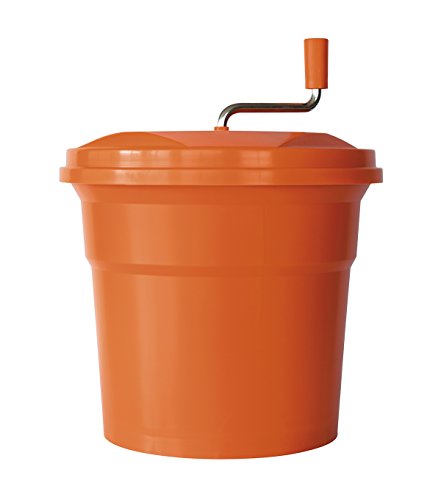
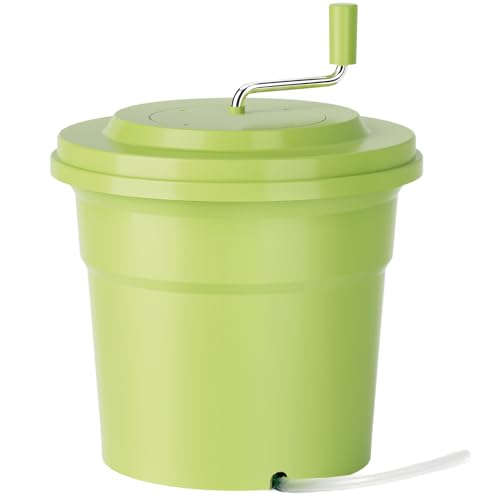

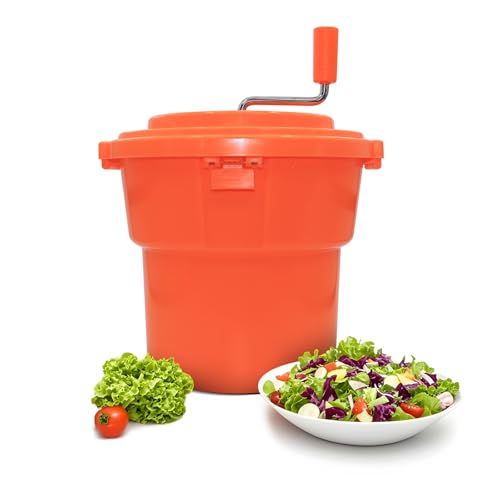
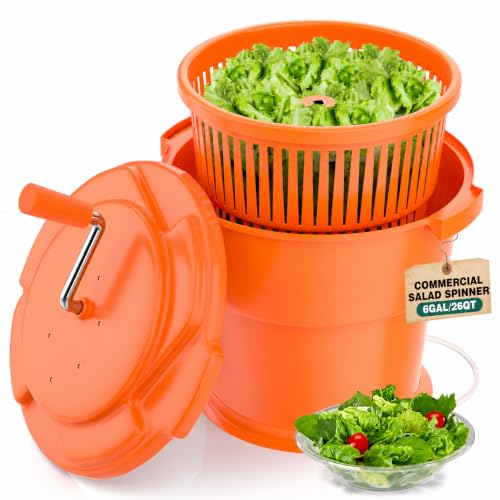
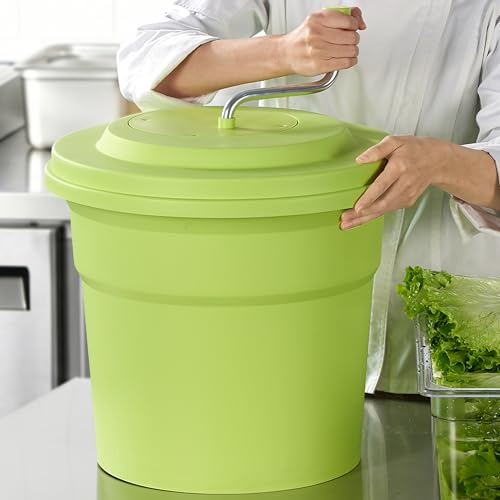
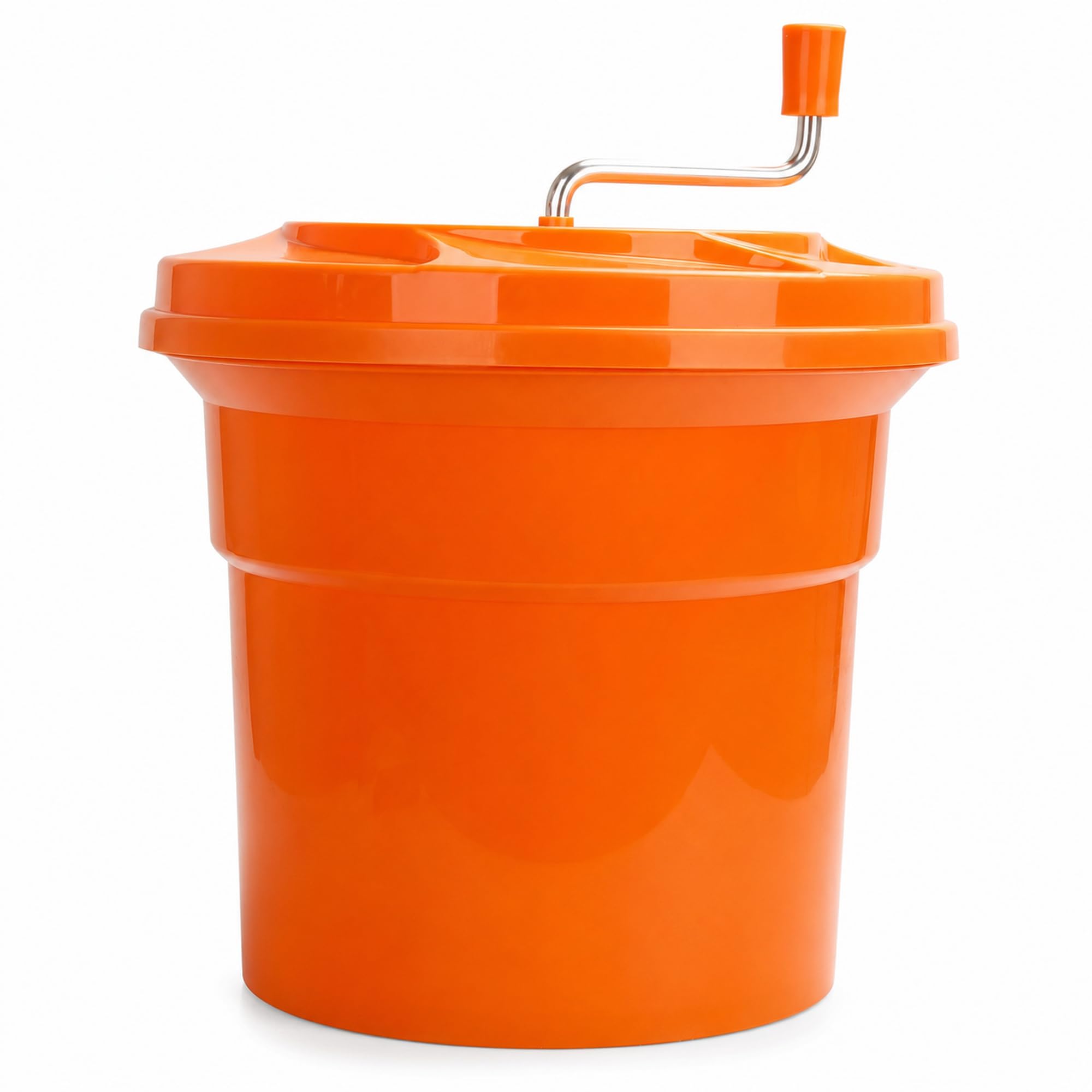
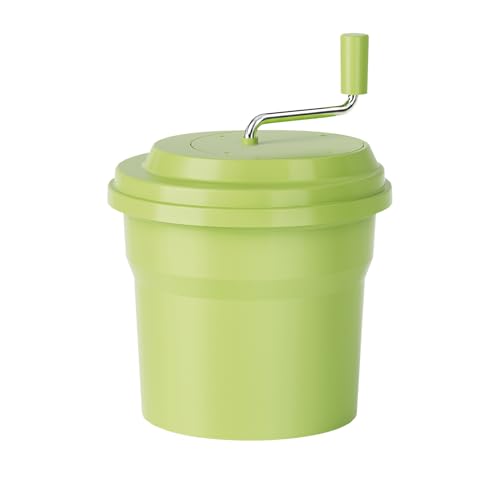
Quick Answer: Three Types Worth Considering
If you want the short version, most home buyers land on one of three types. A large manual pump spinner suits families who dry several heads of lettuce at once and want simple mechanics. An electric model suits cooks who prep in volume and want to press a button instead of pumping. A sturdy stainless steel manual model suits buyers who plan to keep the same spinner for many years. The right best commercial salad spinner for you depends less on raw size than on how often you will actually reach for it.
Think about where the spinner will live, since a model dragged from a high shelf gets used less. Our broader guide to the best salad spinner covers standard home sizes if your household is small and counter space is tight.
Before You Buy: A Quick Checklist for Choosing a Salad Spinner
The best commercial salad spinner for a home is not the biggest bowl. Commercial styling on a label tells you little. What matters is usable capacity, a drive you can work without strain, materials that suit your washing habits, and a price that matches how much salad your household truly eats.
Size: Match It to Your Space
Capacity is listed in quarts or gallons, and the usable load is always less than the headline number because greens need room to release water. Home friendly commercial styles often hold about 5 to 6 quarts per load, while true commercial units can hold several gallons and may be too tall for a kitchen cabinet. Measure your storage spot and your sink before ordering. Households of two who eat side salads may do better with the options in our guide to the best small salad spinner, while big families gain the most from the larger bowl.
Which Type Fits Your Routine
Pump lids are the most common drive and let you control speed with one hand, which helps when the other hand holds a colander or a towel. Pull cord models spin fast but the cord and its housing add a part that can wear over time. Crank handles feel steady on very full loads, though they need clear counter space beside the bowl. Electric models remove the effort entirely and suit high volume prep days. If repetitive pumping bothers your wrist, look at the best electric salad spinner options and plan for a cord and an outlet near your prep area.
Materials and Food Safety
Most bowls and baskets are plastic, which keeps a large spinner light enough to lift when full of wet greens. Look for clear wording that the plastic is food contact safe and free of BPA, and check that the basket slots are smooth so edges do not snag delicate leaves. Stainless steel bowls feel more durable and resist stains and odors, but they add weight and hide the water level. Buyers who prefer metal can compare the best stainless steel salad spinner styles, keeping in mind that a filled steel bowl is heavier to carry to the sink.
Dishwasher Safe or Hand Wash
Large baskets and bowls often fit only on the top rack of a home dishwasher, and some lids with gears inside should never go in at all because heat and detergent can damage the drive. Check the care instructions for each part separately rather than trusting a general claim on the box. If hand washing is required, a basket that lifts out cleanly and a bowl without deep grooves will save you time. A spinner that is annoying to wash tends to sit unused, so treat cleaning effort as a real buying factor.
Realistic Budget Ranges
Prices spread widely because capacity and drive type drive cost. Smaller commercial style manual models often run about $30 to $60, large manual models with stronger gears commonly cost about $60 to $120, and electric or heavy steel models can reach about $120 to $250. Paying more should buy you a sturdier lid mechanism, a nonslip base, and replacement parts the maker actually sells. If a low price comes with no spare parts and a thin basket, the saving can vanish the first time a handle cracks.
Types Compared: How to Choose Among Commercial Styles
Instead of chasing a single winner, match the style to your household, from weekly meal prep to occasional big gatherings.
Large Manual Pump Models for Most Homes
This is the default choice for families who wash several heads of lettuce, bunches of kale, or big bags of mixed greens at once. A pump lid keeps the motion simple, a brake button stops the basket so you can unload without waiting, and a pour spout on some lids lets you drain without lifting the bowl. Choose this type if you prep salads a few times a week and have a shelf that fits the full height. It offers the best balance of capacity, price, and easy care.
Compact Commercial Style Models for Value
Some households want commercial build cues, such as a thicker basket and a reinforced lid, without a bowl that dominates the counter. Compact models in the 4 to 5 quart range give you that sturdier feel while still fitting a standard cabinet. They suit couples and small families who buy bagged greens in modest amounts and would rather spend less up front. The trade off is an extra load when you prep for guests, which many buyers accept gladly in exchange for easier storage.
Steel and Electric Models as a Long Term Investment
Buyers who prep in serious volume, run a small food business from home, or simply dislike replacing kitchen tools can justify the higher tier. Steel bowls shrug off stains from beets and berries and do not hold odors from herbs and onions. Electric drives keep speed consistent across back to back loads, which matters when you dry greens for a party or a week of lunches. Before your first big prep day, read a plain explanation of how to use a salad spinner, since loading balance and spin time change with larger baskets.
What We Like and What We Do Not About Commercial Models
Commercial styles earn their place when a standard spinner forces you into three or four loads. One or two loads save real time, and drier greens hold dressing better and keep longer in the fridge because less surface water speeds up spoilage. Stronger gears and lids also cope better with dense loads of kale, cabbage, and romaine that can stall a light home model.
The downsides are mostly about space and weight. A large bowl crowds a small sink, fills a whole dishwasher rack, and can be awkward to store in an apartment kitchen. Full of water and greens, it is heavy to lift and pour, which matters if grip strength is a concern. Commercial capacity is only a benefit if your routine uses it, and a household that makes a small salad twice a week gains nothing from the extra size.
Common Mistakes When Choosing a Commercial Salad Spinner
- Buying by headline capacity alone: a bowl rated for several gallons may not fit your sink or cabinet, and an unusable giant helps no one.
- Ignoring the lid mechanism: the drive takes the most strain, so a flimsy pump or cord on a large model is the part most likely to fail first.
- Forgetting storage height: measuring width but not height leads to a spinner that lives on the counter and slowly becomes clutter.
- Overloading every load: packing greens tight traps water in the middle, so the batch comes out damp despite the bigger basket.
- Skipping the parts check: if the maker sells no replacement lids or baskets, one cracked part can retire the whole spinner.
Cost of Ownership and Care
Ongoing costs are low for manual models because there are no filters, batteries, or power draw to worry about. Electric models add a small amount of electricity use and a motor housing to keep clean, which should never be submerged. Your main long term expense is replacement parts, so confirm that lids, baskets, and brake parts are sold separately before you commit to a costly model.
Care is simple but worth doing right. Rinse the basket after each use so leaf bits do not dry into the slots, wash the bowl in warm soapy water, and let every part air dry fully before storage, since trapped moisture invites musty odors. Our step by step guide on how to clean a salad spinner covers lid gears and cord housings in detail. Store the spinner with the lid ajar if your cabinet allows it, and keep heavy pans out of the bowl.
Your Questions, Answered
Are commercial salad spinners worth it for a home kitchen?
They are worth it when your household regularly washes large amounts of greens, hosts big meals, or preps salads for several days at once. The time saved by cutting three loads down to one adds up over a season of garden produce or weekly meal prep. If your salads are small and occasional, a standard home size gives you the same dryness with far less storage cost, so the answer depends on your weekly volume.
How long does a commercial salad spinner last?
A well cared for manual model can serve for many years because the parts under strain are few and simple. Longevity depends mostly on the lid drive and on whether you let parts dry fully before storage, since grit left in the gear area grinds slowly with every spin. Electric models add a motor to the equation, so their lifespan also depends on keeping the housing dry and avoiding very long continuous runs that heat the motor.
Can a commercial salad spinner dry herbs and berries without damaging them?
Yes, with a gentler approach than you would use for sturdy lettuce. Spin in short, slow pulses instead of one long fast run, and place delicate items in a single loose layer so they are not crushed under heavier produce. A soft kitchen towel laid over fragile berries can cushion them further. Large baskets help here, because the extra room means soft items tumble less than in a crowded small basket.
Does a commercial salad spinner fit in a standard kitchen sink?
Most home friendly models do, but the largest true commercial bowls may not sit flat in a shallow or divided sink. Measure your sink basin and compare it with the bowl diameter and height listed by the maker. If the bowl cannot sit in the sink, you can fill it on the counter with a pitcher and drain it through a spout, though that routine is slower and worth picturing before you buy.
Should you choose a salad spinner with a brake?
A brake is a small feature that earns its keep on large models. It stops a heavy, fast moving basket quickly, so you can check dryness, add more greens, or unload without waiting for a long coast down. It also reduces the temptation to grab the basket while it is still moving, which can strain the lid. On full commercial size loads it makes the whole task feel calmer and more controlled.
Final Thoughts
Start with your real routine. Count how much green produce you wash in a typical week, measure the cabinet and sink the spinner must fit, then pick the smallest commercial style that still cuts your loads down. Manual pump models cover most homes, compact versions protect a tight budget and tight shelves, and steel or electric models reward heavy daily use. Whichever type you choose from the product table above, the best commercial salad spinner is the one sized to your household, easy for you to wash, and sturdy enough to stay in service for years.


