
Best Commercial Mandoline Slicer for Home Kitchens (2026)
Disclosure: We may earn a commission when you buy through links on this page, at no extra cost to you. As an Amazon Associate I earn from qualifying purchases. Learn more

Compare wide bed, compact and heavy steel models to choose the best commercial mandoline slicer for your counter space, prep volume and budget.
Sunday at your house might mean a tray of potatoes for six, a big bowl of slaw for the week, and onions for soup, all before lunch. A home mandoline can feel slow and wobbly at that pace, while a best commercial mandoline slicer brings a wider bed, a heavier frame, and even slices for batch cooking. The catch is size, storage, and a sharper learning curve.
This guide helps you choose by counter space, household size, and budget rather than by restaurant habits. Compare the types in the comparison table below, then use the checklist to match bed width, thickness control, safety gear, and cleaning effort to the way your kitchen actually runs each week.



Quick Answer: Three Types That Fit Real Homes
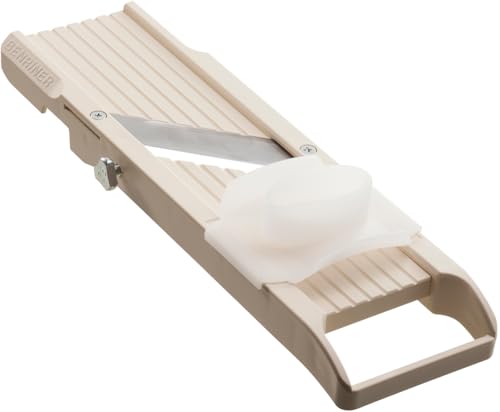
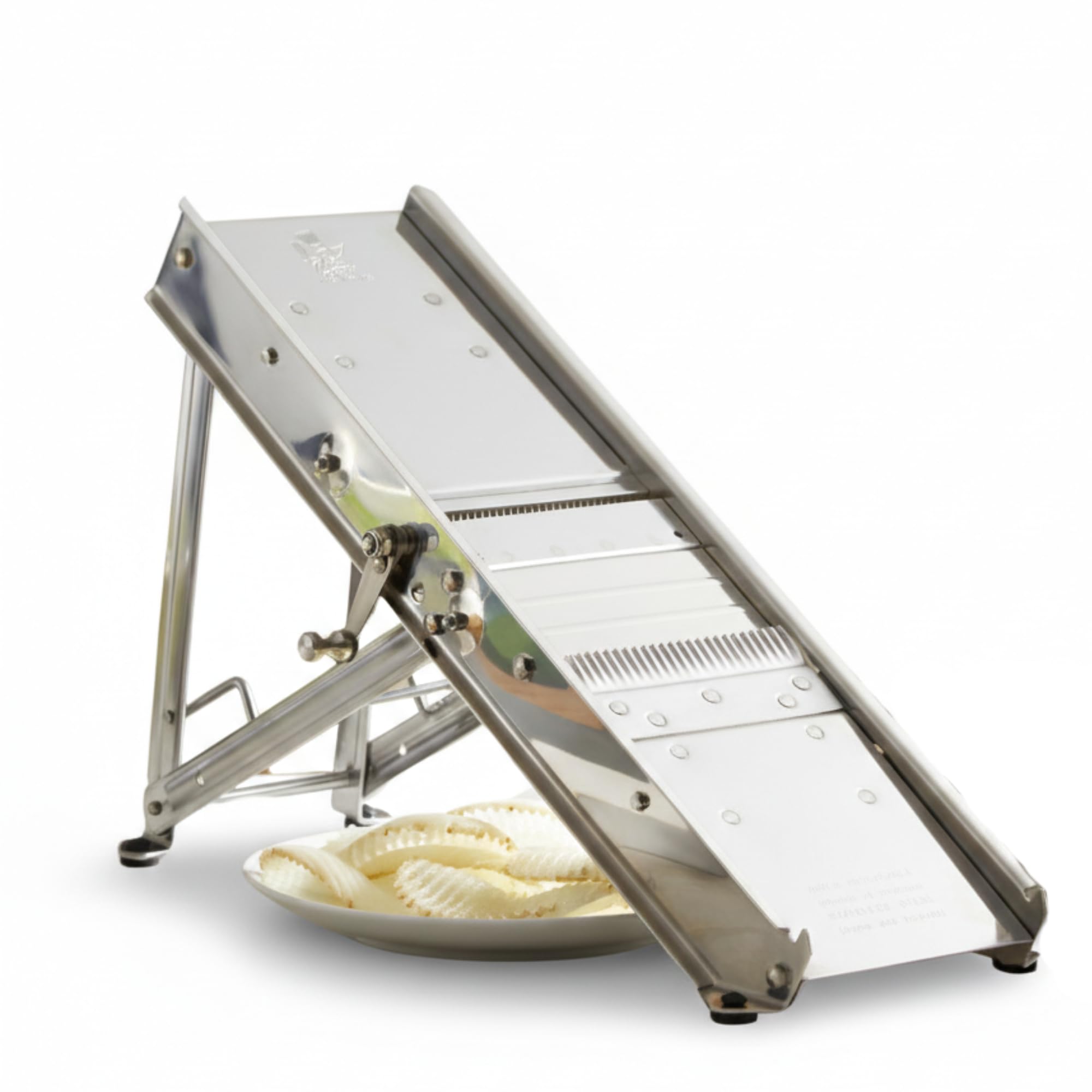
For most homes, a wide flat bed adjustable model is the balanced choice, since it covers potatoes, cucumbers, onions, and zucchini without taking over a whole cabinet. Compact adjustable models suit small kitchens and smaller households. Heavy stainless steel models suit large families and frequent hosts who slice in volume most weeks. If you want a broader look at standard home models before going commercial, see our guide to the best mandoline slicer.
Whichever type you pick, the same three checks matter most. The bed must be wide enough for your largest common vegetable, the thickness dial must lock so slices stay even through a full batch, and the hand guard must grip food firmly down to a small stub.
Before You Buy: A Quick Checklist for Choosing a Mandoline Slicer
Which Type Fits Your Routine
Adjustable flat bed models are the workhorses. A dial or lever changes thickness, and one straight blade handles most slicing, so they fit mixed weekly prep. Japanese style models are light and very sharp, with a simple flat blade that rewards a practiced hand, and our guide to the best japanese mandoline slicer shows how they differ from heavier commercial frames.
V shaped blade models guide food into the cut from two sides, which helps softer produce such as tomatoes stay intact. Handheld and vertical models save space but slow you down on large batches, while rotary and electric models add parts and cost that most homes rarely need.
Features Worth Paying For, and Ones to Skip
Pay for a hand guard with a wide grip and teeth that hold round food steady, plus gloves that resist cuts for anyone who preps at speed or is still learning. A thickness lock and clear markings matter every session. A julienne blade earns its keep if you make slaw, salads, or stir fry weekly.
If safety is your top concern, our guide to the best safe mandoline slicer explains guard designs in depth. Skip spare blade sets in odd shapes, bulky storage containers that duplicate bowls you own, and waffle cutters you will use twice a year.
Materials and Food Safety
Stainless steel blades hold an edge well and resist rust when dried after washing, which suits a tool you plan to keep for years. Bodies come in stainless steel or sturdy plastic. Steel frames feel steadier under pressure and shrug off knocks in a busy drawer, while plastic bodies weigh less and cost less, though they can flex under a large cabbage. Choose materials labeled for food contact, and avoid any blade with chips, bent edges, or loose mounting, since damaged steel can shed fragments and will tear food instead of slicing it.
Dishwasher Safe or Hand Wash Only
Most commercial blades last longer with hand washing, even when a listing calls the body dishwasher safe. Heat and detergent dull fine edges over time, and loose blades can nick other items in the rack. Wash the blade right after use, moving the brush along the back of the blade and away from the edge, then dry it fully before storage. For step by step care that protects the edge, see our guide on how to clean a mandoline slicer.
Realistic Budget Ranges
Under about $20, expect compact plastic models with basic guards, fine for one or two people slicing now and then, but rarely true commercial builds. About $20 to $50 covers most sturdy home friendly commercial styles, with wider beds, better guards, and julienne options. About $50 to $100 buys heavy stainless steel frames, wider beds for cabbage and squash, and replacement blades that are easier to source. Above that, you mostly pay for restaurant volume capacity that few homes use, so weigh the extra size against storage you actually have.
Three Types Compared for Home Kitchens
The type matters less than the fit. These three types cover the same buying factors in different proportions, so match them to your household rather than chasing the biggest frame.
Wide Flat Bed Adjustable Models for Most Homes
A wide flat bed with a dial that moves from paper thin slices to thick cuts around 9 mm handles the widest range of weekly jobs, from cucumber salad to potato gratin. The frame is heavy enough to stay planted on the counter, yet most versions still fit in a deep drawer or stand in a cabinet. Choose this type if your household cooks for three to six people, preps vegetables at least twice a week, and wants one tool rather than a set of specialty slicers.
Compact Adjustable Models for Small Kitchens
Compact adjustable models trade bed width for a smaller footprint and a lower price. They slice onions, carrots, and cucumbers quickly for one or two people, and they rinse clean fast after a weeknight meal. The limits show up with wide produce, since a halved cabbage may not fit, and lighter frames can creep on the counter during firm cuts. Choose this type if counter and storage space are tight, your batches are small, and you would rather own a simple tool you reach for daily than a large one you avoid.
Heavy Stainless Steel Models for Heavy Use
Heavy stainless steel models bring the widest beds, the steadiest frames, and blades built for frequent volume work. They suit large families, keen gardeners with gluts of produce, and hosts who make chips, gratins, and pickles in big batches. You pay more at purchase and give up more storage room, and the weight makes quick small jobs feel like more effort. Choose this type if you slice several kilos of produce a week, want replacement blades sold separately, and plan to keep one slicer for many years.
Selection Criteria for a Commercial Mandoline Slicer
Judge any best commercial mandoline slicer candidate on five points. Ease of use means a dial you can turn with wet hands and a guard that glides without sticking. Durability means a rigid frame, secure blade mounting, and no wobble at the legs.
Cleaning means open surfaces with few crevices where food can hide. Design means a footprint your kitchen can store safely. Value means total cost over time, including gloves and a spare blade, not just the shelf price.
Commercial Versus Other Mandoline Slicers: Tradeoffs for Home Use
Commercial models slice faster and more evenly than basic home models because the bed is wider, the frame is heavier, and the blade stays rigid under load. That speed helps when you prep for a crowd, yet the same size can crowd a small counter and make a single onion feel like a production. A lighter option from our guide to the best handheld mandoline slicer may serve a solo cook better. A food processor slices quickly too, but it gives you less control over thickness and more parts to wash after small jobs.
Think about your largest regular task, not your largest imagined one. If you host a big meal once a month, a mid size flat bed model covers it without ruling your storage. If you preserve garden produce each autumn or cook for eight every week, commercial capacity earns its space. Matching the tool to the routine is what makes the sharper blade feel helpful rather than intimidating.
Common Buying Mistakes to Avoid
- Buying the widest frame your counter cannot hold, so the slicer lives in a box and rarely gets used.
- Ignoring guard size, then finding the holder slips on round food such as onions and potatoes.
- Paying for many blade inserts you will never fit, while the main blade lacks a firm thickness lock.
- Forgetting replacement costs, since a cheap model with no spare blades becomes a full replacement later.
- Skipping gloves and a safe storage spot, which raises the risk of a cut during washing or reaching into a drawer.
Cost of Ownership and Care
Ownership costs stay modest when you plan for them. Budget for cut resistant gloves, a replacement blade every year or two under heavy use, and a storage case or blade cover if the maker offers one. Keep the slicer dry, store it with the blade covered and the thickness set to zero or the blade retracted where the design allows, and never store it loose in a crowded utensil drawer. If you are still building good habits, our walkthrough on how to use a mandoline slicer covers grip, stance, and pacing for steady, even strokes.
Wipe the frame after acidic foods such as tomatoes and lemons, since long contact can dull the edge and stain lighter plastics. Check screws and blade mounts monthly if you prep in volume, and tighten or replace worn feet so the frame stays planted. A stable, clean, dry slicer keeps its edge longer and feels safer every time you reach for it.
Your Questions, Answered
Are commercial mandoline slicers worth it for a home kitchen?
They are worth it when your household slices in volume most weeks, for example large salads, gratins, or preserved vegetables for several people. The wider bed and steadier frame save real time at that scale. For one person slicing a cucumber twice a week, the size and washing effort outweigh the gain, and a compact model will likely get more use. Count your typical weekly kilos of produce before deciding.
What thickness range does a commercial mandoline slicer cover?
Most adjustable commercial models run from about 1 mm for chips and garnishes up to about 9 mm for thick potato slices, with set steps or a smooth dial between those points. Steps help you repeat a setting next week, while a smooth dial gives finer control for pickles and gratins. Check that the setting you use most, often 2 to 3 mm for everyday vegetables, sits firmly without drifting mid batch.
Can a commercial mandoline slicer handle a whole cabbage?
Only the widest beds take a halved cabbage flat without trimming, and even then you should quarter large heads so the guard can grip the piece securely. Feeding a narrower wedge at a slight angle gives cleaner shreds and keeps your strokes even. For slaw, start with the flat blade for shreds, then switch to a julienne insert only if you want finer strands in part of the batch.
How do you store a commercial mandoline slicer safely between uses?
Store it flat in a cabinet or deep drawer with the blade cover on, the guard clipped in place, and nothing stacked on top that could press items against the edge. Some cooks keep the slicer in its box on a low shelf, which also keeps curious children from reaching an exposed blade. Avoid hanging it by a handle near other tools, since knocks can chip the edge and the blade stays exposed.
When should you replace the blade on a commercial mandoline slicer?
Replace the blade when slices start to tear instead of cutting cleanly, when you need noticeably more pressure than before, or when you see nicks along the edge. Dull blades are a safety issue, since extra force makes food more likely to slip under the guard. If your model has no spare blades for sale, treat that as a buying warning and choose a design with replacements in its accessory range.
Final Thoughts
Start with your space and your typical batch, then pick the type that fits both. A wide flat bed suits most families, a compact model suits small kitchens, and a heavy steel frame suits true volume cooking. Check the product table above once more, confirm bed width, guard design, and replacement blade access, and the best commercial mandoline slicer for your home becomes a clear, practical choice.


