
Best Commercial Vegetable Choppers for Home Kitchens: Buying Guide 2026
Disclosure: We may earn a commission when you buy through links on this page, at no extra cost to you. As an Amazon Associate I earn from qualifying purchases. Learn more

Cooking in big batches? Compare push down, lever press and electric styles to find the best commercial vegetable chopper for your home.
Sunday afternoon, a pot of soup on the stove, and a cutting board buried under onions, carrots, and celery. If your household cooks in batches like this, a standard light duty chopper starts to feel slow and flimsy. That is exactly where the best commercial vegetable chopper earns its place. Built with thicker steel and bigger capacity, it handles family sized prep without flexing or jamming. This guide helps you choose by counter space, household size, and budget, and the sections below compare the main styles.
Here, commercial means a chopper built to a sturdier standard that still fits a home kitchen and a home routine. If you are still weighing whether you need this class at all, start with our overview of the best vegetable chopper options for everyday cooking, then come back here for the heavier duty end of the range.


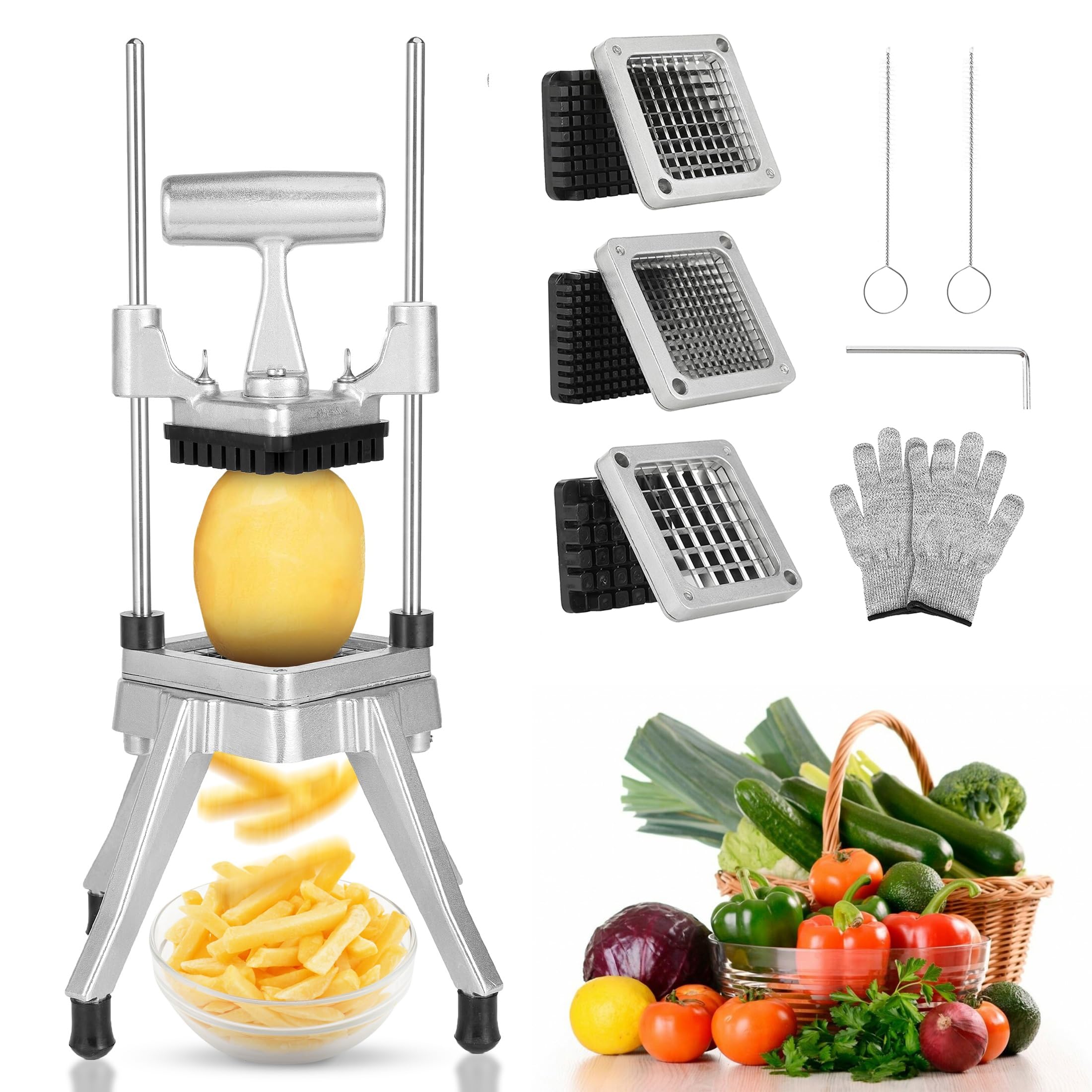

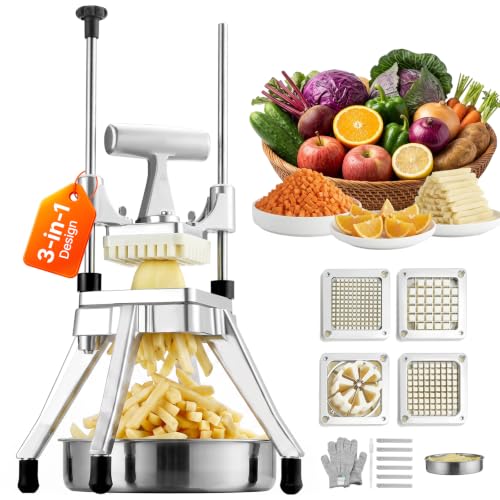
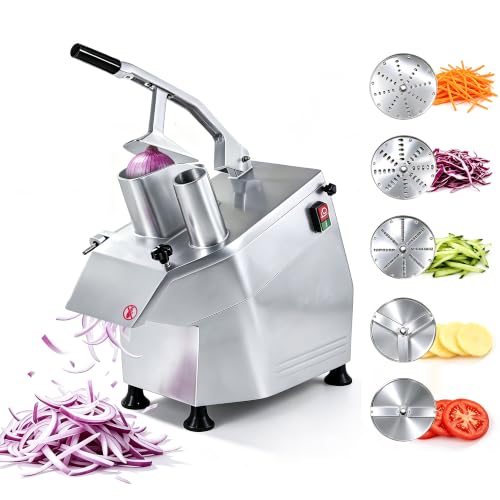


Quick Answer: Commercial Choppers in 30 Seconds
Three styles cover almost every home. Push down choppers suit daily onion and pepper prep in small batches. Lever press choppers with a grid blade suit big weekly batches and firm vegetables. Electric commercial style models suit nonstop prep when your hands or your schedule are the limit. Pick based on the batch you cook most often, not the biggest batch you can imagine, and check that the footprint fits the counter or cabinet where it will actually live.
Before You Buy: A Quick Checklist for Choosing a Vegetable Chopper
Which Type Fits Your Routine
Manual push and press designs need no outlet and give you full control over each stroke, and the best manual vegetable chopper designs are the quiet, simple end of this family. Pull cord models chop in a bowl and work well for salsa and nuts in small amounts. If volume is your bottleneck, the best electric vegetable chopper category trades counter space for speed. A best handheld vegetable chopper suits one clove of garlic or a single onion, while multifunction sets add slicing and grating plates for households that prep many textures each week.
Features Worth Paying For and Ones to Skip
Pay for a container that is big enough for your usual batch, because stopping to empty a small bin every two onions erases the time you saved. Pay for interchangeable blade grids in two or three dice sizes, a pusher that clears the grid in one motion, and a base that stays planted under pressure. A spiralizer plate is worth it only if you already make vegetable noodles weekly. Extra attachments you have no current habit for usually become drawer clutter, and each extra plate is one more part to wash, dry, and store.
Materials and Food Safety
Blades should be stainless steel, since it resists rust from acidic foods like tomatoes and onions and holds an edge longer than coated bargain steel. Look for thick blade stock and a grid frame that does not flex when you press firm produce. Bodies are usually sturdy plastic or steel. If plastic touches food, check that the maker states it is free of BPA. Hinges and latches take the most stress over the life of the tool, so metal hinge pins are a good sign. Avoid cracked housings or loose rivets, since a shifting grid can pinch fingers.
Dishwasher Safe Parts or Hand Washing
Many containers and pusher blocks can go in the dishwasher, while blade grids often last longer with hand washing, since harsh detergent and rattling against other items can dull edges over time. Check the listing for each part rather than assuming the whole unit is dishwasher safe. Hand washing takes about a minute if you rinse right after use. If nobody in your home will do that small step, weight your choice toward models whose parts are all rated for the dishwasher, and accept that blades may need replacing sooner.
Realistic Budget Ranges
Under $20 usually buys a light home chopper rather than a true commercial build, so treat that tier as a trial size. At about $30 to $50 you find reinforced manual presses with steel grids and containers sized for family prep, which is the practical entry point for this category. Above about $50, and often about $60 to $120, you get heavier frames, larger capacity, spare blade grids in the box, and electric models with stronger motors. Spending more mainly buys durability and capacity, not finer dice, so match the tier to your weekly use.
Types Compared: Three Commercial Styles Worth Your Money
Push Down Choppers for Daily Small Batches
This style sits over a container or your own board, and each downward press drives the produce through a fixed blade. It suits cooks who dice one or two onions most nights and want a tool that rinses fast and stores in a drawer or small cabinet. Because the blade size is fixed, it is a poor match for big weekly batches or very firm produce like sweet potato. Choose it when speed on small jobs matters more than capacity, and look for a wide handle top that spreads pressure across your palm.
Lever Press Choppers for Big Weekly Batches
A lever press uses a hinged lid and a pusher block to drive a whole halved onion or pepper through a large grid in one stroke. This is the style most people mean by a commercial vegetable chopper for home use, since it turns a pile of produce into uniform dice with very little knife work. It needs storage room and a firm, flat counter. Before your first batch, read our walkthrough on how to use a vegetable chopper so you load pieces cut side down and press with steady, even force rather than slamming the lid.
Electric Commercial Style Choppers for Nonstop Prep
Electric models chop in a work bowl with a spinning blade, which suits salsa, pesto style sauces, and large amounts of softer produce. They are the fastest option when you prep for a crowd or fill a freezer, and they help if grip strength makes a manual press uncomfortable. The trade off is control, because a few extra pulses turn dice into puree. Choose electric for volume and soft foods, and a grid press for tidy dice you plan to cook evenly.
How to Judge a Commercial Vegetable Chopper
Judge any model on five criteria. Ease of use means a press that works with body weight rather than arm strength alone. Durability shows in blade thickness, hinge construction, and whether spare grids are sold. Cleaning depends on how many parts separate and whether food traps hide under the pusher. Design covers footprint, storage shape, and container size. Value weighs all of that against the price tier. The advice here draws on manufacturer specifications and patterns in verified buyer feedback.
Commercial Choppers Compared With Standard Home Choppers
What stands out first is build. Commercial style models use thicker steel grids, stiffer frames, and containers that hold two to three times as much, so a full batch of soup vegetables fits without mid prep emptying. Spare blades and pusher blocks are easier to find, which extends the life of the tool. The honest downsides are size and commitment. A lever press can take as much cabinet room as a small appliance, it costs more up front, and it is overkill for a household that dices one onion twice a week. If your prep is mostly small and occasional, a standard chopper serves you better and costs less to replace.
Common Buying Mistakes to Avoid
- Buying the largest capacity without measuring your cabinet, so the chopper ends up stored in a garage and rarely used.
- Choosing a grid size that is too small for firm vegetables, which makes each press a struggle and bends blade pins over time.
- Ignoring the cost and availability of spare blade grids, so one damaged grid turns the whole tool into clutter.
- Paying for a large attachment set you have no cooking habit for, which adds washing and storage burden to every session.
- Pressing whole oversized produce instead of halving it first, which strains hinges and gives uneven pieces that cook at different rates.
Cost of Ownership and Care
Running costs are low for manual models, since there is no power draw and the only wear parts are blade grids and pusher blocks, which are usually about $10 to $25 to replace. Electric models add a motor that cannot be repaired at home, so treat the warranty length as part of the price. For care, dry blades fully before storage because trapped moisture is the main cause of early rust spots, and store grids with the pusher seated so the pins stay aligned. Keep the tool assembled and reachable, since a chopper stored in pieces tends to lose parts.
FAQ
Which vegetable chopper brands are the most reliable?
Reliability has less to do with the logo than with support behind the product. Brands that sell spare blade grids and pusher blocks, publish a warranty of at least a year, and keep the same model in production for years tend to serve owners best. A chopper you can repair with a new grid will outlast a cheaper sealed unit every time, so check the spare parts page before you fall for any single brand name.
How do you clean a vegetable chopper?
Rinse every part within a few minutes of finishing, before onion and pepper residue dries into the grid corners. Use the small brush most models include, or an old toothbrush, and push debris out from the back of the grid so the pins do not bend. Our full routine for how to clean a vegetable chopper covers soaking stuck produce and drying the pusher block. Let blades air dry fully before you close the lid for storage.
Is a vegetable chopper worth it for a home kitchen?
It is worth it when knife prep is the step that makes you skip cooking from scratch. Count the nights you dice onions, peppers, or carrots in a typical week. At three or more, a sturdy chopper returns several minutes each session and gives even pieces that cook at the same rate. If you mostly cook for one and chop a single onion, a knife and board remain simpler, and the chopper becomes one more item to wash.
How long does a vegetable chopper last?
A commercial style manual chopper often serves for years of weekly use, because the frame has little that can wear out. The blade grid is the true wear part. Watch for dice that start coming out ragged, pusher pins that no longer line up with the grid, or a hinge that has developed side play. Those signs mean the grid or the tool is near the end of its useful life, even if the body still looks fine.
Are commercial vegetable choppers worth it over standard ones?
They are worth it when your batches regularly overflow a standard container or when you prep for canning, freezing, or feeding a crowd. The stronger grid also handles firm produce like carrots and sweet potatoes with less flexing, which keeps dice uniform across a big batch. For a household that preps two or three small meals a week, the standard size usually covers the work, and the extra money is better kept for a spare grid later.
What is the best commercial vegetable chopper for your home?
Start by counting your typical batch rather than your biggest one. If most sessions involve two to four onions plus peppers and carrots, a mid size lever press with two grid options covers nearly everything. Households that mostly chop small amounts daily do better with a push down style, and high volume soft food prep points to electric. The best commercial vegetable chopper for you is the one whose size matches your routine so closely that using it feels easier than reaching for a knife.
Final Thoughts
Match the style to your routine first, then check build, spare parts, and cleaning before you compare prices. A press that fits your counter, your batch size, and your patience for washing will serve you for years. Use the product table above to compare the main styles at a glance, and remember that the best commercial vegetable chopper is the one you will reach for on an ordinary Tuesday, not the biggest one you can buy.


