Best Commercial Panini Press for Home: Sizes, Plates and Power for 2026
Disclosure: We may earn a commission when you buy through links on this page, at no extra cost to you. As an Amazon Associate I earn from qualifying purchases. Learn more

The best commercial panini press for home fits your counter and crowd. Compare compact, mid size and heavy duty classes by plates, wattage and ownership cost.
A standard press handles lunch for two without complaint, then falls behind when six hungry people want sandwiches at once. Plates cool down, cheese takes longer to melt, and the line at your counter grows. Choosing the best commercial panini press for a home means matching that heavier build to your space, your head count, and your budget, and the comparison table below lays out the main types side by side.
This guide skips named models and focuses on decisions you can check yourself: plate size and style, wattage, certifications, footprint, and ownership cost. If you are still deciding whether a commercial unit is too much machine, our guide to the best panini press covers the standard home options first.



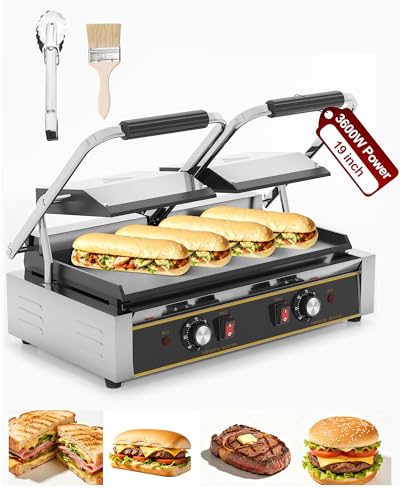


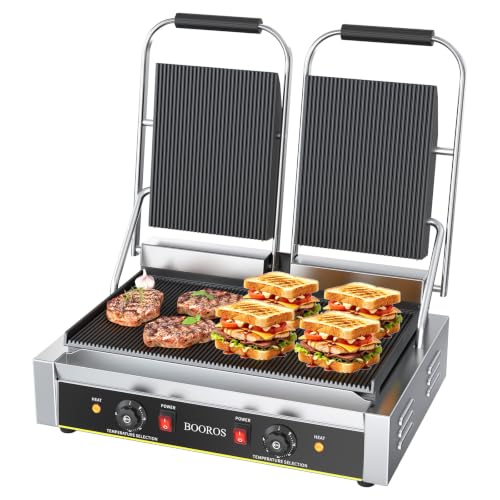
Quick Answer: Three Press Types in 30 Seconds
Commercial presses sold for home use fall into three size classes, and the right one depends on how many sandwiches you press in one session.
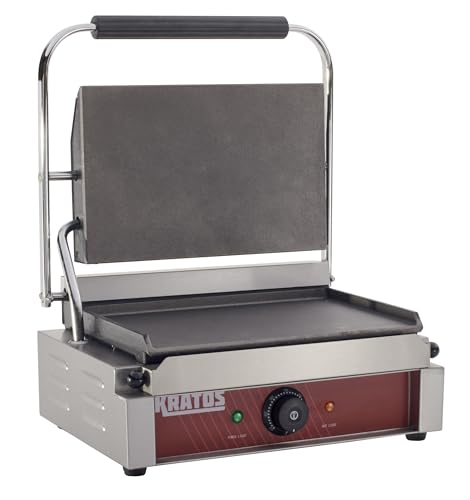
- Compact single presses cook one or two sandwiches at a time and suit couples or small families.
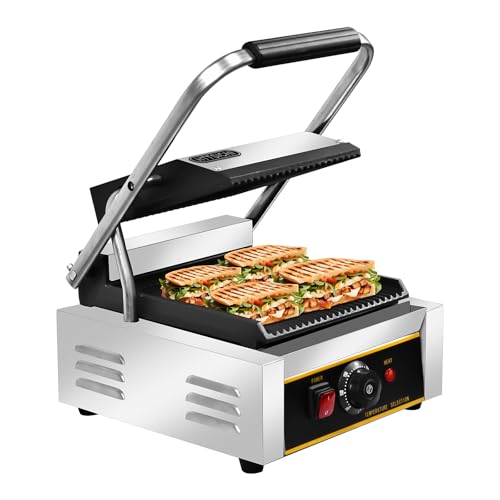
- Mid size double presses cook two to four sandwiches per round and fit families who batch cook or host often.
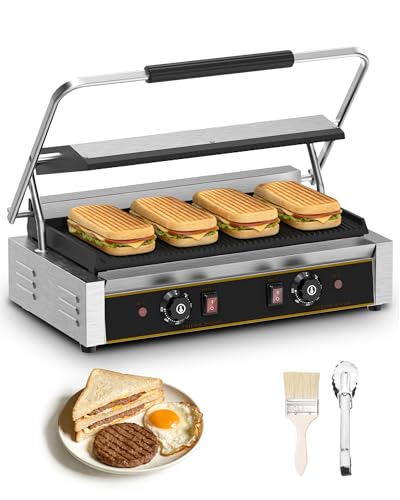
- Large heavy duty presses cook four or more at once, recover heat fastest, and suit big households and small home based food ventures.
Before You Buy: A Quick Checklist for Choosing a Panini Press
Which Type Fits Your Routine
Start with the plates, since they decide what the press does well. Grooved plates leave grill marks and let fat drain away from the bread, which suits classic pressed sandwiches. Flat plates give even contact for wraps, quesadillas, and reheating pizza slices without tearing them. Many commercial units pair a grooved top plate with a flat bottom plate, a sensible middle ground for mixed menus. If grilled cheese is the main event at your house, our guide to the best panini press for grilled cheese explains why even browning matters more than deep grooves for that job. Stainless steel bodies wipe down fast, while nonstick coatings release cheese easily but need gentler tools.
Features Worth Paying For and Ones to Skip
Pay for a floating hinge, because it lets the top plate rest level on a thick sandwich instead of squeezing the filling out of the back. Pay for an adjustable temperature dial, since rye bread, delicate wraps, and thick ciabatta each brown best at different settings. Removable plates earn their cost the first time burnt cheese needs soaking off, and our guide to the best panini press with removable plates shows what to check before relying on that feature. Skip preset programs and novelty attachments, because a commercial press earns its keep through simple controls you can adjust mid service.
Wattage, Power and Energy Use
Most presses in this class draw about 1200 to 1800 watts. Higher wattage mainly buys recovery speed, meaning the plates climb back to cooking temperature quickly after a cold sandwich goes in. That matters during a long batch, and it barely matters for two sandwiches on a Tuesday. A press in this range runs on a standard kitchen circuit, though it should not share that circuit with another large appliance at the same moment. Energy cost per meal stays low.
Safety Features and Certifications
Look for a UL or ETL listing on the label, since that shows an independent safety listing covers electrical and fire risk. Commercial bodies are mostly metal and get hot on every outside surface, so plan on oven mitts and a clear zone around the press while it works. Sturdy feet, a latch that keeps the lid from dropping shut, and a drip tray that stays seated all prevent small accidents. Route the cord behind the unit, away from hot plates and passing hands.
Counter Space and Dimensions
Measure your counter before you fall for a large plate area. A compact press may occupy about 12 by 12 inches, while a large double press can take about 16 by 18 inches once you count the handle and room for your hands. Weight climbs with size, from about 8 pounds for a compact unit to 25 pounds or more for the largest class, and that decides whether the press lives on the counter or travels to a cabinet. Be honest about storage before ordering, because shallow shelves rarely fit a big press.
Realistic Budget Ranges
Expect to pay about $100 to $250 for the compact class, where you get sound plates and simple controls in a smaller body. The mid size class runs about $250 to $450, and the extra money buys a larger cooking surface, stronger hinges, and finer temperature control. Large heavy duty models often cost over $450, and at that level you pay for thicker plates, faster recovery, and parts built to be replaced rather than thrown away. Set your budget by your weekly sandwich count, because a press used twice a month rarely repays the top tier.
Three Types Compared: Which Commercial Press Fits Your Home
Compact Single Presses for Smaller Households
A compact commercial press brings the sturdy build of the category to a one or two sandwich routine. Plates heat evenly, the body feels solid, and cleanup stays quick because there is less surface to scrub. This class suits couples, singles who meal prep on Sundays, and small kitchens where every inch of counter already has a job. The tradeoff is pace. Guests wait between rounds, and sandwiches for a crowd turn into a long session. Choose this class when you value durability and tidy storage more than speed.
Mid Size Double Presses for Busy Families
The mid size class is the natural step up for families who press sandwiches several nights a week. Two to four sandwiches cook at once, so school lunches, weeknight dinners, and weekend hosting all move at a comfortable pace. Most models in this class add the floating hinge and temperature dial described earlier, which makes thick and thin items equally manageable. Readers comparing this class with lighter home models may also like our guide to the best panini press for home, which covers the smaller end of the same decision. Expect a permanent counter spot, because moving 15 to 20 pounds in and out of a cabinet gets old fast.
Large Heavy Duty Presses for Crowds and Side Ventures
The largest class serves big households, multigenerational homes, and anyone pressing food for a small paying audience, such as a home based caterer or a church kitchen crew. Wide plates take four or more sandwiches, thick metal holds heat through back to back batches, and hinges are built for hundreds of cycles a month. The tradeoffs are real. These presses are heavy, they warm up the kitchen, and they cost the most to buy and repair. Choose this class only when your volume is proven, because an oversized press that sits idle is expensive counter decor.
How This Guide Evaluates Commercial Panini Presses
The comparisons here rest on six criteria: capacity, cooking performance, ease of use, cleaning effort, safety and warranty support. Capacity and performance figures come from manufacturer specifications, while ease of use judgments draw on patterns in verified buyer feedback, such as repeated comments about hinge stiffness. When sources disagree, this guide uses the more cautious number, because the best commercial panini press for a home is the one whose claims you can trust.
Commercial Presses Compared With Standard Home Presses
What you gain from a commercial press is consistency under load. Thick plates hold their temperature through a full batch, hinges survive daily use for years, and worn parts can often be replaced instead of discarding the whole appliance. Sandwiches come out evenly browned from the first round to the last, which home presses rarely manage once the fifth sandwich goes in.
What you give up is convenience. Commercial units weigh more, store awkwardly, and offer fewer comfort extras such as automatic shutoff or countdown timers. They also cost more at every size. The commercial route wins when volume is weekly and predictable, not occasional.
Common Buying Mistakes to Avoid
- Buying plate area you cannot store. A press that blocks half the counter gets abandoned within a month.
- Choosing grooved plates for every food. Delicate wraps and flatbreads tear and dry out on deep grooves.
- Ignoring hinge design on thick sandwiches. A fixed hinge pushes filling out of a tall sandwich and cooks it unevenly.
- Skipping the certification label. An unlisted import may lack independently verified protection against overheating.
- Paying for presets instead of temperature control. Fixed programs rarely match your bread, while a simple dial adapts to everything.
Cost of Ownership and Care
Ownership costs stay modest when you plan for them. Electricity for a typical family session costs only a few cents, and the real expenses are replacement plates when a nonstick surface eventually wears, plus a drip tray or handle if one breaks. Models with spare parts listed by the maker protect you here, so check parts availability before buying rather than after a failure. Our step by step guide on how to clean a panini press covers the routine that keeps plates and hinges in good shape.
Daily habits decide how long those parts last. Overfilling strains the hinge, and pressing down hard on the handle adds wear without cooking food any faster. Gentle technique matters as much as cleaning, and the basics in our guide on how to use a panini press will save you repairs and squashed sandwiches. Store the press latched with a soft cloth between the plates to protect the surfaces from scratches.
Your Questions, Answered
Are commercial panini presses worth it for a home kitchen?
They are worth it when you press sandwiches a few times a week or cook for groups often, because the sturdier build spreads its higher price across thousands of uses. They also hold resale value better than light home models, since small cafes buy used units. If your pressing happens once a month, the honest answer is no, and a simple home press will serve you just as well for far less money.
How do you clean a commercial panini press after a busy session?
Unplug the press and let it cool until warm rather than hot, then wipe the plates with a damp cloth so stuck cheese softens and lifts. Work a wooden or silicone scraper along the grooves to clear crumbs, and empty the drip tray once it cools. Never submerge the unit or use metal tools on coated plates, because water near the electrics and scratches in the coating both shorten its life.
How long does a commercial panini press last?
A well kept commercial press commonly serves for many years, often far longer than a light home model used at the same pace. The parts that eventually fail are usually the heating element and the thermostat, not the body or plates, so makers that sell those spares extend the useful life even further. Presses used daily in a small food business wear faster than presses used for family dinners, yet even then the lifespan is measured in years, not months.
What is the most reliable commercial panini press brand?
No single brand wins on reliability for every buyer, and claims that one does should make you cautious. Stronger signals are a warranty of at least a year, spare plates and elements listed for sale, and a service network you can reach from your state. A maker that publishes parts diagrams and sells replacements directly is telling you the press was designed to be repaired, and that choice predicts a long working life better than any badge.
What size commercial panini press fits a small kitchen counter?
Start with the compact class, then check one measurement most buyers miss: the clearance under your upper cabinets with the lid fully open, since a tall press can block its own lid in a galley kitchen. About 18 inches of vertical room handles most models. If counter depth is the tighter constraint, a sturdy rolling cart beside the counter gives the press a home without crowding your prep space.
Final Thoughts
The right choice comes down to volume, space, and how much machine your routine truly needs. Compact presses reward small households, mid size models carry busy families, and the largest class earns its price only under steady demand. Whichever class you pick from the product table above, the best commercial panini press is the one sized to your counter and your crowd, with replaceable parts and controls you will use every week.