
Best Commercial Electric Pizza Oven for Home Use (2026)
Disclosure: We may earn a commission when you buy through links on this page, at no extra cost to you. As an Amazon Associate I earn from qualifying purchases. Learn more

Compare formats, deck sizes and power needs to choose the best commercial electric pizza oven for a home kitchen, plus care tips and budget ranges.
Your dough has proofed, the toppings are ready, and three pizzas are lined up for a family movie night, but your regular oven handles one at a time and the last pie comes out pale. That gap is exactly why many buyers look for the best commercial electric pizza oven they can reasonably run at home. Output, heat recovery, and a deck built for repeated bakes are the draw.
This guide helps you choose by the things that decide daily life with a larger oven: the space it takes, the power it needs, how many people you feed, and what it costs to own. Start with the comparison table below, then read on for the sizing and budget details.



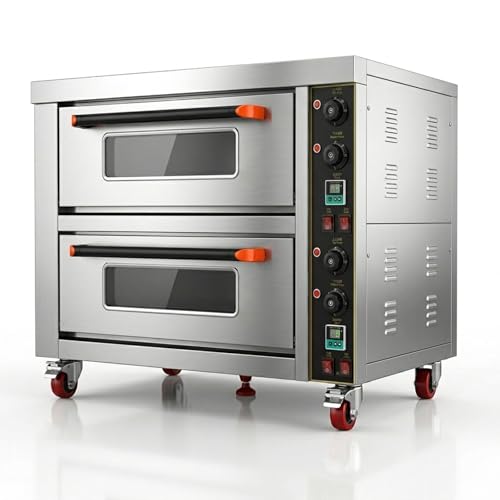
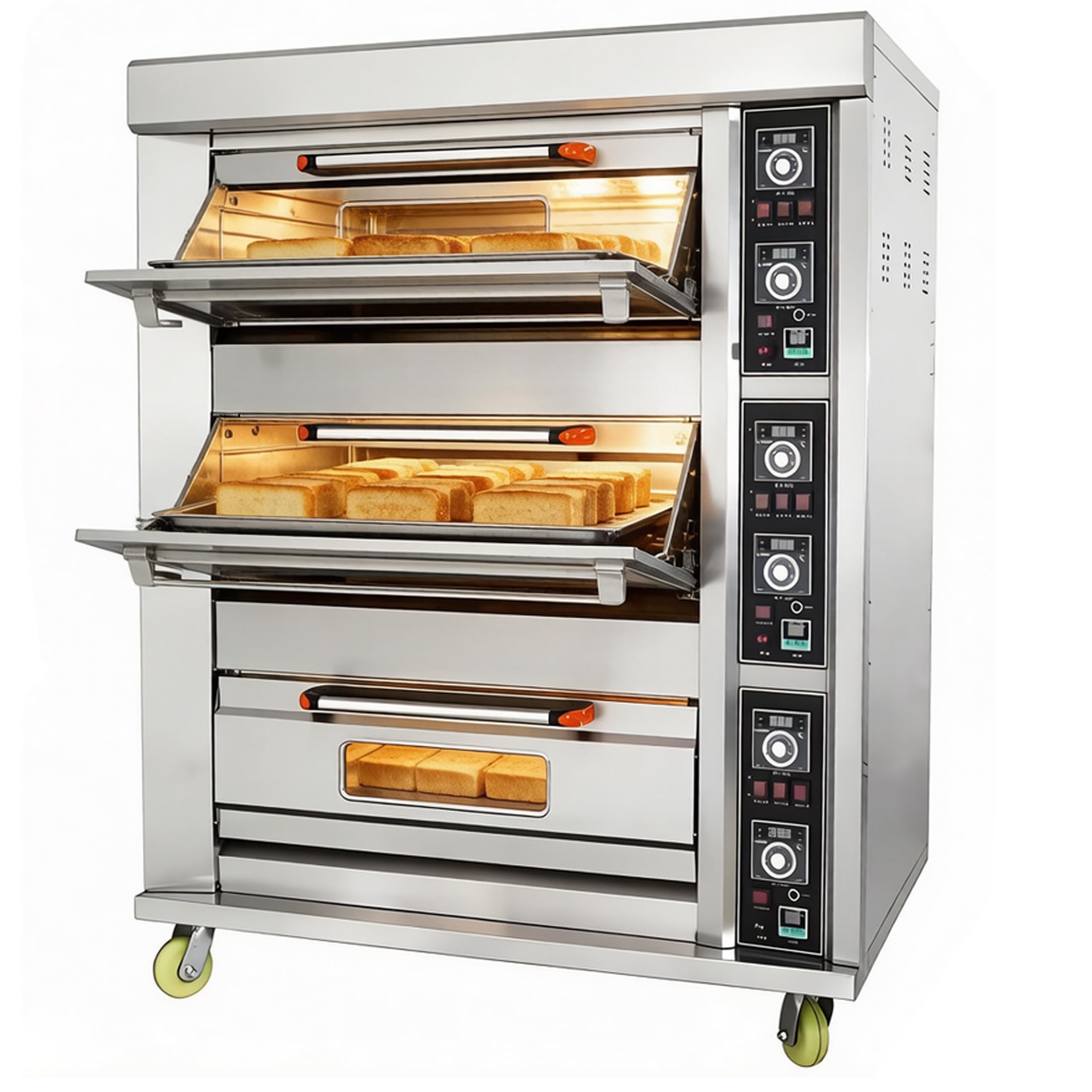
Quick Answer: Which Commercial Electric Pizza Oven Format Fits Most Homes
For most households, a single deck countertop model is the sensible commercial step up. It bakes one large pizza at a time, recovers heat faster than a home oven between bakes, and still fits on a sturdy counter.
If you cook for a crowd or sell at a local market, a double deck doubles your output in the same footprint. Conveyor models suit only very high volume. If one pizza at a time is enough, our guide to the best electric pizza oven covers smaller options.
Before You Buy: A Quick Checklist
Commercial on the box describes duty and output, not a promise that the oven suits your kitchen. Choosing the best commercial electric pizza oven for a home comes down to matching deck size, power supply, and weekly volume to your actual routine, not to the biggest spec sheet.
Size: Match It to Your Space
Deck size sets the largest pizza you can bake. A 12 inch deck handles personal and medium pizzas for one or two people. A 16 inch deck fits the large family pies most households actually make, and an 18 inch deck serves party size pizzas but needs a much wider body. Measure the pizzas you cook most often, including the peel you slide them in with, and buy for that size.
Which Type Fits Your Routine
Deck ovens bake pizza directly on a heated stone or steel surface and give you the crust control most buyers want. Conveyor ovens move pizza through on a belt at a set speed, which favors volume over manual adjustment. Nearly all home suitable commercial units are countertop models made for indoor use, and our guide to the best indoor electric pizza oven explains indoor ventilation basics. True commercial decks are heavy and stay put.
Features Worth Paying For, and Ones to Skip
Pay for a real pizza stone or thick steel deck, because mass in the deck stores heat and keeps the bottom crust crisp across back to back bakes. Pay also for separate top and bottom temperature control, since balancing deck heat against topping heat avoids a burnt top over a soft base. A viewing window helps you judge color without opening the door. Skip preset programs for foods you cook elsewhere and decorative finishes that add cost without adding output.
Wattage, Power and Energy Use
Power is the first hard limit at home. Smaller countertop decks draw about 1500 to 1800 watts and run on a standard kitchen circuit, though they should not share it with another large appliance. Larger units often need 208 to 240 volts and a dedicated circuit of about 20 to 30 amps, which may mean hiring an electrician. Check the nameplate rating before ordering.
Safety Features and Certifications
Look for a UL or ETL listing on the nameplate, which shows the model was evaluated for electrical and fire safety under a recognized standard. Cool touch handles and stable feet matter in a busy kitchen. Keep the clearance the manual states on every side, away from curtains and paper goods. Stop using the unit and call a technician if the cord is damaged, the breaker trips repeatedly, or you smell burning insulation.
Counter Space and Dimensions
External size grows faster than deck size. A 16 inch deck often sits in a body about 24 to 28 inches wide and 20 to 24 inches deep, and double deck models can stand over 20 inches tall, which may block upper cabinets. Many decks weigh about 40 to 90 pounds and need a counter that will not flex. Leave room in front for a peel.
Realistic Budget Ranges
Price follows deck size, power, and build quality more than brand name. Most home buyers land somewhere from under $200 to over $1000, so use these broad ranges to set expectations.
- Under $200: true commercial duty is rare here, and most units are light duty countertop models with small decks and slower recovery.
- About $200 to $500: entry level commercial single decks with a 12 to 16 inch deck, basic controls, and output suited to family use.
- About $500 to $1000: sturdier single decks and compact double decks with thicker decks, faster recovery, and separate element controls.
- Over $1000: larger double decks and small conveyor units built for daily high volume, usually with higher voltage power needs.
Types Compared: Three Formats Worth Your Money
Instead of chasing individual models, compare the three formats below against your weekly volume. The right format at the right size beats a larger oven you cannot power or store.
Single Deck Countertop Models
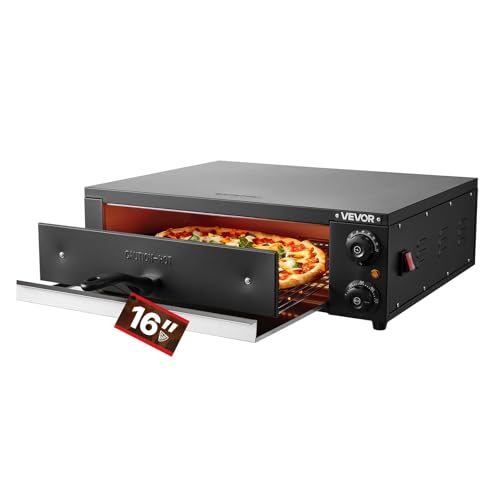
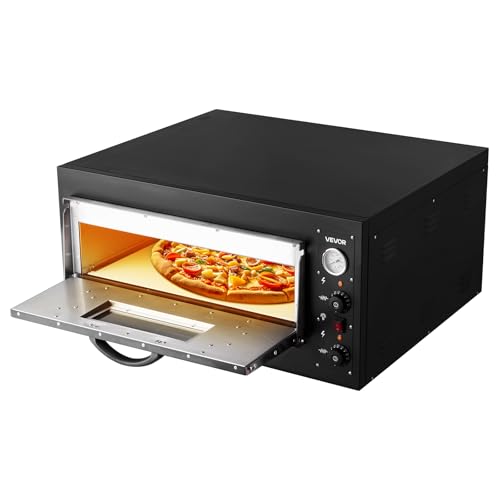
This is the format most home buyers should start with. One stone or steel deck, dual element controls, and a body that fits a garage bench or a wide kitchen counter.
It suits households that bake two to six pizzas in a session and want a firmer crust and shorter gaps between bakes than a home oven gives. Output is its limit, so guests mean planning your bake order. For home sized setups, see our guide to the best electric pizza oven for home.
Double Deck Countertop Models
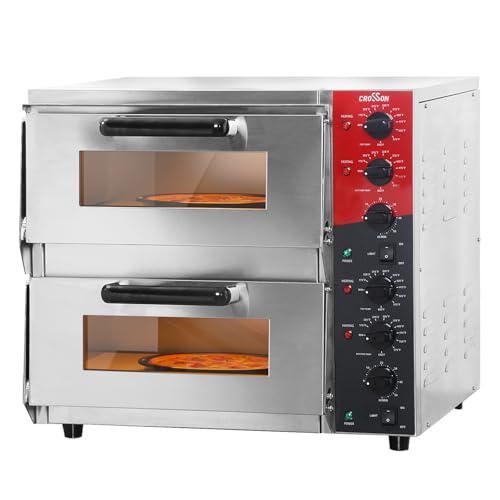
Two stacked decks bake two pizzas at once, or hold one style at a lower heat while another finishes hotter above. This format fits large families, frequent hosts, and home bakers who sell a modest number of pizzas each week. The trade offs are weight, height, and power draw, since two decks pull far more current than one. Each deck needs its own temperature setting, so treat shared controls as a warning sign.
Compact Conveyor Models
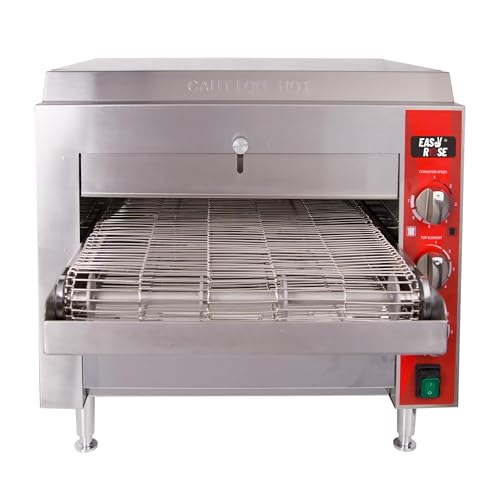
A conveyor oven pulls pizza through a heated chamber on a moving belt, so results stay consistent with little attention once belt speed and heat are set. That helps a small shop or a busy event stand, but the format is wide, loud, and hard to justify for a handful of pizzas a week. You also lose the ability to adjust a single pizza mid bake. Choose it only when steady volume is your main goal.
Our Selection Process
We judge formats on capacity, cooking performance, ease of use, cleaning effort, noise, safety listings, and warranty length. Our information comes from manufacturer specifications, published safety standards, and patterns in verified buyer reports about recovery time and control accuracy. We leave live prices to the product table.
What We Like and What We Do Not: Commercial Models Against Other Electric Options
The strengths are real. A commercial deck holds its temperature when you open the door and load a cold pizza, so the fourth pizza bakes much like the first. The build is usually plain stainless steel with parts a technician can replace. Against that, these ovens are heavy, they warm the room, and many need electrical work before the first bake.
Whether the trade is worth it depends on volume. If you bake pizza twice a month for four people, a home model plus a steel in your regular oven covers you for far less, and our comparison of pizza oven vs regular oven walks through that choice. If pizza night means eight or more pies, recovery speed and deck durability start paying for themselves.
Common Buying Mistakes to Avoid
- Buying deck size for the rare party: an 18 inch deck you fill twice a year wastes counter space and power every week.
- Ignoring the circuit: ordering a 240 volt oven for a kitchen with no free panel capacity turns a delivery into a storage problem.
- Forgetting the peel path: a deck that fits the counter but leaves no room to angle a loaded peel leads to torn pizzas and burnt forearms.
- Paying for two decks with one control: shared controls remove the main reason to own a double deck, running each deck at a different heat.
- Skipping replacement costs: a cracked stone or failed element on a unit with no available parts can end the oven life early.
Cost of Ownership and Care
Running cost is mostly electricity, and a long preheat plus several bakes will show up on your bill in proportion to wattage and session length. Budget also for parts that wear: heating elements, deck stones, and door hinges. Before you buy, confirm that elements and stones for your format are sold as spares. Daily habits matter too, and our walkthrough on how to use an electric pizza oven covers loading and timing basics that reduce wear.
Care is simple but regular. Brush crumbs off the cooled deck after each session, wipe the exterior once the body is cool, and keep vents clear of flour dust.
Never pour water on a hot stone deck, since the sudden temperature change can crack it. For the full routine, follow our guide on how to clean an electric pizza oven. Have a technician inspect the wiring if bake times suddenly stretch.
FAQ
Are commercial electric pizza ovens worth it for a home kitchen?
They are worth it when your volume is steady, meaning pizza sessions most weeks and several pies per session, because faster heat recovery shortens the whole evening. They are hard to justify for occasional use, since the oven takes counter space and power capacity all year. If you plan to sell pizzas from home, food licensing laws vary by area, so confirm what your city or state allows first.
How long does a commercial electric pizza oven need to preheat?
Most countertop deck models need about 30 to 60 minutes to bring a thick stone or steel deck fully up to temperature, even if the air temperature display reaches the target sooner. The deck itself is the cooking surface, so judging by the display alone gives a pale bottom crust. An infrared thermometer pointed at the deck removes the guesswork and shows whether one corner runs cooler.
Can a commercial electric pizza oven run on a standard kitchen outlet?
Only the smaller models rated near 1500 to 1800 watts can, and even then the circuit should feed little else while the oven runs. The detail many buyers miss is the plug itself: higher rated units use plug shapes that will not fit a household receptacle at all, a deliberate safety design, not a defect. Never use an adapter to defeat that. If the plug does not match, you need a proper circuit.
Does a commercial electric pizza oven need special ventilation at home?
Most countertop electric decks do not require a commercial hood in a home, because there is no open flame and no combustion exhaust. They do release heat and some smoke when cheese or flour burns on the deck, so a range hood vented outdoors makes long sessions far more comfortable. Selling food to the public can trigger stricter local codes, so check those first.
How long does a commercial electric pizza oven usually last?
A well kept commercial deck often serves for many years, because the design favors replaceable parts over sealed construction. Elements, thermostats, and switches can be swapped by a technician, which extends service life well past that of a disposable home appliance. The usual life limiter is not age but neglect: flour packed into vents, water damage to a hot deck, and repeated breaker trips that stress the wiring.
Final Thoughts
Start with your real volume, then your circuit, then your counter. Most homes land on a single deck model, busy hosts step up to a double deck, and only steady sellers need a conveyor. Check your format against the product table above, and choose the best commercial electric pizza oven that fits your space and power supply. The right format gives you heat that recovers and a deck you understand.


