
Best Colanders for quinoa: Size, Type and Care Guide for 2026
Disclosure: We may earn a commission when you buy through links on this page, at no extra cost to you. As an Amazon Associate I earn from qualifying purchases. Learn more

Match hole size, capacity and storage to how you cook quinoa so the colander you choose drains well and stays easy to clean.
You rinse a cup of quinoa for dinner, lift the colander, and watch half the grains slip straight through the holes into the sink. That small daily frustration is exactly why the best colander for quinoa is not a standard pasta colander at all. Its openings have to be smaller than the grains, and its shape has to suit your sink, your storage space, and the number of people you cook for most nights.
Use the product table to see the main types side by side, then work through the checklist so the one you bring home fits your routine from the first rinse.




Quick Answer: The Types That Work in 30 Seconds
Choosing the best colander for quinoa comes down to one simple test. If the openings are fine mesh or tiny round holes, the grains stay in and the water runs out. If the openings are wide slots or large punched holes, the grains escape, no matter how sturdy the bowl feels in your hand.
For most homes, a fine mesh strainer with a firm rim and a handle is the most flexible choice. Homes that cook larger pots often prefer a micro perforated metal bowl that sits steady in the sink. If storage space is tight, a collapsible or over the sink style can work, as long as the mesh or the holes pass that same small grain test.
Before You Buy: A Quick Checklist for Choosing a Colander for Quinoa
Size: Match It to Your Space
Start with the amount you cook at one time. One cup of dry quinoa makes about three cups cooked, so a small strainer of about 1 to 2 quarts handles a side dish for one or two people. A 3 quart size suits most family dinners and leaves room to shake the grains under the tap. A 5 quart bowl earns its shelf space only if you cook big batches for meal prep. Also measure your sink and cabinet, since a wide bowl needs more room than its quart rating suggests.
Which Type Fits Your Routine
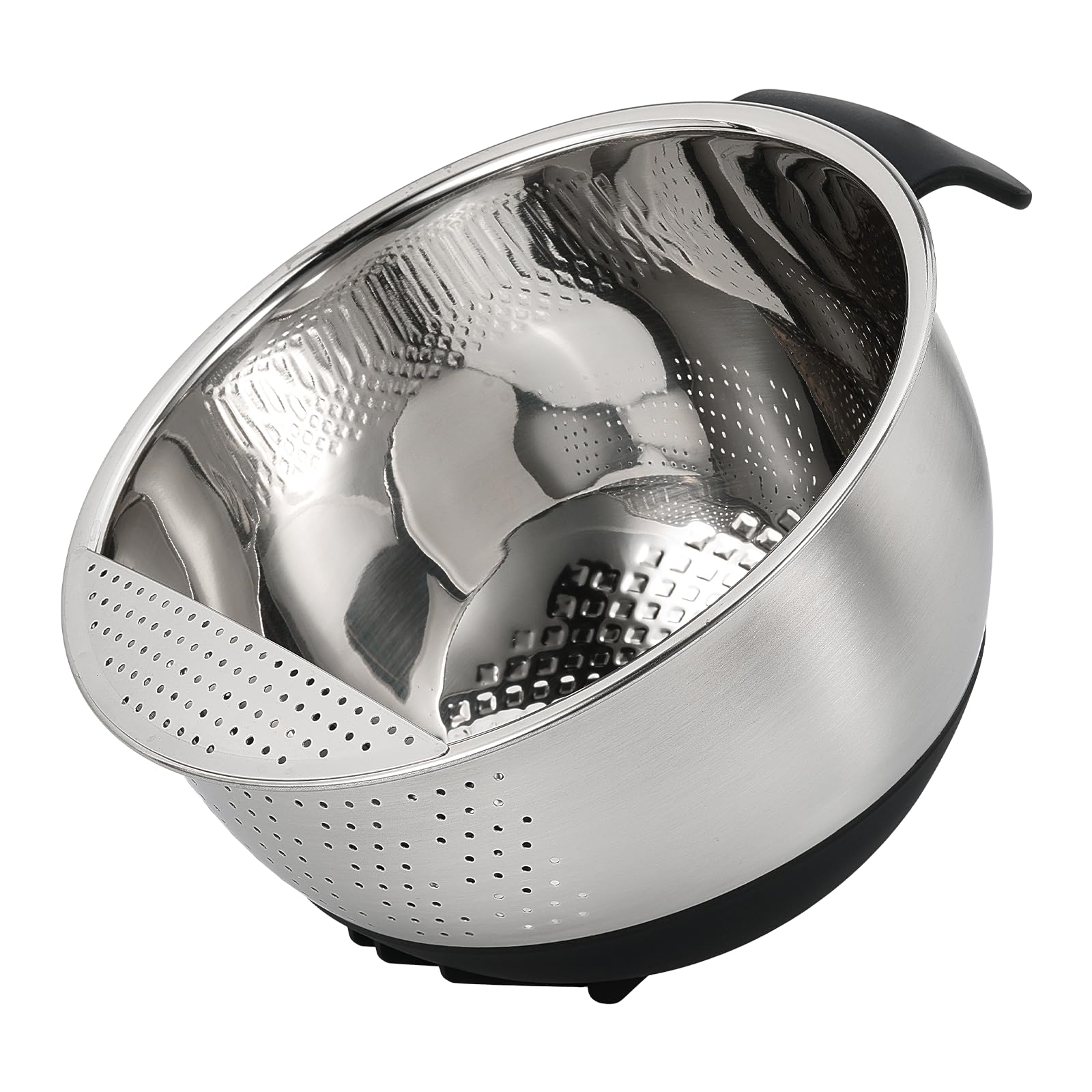
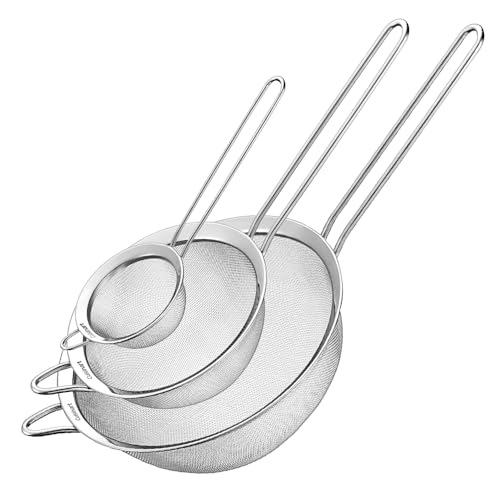
Fine mesh strainers use woven wire and are the safest bet for tiny grains, and a set in graduated sizes covers a single portion or a family pot. Micro perforated metal bowls have tiny punched holes, feel sturdier, and drain fast. Basket style colanders with feet suit draining cooked quinoa, but only when the holes are small enough. Collapsible silicone styles fold flat for small kitchens, while over the sink and clip on styles free up your hands. Standard plastic colanders with wide slots rarely work for this grain.
Features Worth It, and Ones to Skip
Pay for a rim that feels rigid when you press it, since a rim that flexes lets mesh pull loose over time. Two handles, or one long handle plus a resting hook, help you hold the strainer steady while the other hand stirs the grains. A stable base or short feet keep a loaded bowl from tipping in the sink. Skip decorative patterns with mixed hole sizes, deep narrow shapes that trap grains, and novelty strainers with cute cutouts, since each makes rinsing slower and cleaning harder.
Materials and Food Safety
Stainless steel is the most durable option here, it does not hold odors, and it tolerates hot cooked grains without softening. Look for steel described as food grade, with mesh firmly set into the rim rather than glued. Silicone styles are gentle on sinks and fold for storage, but check that the draining surface is still fine enough. Plastic costs less and feels light, yet it can warp near hot pans and can stain. Whatever the material, the draining surface decides whether quinoa stays in the bowl.
If durability is your top concern, our guide to the best stainless steel colander explains how steel gauges and rim construction differ across price levels.
Dishwasher Safe or Hand Wash
Most steel and silicone colanders can go in the dishwasher, and that matters when sticky cooked grains are involved. Fine mesh still benefits from a quick rinse right after use, since dried grains wedge into the weave and turn a simple wash into a scrubbing job. Wooden handles and some plastic styles need hand washing to avoid cracking or warping. Check the care notes before you buy, and pick a shape without folded seams where grain bits can hide.
Realistic Budget Ranges
Under $15 usually buys a single fine mesh strainer or a simple perforated bowl, enough for most small households. From about $15 to $25, you get sturdier rims, better handles, and sets with two or three sizes. From about $25 to $50, expect heavier steel, larger capacity, and stronger collapsible or over the sink frames. Spending more mainly buys build quality and size, not better draining, so extra cost should solve a storage or durability problem you actually have.
Types Compared: Three Styles That Fit Real Homes
Fine Mesh Strainers for Everyday Rinsing
This is the default choice for most kitchens. The woven mesh stops even the smallest grains, the handle keeps your hand clear of running water, and the strainer can rest across a bowl while excess water drains. A medium size handles both rinsing and draining, so one tool covers the whole task. The trade off is cleaning, since the weave grabs tiny bits. For a broader view of shapes, see our roundup of the best colander styles for general kitchen use.
Micro Perforated Bowls for Larger Batches
A metal bowl with tiny holes across its base and sides drains a big pot of cooked quinoa quickly, and its feet hold it steady while you fluff the grains. The smooth punched surface rinses clean faster than woven mesh. These bowls take more cabinet room and offer less control for small amounts, since a single cup of grains spreads thin across the base. Choose this style when your household cooks quinoa in quantity, or when you also drain beans and berries often.
Space Saving Options for Small Kitchens
Collapsible styles flatten and slide into a drawer or hang on a hook, which solves the storage problem in apartments and small homes. Over the sink styles rest on the sink edges and give you a stable draining spot when counter space is scarce. With both, check two things: the draining surface must still be fine mesh or tiny holes, and the frame must lock or rest firmly so wet grains do not fold it mid rinse. Our guide to the best collapsible colander covers how folding frames hold up over time.
How to Compare Colanders for Quinoa
Judge every style against the same criteria: whether the grains stay in, how fast the water drains, how the tool feels in daily use, how hard it is to clean, and what it costs to own over several years. Compare the maker specifications for size, material, and hole or mesh type, and read buyer feedback for patterns such as bent rims, loose mesh, and rust spots.
Living With It: What Really Matters in a Colander for Quinoa
The daily routine is simple once the tool fits. You measure the dry grains into the strainer, rinse under cool water while moving them gently with your fingers, and shake off the excess before the pot. After cooking, you can tip the grains back in to drain for a minute if the pot held extra water. A strainer light enough to lift with one hand and small enough to store near the stove gets used every time.
Quinoa is far less forgiving than pasta here, since pasta strands bridge wide holes and grains do not. If you drain pasta in the same kitchen, our guide to the best colander for pasta shows why those larger holed bowls still have a place for noodles. For correct rinsing and draining technique with any style, the steps in how to use a colander walk through hand position, water flow, and shaking off excess water without losing food.
Common Buying Mistakes to Avoid
- Buying a standard pasta colander with wide slots, so a large share of every cup of quinoa ends up in the sink.
- Choosing by quart size alone and ignoring hole size, which is the one spec that decides whether the tool works at all.
- Picking a bowl too large for your sink, so it sits tilted and pools water instead of draining freely.
- Paying for extra features like lids and pouring spouts while the mesh itself is too coarse for small grains.
- Storing a mesh strainer under heavy pans, which bends the weave and opens gaps that grains can slip through.
Cost of Ownership and Care
A colander has no running costs and no parts to replace, so the real cost question is how long yours lasts. A steel strainer with a solid rim can serve for many years, while thin mesh and weak rims are the usual failure points on cheap models. Rinse yours right after use, wash it, and dry it before storing so water does not sit in the weave. The full routine in how to clean a colander covers removing grains stuck in mesh without damaging it.
Store mesh styles hanging or nested with soft items, not crushed under cookware. If grains start escaping in one spot, check for a bent section or a tear near the rim, since a small damaged area only grows with use. Replacing a damaged strainer early costs less than the food you will keep losing through it.
Your Questions, Answered
Do you need to rinse quinoa that is labeled pre rinsed?
A quick rinse still helps, even when the bag says the grains were rinsed before packing. Quinoa carries a natural coating called saponin, which can taste bitter or soapy, and storage can leave fine dust on the grains. Thirty seconds under cool water in your fine mesh strainer is enough in most cases. If a new brand tastes bitter, rinse longer next time rather than adding more seasoning to cover the flavor.
Can you rinse quinoa without holding it under running water?
Yes. Put the grains in your strainer, set it inside a larger bowl of cool water, and swirl gently for about twenty seconds. Lift the strainer, pour out the cloudy water, and repeat once or twice until the water looks mostly clear. This bowl method suits low water pressure and small sinks. It also lets you see how much coating is washing off, which a fast tap rinse does not show as clearly.
Can a fine mesh colander for quinoa also strain rice and lentils?
Usually, yes. Rice, red lentils, and split peas are all large enough for the same fine mesh that holds quinoa, so one strainer can cover most grain and legume rinsing. Couscous is the main exception, since its tiny pearls can pass through mesh that works fine for quinoa. If you cook couscous often, test a spoonful over the sink first, and use your finest mesh size for that job.
Should cooked quinoa rest in the colander after draining?
A short rest helps when the cooking water did not absorb fully. Tip the grains into the strainer, let them sit over the warm pot for two or three minutes, and steam will escape instead of settling back in. Then fluff with a fork before serving. Do not leave cooked quinoa sitting in pooled water, since the bottom layer turns soft.
What does cloudy rinse water tell you about quinoa?
Cloudy water is normal at the start of rinsing. It carries off surface starch, fine dust, and traces of the saponin coating, and it should fade as you rinse and swirl. If the water stays milky after three rinses, keep going for another round, since some batches carry more coating than others. Foamy bubbles are another sign the coating is still present, and they should mostly disappear before cooking.
Final Thoughts
For most households, a fine mesh strainer sized to your usual batch is the simplest answer, with a perforated bowl for big batch cooks and a collapsible style for small kitchens. Match the hole size first, then size, material, and storage, and the tool will quietly do its job for years. Use the product table above to compare the styles again, and choose the best colander for quinoa that fits your sink, your shelves, and the way your household actually cooks.


