
Best Coat Rack: A Practical Buying Guide for 2026
Disclosure: We may earn a commission when you buy through links on this page, at no extra cost to you. As an Amazon Associate I earn from qualifying purchases. Learn more
The best coat rack fits your entryway, your household and the coats you actually hang: compare types, hooks, stability, materials, sizing and placement.
Coats land on chair backs, scarves vanish into closets, and guests end up holding their jackets because there is nowhere sensible to put them. Choosing the best coat rack for your home solves that daily clutter at the door, but only if the rack fits your space, your household, and the weight of what you actually hang. This guide walks through types, materials, hook layouts, stability, and placement so you can buy once and buy well.
Start by picturing your busiest moment at the door, with arms full of bags and several coats coming off at once. The comparison table below gives a quick overview of options, and the sections that follow explain how to read those details against your own entryway, hallway, or bedroom corner.

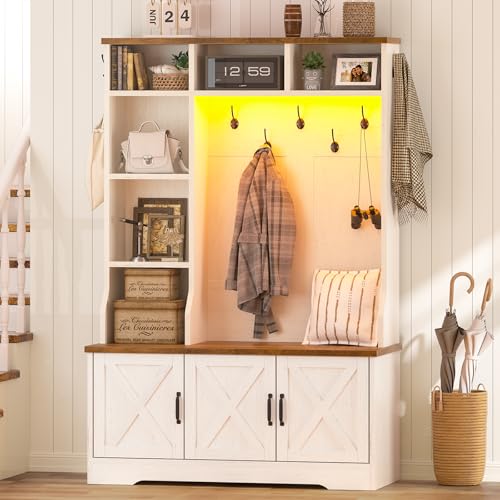
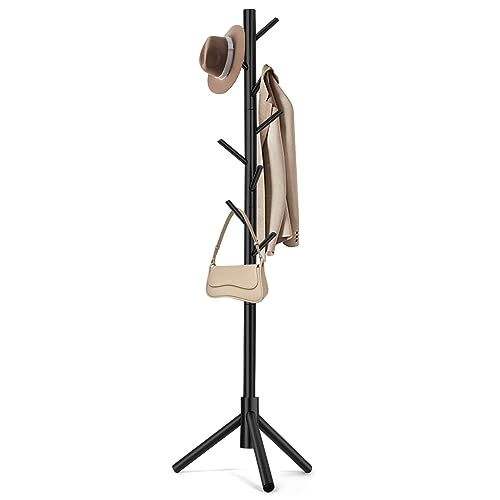
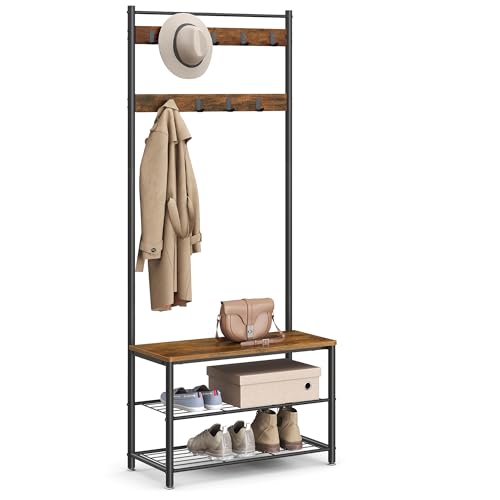
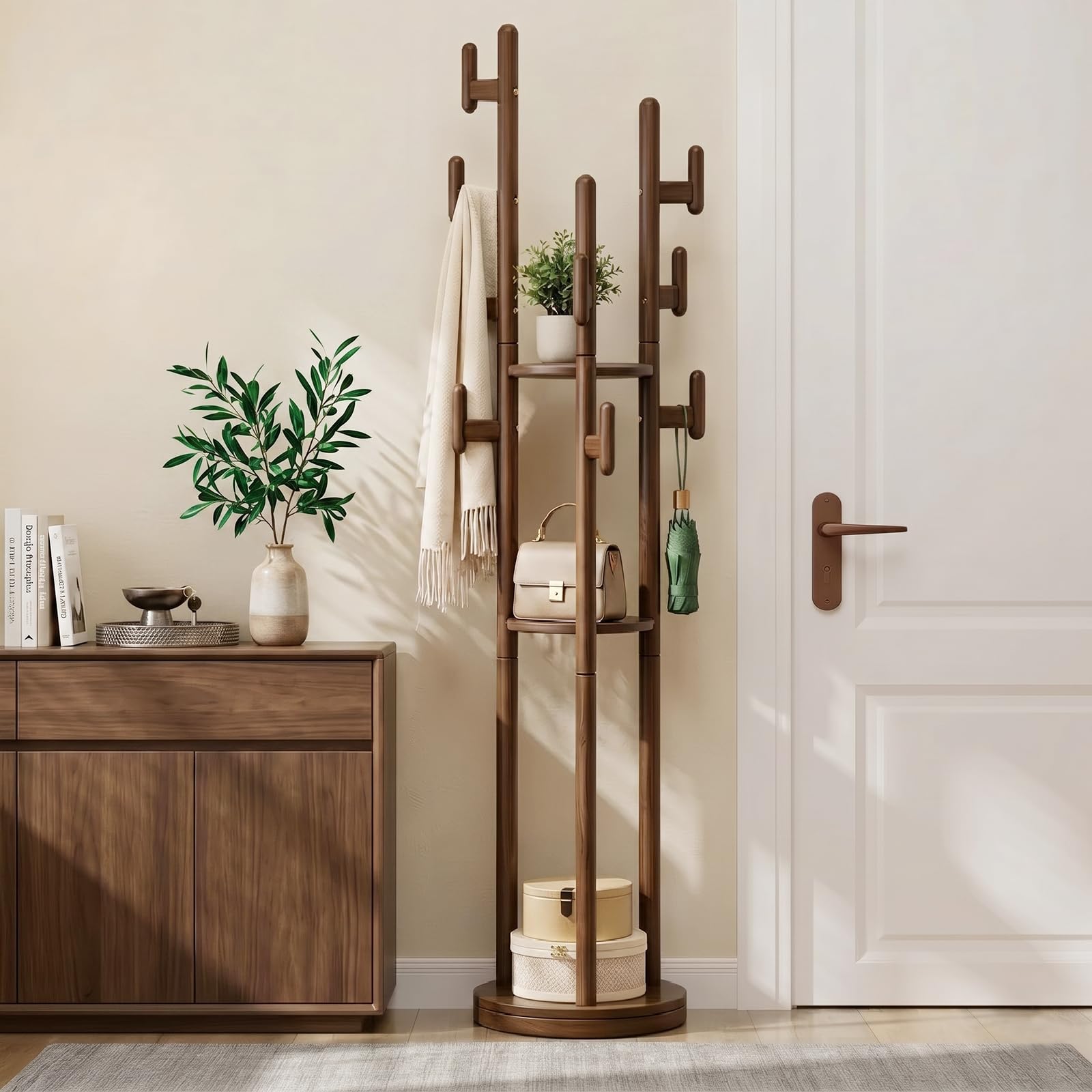
Who Should Buy a Coat Rack?
Busy Families With a Crowded Entryway
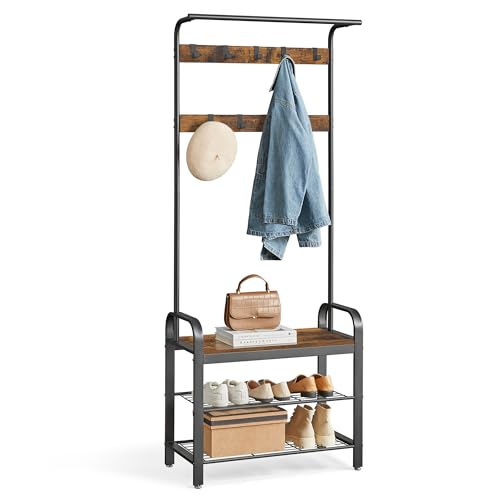
If your household drops school bags, work jackets, and dog walking gear in the same small area, you need capacity more than decoration. Look for hooks at two heights so children can reach the lower row and adults keep the upper row. A hall tree with a bench gives kids a place to sit while shoes come off, keeping the routine in one spot.
Apartment Renters With Little Closet Space
When the coat closet is tiny or missing, a freestanding rack in a corner can hold daily outerwear without any drilling. Renters should favor models that assemble with basic tools and come apart again, since moving day is easier when the rack breaks down into light pieces. If most of your storage problem is shirts and dresses on hangers rather than coats on hooks, see our guide to the best clothing rack options instead.
Homeowners Who Host Guests Often
A dedicated rack near the door saves guests from draping coats over beds and banisters, and it protects your furniture from damp jackets. Hosts usually do best with a sturdy wall mounted row or a hall tree in the mudroom, because both keep coats off the floor even when every hook is full.
Key Features to Compare
When you compare the best coat rack options in the product table above, the five factors below decide how well a rack serves you after the first week.
Material and Frame Construction
Solid wood racks feel warm and substantial and suit traditional rooms, but they are heavier to move and can cost more. Metal frames in steel or aluminum are slimmer, often cheaper, and resist dents well, though thin tubes can flex under a full load. Engineered wood and bamboo sit between the two at a moderate price. Whatever the material, check that hooks are screwed or bolted on rather than glued, because glued hooks are usually the first part to fail.
Hook Count, Shape, and Spacing
Count the coats your household hangs on a normal day, then add room for guests and bags. Most families land between eight and twelve hooks, while a single person may need only four or five. Double hooks that hold a coat above and a hat or scarf below make better use of vertical space, and rounded hook ends stop fabric from snagging. Hooks spaced too closely cause bulky coats to bunch, so wider spacing matters more than a big headline hook count. If headwear is your main clutter, see our guide to the best hat racks for storage shaped around caps and brims.
Stability and Weight Capacity
A rack that tips is worse than no rack at all, so judge stability before style. Freestanding models stand safest on a wide disc base or on legs that spread well beyond the pole, and a lower center of gravity helps when coats hang on one side only. Manufacturers list a total weight capacity, but the per hook limit matters just as much, since one heavy wet coat can stress a single hook. Spread heavy items around the rack instead of loading one side.
Height, Footprint, and Clearance
Most freestanding racks stand about 5 to 6 feet tall, which lets long coats hang clear of the floor while keeping top hooks within reach. Measure your spot before ordering, including door swing and the space coats need once hanging, because a rack that fits empty can crowd the walkway once loaded. In tight hallways, a flat wall mounted row takes almost no floor space.
Extra Storage Such as Benches and Shelves
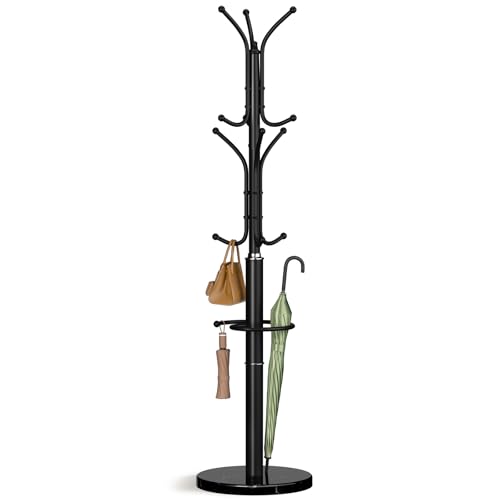
Hall trees combine hooks with a bench, cubbies, or shelves, turning one piece into a full drop zone for shoes, bags, and mail. A built in umbrella stand catches drips from wet gear and protects the floor. Extra features only earn their footprint if you will use them daily, so skip the bench if your entry is too narrow to sit down in.
Types of Coat Racks
The product table above is the right place to compare coat rack designs once you know which type suits your home.
Freestanding Coat Racks
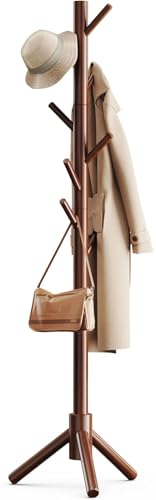
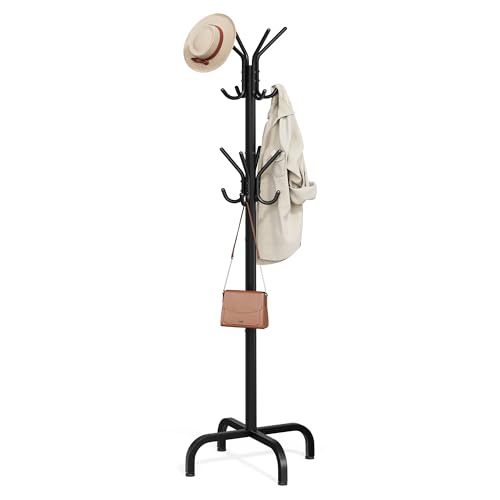
Freestanding racks, often called coat trees, stand on their own base and can move from room to room as your needs change. They suit renters and anyone unsure where the rack will live long term. Their weakness is stability, since a narrow base with coats on one side can wobble. Choose a heavy base and spread the load evenly.
Wall Mounted Coat Racks
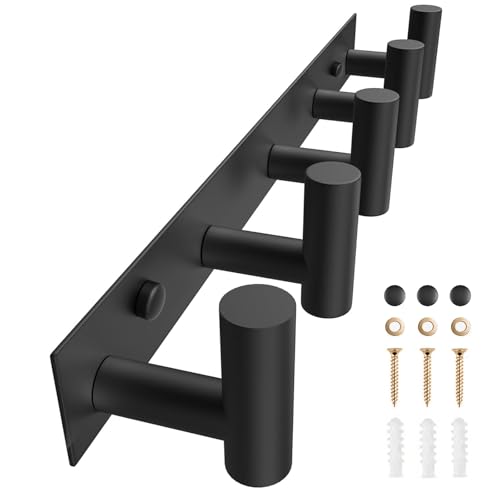
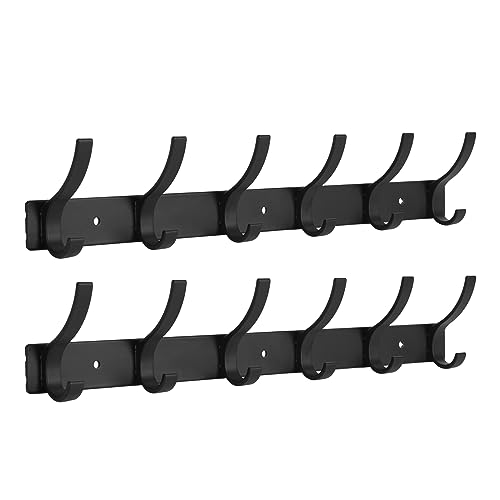
Wall mounted racks fix to studs or solid backing and hold heavy loads without any floor footprint. They work beautifully in narrow halls, behind doors, and in mudrooms where floor space is precious. Installation takes more effort, and moving the rack later leaves holes to fill. A simple rail with hooks is the most flexible version, since you can space the hooks to match your coats.
Hall Trees With Benches
A hall tree pairs hooks with a bench and usually some shelving or cubbies, making it the most complete option for families. It anchors a mudroom or wide entry and gives everyone a seat for boots and shoes. Hall trees are the bulkiest and priciest choice, and they need a wall wide enough for the full unit. Measure carefully, because a hall tree that overhangs a doorway blocks traffic.
Door Hanging Coat Racks
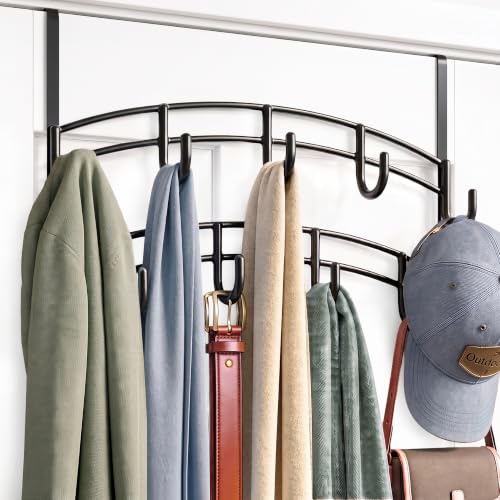
Door hanging racks hook over the top of a door and need no tools, which makes them handy for bedrooms, dorms, and guest rooms. They hold lighter loads than the other types, and the door must still close freely with the brackets in place. Check the gap above your door first, since thick brackets can stop a door from latching. For a main family entry, treat this style as backup storage.
How to Measure and Place Your Coat Rack
Good placement starts with the coats themselves. Hang your longest coat on a hook at the height you plan to use and check that the hem clears the floor or bench below by a few inches. Then walk the route from the door with your arms full and confirm the rack does not narrow the path. Keep these points in mind:
- Leave enough depth for hanging coats, usually about 18 to 24 inches of clear space in front of the hooks.
- Place the rack close to the main door, because storage that takes extra steps rarely gets used.
- Keep the rack away from heat vents, since constant dry heat can crack wood finishes over time.
- In homes with small children, favor wall mounted styles that a climbing child cannot pull over.
Common Mistakes to Avoid
- Buying by looks alone and ending up with a rack that tips the first time three winter coats hang on one side.
- Counting hooks instead of checking spacing, so bulky coats bunch together and fall to the floor.
- Skipping the stud finder on a wall mounted rack, which lets screws pull out of plain drywall under load.
- Choosing a rack too tall for the room, so top hooks sit out of reach and stay empty.
- Ignoring the base footprint, then finding the rack blocks the door swing or the walkway.
- Loading every hook to its limit at once, which bends weak hooks and loosens joints.
Assembly and Care for Your Coat Rack
Most freestanding racks assemble in under an hour with the included hardware. Lay out every part first, tighten bolts gradually in rotation so the pole stays straight, and recheck every fastener after the first week, because new joints settle under load. Wall mounted racks deserve proper anchors or stud screws, and a level line in pencil keeps the rail straight.
Day to day care is simple. Dust wood racks with a soft cloth and clean metal frames with a damp cloth, drying them afterward so moisture does not sit on the finish. Wet coats are the main enemy of both materials, so let soaked jackets drip in a tub before hanging them overnight. Inspect hooks a few times a year, and tighten or replace a failing hook before it drops a coat or tears a lining.
Frequently Asked Questions
How tall should a coat rack be in an entryway?
A coat rack in an entryway should stand about 5 to 6 feet tall. That height lets a long winter coat hang without pooling on the floor while keeping the top hooks reachable. Homes with lower ceilings can choose a rack closer to 5 feet, since unused top hooks add height without adding storage. If children hang their own coats, a second lower row matters more than total height.
How many hooks does a family coat rack need?
A family coat rack usually needs eight to twelve hooks. Count two hooks per person for a coat and a bag, then add two spare hooks for guests. Families in cold climates should lean toward the higher end, because thick coats take more room. A rack with double hooks effectively doubles capacity in the same footprint, which is worth seeking out for large households.
Can a freestanding coat rack hold heavy winter coats?
Yes, a freestanding coat rack can hold heavy winter coats if its base is wide and its per hook limit is respected. Spread the heaviest coats on opposite sides of the pole so the load stays balanced. One detail many buyers miss is that a coat soaked with rain weighs noticeably more than a dry one, so a rack that feels steady in summer deserves a fresh balance check in winter.
Is a wall mounted coat rack a good choice for a rental home?
A wall mounted coat rack can suit a rental home if your lease allows small holes and you are willing to fill them when you leave. Adhesive hooks avoid holes but hold far less weight, so they suit hats and light jackets only. Many renters find a freestanding rack simpler, since it moves out with them and leaves the walls untouched. Check your lease wording on wall fixings before drilling.
Where should a coat rack go in a small apartment?
In a small apartment, a coat rack works best in the corner nearest the door or on the wall space behind the door itself. Corner placement keeps the walkway clear while putting coats exactly where you take them off. A slim rack with a small round base takes less visual space than a wide hall tree. If even a corner is too tight, a short wall rail above a shoe cabinet uses vertical space that usually goes to waste.
Final Thoughts
The right rack comes down to three things: a type that fits your space, hooks that match the number and weight of your coats, and a base or mounting solid enough to stay steady under a full load. Use the product table above to compare those points, and measure your entry once more before ordering. Choose well and your best coat rack becomes the hardest working spot in the house, with clear floors and coats always where you left them.


