Best Clothing Rack in 2026: Which Type Is Right for You?
Disclosure: We may earn a commission when you buy through links on this page, at no extra cost to you. As an Amazon Associate I earn from qualifying purchases. Learn more
Confused by all the options? We compare every type of clothing rack side by side so you can choose the best clothing rack for your space and budget.
A spare bedroom with no closet, a laundry room that never stays clear, or a pile of coats on a chair can all point to the same fix. Choosing a best clothing rack sounds simple until you face rolling frames, tall frames, wall mounted rails, and racks with shelves all promising more storage. The comparison table below lines the main types up side by side so you can spot the differences fast.
This guide walks through each type in plain terms, then covers the measurements, load ratings, and stability checks that decide whether a rack feels solid or shaky. Care advice, common mistakes, and frequent buyer questions follow below.
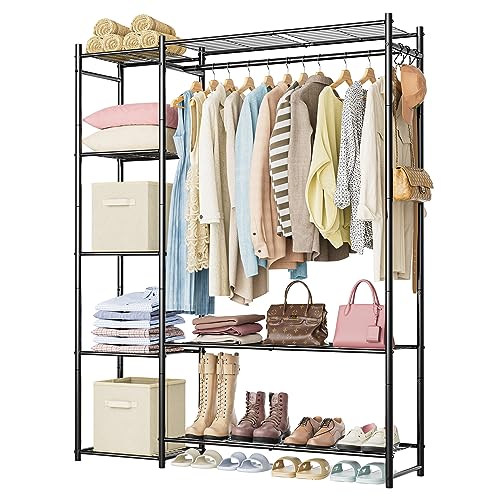
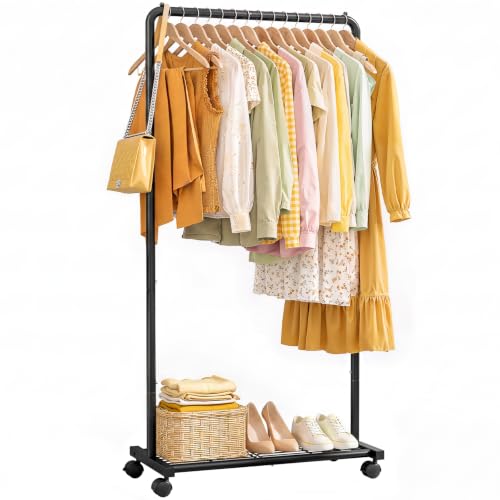

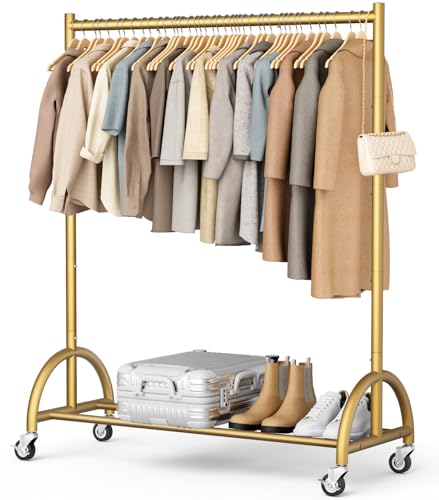
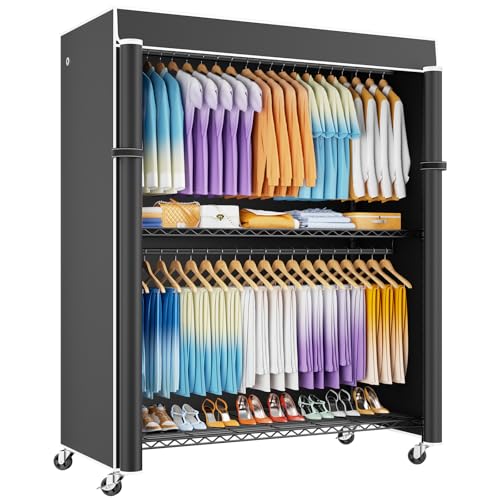

Types of Clothing Racks Compared
Most racks fall into four groups, and the group matters more than the finish or the color. Start by matching the type to the load you actually hang, how often the rack will move, and whether you can fix anything to the wall. The product table above gives the quick view, and the sections below explain where each type earns its space, so you can pick the best clothing rack with confidence.
Rolling Clothing Racks
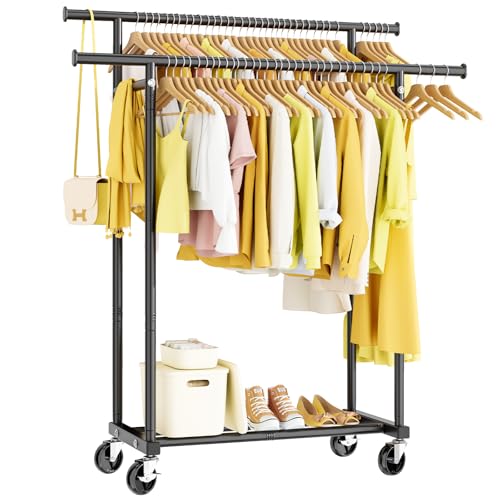
Rolling racks stand on casters so you can move a full load of clothes from room to room without lifting anything. They suit renters, clothing sellers, and anyone who cleans behind furniture often. Look for casters that swivel smoothly and at least two that lock, because a rack that drifts every time you pull a hanger off the bar quickly becomes annoying.
The trade off is stability. Wheels raise the frame and narrow its contact with the floor, so a loaded rolling rack can feel tippy on thick carpet or over door thresholds. Keep heavier garments near the center, lock the casters once parked, and never drag it sideways across rough floors.
Heavy Duty Clothing Racks
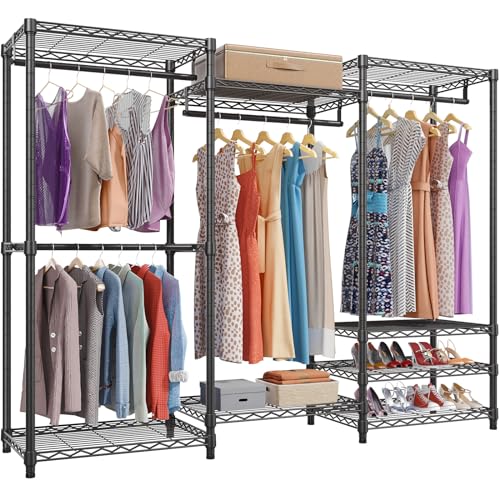
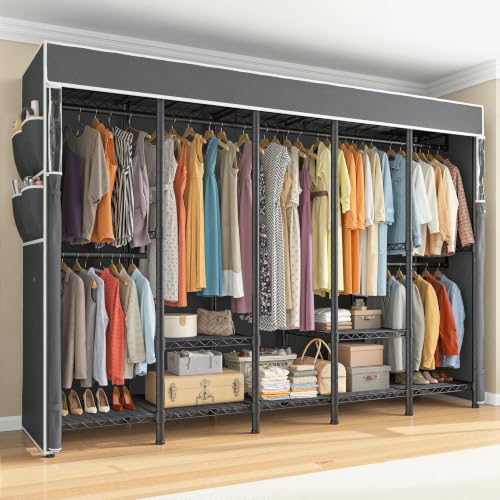
Heavy duty racks use thicker steel tubing, wider bases, and stronger joints to carry dense loads such as winter coats, suits, and uniforms. They are the right call for a main wardrobe overflow, a shared family entryway, or a garage where off season clothing stays stored for months. Prices often run about $80 to $250, and the extra steel is what you are paying for.
Check the stated weight limit and remember that it covers hanging clothes only. Never climb on a rack, hang from the bar, or use it for exercise, because the joints are built for a steady downward load, not body weight in motion. For lifting equipment instead, see our guide to the best squat racks.
Clothing Racks With Shelves and Two Bars
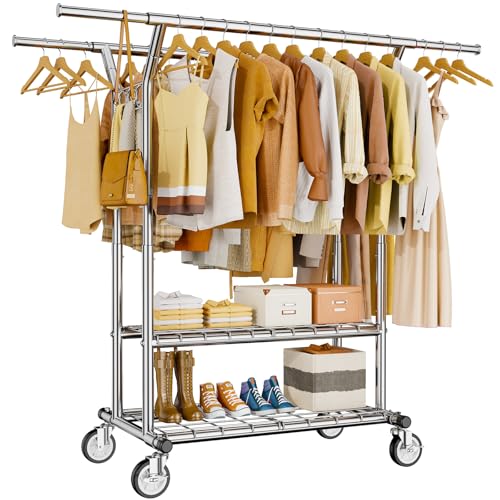
Some frames add a second hanging bar, shelves, or both, turning one footprint into storage for folded items and shoes as well as hanging clothes. Two bars work well when most of your clothing is shirts, blouses, and pants, since shorter garments can hang in two rows. Shelves below the bar hold storage boxes, boots, or a basket for scarves and gloves.
The catch is garment length. A second bar cuts the clear drop for long dresses and coats, so measure your longest piece before choosing this layout. Shelves also collect dust, and boxes stored low can block the bottom bar if you stack them too high.
Wall Mounted and Compact Clothing Racks
Wall mounted rails fix straight to studs and free up the floor entirely, which helps in laundry rooms, mudrooms, and narrow hallways. Because the wall carries the load, a well fitted rail feels rock solid and never wobbles when you slide hangers along it. The limits are clear, though. You need permission to drill, solid fixing points, and confidence that the spot will stay right, since moving a rail leaves holes to fill.
Compact freestanding racks offer a middle path for small spaces, and many fold flat for storage between uses. Capacity is modest, so treat these as a home for daily outfits, guest coats, or laundry day sorting rather than a full wardrobe replacement.
Rolling Racks vs Heavy Duty Racks: Which Should You Choose?
These two types cause the most hesitation, so compare them on the points that change daily use. For load, heavy duty frames win clearly, since thicker tubing and a fixed wide base carry coats and denim without the bar bowing. For movement, rolling racks win, because casters let one person shift a full wardrobe for cleaning, decorating, or a room change.
Space and price pull in opposite directions. A rolling rack often costs around $40 to $120 and parks against any wall. A heavy duty frame costs more and stays where you build it, yet it repays you with years of sag free service. Choose rolling if your storage needs change month to month. Choose heavy duty if the load is large, permanent, and mostly coats or suits.
How to Choose the Right Clothing Rack
Hanging Width and Garment Length
Bar width decides how much you can hang without crushing everything together. As a rough guide, about 24 inches of bar holds a modest row of shirts, while a full family overflow may need 48 inches or more. Leave a little air between hangers so fabrics can breathe and you can lift one item out without pulling three others with it.
Height matters just as much. Shirts and folded pants need about 40 inches of clear drop below the bar, while dresses, long coats, and robes can need 60 inches or more. Measure from the floor to the shoulder of your longest garment on its hanger, then add a few inches so hems never drag, wrinkle, or pick up dust.
Load Capacity and Bar Strength
Every rack lists a weight limit, and you should treat it as a ceiling, not a target. Wet laundry, leather jackets, and denim weigh far more than the same number of summer tops, so estimate your load honestly before ordering. A bar that bows in the middle is telling you the frame is overloaded, even if nothing has broken yet.
Bar strength comes from tube thickness, tube diameter, and how the bar joins the uprights. Wide racks with a center support post carry long spans better than a single unsupported bar. If you plan to store coats year round, favor strength over a slim look.
Frame Material and Finish
Most frames are steel, finished in chrome, matte black, white, or a powder coat. Steel gives the best strength for the price and suits nearly every room. Chrome looks bright and wipes clean easily, while powder coated finishes resist scratches and suit bedrooms where the rack stays on show. Thin hollow tubing keeps a rack light and cheap, but it flexes under heavy coats.
In damp spots such as a laundry room or basement, rust resistance matters more than looks. Choose a finish without chips or exposed raw metal, and dry the frame if it gets splashed. A rough or flaking finish can also snag delicate fabrics, which matters if you hang the nicer pieces covered in our guide to the best brand clothing.
Wheels, Feet, and Stability
A rack stands or falls on its base. Wide feet, a low cross bar, and a rectangular footprint all resist tipping when a child brushes past or a cat lands on a shelf. Adjustable feet help on uneven floors, since you can level the frame instead of living with a constant wobble. Rubber caps protect wood and tile from scratches.
If you choose wheels, size and quality matter. Larger casters roll over rugs and floor joins far better than small hard ones, and locking casters on at least one end keep the rack parked. Load the heaviest items low and toward the middle, because a top heavy rack with coats bunched at one end is the setup most likely to lean or topple.
Assembly, Care, and Durability
Most racks assemble with push buttons, bolts, or a mix of both, and a careful build takes about 15 to 30 minutes. Lay every part out first and tighten bolts evenly on both sides. Recheck the bolts after the first week of use, because joints often settle under load.
Care is simple but it keeps a rack looking and working like new. Wipe the bar and frame with a damp cloth so dust never transfers to clean clothes. Tighten loose casters, replace cracked end caps, and never overload a shelf with paint cans or tools, since racks are built for clothing weight spread along a bar.
Common Mistakes to Avoid
- Buying by bar width alone and ignoring the weight limit, so the bar bows under a load of winter coats.
- Choosing a two bar rack for long dresses, so hems bunch on the lower bar and crease badly.
- Parking a rolling rack with unlocked casters on a slope, so it drifts and bumps the wall or a door.
- Fixing a wall mounted rail into plaster alone without studs, so the rail pulls loose under a full load.
- Loading all the heavy coats at one end of the bar, so the frame leans and the joints loosen over time.
- Storing a rack damp in a basement, so the finish rusts and leaves marks on light colored clothing.
Tips to Get the Most From Your Clothing Rack
Group your clothing by weight and length rather than by color alone. Heavy coats belong near the uprights where the bar is strongest, lighter tops sit happily in the middle, and the longest pieces go on the tallest section. This layout reduces sag and keeps the rack balanced.
Hang shirts and blouses on the rack straight after pressing them, while the fabric is still smooth and warm. If pressing is part of your routine, see our guide to the best clothing iron for help choosing one that suits your fabrics. A garment bag over rarely worn suits and dresses also keeps dust off shoulders, and a quick weekly shake out stops stored clothing smelling stale.
Clothing Rack FAQs
Are premium clothing racks worth the extra cost?
Premium clothing racks are worth it when you hang heavy clothing daily or plan to keep the rack for many years. The extra money usually buys thicker steel, better casters, and a finish that resists chips. Budget frames serve light and temporary loads well, so the smart question is how much weight and daily use your rack must handle, not which price tag looks impressive.
How tall should a clothing rack be for long dresses and coats?
A clothing rack for long dresses and coats should give you about 60 to 68 inches of clear hanging height. Measure your longest garment on its hanger, from the hook to the hem, and add the height the hanger itself takes above the shoulder. Many racks list total frame height rather than clear drop, so subtract the base and top fittings before you trust the number.
How do you stop a clothing rack from wobbling?
You stop a clothing rack from wobbling by leveling the feet, tightening every bolt, and spreading the load evenly along the bar. Check the floor first, since a rack that rocks on uneven boards will wobble no matter how tight the frame is. Felt pads under the feet can steady a frame on hard floors and protect the surface at the same time.
Can a clothing rack replace a closet in a small apartment?
A clothing rack can replace a closet for a modest wardrobe, especially when you pair it with shelves and storage boxes for folded items. Dust and light reach open rails more than a closed closet, so cover special occasion outfits and keep the rack away from a sunny window.
Final Thoughts
Start with the type that fits your space and habits, then confirm the three numbers that matter most, which are bar width, clear hanging height, and the weight limit. Stability, sound casters or feet, and a finish that suits the room finish the job. Use the product table above to compare those points across the racks you are considering, and you will land on a best clothing rack that earns its floor space every single day.