
Best Co2 Inflator for Mountain Bike of 2026: Complete Buying Guide
Disclosure: We may earn a commission when you buy through links on this page, at no extra cost to you. As an Amazon Associate I earn from qualifying purchases. Learn more

The best co2 inflator for mountain bike riding seats tubeless beads and refills wide tires fast: compare cartridge size, valve fit and flow control.
A flat tire miles from the trailhead can turn a good ride into a long walk, especially when a hand pump takes minutes of hard work on a wide tire. Choosing the best co2 inflator for mountain bike riding gives you a fast way to refill a tire, seat a tubeless bead, and get rolling again in seconds. The comparison table below gathers the key options in one place.
Mountain bike tires hold far more air than narrow road tires, so details that barely matter elsewhere decide whether one cartridge is enough for you. This guide explains who benefits most, which features change the result, and how to use and store your kit with confidence.




Who Should Buy a Mountain Bike CO2 Inflator?
Almost any rider who ventures beyond sight of the car can use one, but the right setup depends on your tire size, your riding style, and how much backup you like to carry.
Trail Riders Who Want the Fastest Flat Fix
If you ride trail or cross country loops and hate kneeling beside the trail pumping by hand, a compact inflator belongs in your hip pack or jersey pocket. One cartridge refills a typical tire in seconds, which matters when daylight, weather, or a group ride will not wait for you. Riders on a hardtail and riders on a full suspension bike benefit in the same way, since the valve and tire work the same on both.
Tubeless Riders Who Need a Quick Burst of Air
Tubeless tires often reseat only when air enters fast enough to push the bead outward against the rim. A slow pump may never build that sudden rush, while a cartridge delivers it at once and can save a ride after a burp or a small bead leak. Carry a plug kit as well, because a cartridge refills the tire but does not close a cut that sealant cannot seal.
Riders Who Pair an Inflator With a Pump Backup
Some riders want speed for the first refill and security for the second flat, so they carry both an inflator and a small pump. If that layered approach appeals to you, see our guide to the best co2 mountain bike pump kits that combine both tools in one carry system.
Key Features to Compare
The product table above lists sizes and formats side by side, and finding the best co2 inflator for mountain bike use starts with knowing what those listings mean for your tires.
Cartridge Size and Tire Volume
Cartridge size is measured in grams, and common mountain bike choices are 16 gram, 20 gram, and 25 gram cartridges. A 16 gram cartridge can refill a narrower cross country tire, while wide trail tires and plus size tires often need 20 grams or more to reach a rideable pressure. When in doubt, carry the larger size, since a cartridge that runs short cannot be stretched.
Valve Compatibility for Presta and Schrader Valves
Most mountain bikes use Presta valves, which are slim with a small brass tip you unscrew before inflating. Some bikes, including many kids models and older wheels, use wider Schrader valves like the ones on car tires. Check your valve before you order, and confirm that the head seals without needing an adapter you could easily lose on the trail.
Flow Control and Inflation Speed
Flow control is the feature that separates a calm refill from a wasted cartridge. Trigger designs and twist designs let you start, stop, and restart the gas, so you can check pressure, add a little more, or stop to fix a bead that is seating unevenly. For tubeless work you also want a head that can open fully, because a slow trickle will not snap a loose bead into place.
Sleeve Protection and Cold Cartridges
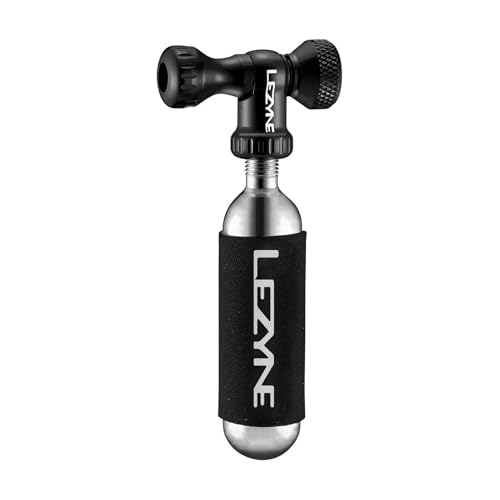
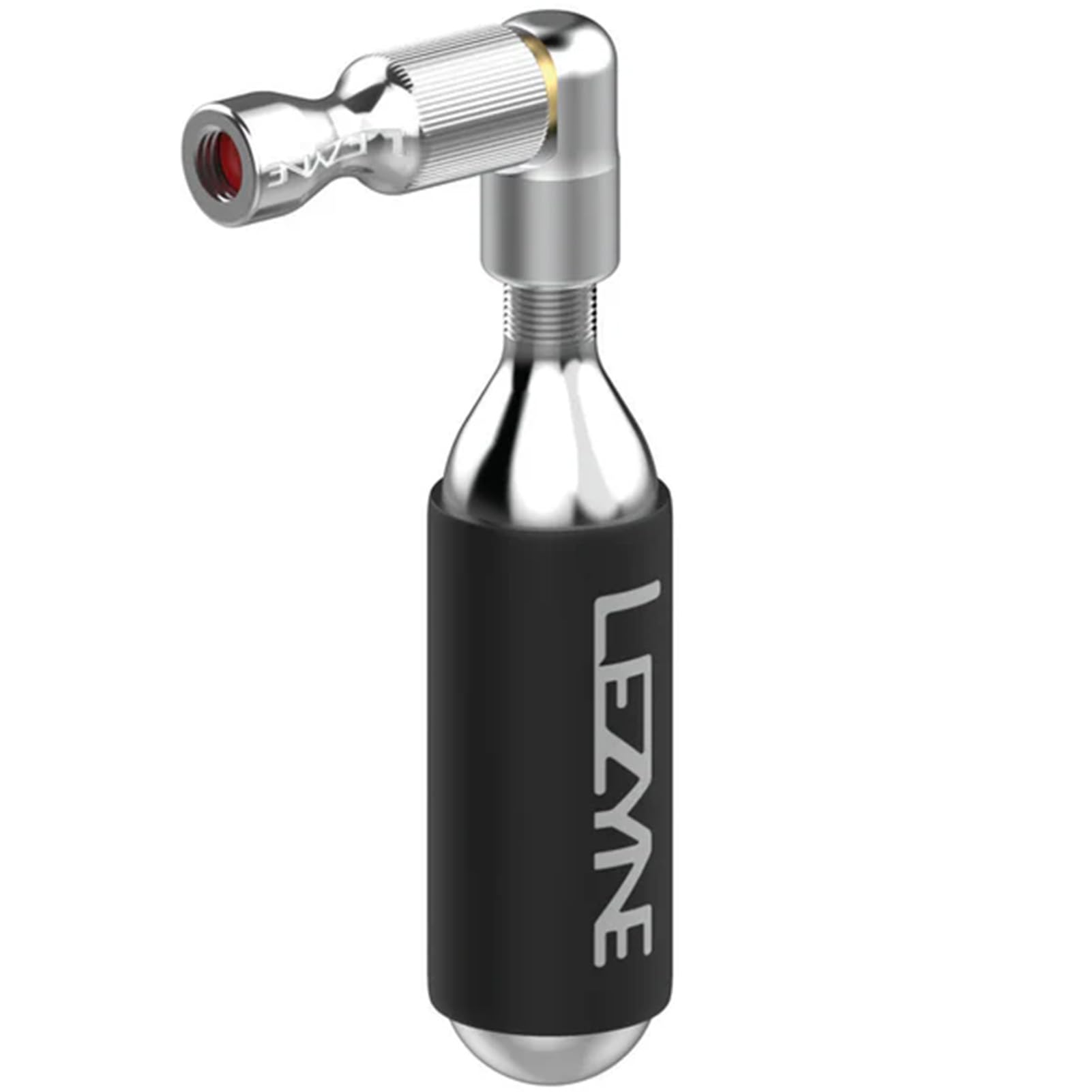
A discharging cartridge gets extremely cold, cold enough to sting bare fingers and to stick to damp skin. A foam or rubber sleeve slides over the cartridge and gives you a safe grip while the gas empties. Some inflators include the sleeve, while others sell it separately, so check what is in the box before your first ride.
Threaded Cartridges and Head Design
Most mountain bike inflators use threaded cartridges that screw into the head until the seal pierces and the gas is ready. A smaller number of heads accept unthreaded cartridges inside a chamber, so confirm which type a head needs before you stock up. Metal heads in brass or aluminum shrug off drops on rock and keep their threads true for years.
Size, Weight, and How You Carry the Inflator
An inflator head is tiny, often shorter than your thumb, and the cartridge adds most of the bulk you carry. Storage choices include a simple sleeve in a pocket, a mount that holds a cartridge beside a bottle cage, and cases that keep the head, cartridges, and a plug kit together. Keep the kit somewhere you can reach with gloves on and without emptying your whole pack.
Choosing the Right Cartridge Size for Your Tires
Start with the tire width printed on your sidewall, since width drives air volume more than any other number. Narrow tires around 2.1 to 2.3 inches usually refill well from a 16 gram or 20 gram cartridge. Trail tires around 2.4 to 2.6 inches are safer with 20 grams, and plus tires near 2.8 to 3.0 inches often need a full 25 gram cartridge to feel firm enough to ride out.
If you are still choosing a bike, see our guide to the best bike for mountain biking to understand the setups you may end up servicing. Riders moving into wider tires and rougher terrain can also see our guide to the best all mountain mountain bike range, since those bikes almost always call for 20 gram or 25 gram cartridges.
Electric mountain bikes deserve a special note because their tires are often wide and their riders travel farther from help. Carry at least one 25 gram cartridge or two smaller ones, and remember that a refill only helps once the puncture itself is plugged or the tube is replaced. Whatever bike you ride, practice once at home so the trail is not your first attempt.
Types of CO2 Inflator Heads
Heads fall into three broad families, and the product table above groups them by how they release gas.
Trigger Style Inflator Heads
Trigger heads release gas while you press a lever and stop the moment you let go. That start and stop control suits riders who like to add air in short bursts and check the bead and pressure as they go.
Twist Control Inflator Heads
Twist heads work like a small valve that you open and close by rotating the cartridge or a knob. They are simple, compact, and very reliable, and the slow opening helps when topping up rather than refilling from flat. The tradeoff is speed, since a partly open twist head may not deliver the sudden burst that a stubborn tubeless bead needs.
Push On Inflator Heads
Push on heads are the smallest and simplest design, releasing gas when you press the head firmly onto the valve. The risk is waste, because lifting the head even slightly mid refill can vent gas to the air instead of into your tire.
Common Mistakes to Avoid
- Buying 16 gram cartridges for wide trail tires, which can leave the tire too soft to ride without rim damage.
- Forgetting to unscrew the Presta valve tip before inflating, which blocks the gas and wastes the whole cartridge.
- Holding a bare cartridge during discharge, which can freeze to your skin and cause a painful cold burn.
- Releasing all the gas before checking the bead, which leaves nothing in reserve if the tire seats unevenly.
- Carrying an inflator with the wrong cartridge type, which means the head and cartridge cannot connect at all.
- Riding out on cartridge pressure without checking it later, which can leave you far above or below your normal setting.
Care and Maintenance for Your CO2 Inflator
An inflator has few parts, and a minute of care at home keeps it ready for the one moment you truly need it. After each use, wipe grit from the head, check that no sealant or mud is blocking the valve cup. Inspect the small rubber seal inside the head every few months and replace the head if that seal looks cracked or torn, since a tired seal vents gas around the valve instead of into the tire.
Store cartridges in a dry place at normal indoor temperatures, and never leave them in a hot car where heat builds pressure inside the steel shell. Keep spare cartridges unpierced until you need them, because a pierced cartridge slowly loses gas even when the head is closed. Used cartridges are single use steel and can go into normal metal recycling where local rules allow it.
FAQ
How many CO2 cartridges should a mountain bike rider carry on one ride?
Carry two cartridges for most rides so one wasted or short refill does not end your day. One cartridge handles a single flat, while the second covers a second puncture, a bead that needs another burst, or a riding partner in trouble. On short loops near the car one cartridge plus a pump may be enough.
Can a CO2 inflator seat a tubeless mountain bike tire?
Yes, a CO2 inflator can seat a tubeless mountain bike tire because the sudden rush of gas pushes both beads outward at once. Remove the valve core first if your head allows it, since that opening lets gas enter even faster. If the bead will not seat after one cartridge, check for a tire bead folded under before spending a second one.
Does CO2 escape from a mountain bike tire faster than pumped air?
Yes, CO2 passes through rubber faster than normal air, so a tire filled from a cartridge often feels softer the next day. Plan to refill the tire with a floor pump once you get home and treat the cartridge fill as a trailside rescue only. This is normal behavior and not a sign of a leak or a faulty valve.
Can a CO2 inflator work with both Presta and Schrader mountain bike valves?
Many CO2 inflators work with both valve types, but you should confirm the fit for your exact wheels before a ride. Some heads switch by flipping an internal part, while others seal on either valve with no change at all. Try the head on your spare tube or wheel at home so there are no surprises beside the trail.
Why does a CO2 cartridge get so cold during mountain bike tire inflation?
A CO2 cartridge gets cold because the gas inside expands rapidly as it leaves the small steel shell. That expansion absorbs heat, which chills the cartridge and can frost its surface in humid air. Always use the sleeve or wear gloves, and set the spent cartridge down rather than palming it. The cold fades within a minute or two.
Final Thoughts
The right kit comes down to three choices: cartridge size matched to your tire volume, a head that seals on your valves, and flow control you trust with cold hands. Use the product table above to compare those points in one place. Chosen well, the best co2 inflator for mountain bike riding turns a ride ending flat into a short pause, and that peace of mind is worth the small space it takes in your pack.


