Best Clear Pantry Storage Containers (2026): Picks That Fit Real Homes
Disclosure: We may earn a commission when you buy through links on this page, at no extra cost to you. As an Amazon Associate I earn from qualifying purchases. Learn more

Clear walls end the guesswork in a crowded pantry: compare the best clear pantry storage containers by shelf size, lid seal, material and set style.
You open the pantry for rice and find three open bags, a torn flour sack dusting the shelf, and no idea how much pasta is left. Clear containers fix that daily frustration because you can see the contents and the remaining amount at a glance. This guide to the best clear pantry storage containers helps you choose by shelf space, household size, and budget, and the comparison table below sums up the main set styles.
Start with the foods you store most, then match shapes and lid types to those foods. For a broader view beyond clear styles, see our guide to best pantry storage containers.



Quick Answer: Three Set Styles That Cover Most Homes
Most homes are covered by one of three set styles. A small starter set of four to six pieces suits a single person or a couple with limited shelves. A mid size set of eight to fourteen pieces suits most families and gives you tall, medium, and small sizes. A large set of twenty or more pieces suits bulk buyers, but it only pays off if every piece has a food assigned to it before you order.
Whichever style you pick, square shapes use shelf space better than round ones, and a lid that seals on all four sides protects dry goods better than a simple snap cover.
Before You Buy: A Quick Checklist for Choosing Pantry Storage Containers
Size: Match It to Your Space
Measure shelf height and depth before you shop, and write the numbers down. Tall cereal and pasta containers often need about 12 to 14 inches of clear height, while many pantry shelves allow far less. Next, list your staple foods with rough amounts, such as five pounds of flour, four pounds of rice, and two boxes of cereal. Match each food to a container that holds that amount with a little room at the top, because a container filled to the rim is hard to scoop from and hard to seal.
Which Type Fits Your Routine
Think about how you actually cook during a busy week. If you bake often, choose wide mouth containers for flour and sugar so a measuring cup fits inside without scraping your knuckles. If you pour cereal or rice daily, a flip top or pour spout lid reduces spills. If several people in the house open the same containers, simple lids that close with one hand get used correctly more often than fussy lids that need careful alignment every time.
Material matters too. Clear plastic is light and will not shatter if dropped, while glass resists stains and odors. If glass suits your kitchen better, our guide to best glass pantry storage containers covers weights and lid styles in detail.
Features Worth Paying For, and Ones to Skip
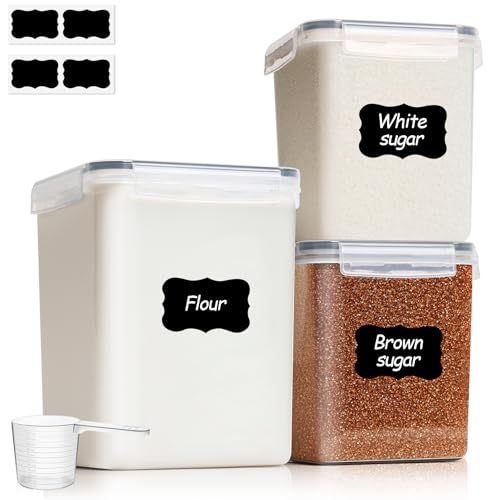
Labels are worth having because clear walls show the food but not the name of look alike flours or the date you bought them. A simple label you can rewrite beats a printed set that runs out. A scoop that clips to the side is also useful for flour and rice. You can usually skip chalkboard labels, extra marker sets, and decorative lids that add cost without improving the seal.
Airtight Seal and Materials Without BPA
A good seal keeps moisture and pantry pests out and slows the staling of crackers, cereal, and baking supplies. Look for a silicone gasket inside the lid and a closing action that presses the gasket down evenly, such as locking sides or a push button top. For a deeper look at seal designs, see our guide to best airtight pantry storage containers. For plastic, choose pieces stated as made without BPA for food contact, and check that the base and lid are both food grade rather than assuming the whole set shares one material.
Pop top lids deserve a closer look before you commit a whole set to them, since the button mechanism takes up head room. If that style appeals to you, read our oxo good grips pop containers review for how the push button seal works in daily use.
Freezer, Microwave, and Oven Safety
Most pantry containers are made for dry storage at room temperature, and that is all most buyers need. If you plan to use one in the freezer, confirm the maker rates both the base and the lid for freezer use, and leave room for food to expand. Microwave and oven ratings matter only if you will reheat food in the same container, which is rare for flour or cereal. Never assume a container is oven safe from its look, and never heat a sealed lid.
Realistic Budget Ranges
Price mostly follows piece count, material, and lid design. Use these rough ranges to set expectations before you compare sets.
- Under $20: small starter sets, usually four to six plastic pieces with basic snap lids, fine for a first apartment or a single shelf.
- About $20 to $50: mid size plastic sets with gasket seals, labels, and a better mix of tall and small sizes for most families.
- About $50 to $100: large sets, glass sets, or plastic sets with stronger lids and more uniform stacking, suited to a full pantry reset.
Spending past about $100 rarely adds storage value for dry goods. You are paying for looks or for extra pieces you may never fill.
Three Set Styles Compared: Starter, Family, and Bulk
Starter Sets for Small Households
A starter set of four to six containers works when one or two people cook and shelf space is tight. Put flour, sugar, rice, and pasta in the largest pieces and keep coffee or tea in the smallest. The strength of this style is focus, since every piece earns its place. The limit is growth, because adding a different brand later often means lids and footprints that no longer stack neatly together.
Family Sets for Mixed Daily Staples
A family set of eight to fourteen pieces gives you two tall containers for cereal or pasta, several medium ones for grains and beans, and small ones for nuts and baking extras. This is the most flexible style for homes that cook most nights and shop weekly. Check that the tall pieces fit your shelf height, and confirm that replacement lids are sold on their own.
Large Sets for Bulk Buying
A large set of twenty or more pieces suits warehouse shoppers and big households that decant almost everything. The value is consistency, with one lid system and one footprint across the pantry. The risk is waste, since small filler pieces often end up holding a handful of lentils or nothing at all. Before buying, write down twenty foods you will store on day one. If you cannot name them, a family set plus two extra tall containers is the smarter spend.
How to Evaluate a Set Before You Order
Judge any set on five points in this order: seal quality, material, capacity and fit on your shelves, cleaning effort, and value for the pieces you will actually use. Read the maker stated capacity rather than the box claim for the whole set, and check buyer comments for repeated notes about cracked lids or weak gaskets. You can also read our rubbermaid brilliance pantry review to see how one widely sold clear plastic line handles stacking, sealing, and washing over time.
What We Like and What We Do Not About the Best Clear Pantry Storage Containers
The clear wall is the whole point, and it delivers. You spot low supplies while making a shopping list, guests and children find snacks without opening every lid, and matching clear sets make a crowded shelf look calmer. Clear containers also discourage forgotten duplicates, because the second bag of rice has nowhere to hide.
The trade offs are real but manageable. Clear plastic can pick up scratches over years of washing, and strongly colored dry mixes can stain lighter plastics. Clear walls also show every crumb and fingerprint, so a pantry on display needs a quick wipe more often. Glass avoids most staining but adds weight and breakage risk. Opaque containers hide all of that, yet they force you to open lids or trust labels, which is why clear remains the practical default for daily staples.
Common Buying Mistakes to Avoid
- Buying by piece count alone: a set of 24 with tiny containers you never fill costs more per useful piece than a set of 8 that fits your staples.
- Skipping the shelf measurement: tall containers that hit the shelf above end up stored sideways or returned.
- Mixing lid systems: two brands with similar looking lids lead to wrong lid pairings and seals that never close properly.
- Decanting everything at once: foods you use rarely, such as specialty flours, often keep better in their sealed original bags until you open them.
- Ignoring replacement costs: a low priced set with no spare lids or gaskets sold separately becomes a full replacement the first time a lid cracks.
Cost of Ownership and Care
Ongoing cost is low, but it is not zero. Budget for a replacement lid or gasket now and then, and fresh labels when your staples change. Sets with lids sold separately protect that small spend, while closed systems force you to replace a whole container for one failed part.
Care is simple. Wash bases in warm soapy water or on the top rack if the maker allows it, and wash gaskets by hand so they keep their shape. Dry every part fully before refilling, because trapped moisture inside a sealed container can spoil dry food. Store empty spares with lids off so stale odors do not build up inside.
Your Questions, Answered
How do you clean clear pantry storage containers without clouding them?
Wash plastic bases with a soft sponge rather than a scouring pad, since fine scratches are what turn clear walls cloudy over time. For sticky residue from labels, soak the spot in warm water and rub gently instead of scraping with a knife. Dry with a soft cloth rather than air drying if your water leaves spots, and store containers away from cooking grease, which films clear surfaces faster than dust does.
Are expensive clear pantry storage containers worth it?
They can be, but only when the extra money buys a better gasket, thicker walls, or lids you can replace on their own. A costly set that adds decorative finishes gives you nothing in daily use. Compare cost per container you will truly fill, not cost per piece in the box, and remember that one cracked lid on a cheap closed system can erase the saving within a year.
How long do clear pantry storage containers last?
A glass base can last many years if it is not chipped, and a sturdy plastic base often serves for several years of weekly use. Lids and gaskets wear out first, so treat those as the life span of the set unless spares are available. Retire any container with a cracked rim, a warped lid, or a gasket that stays loose after cleaning, because a seal that no longer closes fully will not protect food.
Are clear pantry storage containers worth it for a small pantry?
Yes, and a small pantry may gain the most, because you can judge what you own without pulling containers out to open them. Choose square shapes that sit flush against each other and skip the largest bulk sizes. A quick look before you shop also stops duplicate buys that waste money and scarce shelf space.
What size container do you need for a bag of flour?
A standard five pound bag of flour needs a container holding about 16 to 20 cups, with extra room above the flour line so you can scoop and level a measuring cup inside. Sugar is denser, so the same five pound amount fits in a smaller container of about 12 to 14 cups. When in doubt, size up for flour only, because an overfilled flour container sheds dust every time the lid opens.
Final Thoughts
Start with your shelf measurements and your staple list, then pick the set style that covers those foods with a seal you trust. For most homes, the best clear pantry storage containers are a mid size square set with gasket lids, labels, and spare lids sold separately. Check the product table above against your measurements before you order, and add pieces later only when a real food has no home.