
Best Clip on Fan for 2026: Types Compared and Buying Guide
Disclosure: We may earn a commission when you buy through links on this page, at no extra cost to you. As an Amazon Associate I earn from qualifying purchases. Learn more

The best clip on fan matches its jaw, blade size, and power source to your desk, bed, or workshop. Compare types, noise, and running cost before you buy.
A clip on fan only helps if it stays where you put it and points air exactly at you. A weak jaw slides down a shelf edge, small blades move little air, and a short cord can rule out the bed frame you had in mind. The best clip on fan for your space matches its jaw opening, blade size, and power source to the spot where it will live. The comparison table below sums up the main types before the detail that follows.
This guide compares the three main types of clip on fans, explains the specs that change how comfortable you feel, and shows where a clip model beats a fan that sits on the floor or a desk. It also covers noise, running cost, cleaning, and price tiers.


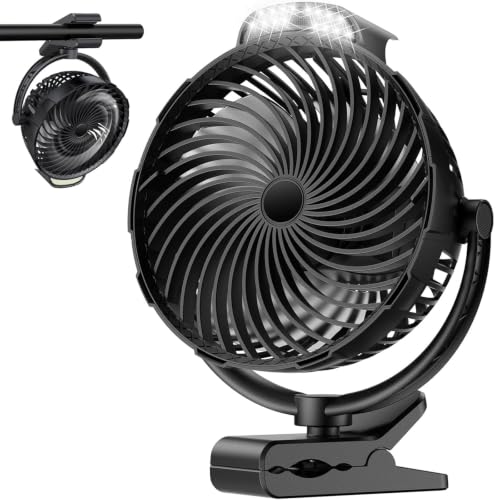
Clip On Fan Types at a Glance
Clip on fans fall into three broad groups. Small personal models run on batteries or USB power and suit one person at close range. Standard corded models clip to a desk, shelf, or headboard and run as long as you need. Larger models with stronger springs and bigger blades suit workshops, garages, and grow tents, where the mount is thick and the air has farther to travel.
Three Clip On Fan Types Compared
Small Personal Clip On Fans
These compact fans usually have blades around 4 to 6 inches across and run on a rechargeable battery or a USB connection. They weigh little, so the jaw can grip a stroller handle, a treadmill rail, or a bunk rail without sagging. Airflow is modest, and that is fine when the fan sits 2 to 3 feet from your face or hands. Expect the breeze to fade fast across a room, and expect runtime to drop sharply on the highest speed.
Standard Corded Clip On Fans
Corded models are the default choice for a desk, a nightstand edge, a kitchen shelf, or a dorm room headboard. Blades around 6 to 8 inches across move noticeably more air than the personal size, and wall power means the speed never fades as a battery drains. Some heads oscillate, while others only tilt and turn by hand. The main limits are cord length and outlet position, so picture the cord route before you buy.
Large Clip On Fans for Workshops and Garages
Bigger clip on fans, often with blades around 8 to 12 inches across, use a heavier spring and wider jaw to grip workbench edges, shelving uprights, and tent poles. They push air across a work area rather than at one face, which suits sanding stations, garage gyms, and indoor growing setups. The trade off is noise and vibration. A strong fan on a thin metal shelf can hum through the whole frame, so a solid mount matters more here than raw speed.
How to Judge Any Clip On Fan
This guide judges every clip on fan against the same criteria: jaw grip on real furniture, useful airflow at a normal sitting distance, noise on the lowest speed, power options, and how easily the grille comes off for cleaning. The criteria come from maker specifications, safety listing standards, and the complaints buyers repeat most often. Any model you shortlist should state its jaw opening and blade size clearly.
How to Choose the Right Clip On Fan
Start with the furniture, not the fan. To choose the best clip on fan for your setup, work through the mount, the airflow, and the power source in that order, then spend on extra features only if they solve a problem you actually have.
Start With the Mount and Jaw Opening
Measure the thickness of the shelf, desk edge, rail, or headboard where the fan will live, then compare it with the jaw opening in the listing. The jaw must open wider than that thickness, or the fan simply will not attach. Rubber pads inside the jaw protect wood finishes and add grip, while a stiff spring resists sliding when the head tilts. Round poles are the hardest mounts, since a flat jaw can rock on a curve, so look for a jaw that wraps part way around a bar.
Blade Size, Speeds, and Air Direction
Blade diameter sets the ceiling for airflow, and speed settings let you trade breeze strength against noise and battery drain. Two or three speeds cover most needs. A head that tilts and swivels is worth more than extra speeds, because aiming air at your face or hands is the whole point of a clip mount. Oscillation spreads air across a wider area, but the moving head adds width and can slowly work a weak jaw loose.
Power Source: Corded, Battery, or USB
A corded fan gives steady power for a fixed spot and never needs charging. A battery fan goes anywhere, including tents, porches, and workout gear, but runtime varies a lot by speed and the battery adds weight the jaw must hold. USB power from a laptop or power bank is convenient at a desk, though output is usually gentle. If you lean toward battery power, check whether the battery is removable, since a swappable pack extends the useful life of the whole fan.
Features Worth Paying For
A timer helps at bedtime, letting the fan stop after you fall asleep instead of running all night. A remote earns its cost only when the fan mounts out of easy reach, such as high on a shelving unit. A built in light can help inside a tent or under a cabinet. Skip decorative extras and aroma pads, since they add price and cleaning chores without moving more air or gripping any better.
Room Size and Coverage
A clip on fan is a zone cooling tool, not a whole room appliance. Makers rarely rate these fans by room size, and a square foot claim means little, because the breeze weakens with every foot between the blades and your skin. A large living room needs the air moved across the whole space instead, so treat a clip model as personal comfort and size your expectations to the seat it serves.
Running Cost and Energy Use
Clip on fans sip power compared with most cooling gear. Small USB and battery models draw only a few watts, and larger corded models still use far less than a room air conditioner. Running one through the night costs very little. For a fuller picture of fan running costs across sizes, read our guide on how much electricity does a fan use.
Noise Levels for Bedrooms
Decibel figures are hard to compare across brands, since makers measure at different distances and speeds. Judge by use instead: the lowest speed is the one you will sleep with, so favor fans praised for a smooth hum over raw power. Rattle usually comes from the mount, not the motor, and a firmer grip or a thin pad under the jaw often quiets it. If nighttime air matters most in your home, our guide to the best fan for bedroom covers quieter full size options too.
Cleaning, Care, and Storage
Dust coats the blades and grille over time and slowly cuts airflow, so plan on access for a wipe down when you shop. Beyond cleaning, inspect the cord for cracks and check that the jaw spring still snaps shut firmly. Store the fan indoors in a dry spot, and avoid leaving the jaw clamped wide open for months, since a spring held stretched can lose some grip. Our step by step guide on how to clean a fan walks through the process.
How Much Should You Spend?
Basic personal fans cost about $15 to $30 and cover a stroller, a desk corner, or a bunk bed well. The middle tier, about $30 to $60, is where you gain stronger jaws, oscillation, larger batteries, and sturdier housings. Above about $60, you are paying for large blades, specialty mounts, or very long runtime. Spending more does not guarantee a quieter fan, so let your mount and power needs set the budget first.
Clip On Fans vs Other Fan Types: Pros and Cons
The clear win is placement. A clip on fan frees your desk and floor, and aims down from a shelf or across from a headboard. The limits are size and reach: small blades cannot stir a whole room, and the fan only works where a grippable edge exists. If your goal is moving air across a living room, our guide to the best tower fan covers models built for that job.
Against cooling with an air conditioner, a clip fan uses a fraction of the energy but only cools the person in its path, since moving air speeds sweat evaporation rather than lowering room temperature. Our comparison of fan vs air conditioner explains when each one makes sense and how pairing them can trim your cooling bill.
FAQs
What is the best clip on fan?
The right answer depends on your mount and power source, not on a single model. Match the jaw opening to your furniture, pick blade size by the distance to your seat, and choose corded power for a fixed spot or a battery for a portable one. One extra check: confirm the fan carries a recognized safety listing mark, which signals the motor, cord, and housing met a published safety standard.
Are clip on fans worth it?
Yes, when your problem is a lack of surface space or a need for air in an odd spot. They earn their keep on bunk beds, treadmills, workshop benches, and nursery shelves where a desk or floor fan cannot sit. They are less worth it as your only cooling in a large room, since the breeze stays local. Think of the purchase as targeted comfort for one seat or task, and judge the price against how often that seat gets used.
How long does a clip on fan last?
A well kept clip on fan often serves for several years of seasonal use. The jaw spring and the battery, where fitted, usually age out before the motor does. Warning signs that a fan is near the end include a grinding or clicking sound, a head that droops despite a tight grip, blades that spin up slowly, and a jaw that no longer snaps shut. Replace a fan with a cracked housing or a damaged cord rather than taping over the fault.
Is a fan worth it if you already have air conditioning?
Often, yes, because a fan lets you feel comfortable at a higher thermostat setting, and each degree you raise the setting trims cooling cost. A clip model is handy here because it targets the one spot you occupy, such as a home office desk during the day or your side of the bed at night, and it adds little to the power bill.
How do you clean a clip on fan?
Unplug the fan or remove its battery first. Most grilles unclip or unscrew so you can reach the blades; wipe blades and grille with a damp cloth and a little mild soap, then dry every part fully before reassembly, since moisture near the motor causes trouble. A soft brush clears the rear vents where dust gathers thickest. Cleaning at the start and end of the cooling season keeps airflow strong.
What makes a clip on fan brand reliable?
Reliability shows up in the details rather than the name. Look for a warranty of at least a year, replacement parts or batteries that the maker actually sells, clear specifications for jaw opening and blade size, and support contact details that lead to a real company. Consistent buyer reports about grip strength over months matter more than launch reviews.
Final Thoughts
Get the mount right and the rest of the decision gets easy. Measure your edge, pick the power source that fits how you live, and let blade size follow the distance to your seat. The product table above pulls the main types together so you can compare at a glance, and with it you can spot the best clip on fan for your space without paying for features you will never use. For whole room options beyond the clip style, see our broader guide to the best fan.


