Best Clip on Candy Thermometer Guide for Real Home Kitchens (2026)
Disclosure: We may earn a commission when you buy through links on this page, at no extra cost to you. As an Amazon Associate I earn from qualifying purchases. Learn more

Home cooks can pick the best clip on candy thermometer for their pots, with probe length, clip grip, temperature range, and cleaning tips for candy and frying.
Saturday afternoon, a pot of caramel on the stove, and a child asking when the fudge will be ready. That is the moment a best clip on candy thermometer earns its drawer space, because it holds the probe in the syrup and leaves both of your hands free to stir, pour, and keep little helpers at a safe distance. This guide helps you choose by kitchen size, household size, and budget, and the comparison table below sums up the main styles at a glance.
A clip on model suits real homes for a simple reason. It stays put in the pot, reads the syrup rather than the pan, and stores in a utensil drawer instead of taking counter space. Small kitchens, big holiday batches, and weeknight jam all benefit, as long as the clip, probe length, and temperature range match the pots you already own.






Quick Answer: What to Look For in 30 Seconds
If you want the short version, here it is. Choose a clip that grips your thickest pot rim, a probe long enough to sit about 2 inches into the syrup without touching the bottom, and a range that reaches at least 400 degrees Fahrenheit. Dial and glass models cost the least and need no batteries. Digital models read faster and suit large families who cook several batches in a row. Everything below explains how to match those basics to your home.
Before You Buy: A Quick Checklist for Choosing a Candy Thermometer
Which Type Fits Your Routine
Candy thermometers come in a few forms, and your routine decides which one fits. A clip on model attaches to the pot and monitors the batch the whole time it cooks, which suits candy, caramel, jam, and frying oil. An instant read model only checks the temperature when you dip it in, so your hand stays near the steam. If that style appeals to you, our guide to the best instant read candy thermometer explains where quick spot checks work well. Glass tube and dial models are clip on classics, while digital clip on versions add alarms and faster updates for busy cooks.
Materials and Food Safety
Most probes and clips are stainless steel, which resists rust, does not react with acidic jam or tomato based sauces, and tolerates years of hot syrup. The part you hold matters too. Look for a heat resistant handle or top section that stays cool enough to adjust with bare fingers, because a clip you cannot move safely mid batch will get left in the drawer. Glass tube models need more care, since a cracked tube ends the tool for good. Whatever you choose, the probe tip should sit fully in the liquid and clear of the pot bottom, because touching metal reads the pan instead of the food and can throw a batch off by several degrees.
Dishwasher Safe or Hand Wash
Cleaning decides how often a thermometer gets used on busy weeknights. Steel dial models often tolerate the dishwasher, though repeated cycles can fog the dial face and make small markings harder to read. Digital units almost always need hand washing, because the display and battery housing cannot soak. A quick rinse right after cooking stops sugar from hardening on the probe, and that habit matters more than the wash method. Dried caramel needs a long soak in hot water before it lets go, so a model that wipes clean in seconds suits households that cook candy often and wash up in a hurry.
Realistic Budget Ranges
Prices stay modest for this tool. Basic dial and glass clip on models usually cost under $15, and for many homes that is plenty, since the design is simple and there is nothing to power. Digital clip on models with alarms, backlit displays, and wider ranges tend to run about $15 to $30. Above that, you mostly pay for faster sensors and sturdier clips rather than better candy. For a household that makes fudge twice a year, the basic tier makes sense. For weekly jam or holiday production for a crowd, the middle tier earns its keep through speed and easier reading.
Clip On Styles Compared: Dial, Digital, and Glass
Since the right style depends on your home, compare the three clip on families directly. A dial model shows temperature on a round face with stage markings such as soft ball and hard crack printed around the edge. It never needs batteries, survives drops well, and reads a little slowly, so it suits patient cooks and small batches. Its face can be hard to read from across the kitchen, which matters when you are also watching children or a second pot.
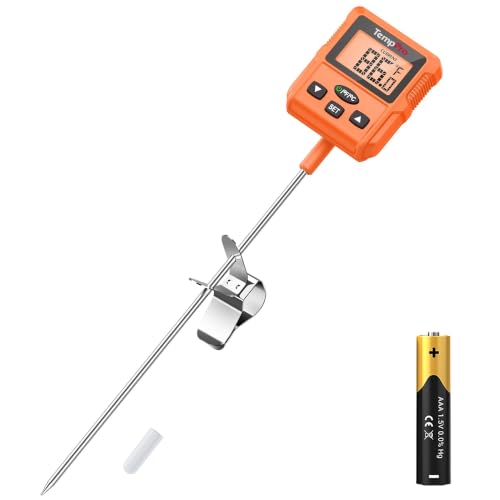
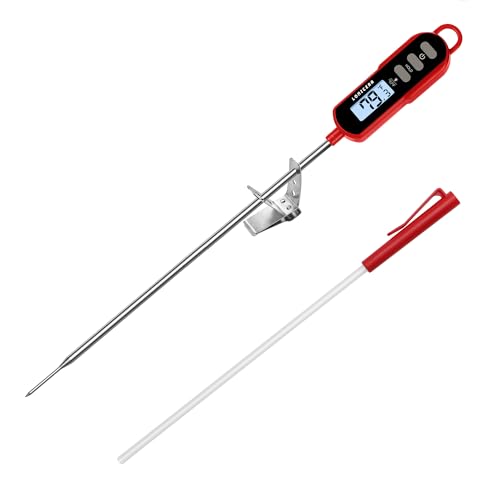
A digital clip on model pairs a steel probe with a small display unit that sits above the pot. Readings update in seconds, many models beep at a target temperature you set, and the numbers stay easy to read from a step or two away. That helps larger households cooking double batches, where walking away for thirty seconds is normal. The trade offs are batteries, a display that dislikes steam and soaking, and a higher price. If digital appeals to you, the best digital candy thermometer guide covers display and alarm features in depth.
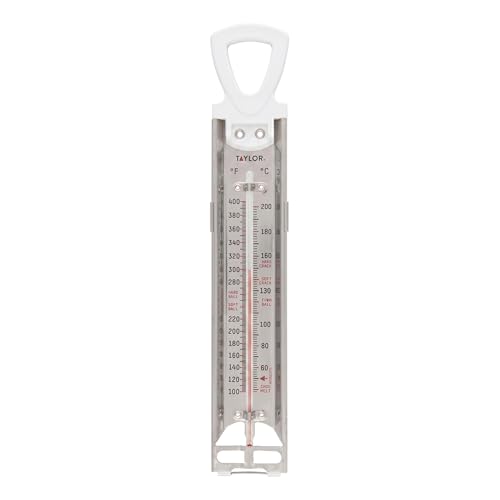
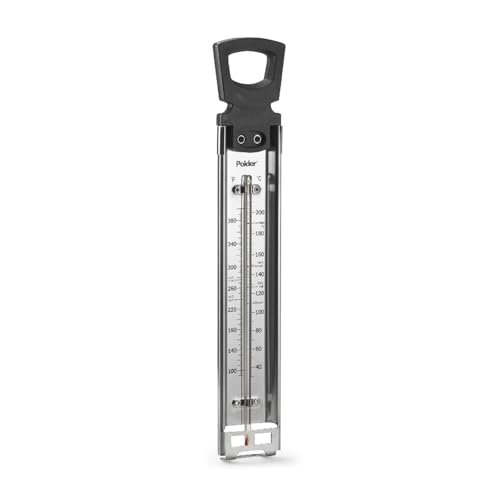
A glass tube model is the oldest style, with a printed scale beside a liquid column inside a protective frame. It costs the least and reads steadily, but it reacts slowly to temperature changes and breaks if it falls on a tile floor. It suits a calm cook with one pot and time to watch. Across all three styles, the shared strengths explain why clip on designs lead this category, and the wider best candy thermometer guide shows how they rank against every other type.
What Matters Most When You Compare
Judge any clip on candy thermometer on five points. Ease of use comes first, meaning a clip that slides on with one hand and a scale you can read without leaning over the steam. Durability follows, so check that the clip spring feels firm and the probe joint has no wobble. Cleaning counts because sugar residue builds up fast. Design matters in small kitchens, where a slim tool that fits a shallow drawer beats a bulky one. Value closes the list, since a tool used for years costs little per batch even at the middle price tier.
Clip On Versus Other Candy Thermometers
The clip on design answers a specific need, steady monitoring without holding anything. Compared with an instant read probe, it removes the repeated dipping that lets heat escape and puts your hand in the steam again and again. Compared with a floating glass thermometer, it cannot drift into the stir path or sink when the syrup thins. Compared with infrared guns, it measures the syrup itself rather than the surface, and surface readings can sit well below the temperature at the center of the pot. For frying, the same clip holds the probe in oil while you turn food, which is why many cooks keep one tool for both candy and deep frying.
Common Buying Mistakes to Avoid
- Buying a probe too short for your deepest pot, so the tip cannot stay submerged and the reading wanders.
- Ignoring the clip grip range, because a clip made for thin rims slides on thick cast iron or rolled edges.
- Choosing a range that stops too low, since hard crack candy needs about 300 to 310 degrees Fahrenheit and frying oil runs hotter still.
- Paying for features your household will not use, such as app connections on a tool that only leaves the drawer at the holidays.
- Storing it loose with heavy utensils, which bends probes and cracks glass tubes long before the tool wears out.
Cost of Ownership and Care
Ownership costs stay low with this tool. Dial and glass models cost nothing to run. Digital models need a small coin battery about once a year with regular use, and keeping a spare in the drawer avoids a dead display mid batch. Store the thermometer in a drawer with its probe cover on, or hang it from a hook, so the tip stays straight. Wash it soon after cooking, dry the clip spring so it does not rust at the hinge, and check accuracy now and then in boiling water, which should read about 212 degrees Fahrenheit at sea level. Our full walkthrough on how to clean a candy thermometer covers stuck sugar and storage in more detail.
Your Questions, Answered
What is the most reliable candy thermometer type for a home kitchen?
For most homes, a steel dial clip on model is the most forgiving choice. It has no battery to die before a holiday batch, tolerates drops that would crack glass, and keeps working after years of drawer storage. Digital models match it when cared for, but a soaked display ends one quickly. Reliability here is less about the brand and more about simple construction, dry storage, and a clip that still grips firmly after repeated use.
How do you clean a candy thermometer after making caramel?
Stand the probe in a tall glass of hot water right after pouring the caramel out, and the residue softens within minutes instead of setting hard. Wipe with a sponge, then wash the clip hinge carefully, because sugar hides there and can stiffen the spring. Never plunge a hot glass tube into cold water, since the sudden change can crack it. Let the tool air dry fully before it goes back in the drawer.
Is a candy thermometer worth it if you only cook sweets a few times a year?
Yes, because candy stages sit within narrow bands and guessing by color or timing ruins batches that cost real money in sugar, butter, and cream. A basic model under $15 protects even one holiday fudge session, and it doubles for frying oil and jam the rest of the year. Few kitchen tools this cheap prevent this much waste. If your household truly never heats sugar or oil, a general kitchen thermometer covers the rest.
How long does a clip on candy thermometer last?
A steel dial or digital model often lasts five years or more with gentle handling, and many last far longer. Glass tubes usually fail from a drop or a knock in the drawer rather than age. The first signs of trouble are a clip that slips, a dial that sticks at one reading, or boiling water results that drift several degrees from about 212 degrees Fahrenheit. Any of those means it is time to replace the tool before a big batch depends on it.
Are clip on candy thermometers accurate enough for hard crack candy?
Yes, as long as the probe tip sits in the syrup and clear of the pot bottom and sides. Accuracy trouble usually comes from placement, not the tool, because a tip touching metal reads the pan. Stir gently before reading so hot and cool pockets even out. The step by step guidance in how to use a candy thermometer shows correct placement for each stage, from thread through hard crack.
Can one clip on thermometer handle both candy and frying oil?
Usually yes, provided its range reaches at least 400 degrees Fahrenheit, since frying oil commonly runs between 325 and 375 degrees Fahrenheit. Check that the clip holds on your frying pot as firmly as on your candy pot, because rim shapes differ. Wash it well between jobs so old oil flavors never reach a batch of caramel. A single dual duty tool suits small kitchens that cannot store a thermometer for every task.
Final Thoughts
For a family kitchen, the best clip on candy thermometer is the one that fits your pots, reads clearly from where you stand, and cleans up fast enough that you reach for it without thinking. A basic dial model serves occasional candy makers well, a digital model suits big households cooking batch after batch, and a glass model works for careful cooks on a tight budget. Compare your finalists against the product table above, match the probe length to your deepest pot, and your next batch of fudge or caramel will land on the right stage the first time.