
Best Coffee Scoops for 2026: A Simple Buying Guide
Disclosure: We may earn a commission when you buy through links on this page, at no extra cost to you. As an Amazon Associate I earn from qualifying purchases. Learn more
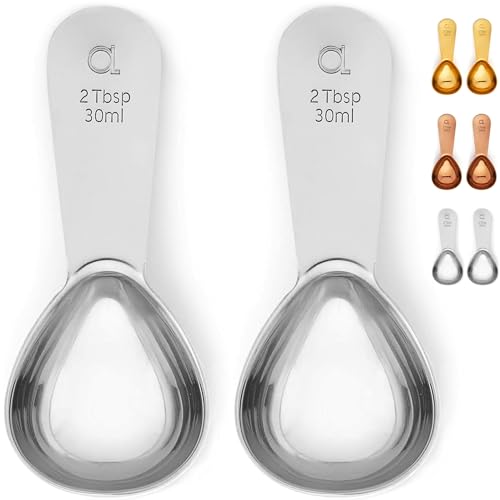
Best coffee scoops give you the same cup every morning. Compare one and two tablespoon sizes, handle length, clips and materials before you buy.
A coffee scoop looks like the simplest kitchen tool there is, yet it decides whether tomorrow's cup tastes like today's. Eyeballing a heap of grounds gives you a different cup every morning. The best coffee scoops measure the same amount each time, reach to the bottom of the bag and rinse clean in seconds.
The product table above lists stainless steel scoops in several sizes, from a single tablespoon to a two tablespoon measure, with long handles, clips and sets. This guide explains which size suits your brew method and which details make a scoop pleasant to use.



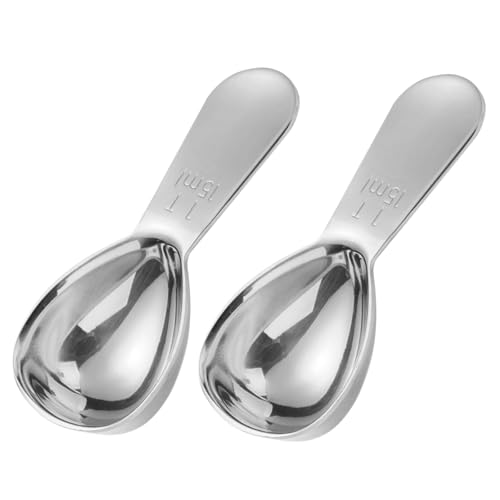

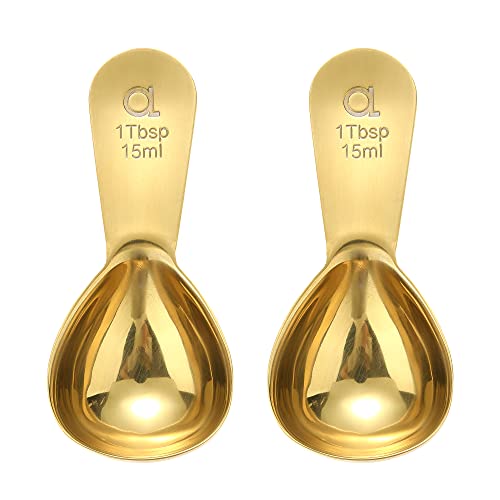
Why the best coffee scoops beat guessing
Coffee strength depends on the ratio of grounds to water. A heaping scoop one day and a flat scoop the next shifts that ratio enough to taste the difference. A scoop with a known volume lets you repeat a recipe you like and adjust it by half a scoop at a time when you try a new bean.
The best coffee scoops are also quicker than a scale. If you want to be exact, weigh a few scoops once to learn what yours holds, then rely on the scoop day to day.
One tablespoon or two tablespoons
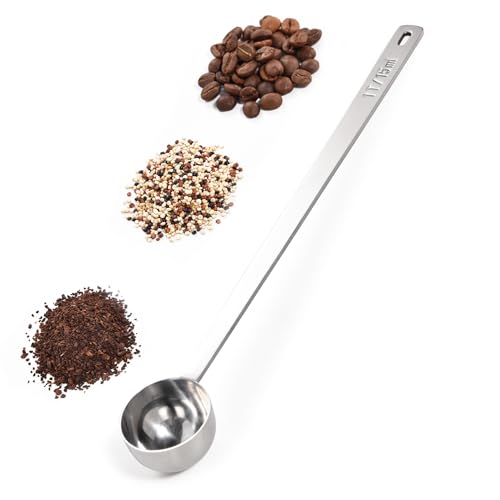
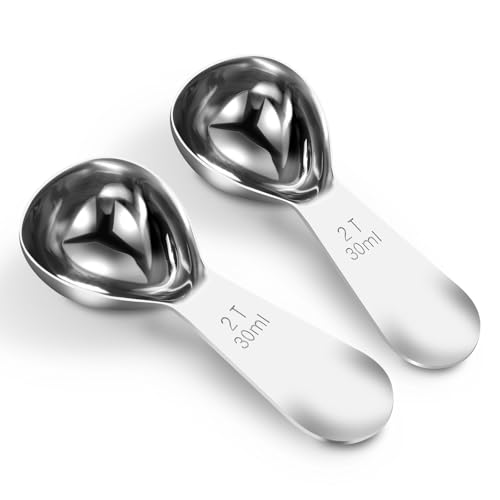
A one tablespoon scoop is the best for small batches, such as a single mug or a pour-over, because you can fine tune the amount. A two tablespoon scoop, often sold as the standard coffee scoop, is faster for a full pot, since a drip machine often needs several scoops. Many people buy a set with both sizes and keep one in the bag and one near the machine.
Check the listing for the stated volume. Some scoops are labeled in milliliters, so a fifteen milliliter scoop is roughly one tablespoon and a thirty milliliter scoop is roughly two.
Handle length and reach
A long handle reaches the bottom of a tall canister or a bag without getting your fingers in the grounds. A short handle is neat for a countertop container and fits in a drawer. If you buy beans in large bags, a long scoop is much easier. If you keep coffee in a small jar, a short one is fine.
Look at the handle shape as well. A flat handle sits comfortably in a drawer, while a round handle feels better in the hand.
Materials and build
Stainless steel is the usual choice, because it is strong, does not hold flavors and rinses clean. Thin steel can bend, so look for a scoop with a thicker bowl and a solid joint. Plastic scoops are cheap but may hold smells and static, which makes grounds cling to the bowl.
Check that the edge of the bowl is smooth, as a sharp edge scratches canisters and catches on bag seals.
Clip designs and bag sealing
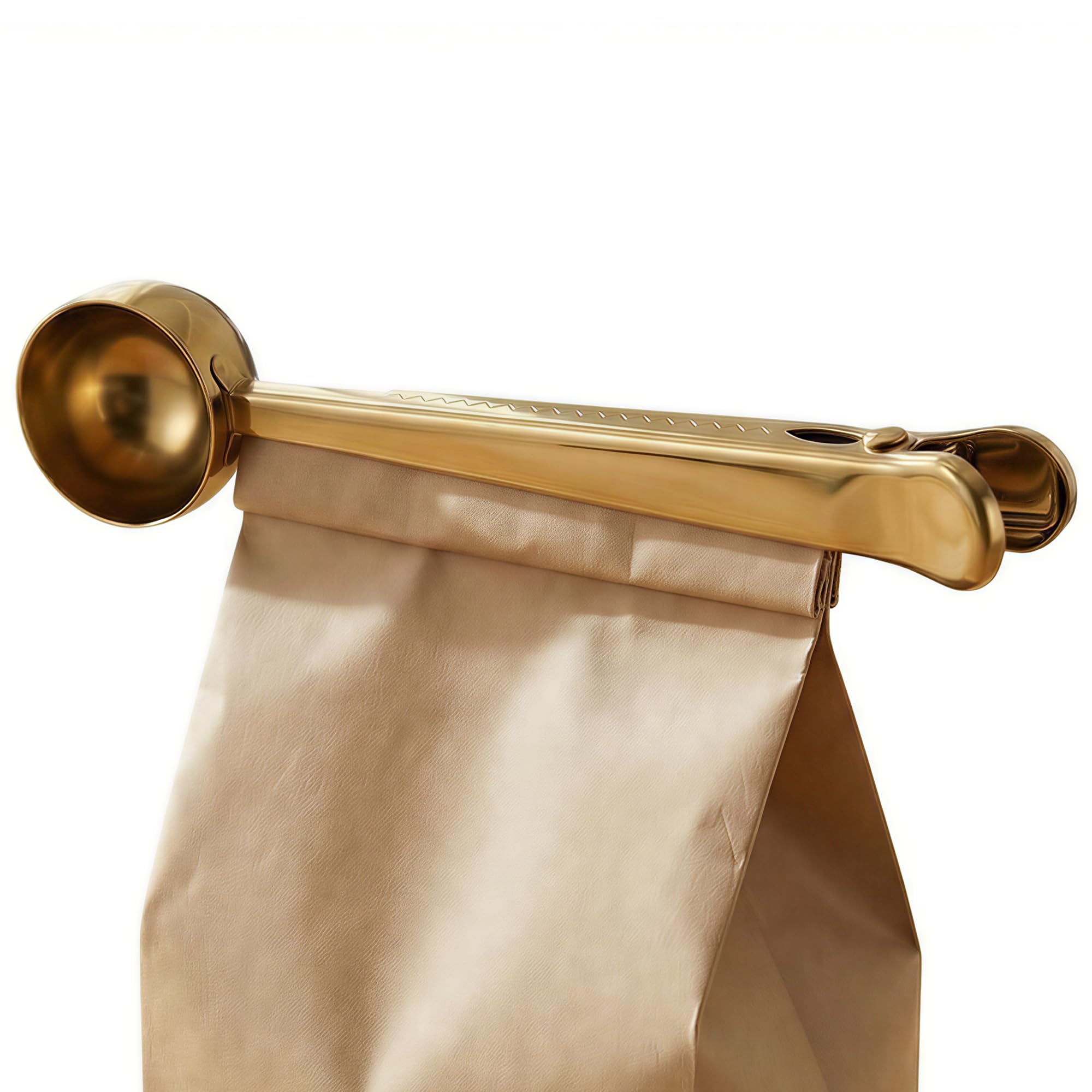
Some scoops include a clip on the handle that closes an opened bag. This keeps coffee fresh and means the scoop never gets lost. A clip scoop is practical for people who keep coffee in the original bag. If you use an airtight canister, a clip adds nothing, and a plain scoop is enough.
Cleaning and storage
Rinse the scoop after use or wipe it dry. Coffee oils build up slowly, so wash it with soap now and then. Most steel scoops are dishwasher safe, though hand washing keeps them looking new. Store it in the canister, in a drawer or on a hook near the machine.
Moisture is the enemy of coffee, so make sure the scoop is dry before it goes back into the beans.
Price and value
The scoops in the table range from around $9 to $18, and most come in sets. A basic steel scoop does the job as well as a premium one. Spend a little more for a thicker steel, a clip or a set of sizes that cover all your brew methods.
Matching the scoop to your brew method
Different brewers want different amounts. A drip machine usually calls for a scoop per cup of water, a French press wants a coarser grind and a larger scoop count, and an espresso machine is better served by a scale. A pour over uses a smaller ratio that you can dial in by the half scoop. Keep a one tablespoon scoop for these small changes and a larger one for full pots.
If you switch between methods during the week, a pair of scoops saves you from counting out tablespoons each time.
Scooping without a mess
Static makes fine grounds jump out of the bowl, and a wide bowl makes them spill. A deep bowl with a straight edge holds grounds more securely. Tap the handle to settle the coffee and level the top with the back of a knife for a precise measure. Keep a small tray under the scoop if you work over the machine.
For whole beans, a scoop works well too, but remember that beans take more space than ground coffee, so a scoop of beans weighs less than a scoop of grounds. Use a scale if you want to match the amount.
Other uses around the kitchen
A sturdy scoop is also handy for loose tea, protein powder, spices and baking ingredients. Wash it well between uses to avoid carrying coffee oils into other foods. If you use the scoop for other ingredients, consider buying a second one just for coffee to keep the taste pure.
Making your scoop last
A good steel scoop can last for years if you dry it properly and avoid bending the handle. Do not use it to pry open lids or chip frozen coffee, as thin steel will warp. If the finish dulls, a soak in warm water and baking soda brings back the shine.
Common questions
How much coffee is one scoop?
A standard coffee scoop holds two tablespoons, and a small scoop holds one. Check the listing for the stated volume.
How many scoops per cup?
A common starting point is about two tablespoons for every six ounces of water. Adjust to taste.
Should I level or heap the scoop?
Level it for consistency. A heaped scoop changes from day to day.
Is a scoop as accurate as a scale?
A scale is more accurate, but a scoop is quicker and good enough for most home brewing.
Final thoughts
The best coffee scoops are accurate, sturdy and easy to wash. Pick the size that matches your brew method, choose a handle length that suits your container, and compare the options in the table above.


