Best Circuit Breakers for 2026: A Practical Buying Guide
Disclosure: We may earn a commission when you buy through links on this page, at no extra cost to you. As an Amazon Associate I earn from qualifying purchases. Learn more

How to choose the best circuit breakers for your panel, from standard and arc fault types to amperage, trip curves and safety checks, without overspending.
Choosing best circuit breakers starts with matching the breaker to your panel, your wiring, and the circuit it will protect, not with picking the highest amperage you can find. A breaker that fits poorly or lacks the protection your local rules require can leave a circuit unsafe even when the rest of the installation looks tidy. This guide explains the comparison table below in plain terms so you can compare types, ratings, and features before you buy.
The right choice depends on where the circuit runs and what it powers. A bedroom circuit, a kitchen circuit, and a workshop circuit do not need the same protection, and a breaker made for one panel brand may not fit another panel at all. Read the panel label, check the maker guidance for your panel, and plan to have a licensed electrician do the actual installation work.




Spending Levels That Make Sense
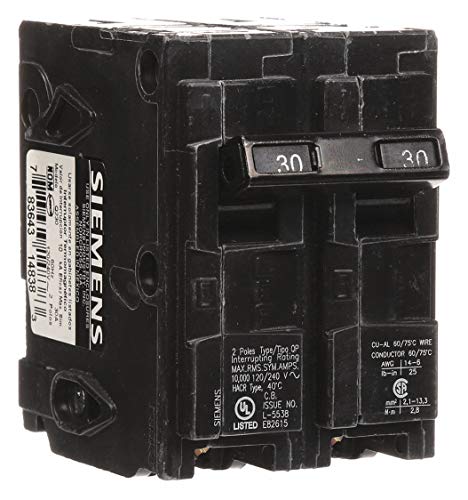
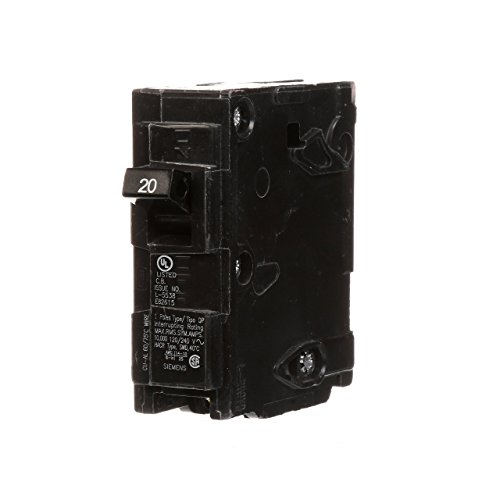
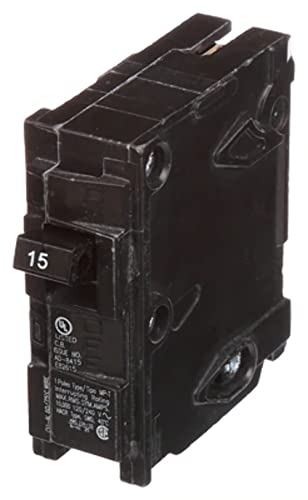
At a lower spending level, around $10 to $30 per breaker, you will usually find standard thermal magnetic breakers for common branch circuits. These suit simple lighting and outlet circuits where no special fault protection is required by local rules, and they are a sensible choice when the circuit is straightforward and the panel already accepts that breaker type.
In the middle range, about $30 to $70 per breaker, you will often find arc fault, ground fault, and dual function breakers. These add protection for specific risks, such as arcs in bedroom wiring or ground faults near water, and they are commonly required in newer work. The extra cost is easier to justify when the circuit serves a bedroom, a bathroom, a kitchen, or an outdoor outlet.
At a higher spending level, about $70 to $150 per breaker, you may see breakers with added monitoring, surge protection, or features for larger panels. These can make sense for a main panel upgrade or a circuit that feeds sensitive equipment, but they are rarely needed for a single simple circuit, so check whether the added feature solves a real problem before paying for it.
How to Choose the Best Circuit Breakers: Buying Guide
Intended Use and Who It Is For
Start by naming the circuit you are protecting. A homeowner replacing a failed breaker needs an exact match for panel type, amperage, and protection type, while a homeowner planning a new circuit needs to think about the room, the load, and the local rules for that room. Renters and homeowners who are not qualified to work inside a panel should not open a panel or swap a breaker themselves, even when the buying decision is theirs.
Price Versus Value
Price alone tells you little about value, because a cheap breaker that does not meet local rules or does not fit your panel is not a bargain. Compare breakers only within the same protection type and the same panel compatibility group, since a standard breaker and an arc fault breaker are not interchangeable even when they share the same amperage. Value also includes clear labeling and a clear trip indication, which save time and guesswork after a trip.
Size, Weight, and Fit for Your Space
Breakers are made to fit specific panel designs, and fit is not interchangeable across brands in most cases. Check the panel label for the approved breaker types, and match the frame size and connection style to that list, since a breaker that looks similar but is not listed for your panel should not be forced into place. Tandem breakers can add circuits in a tight panel only when the panel is rated for them and local rules allow them.
Key Performance Specs
Amperage is the first spec to get right, and it must match the wire size and the circuit design, not the size of the appliance you hope to run. A 15 amp circuit and a 20 amp circuit use different wire, and raising the breaker size without changing the wire is unsafe. Never choose a higher amperage to stop nuisance tripping without finding the cause first, and confirm trip curve and interrupting rating with an electrician from the panel label.
Build Quality and Materials
A well built breaker feels solid when it is seated, moves cleanly between on, tripped, and off, and stays firmly in place once installed. Loose fit, a vague handle feel, or a case that flexes can signal a poor match for the panel rather than a defect on its own. Terminals should accept the wire size for your circuit without forcing or trimming strands, since a clean connection reduces heat at the terminal and makes future inspection easier.
Ease of Use and Setup
For the homeowner, ease of use mostly means clear labeling and a simple reset process after a trip. A breaker should trip to a clear middle position, reset with a firm move to off and then to on, and show its rating without removing the panel cover. Setup itself is electrical work, so it belongs to a licensed electrician who follows maker guidance and local rules for permits and inspection.
Types of Circuit Breakers
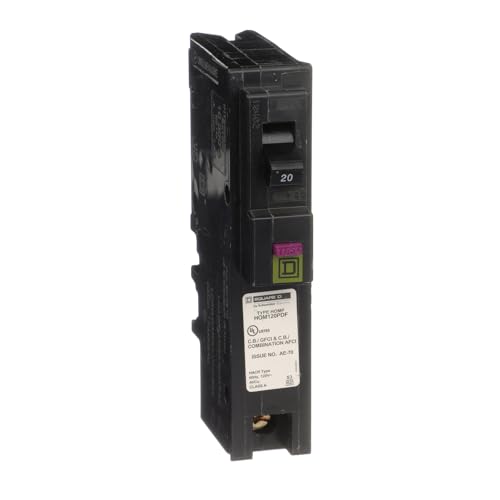
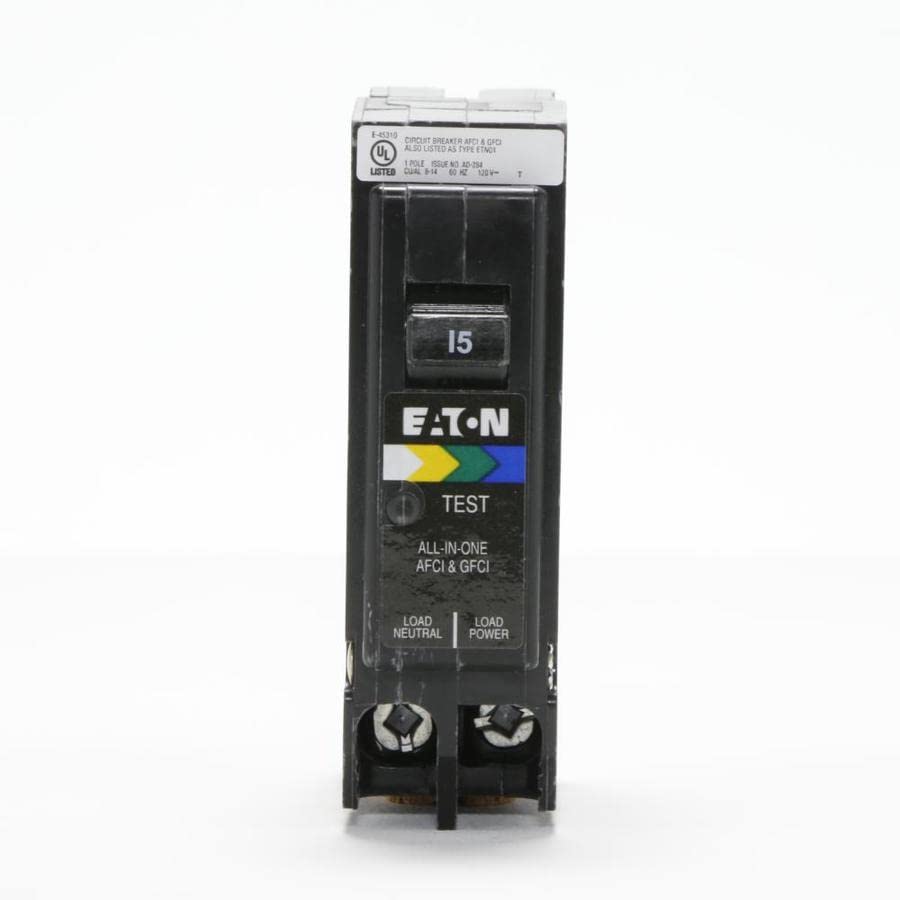
Standard breakers protect against overloads and short circuits. Arc fault breakers add protection against arcs that can start fires in damaged wiring. Ground fault breakers add protection against current leaking to ground, which matters near water and outdoors. Dual function breakers combine arc and ground fault protection in one unit.
| Type | Best For | Main Benefit | Typical Price |
|---|---|---|---|
| Standard | General lighting and outlet circuits | Overload and short circuit protection | About $10 to $30 |
| Arc fault | Bedrooms and living areas | Arc detection in branch wiring | About $30 to $70 |
| Ground fault | Bathrooms, kitchens, and outdoors | Ground fault protection near water | About $30 to $70 |
| Dual function | Rooms needing both protections | Arc and ground fault in one unit | About $40 to $80 |
Mid Range Options
Mid range breakers usually cover arc fault, ground fault, and dual function types for common residential circuits. They suit rooms where local rules now require added protection, and they keep the panel directory simple because one breaker covers one clearly defined circuit. Their main drawback is cost, since they run higher than a standard breaker for the same amperage.
Compact Options
Compact and tandem breakers suit panels that are short on space, provided the panel is rated for them. They let you add a circuit without replacing the whole panel, which can save a larger upgrade cost. Their drawback is that they can crowd the panel and make labeling harder, so they work best when each circuit is clearly marked and the total load stays within the panel rating.
Setup and Care Tips
- Read the manual before first use, and keep the panel directory updated so every circuit is easy to identify after a trip.
- Clean and inspect regularly from outside the panel, looking for warmth, discoloration, or a musty smell, and call an electrician if anything seems unusual.
- Store spare breakers in a dry place, in their original packaging, so terminals stay clean and labels stay readable.
- Press the test button on ground fault and arc fault breakers on the schedule in the maker guidance, and replace a breaker that fails that check.
- Never work inside a live panel, and never bypass a breaker that keeps tripping, since repeated tripping is a warning that needs investigation.
For help matching a breaker to a panel, see our guide to the best circuit breaker finder tools. For panel size and spaces, see our guide to the best circuit breaker panel options. For safe checks from outside the panel, see our guide to the best circuit testers.
Frequently Asked Questions
What features matter most when buying circuit breakers?
Panel compatibility matters most, followed by correct amperage, the right protection type for the room, and a clear trip indication. A breaker that is not listed for your panel should not be used, even when it appears to fit, because fit alone does not guarantee safe contact or correct operation. After compatibility, focus on whether the circuit needs arc fault, ground fault, or dual function protection under local rules.
Are expensive circuit breakers worth it?
Expensive breakers are worth it when the added protection or feature matches a real requirement in your home, such as arc fault protection in a bedroom or ground fault protection near water. They are not worth it when a standard breaker already meets local rules and fits the circuit, since paying more does not add safety in that case. Compare breakers within the same protection type, and treat monitoring or surge features as extras.
How long does a circuit breaker last?
A circuit breaker can last for many years when it is correctly sized, properly installed, and rarely tripped, but there is no single lifespan that applies to every home. Frequent tripping, moisture, heat, or physical damage can shorten its useful life and should prompt inspection by an electrician. If a breaker feels loose, fails its test button check, or shows discoloration, have it checked promptly.
How much should I spend on a circuit breaker?
Most homeowners spend about $10 to $30 for a standard breaker and about $30 to $80 for arc fault, ground fault, or dual function breakers, depending on amperage and panel type. Your total depends on how many circuits need added protection and whether the panel needs any related work at the same time. Budget for professional installation separately, since the breaker price alone does not cover labor or inspection.
How do I maintain a circuit breaker?
Maintain a breaker by keeping the panel directory accurate, pressing fault protection test buttons on the maker schedule, and watching for signs of trouble such as warmth, buzzing, or repeated tripping. Do not open the panel interior yourself, and do not spray cleaners or lubricants inside the panel. If a breaker trips often, note what was running at the time and share that detail with an electrician.
Wrapping Up
The three criteria that matter most are panel compatibility, correct amperage for the wire and circuit, and the right protection type for the room. Get those three right, confirm local rules with a licensed electrician, and the rest of the choice becomes a matter of labeling, budget, and useful extras. A careful match now avoids nuisance trips, unsafe workarounds, and costly panel changes later.
For a final check, reread the panel label, confirm the breaker type and rating, and review the product table above before you order. The best circuit breakers for your home are the ones that fit your panel, meet local rules, and protect each circuit at the level it was designed for, installed safely by a qualified person.