Best Check Valves for Sump Pumps: Types Compared and How to Choose for 2026
Disclosure: We may earn a commission when you buy through links on this page, at no extra cost to you. As an Amazon Associate I earn from qualifying purchases. Learn more
Choose the best check valves for sump pumps by pipe size, valve style, noise and ease of replacement so the pump stops short cycling.
A sump pump pushes water out of the pit, and the check valve stops that water from running straight back in when the pump shuts off. Without one, the pump restarts again and again, wears out sooner and may fail when a storm needs it most. This guide helps you choose among the best check valves for sump pumps by pipe size, valve style, noise and ease of replacement.
Use the comparison table below to see the main models, then follow the sections to match the valve to your discharge pipe and your basement.


What a Sump Pump Check Valve Does
The valve sits in the discharge pipe just above the pump. Water pushed up the pipe lifts a flap or spring loaded disc, and when the pump stops the flap closes so the column of water in the pipe cannot fall back into the pit. That keeps the pump from short cycling, which is the rapid on and off pattern that burns out motors and switches.
The valve also affects noise. A basic flap valve can slam shut with a loud knock, known as water hammer, which you hear through the floor. Spring loaded quiet or silent models close gently and are popular in finished basements.
Choosing the Best Check Valves for Sump Pumps by Style
Swing Check Valves
A swing valve uses a hinged flap that opens with the flow and falls shut on its own. It is simple, low in cost and has low flow resistance, but the flap can bang shut, especially on a tall vertical pipe. It suits a basement where noise does not matter, such as an unfinished utility area.
Spring Loaded Silent Valves
A spring loaded valve closes before the water column falls back, so it shuts gently. This style is the usual pick for homes where the pit is close to bedrooms or a family room. Make sure the spring is stainless steel and the body is thick PVC, since a weak spring is the first part to fail.
Clear Body and Union Style Valves
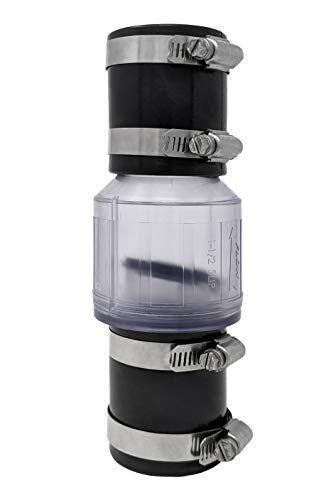
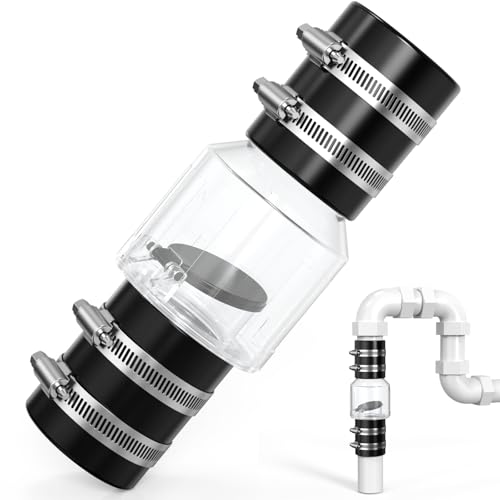
Some valves have a clear body so you can see the flap move, and some use unions or removable fittings so you can take the valve out without cutting pipe. Easy access matters because a valve that jams with grit needs cleaning or replacing, and a stuck valve can leave the pump running against a closed flap.
Key Features to Compare
Size and Pipe Match
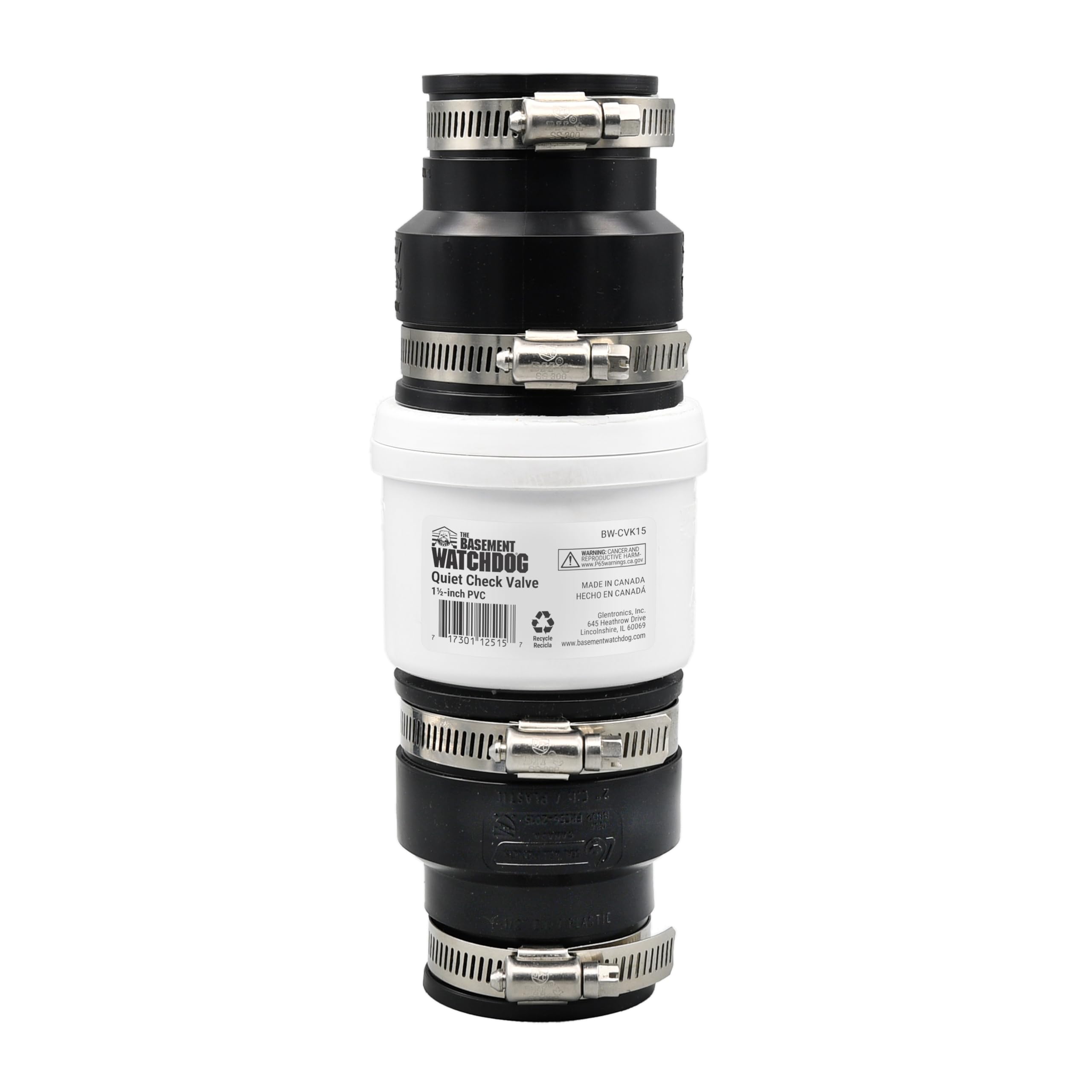
Most residential pumps use 1-1/4 inch or 1-1/2 inch discharge pipe, and some use 2 inch. Measure the pipe or check the pump manual before ordering, because a valve that does not match the pipe will leak or need adapters. Many valves ship with rubber couplings and hose clamps that fit both common small sizes.
Couplings and Clamps
Rubber couplings with stainless steel clamps let you install the valve without gluing, and they absorb vibration. Check that clamps are stainless rather than plated steel, since a basement is damp and cheap clamps rust. Glued PVC connections last well but make replacement harder.
Flow Direction Markings
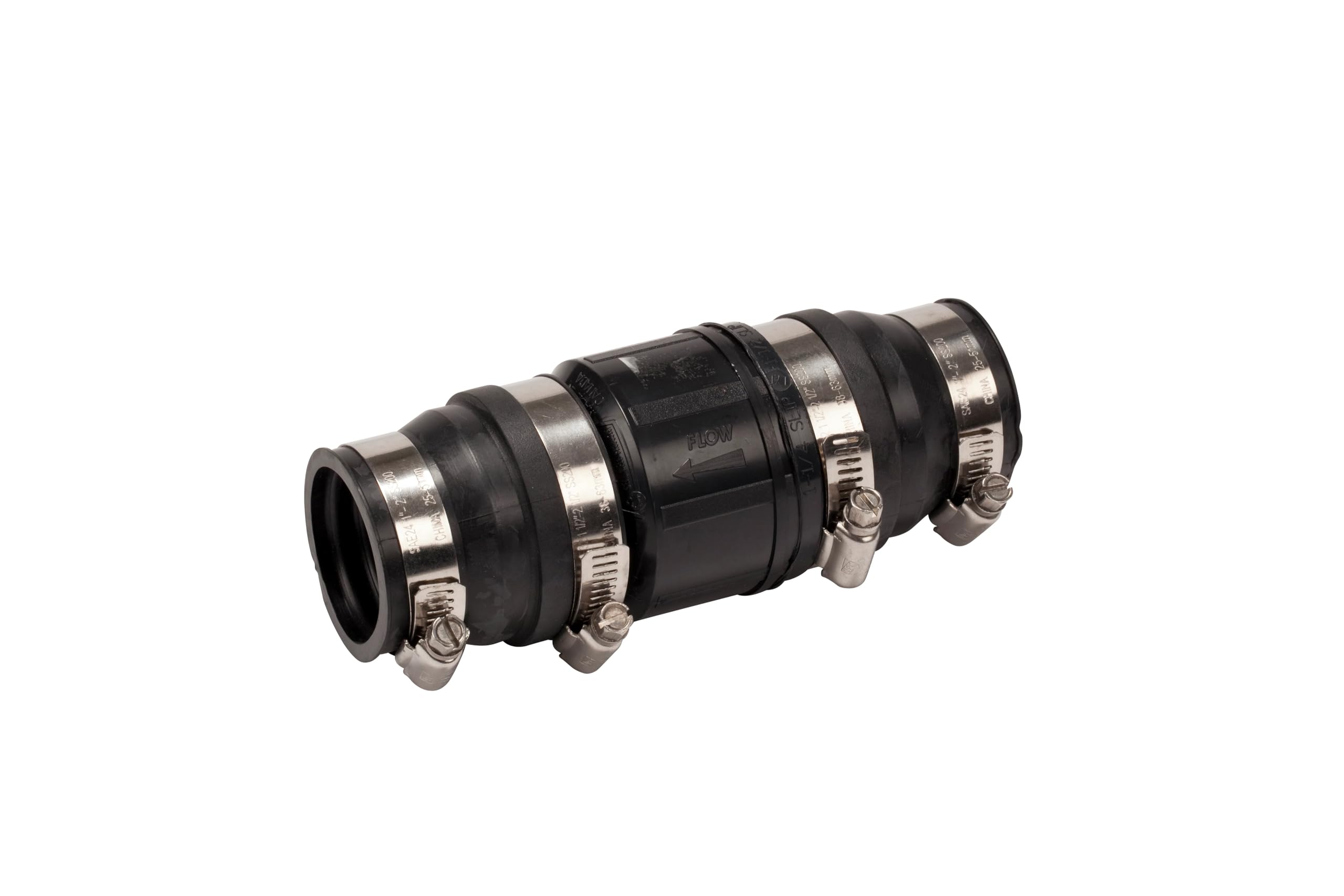
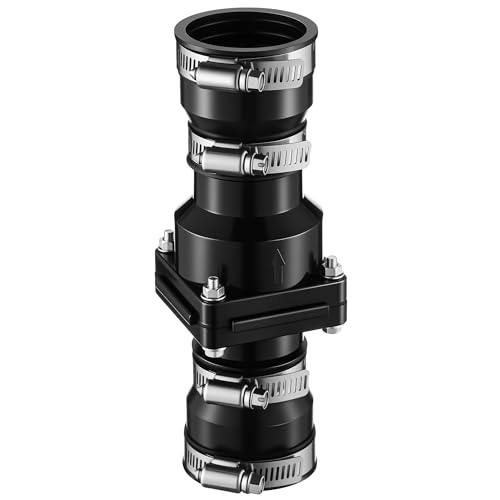
An arrow on the body shows which way water flows, and installing the valve backward blocks the pump completely. Clear, molded arrows are easier to read in a dim pit area than printed labels.
Noise and Water Hammer Control
Quiet models list a spring or a soft seat to reduce slamming. If you hear a loud knock when the pump stops, a silent valve is the usual fix.
Access for Inspection and Replacement
Choose a valve you can reach without moving the pump or cutting pipe. Couplings, unions or a clear body make routine checks quicker.
Installation Basics
- Unplug the pump and let water drain from the discharge pipe.
- Mark where the valve will sit, on the vertical pipe just above the pump, and cut the pipe cleanly if required.
- Fit the rubber couplings and place the valve with the flow arrow pointing up and away from the pump.
- Tighten the clamps firmly and evenly.
- Plug the pump back in, run a test cycle by pouring water into the pit, and check each joint for drips.
Many installers also drill a small weep hole in the pipe below the valve to release trapped air. If you are unsure about plumbing or electrical work near the pump, ask a licensed plumber or electrician.
Common Mistakes to Avoid
- Installing the valve backward, which blocks the flow completely.
- Choosing the wrong size, which causes leaks or forces you to use adapters.
- Using plated clamps that rust in a damp pit.
- Skipping a check valve altogether, which lets the pump short cycle.
- Burying the valve where you cannot reach it for service.
Cost and Care
Check valves are inexpensive, with many models between about $10 and $40, and a good one costs far less than a burnt out pump. Look at the valve after any heavy storm, listen for knocking or chatter, and replace a valve that sticks or weeps. Many owners swap the valve every few years along with a routine pump check.
Frequently Asked Questions
Do I need a check valve on my sump pump?
Almost always yes. It keeps discharged water from flowing back into the pit and stops the pump from cycling needlessly.
Which style is quietest?
Spring loaded silent valves close gently and avoid the knock a basic flap valve can make.
What size check valve do I need?
Match the discharge pipe, commonly 1-1/4 inch, 1-1/2 inch or 2 inch. Check the pump manual or measure the pipe before ordering.
Why does my pump run but not push water out?
A jammed valve, a backward valve or trapped air can be the cause. Check the flow arrow and the weep hole, and call a plumber if the problem continues.
How often should I replace the valve?
Inspect it each season and replace it when it sticks, leaks or bangs. Many last several years.
Final Thoughts
Match the valve to your pipe size, pick a spring loaded model if noise matters, and favor couplings you can undo. Compare options in the product table above, and the best check valves for sump pumps for your home will be the one that fits cleanly and keeps the pump from cycling needlessly.