Best Circuit Breaker Finder: A First Time Buyer's Guide for 2026
Disclosure: We may earn a commission when you buy through links on this page, at no extra cost to you. As an Amazon Associate I earn from qualifying purchases. Learn more

A first time buyer guide to circuit breaker finders: how they work, key specs, price ranges and safe first use.
Flipping breakers one by one until the right light goes dark is slow, annoying and hard on anything plugged into the other circuits. A circuit breaker finder fixes that by telling you which breaker feeds an outlet or light before you touch the panel. This guide to the best circuit breaker finder is written for first time buyers, starting with how these tools work and ending with what to buy for your home projects.
We explain the specs in plain English, show what each price level gets you, list rookie mistakes and walk through first use. A breaker finder helps you identify circuits, but it does not replace safe practice: always switch off the breaker and confirm the circuit is dead with a voltage tester before touching wires, and hire a licensed electrician for panel work.





Circuit Breaker Finders 101: The Basics
A circuit breaker finder is a two part tool made of a transmitter and a receiver. You plug the transmitter into an outlet, or connect it to a light socket or wires with an adapter, and it sends a signal along that circuit. You then sweep the receiver over the breakers in your panel, and it beeps and lights up when it finds the breaker carrying the signal.
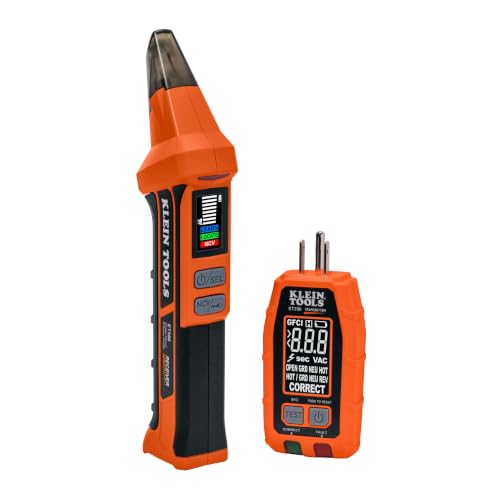
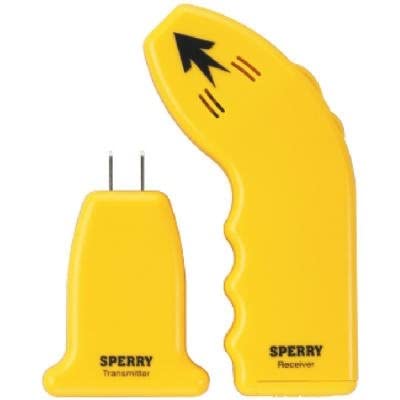
Most home breaker finders work on standard North American 120 volt AC circuits; Klein's ET310 lists 90 to 120 volts, and Sperry's CS550A lists 120 volts AC. Many transmitters double as an outlet tester with GFCI trip function, showing whether an outlet is wired correctly. Some receivers add a non contact voltage, or NCV, detector that senses live wires without touching them.
A few terms show up often. Learn mode and locate mode describe a two scan process: the receiver first scans every breaker to learn the panel, then scans again to find the strongest signal. Sensitivity adjustment lets you tune the receiver manually. Wire tracers are more advanced tools that follow wires inside walls.
How to Choose the Best Circuit Breaker Finder: Key Specs in Plain English
Six factors decide whether a breaker finder suits you: intended use, build quality, performance, ease of use, upkeep and warranty.
Intended Use and Who It's For
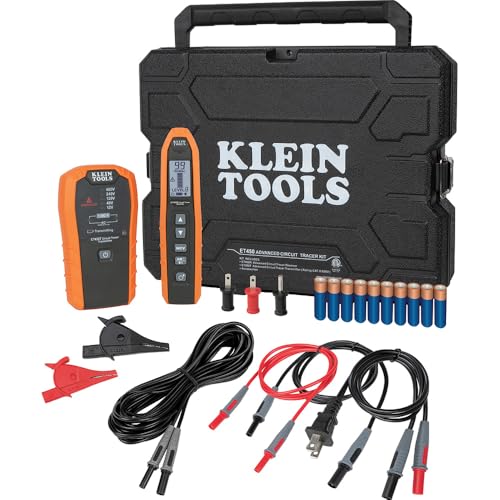
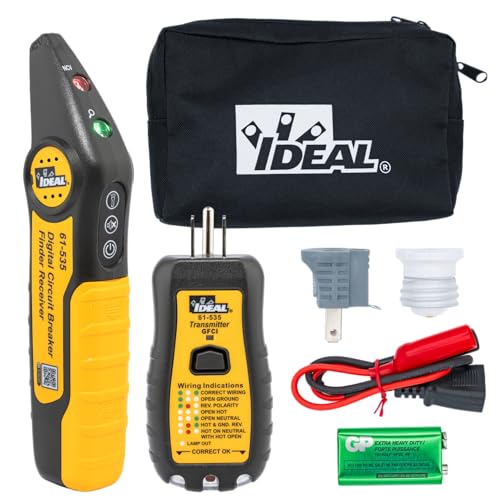
Homeowners labeling a panel or replacing an outlet need a basic breaker finder like Klein's ET310 or Sperry's CS550A. DIYers who also want to check outlet wiring should choose a model with a built in outlet tester, which most kits include. Renovators and handymen who work in older homes benefit from adapters for light sockets and bare wires, like those in Klein's 80016 kit, Ideal's 61-535KIT and Focemta's kit. Electricians who trace wires through walls or need to work on de energized circuits should consider a wire tracer like Klein's ET450.
Build Quality and Materials
Look for a sturdy housing, a secure battery compartment and a case to keep parts together. Focemta lists an impact resistant ABS housing, a screw sealed battery compartment and ETL certification with a CAT II 135 volt rating.
Extech's CB10 transmitter and receiver snap together for storage, and the receiver weighs about 4 ounces. Sperry's CS550A is UL listed. Safety listings from UL, ETL or similar labs are worth checking on any electrical tool.
Key Performance Specs
The most important spec is how reliably the receiver singles out one breaker. Auto sensing receivers, like Klein's ET310 and Sperry's CS550A, need no manual adjustment.
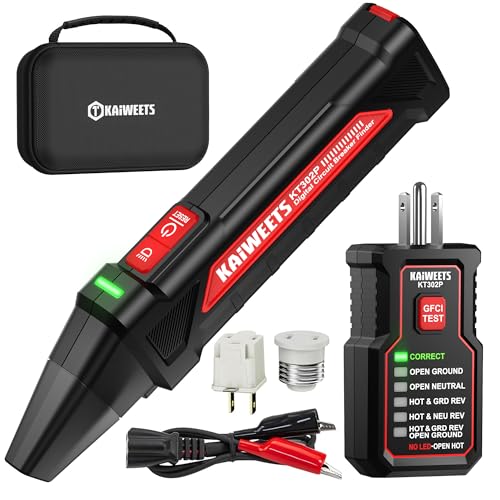
Learn and locate modes, used by Klein's ET350 and KAIWEETS' KT302P, scan the whole panel first to reduce false hits. Manual sensitivity, like Extech's CB10, helps in crowded panels. For most homes, choose a 120 volt model with automatic or learn mode detection plus audible and visual alerts.
Ease of Use and Setup
The easiest finders need only batteries and a plug. Displays help beginners: KAIWEETS' KT301P has a backlit LCD that shows real time voltage from 30 to 150 volts, outlet wiring status and signal strength, while Focemta shows voltage from 90 to 135 volts and signal strength. KAIWEETS' KT302P uses LED indicators on both sides of the transmitter that show 6 wiring conditions directly. Built in flashlights, like those on Klein's ET350 and KAIWEETS' models, help in dark basements.
Maintenance and Long Term Costs
Breaker finders need very little upkeep. The main ongoing cost is batteries; Focemta's kit includes a 9 volt and 2 AAA batteries, and Klein's ET450 includes batteries in its kit.
Remove batteries during long storage to prevent leaks. Adapters, like Gardner Bender's light socket and clip adapter set, around $15, can be replaced if lost. Keep the tool in its case, away from moisture and extreme heat, to extend its life.
Warranty and Customer Support
Established tool brands like Klein Tools, Ideal Industries, Sperry Instruments and Extech have long histories in electrical tools and offer support and replacement parts. Newer brands like KAIWEETS and Focemta often include more features for the money, so check warranty terms on the listing. Keep your receipt and register the tool if the maker offers it.
Choosing for Your Situation
New homeowners who want to label an unmarked panel should start with a simple auto sensing finder like Sperry's CS550A or Klein's ET310, since the job is mostly plugging in and sweeping. Anyone planning to swap light fixtures or ceiling fans should buy a kit with a light socket adapter and clip leads, such as Klein's 80016, Ideal's 61-535KIT or Focemta's kit, because fixtures have no outlet to plug into. If you like seeing numbers rather than guessing from beeps, a display model like KAIWEETS' KT301P shows voltage and signal strength on screen.
Price Ranges at a Glance
Basic finders cost around $34 to $45: Sperry's CS550A around $34, Extech's CB10 around $40, KAIWEETS' KT302P kit around $42 and Klein's ET310 around $45. Kits with adapters and displays cost around $57 to $80, including Focemta's kit around $57, Klein's 80016 kit around $60, Ideal's 61-535KIT around $65, KAIWEETS' KT301P around $66 and Klein's ET350 4 in 1 around $80. Professional wire tracers like Klein's ET450 cost around $298.
Rookie Mistakes to Avoid
- Treating a breaker finder as a safety check. Finding the breaker is not the same as confirming the circuit is off. Always verify with a voltage tester before touching wires.
- Buying for the wrong voltage. Most finders are made for 120 volt circuits. They will not identify 240 volt breakers for ranges or dryers unless the maker says so.
- Skipping the full panel scan. Neighboring breakers can pick up signal. Scan every breaker, then return to the strongest one.
- Forgetting adapters. Light fixtures and hard wired circuits need a socket adapter or clip leads. Buy a kit if you plan to trace lights.
- Working inside the panel. Removing the panel cover exposes live parts. Scan through the closed cover and leave panel work to licensed electricians.
Getting Started: Setup and First Use
Read the manual before first use, since each brand's receiver works a little differently. Install fresh batteries, then plug the transmitter into the outlet you want to identify and confirm its lights show power. Take the receiver to the panel, hold it as the manual describes and sweep slowly across every breaker. On learn and locate models, complete the learn scan first, then the locate scan.
When the receiver beeps and lights on one breaker, switch that breaker off and confirm the transmitter loses power. Label the breaker clearly. Before doing any electrical work, recheck the outlet with a voltage tester. Clean the tool and inspect leads and adapters for cracks after each use, and store everything in its case.
Frequently Asked Questions
How do I maintain a circuit breaker finder?
Keep it clean, dry and stored in its case with batteries removed during long storage. Wipe the housing with a dry cloth, check adapters and leads for cracked insulation and replace damaged parts. Replace batteries when indicators dim, since weak batteries can cause unreliable readings.
How long does a circuit breaker finder last?
A quality breaker finder can last many years of homeowner use. With few moving parts, the main wear points are battery compartments, adapters and prongs. Dropping the tool or storing it in damp areas shortens its life, so a case is worth having.
Are expensive circuit breaker finders worth it?
Expensive finders are worth it for electricians and frequent renovators, not for occasional homeowners. Klein's ET450 traces wires through walls and works on de energized circuits, which pros need. A homeowner labeling a panel does well with Klein's ET310 or Sperry's CS550A.
What features matter most when buying circuit breaker finders?
Reliable breaker identification, clear alerts and a built in outlet checker matter most. Look for auto sensing or learn and locate modes, audible and visual signals and adapters for lights. A display, flashlight and NCV detector are helpful extras, and a UL or ETL listing adds confidence.
How much should I spend on a circuit breaker finder?
Most homeowners should spend around $40 to $65. That covers reliable tools like Klein's ET310, KAIWEETS' KT302P and complete kits like Klein's 80016 or Ideal's 61-535KIT. Spend around $80 for a 4 in 1 tool like Klein's ET350, and around $298 only for professional wire tracing.
Can a breaker finder work on 240 volt circuits?
Most consumer breaker finders do not identify 240 volt circuits. They are built for 120 volt outlets and lights. For 240 volt appliances, consult the panel labels or hire an electrician rather than guessing.
Final Thoughts
When choosing a breaker finder, focus on three things: dependable breaker identification, a built in outlet checker and adapters for the circuits you plan to trace. Klein's ET310 is a strong first tool, KAIWEETS' KT301P adds a helpful display, Klein's 80016 and Ideal's kits add accessories and Klein's ET450 suits pros. The best circuit breaker finder saves time, but always confirm a circuit is dead before you work on it.
For more tool guides, see the best multimeter for home, the best wire strippers, the best electric screwdriver and the best rechargeable flashlight. Then compare current prices in the product table above.