
Best Chess Sets Under 100: Buying Guide for 2026
Disclosure: We may earn a commission when you buy through links on this page, at no extra cost to you. As an Amazon Associate I earn from qualifying purchases. Learn more

What the best chess sets under 100 offer in board size, weight and storage, and what a budget of about $100 usually cannot buy.
Choosing a chess set sounds simple until you compare board sizes, piece heights, materials, and storage options side by side. A set that looks elegant in photos can feel cramped in play, tip over too easily, or arrive with pieces that are hard to tell apart. This guide to the best chess sets under 100 dollars helps you focus on the details that shape real games.
You will learn what this budget can buy, what it usually cannot, and how to match a set to your table, your hands, and the people you play with. Use the comparison table below to check sizes and materials, then read the sections that follow for the reasoning behind each choice.


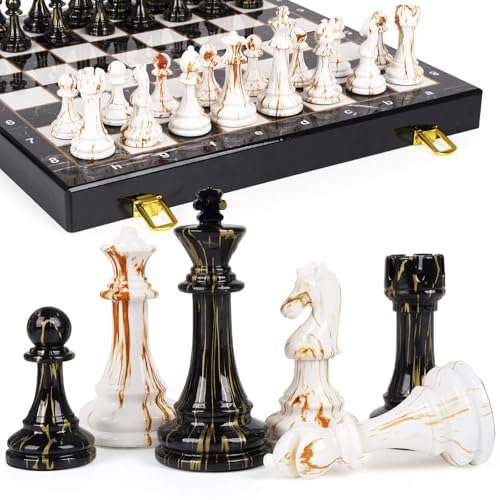

What to Look For at a Glance
The Balanced All Round Profile
For most homes, the strongest all around profile is a wooden or wood veneer board with a king around 3.5 to 3.75 inches tall and a board with squares around 2 inches wide. Weighted bases, felt bottoms, and clear piece shapes matter more than ornate carving. Expect to pay about $70 to $100 for this balance of size, stability, and finish that suits daily play and display.
The Value Profile
Value in this range usually means a slightly smaller board, simpler piece shaping, and a folding case that doubles as storage. A king near 3 inches and squares near 1.75 inches can still play very well for casual games and lessons. Sets around $40 to $70 often give you the best play per dollar if you skip decorative extras and spend on weight, felt, and readable piece design instead.
The Beginner Profile
Beginners benefit most from high contrast between light and dark squares, large clear piece silhouettes, and sometimes algebraic coordinates printed along the board edge. Coordinates help new players record moves and follow lessons without confusion. A sturdy folding board around $30 to $60 is a smart start because it travels to classes and clubs, stores easily, and lets you upgrade later once you know your preferences.
How to Choose a Chess Set Under $100
When people ask about the best chess sets under 100 dollars, the honest answer depends on how you will actually use the set. The buying guide below walks through realiztic expectations, fit, and the small specifications that separate a set you keep for years from one that ends up in a closet.
What You Can Realiztically Get Under $100
Under $100 you can realiztically get a well sized board, weighted plastic or wooden pieces with felt bottoms, and decent storage. You usually cannot get solid hardwood throughout, hand carved detail on every piece, and a large presentation box all at once. Do not cut corners on piece stability or board flatness. Save instead on exotic woods, brass accents, and oversized packaging that add cost without improving a single move.
Intended Use and Who It Is For
Start with your main use. A family set needs durable pieces that survive drops and quick cleanup after games. A club or lesson set needs clear shapes, coordinates, and a board that folds for transport. A display set for a living room can lean toward richer wood tones and larger pieces. If children will play often, choose lighter pieces with wide bases and avoid sharp crowns that chip when knocked together.
Price vs Value
Budget sets around $25 to $45 focus on playability with plastic pieces and folding boards. Mid range sets around $45 to $75 add weight, felt, better hinges, and more attractive finishes. Premium options under the cap, around $75 to $100, improve wood quality, piece finish, and storage layout. Value is not the lowest price. Value is paying for weight, clarity, and flat squares while skipping decoration that does not help you play.
Ease of Use and Setup
A good set should be ready to play in under a minute. Pieces should sit in fitted slots or a simple tray so setup feels inviting, not like a chore. Check that the board opens flat without a raised ridge in the middle, because a ridge makes pieces wobble on the central squares. Smooth hinges, quiet latches, and pieces you can identify at a glance all lower friction for regular play.
Key Performance Specs
The key specs are king height, square size, piece weight, and base diameter. As a rule, the square should be a little wider than the base of the king, and the king base should fill roughly three quarters of the square. A 3.75 inch king pairs well with squares around 2 to 2.25 inches. Weighted pieces resist tipping during fast games, and felt bottoms protect the board surface and move quietly.
Warranty and Customer Support
Chess sets rarely have long warranties, but reputable sellers will replace missing or damaged pieces and accept returns for warped boards or broken hinges. Read the listing for what is covered and keep your order details until you have inspected every piece. Photograph any defect on arrival. Support matters most for wooden sets, where a split seam or uneven finish may only show once the set is under bright light at home.
Size, Weight, and Fit for Your Space
Measure your table before you buy. A board with 2 inch squares is about 16 inches across before you add the border, so the full board often needs 18 to 20 inches of clear space. Folding sets suit small apartments and travel. Full size wooden boards suit a dedicated table. Also consider total weight if you will carry the set to a club, because solid wood and weighted pieces add up quickly.
Types of Chess Sets
Budget Options
Budget options use molded plastic pieces and printed or veneer boards, often in a folding case. They are light, forgiving of spills and drops, and easy to replace if a piece goes missing. The trade off is less satisfying weight and simpler detail. They suit classrooms, travel, and first sets for kids who are still learning how to handle pieces with care.
Compact Options
Compact options shrink the board to squares around 1.25 to 1.5 inches and use magnetic pieces to hold position in cars, trains, or small desks. Magnets help when the board gets bumped, but very small pieces can feel fiddly for adult hands. Choose a compact set as a second set for travel rather than your only set at home, unless space truly limits you.
Premium Options
Premium options under $100 use better wood veneers or solid wood pieces, smoother finishes, extra queens for pawn promotion, and lined storage compartments. Extra queens are a genuine play benefit, not a luxury, because promoted pawns appear in real games. The trade off is weight and care. Wood needs dusting and protection from heat and moisture, and a nicer finish shows scratches more readily than plain plastic.
Mid Range Options
Mid range options balance cost and feel. You typically get weighted pieces, felt bottoms, a folding wooden board, and clear Staunton style shapes that match what books and videos show. This is the sweet spot for most buyers. It plays well at home, travels without worry, and looks good enough to leave out, which quietly encourages you to play more often.
Choosing Chess Sets for Your Situation
Stretching to $150
If you consider stretching to $150, the extra money mostly buys larger boards, solid wood construction, and finer piece carving, especially on the knights. The play itself does not change dramatically. Step up to that tier if you want a display piece for a main room or a larger board for long analytical sessions. Stay under $100 if portability and value matter more than furniture level finish.
On the other side of the budget, our guide to the best chess sets under 50 shows what you give up and what you keep when you spend half as much, which is useful context before you decide.
Setup and Care Tips
- Read the manual before first use, especially any notes on wood care or hinge adjustment, so you do not force a latch or fold the board the wrong way.
- Clean and inspect regularly by dusting pieces with a soft dry cloth and checking felt bottoms for grit that could scratch the board.
- Store in a dry place away from direct sunlight and heating vents, because heat and moisture can warp wood and fade finishes over time.
- Register the product for warranty when the maker offers it, and keep a photo of the full set so a missing piece is easy to document.
- Set up the board with a light square on your right hand side and queens on their own color, a quick habit that prevents confused starts.
- Count pieces after games with younger players, since pawns tend to wander under sofas and into other game boxes.
For a broader view across all budgets before you commit, browse our guide to the best chess sets and compare how board sizes and materials change as prices rise. And if your budget grows later, the guide to the best chess sets under 200 explains the next step up in wood and craftsmanship.
Chess Sets Under $100: Your Questions Answered
Can you get a good chess set under $100?
Yes, you can get a genuinely good set under $100 for home and club play. Look for weighted pieces, felt bottoms, a flat board, and squares sized to the pieces. What you give up at this price is exotic wood and fine hand carving, not play quality. A well chosen mid range set can serve a regular player happily for many years of weekly games.
How long does a chess set last?
A chess set can last decades when it is stored dry and handled with normal care. Plastic sets survive rough use but can fade or lose felt over time. Wooden sets last longest when kept away from heat and moisture. The most common end of life issue is not breakage but lost pieces, so fitted storage and a quick count after games protect your investment more than anything else.
How do I maintain a chess set?
Dust pieces with a soft cloth, keep the board dry, and wipe spills at once with a slightly damp cloth followed by a dry one. Avoid household sprays with strong solvents on wood finishes. Replace worn felt pads when they peel, because exposed base edges scratch boards. Store pieces in their slots rather than loose in a bag, which prevents chips on crowns and crosses during transport.
How much should I spend on a chess set?
Spend about $40 to $75 if you play casually at home and want a set that feels solid and looks welcoming. Spend closer to $100 if you play weekly, study games on the board, or want a set that doubles as decor. Beginners can start lower and upgrade later. Your playing frequency matters more than your rating when you set the budget.
Are expensive chess sets worth it?
Expensive sets are worth it when you value craftsmanship, larger size, and materials that age beautifully on display. They do not make the game itself better beyond a point, because chess quality comes from clear shapes, stability, and correct proportions. If you play mostly online and rarely set up a board, a modest set is the wiser buy. Frequent over the board players benefit most from the upgrade.
Final Thoughts
Focus on three things: correct proportions between pieces and squares, weighted pieces with felt bottoms, and a board that opens flat and fits your table. Match the style to your main use, whether that is family games, lessons, club play, or display. The product table above pulls the details together so you can compare quickly. For most buyers, the best chess sets under 100 dollars are the mid range wooden folding sets that balance feel, clarity, and price.


