
Best Chess Sets to Buy: A Practical Guide for 2026
Disclosure: We may earn a commission when you buy through links on this page, at no extra cost to you. As an Amazon Associate I earn from qualifying purchases. Learn more

A practical guide to the best chess sets to buy, covering piece size, board contrast, materials, storage and who each style suits.
A chess set is bought once and used for years, so small details like piece weight, board size, and storage matter more than they first appear. Best chess sets to buy are not a single model, but a match between the player, the place of play, and the budget, from a sturdy travel set to a wooden set that lives on a table at home. The comparison table below gives a quick overview, while this guide explains how to compare the options.
Beginners often focus on looks, while experienced players focus on piece proportions and board contrast. Both matter, because a set that is hard to read slows the game and a set that feels cheap gets left in a cupboard. This guide walks through size, style, material, and care, so the set you choose gets played with often.



Who Should Buy Which Type
Casual players who play at home with family need a set that is easy to read, hard to break, and simple to store. A medium size Staunton style set on a folding board usually fits that need, since the pieces are familiar and the board packs away. Club players need a tournament size set with a standard board, because consistent proportions make games fair and pieces easy to recognize at a glance.
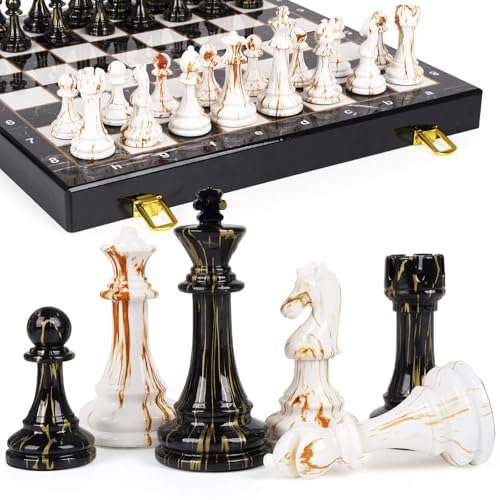
Collectors and gift buyers have different priorities, with craftsmanship, wood grain, and display value mattering more than portability. A larger wooden set with weighted pieces suits a display table, while a travel set with magnetic pieces suits trains, parks, and holidays. Decide the main use first, and the right size and material usually follow.
Key Features Worth Comparing
Piece Size and Proportions
Piece size should match the board squares, with the base of the king covering roughly three quarters of a square. Pieces that are too large crowd the board, while pieces that are too small look lost and tip over easily. A king height of about three to four inches suits most home boards, while tournament boards pair with taller kings and larger squares.
Weight also matters. Weighted pieces feel stable and are less likely to fall when a table is bumped, which matters in fast games and in homes with children. Unweighted plastic pieces are lighter and cheaper, and they suit travel and school use, but they feel less satisfying in slow, serious games.
Board Material and Contrast
Board contrast decides how easy the position is to read. Light and dark squares should differ clearly without glare, and a matte finish beats a shiny finish under room lights. Wooden boards look warm and last well, while vinyl roll up boards are light, cheap, and ideal for clubs and travel.
Check the board size against the table it will sit on, and leave room for captured pieces at the side. A board that overhangs a small table invites accidents, while a board that is too small makes crowded middlegame positions hard to follow. Measure the table before buying, not after.
Storage and Durability
Storage protects the investment. A box with fitted slots keeps pieces from chipping, while a bag suits travel sets and club sets that move often. Felted bases protect the board and reduce sliding, and they are worth checking before purchase, since refelting is fiddly work.
Durability depends on material and use. Boxwood and sheesham are common wooden choices that age well, while good quality plastic survives drops and school bags. Avoid very cheap painted sets if the set will be handled daily, since paint chips and thin plastic cracks under regular play.
Styles and Materials Compared
Staunton style pieces are the standard for serious play, because their shapes are instantly recognizable and tournament legal. Themed sets, with pieces shaped as historical figures or fantasy characters, look striking on display but can slow play when pieces look alike. Electronic sets add move hints and lessons, which help beginners, but they need batteries or charging and suit solo study more than face to face games.
Related guides can help you narrow the style: best chess sets ever, best luxury chess sets, best wooden chess sets, best electronic chess sets, and best chess sets for beginners. Each guide looks at a different use, from display pieces to first sets for new players.
Practical Checks Before You Buy
Before ordering, confirm the king height, the square size, and whether spare queens are included, since promotion needs an extra queen. Check that the set includes a board or that the board size matches, because sets and boards are sometimes sold separately. Read the return policy too, since piece feel and board color are hard to judge from photos alone.
Set a budget that matches the use. A durable home set need not cost a fortune, while a display set rewards spending on wood and finish. Avoid paying for decoration that makes pieces hard to tell apart, and remember that the most played set is usually the clearest one, not the fanciest one.
Building a Chess Habit at Home
A chess set earns its value through regular play, and a simple routine helps more than any single purchase. Set aside two or three evenings a week for a game, even a short one, and keep the set on a table that invites sitting down. A set that lives in a cupboard gets forgotten, while a set on a side table becomes part of the evening. Short regular games build skill faster than rare long sessions.
Teaching a child or a friend works best with patience and short games. Start with simple endgames using only a few pieces, then add pieces gradually as understanding grows. Celebrate good moves rather than only wins, and let the learner ask questions freely during casual games. A clear uncluttered set helps learners most, since piece recognition should never be a barrier to thinking.
Club preparation benefits from a tournament size set at home, since practising on the same proportions used in competition removes surprises. Play with a clock occasionally, even casually, to learn time habits before a real event. Record interesting games in simple notation, and review one or two key moments afterwards, since reflection teaches more than playing game after game without thought.
Display and storage can coexist happily. A wooden set on a table looks beautiful and invites play, while a fitted box protects pieces between games. Dust the board weekly, check felt bases monthly, and keep spare queens handy for promotion games. A set that is both displayed and played stays in the best condition, since regular handling reveals loose felt or chips early.
Enjoyment should lead the habit. Try different time controls, play occasional variant games for fun, and visit a local club when ready for new opponents. Chess rewards curiosity, and a set chosen for clarity and comfort supports years of games, lessons, and friendly rivalry. The best set is simply the one that keeps getting played.
Frequently Asked Questions
What size chess set should a beginner buy?
A beginner should buy a medium size Staunton style set with a king around three to four inches tall and squares that let the king base cover about three quarters of a square. That size is easy to read, stable on a table, and comfortable for learning without crowding the board. Smaller travel sets suit holidays, but they feel cramped for regular home study and teaching.
Are weighted pieces worth the extra cost?
Weighted pieces are worth the extra cost for regular home and club play, because they feel stable, resist tipping when a table is bumped, and make moving pieces more satisfying. Light plastic pieces still suit travel, schools, and young children, where drops are common and cost matters more. If the set will be used weekly, weight is one of the first upgrades to consider.
What is the difference between Staunton and themed sets?
Staunton pieces follow a standard design that every player recognizes at once, which keeps games fast and fair. Themed pieces look decorative and suit display, but unusual shapes can slow play when two pieces look similar. Choose Staunton for learning and club games, and save themed sets for display or casual play where looks matter more than speed.
Do I need a separate board?
You need a separate board only if the set is sold without one, so always check the listing before ordering. When buying separately, match the square size to the king base, and check that the board fits the table with room for captured pieces. Folding boards suit storage, while solid wooden boards suit a permanent table at home.
How do I care for a wooden chess set?
Care for a wooden chess set by keeping it dry, out of direct sunlight, and away from radiators, since heat and damp can warp boards and crack pieces. Dust pieces with a soft dry cloth, and store them in a fitted box or padded bag between games. Avoid harsh cleaners on wood and felt, and repair loose felt bases promptly so pieces glide cleanly.
Final Thoughts
The strongest choice is a set that matches its main use, with readable pieces, a board that fits the table, and storage that protects it between games. Compare king height and square size first, then material and weight, and let looks guide the final pick rather than lead it. The product table above recaps the main types, but handling a set in person remains the best test.
When you shop for best chess sets to buy, remember that the set that gets played most is the one that feels clear and comfortable in the hand. Choose for the games you will actually play, keep the pieces safe, and the set will serve for years of good games.


