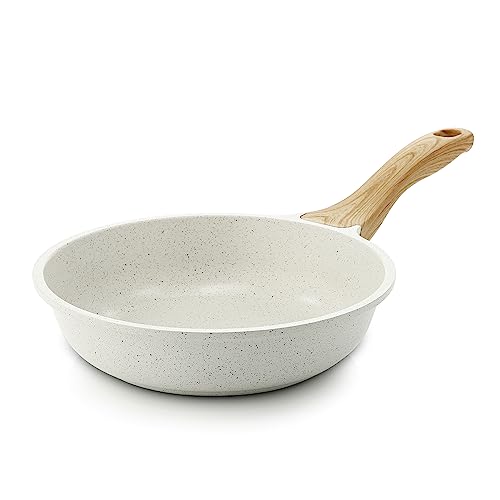
Best Ceramic Grill Pans (2026): 3 Picks That Fit Real Homes
Disclosure: We may earn a commission when you buy through links on this page, at no extra cost to you. As an Amazon Associate I earn from qualifying purchases. Learn more

Shopping for the best ceramic grill pan? Here are 3 picks that suit different homes and budgets, plus a quick checklist so you choose right the first time.
A small kitchen on a weeknight tells you a lot about a pan. You want grill marks on chicken or vegetables, but you also need a pan that fits your burner, stores in a crowded cabinet, and cleans up without a long soak. Choosing the best ceramic grill pan for your home starts with space, household size, and how often you actually cook this way, not with the largest pan you can find.
This guide walks through sizes, types, coatings, stove fit, and honest budget ranges so you can match a pan to your routine. Use the product table to compare current options before you read the details.


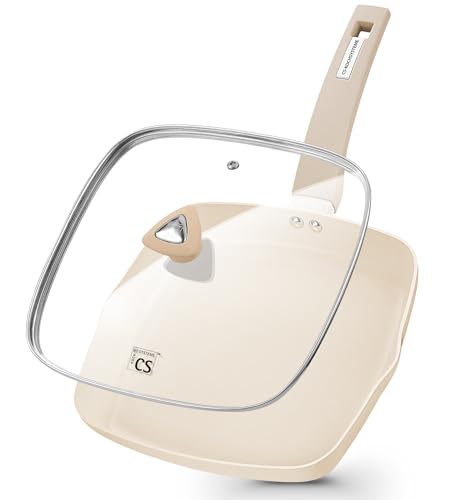


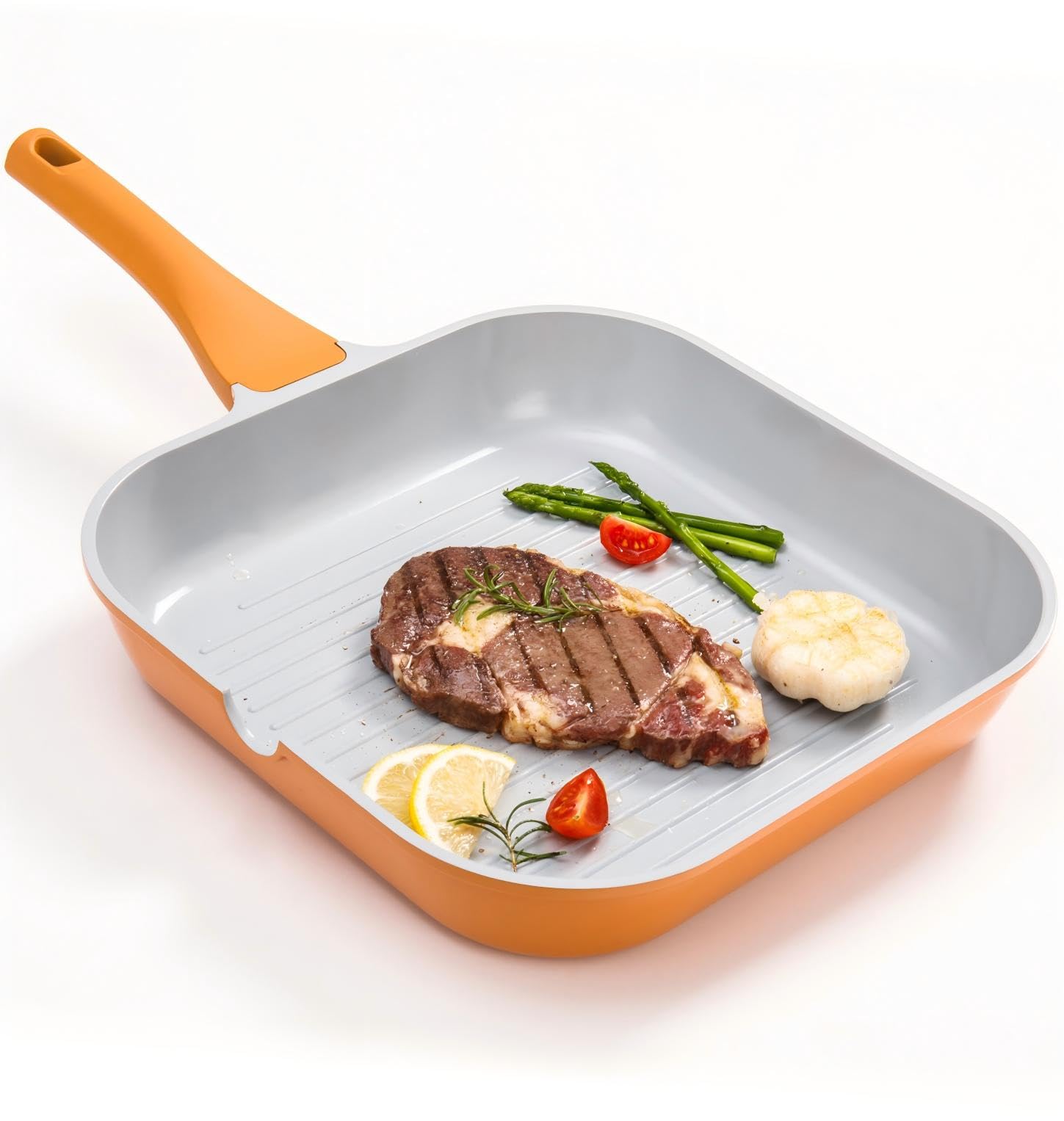
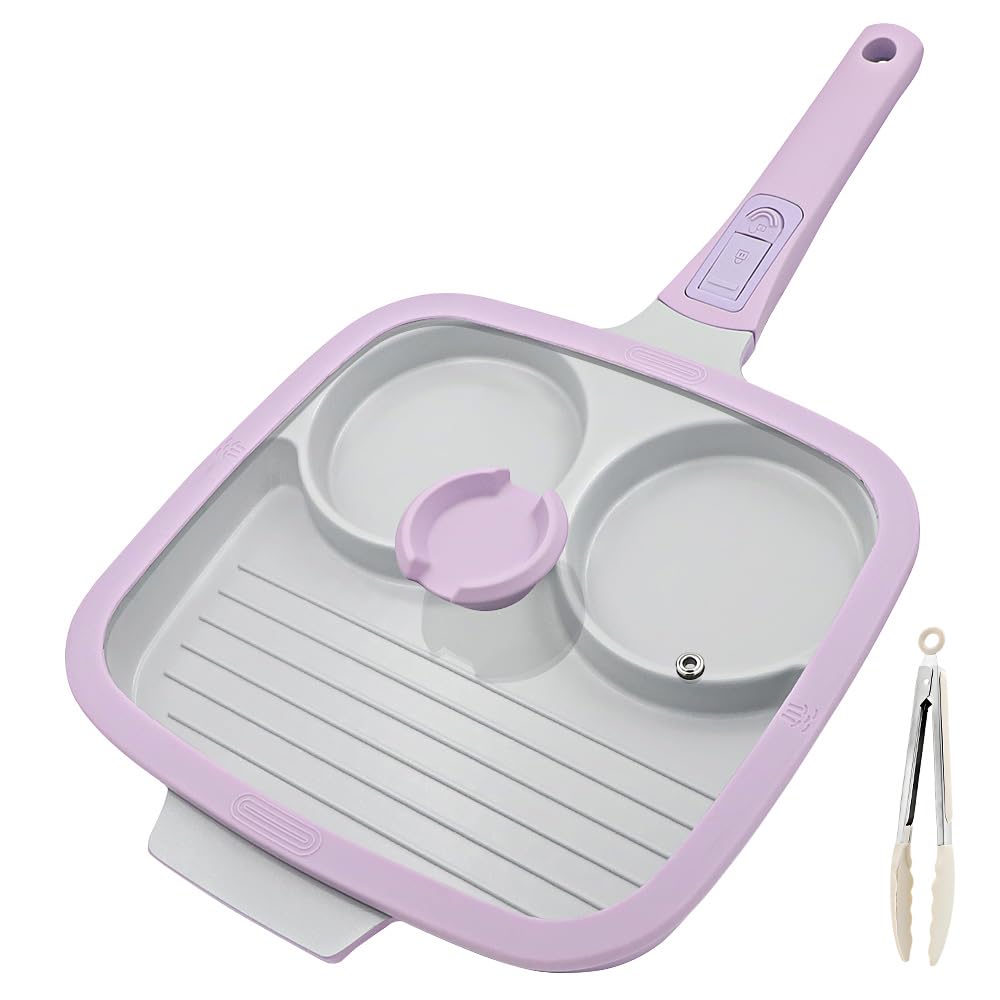
Quick Answer: Types That Fit Real Homes in 30 Seconds
When choosing the best ceramic grill pan, most homes do well with one of three setups. A compact square pan suits one or two people and a small stove. A midsize square pan is the flexible choice for three or four people. A double burner griddle style pan suits larger families and batch cooking, but only if you have the storage and a stove layout that can heat it evenly.
- Compact square pan: easiest to store, quick to heat, and sized for small batches.
- Midsize square pan: room for four portions while still fitting a standard burner and cabinet.
- Double burner style: the most cooking surface, with the highest storage and heating demands.
Before You Buy: A Quick Checklist for Choosing a Grill Pan
Size: Match It to Your Space
Measure your largest burner and your cabinet before you shop. A pan around 10.5 inches across fits most burners and stores easily, which suits singles and couples. A 12 inch pan adds room for family portions, but its handle can crowd neighboring burners and wide pans may not sit flat in a shallow drawer. Think about handles as part of the footprint, since a long handle often decides whether a pan fits your oven and your storage space.
Which Type Fits Your Routine
Ceramic coated pans give you easy food release and simple cleanup, which suits weeknight cooking. Cast iron holds heat longer but weighs more and asks for seasoning and careful drying. Enameled cast iron sits between the two, with strong heat retention and a smoother surface. Stainless steel tolerates high heat and metal tools but releases food less easily. Hard anodized and other nonstick pans feel light and familiar, while a reversible griddle adds a flat side for pancakes and eggs.
Features Worth Paying For and Ones to Skip
A helper handle is worth paying for on a larger pan, since a loaded grill pan is awkward to lift with one hand. Pour spouts help drain fat from burgers and bacon. A matching lid is useful only if you often melt cheese or finish thick cuts with gentle steam. A grill press can help with sandwiches and bacon, but many homes rarely reach for one, and it becomes one more heavy item to store and wash.
What Ceramic Coating Means for Safety
Ceramic coatings are generally made without PTFE, the material used in traditional nonstick coatings, and makers often market them as made without PFAS as well. Labels vary, so read the maker statement for the exact model and look for clear wording rather than a vague claim on the box. If avoiding coatings entirely matters more to you, bare cast iron and stainless steel remain the simple options. Whatever you choose, retire a coated pan once the surface is deeply scratched or food sticks badly across the whole base.
Induction, Gas and Glass Top Compatibility
Check the base, not just the coating. A ceramic pan works on induction only when its base contains magnetic metal, so look for an explicit induction note from the maker. On a glass top, a flat and smooth base matters most, and you should lift the pan instead of sliding it. If gas is your main stove, our guide to the best grill pan for gas stove explains burner sizing and grate fit in more depth.
Oven Safe Temperature and Handles
Makers rate oven limits by the handle and coating, not by the pan body alone. Many ceramic pans are rated to about 450 degrees Fahrenheit, while some handles lower that limit. A short metal handle tolerates broiler heat better than a long coated handle, but it also gets hot on the stove and needs a mitt every time. Confirm the rating for the exact size you buy, since ratings can differ across a product line.
Realistic Budget Ranges
Under $30, expect a light pan with a thinner base and a coating that rewards gentle use. Between about $30 and $50, bases usually feel sturdier and handles are better shaped for daily lifting. Closer to $100, you tend to get heavier construction, a more even base, and clearer warranty terms.
Three Home Setups Compared
A Midsize Square Ceramic Pan for Most Homes
A midsize square pan uses round burner space better than a round pan, giving corners room for vegetables or a fourth portion. Raised ridges lift food out of its own fat and leave clear marks on chicken, burgers, and thick slices of zucchini or halloumi. For households that grill indoors a few times a week, this size balances cooking room, washing effort, and storage better than any other shape. It is the setup most readers should start with.
A Compact Single Burner Pan for Small Households
A compact pan heats fast and washes in a small sink without a fight, which matters in apartments and shared kitchens. Portions stay modest, so it suits grilled sandwiches, two chicken thighs, or a small batch of peppers and onions. The tradeoff is batch cooking, since a crowd means several rounds at the stove. If your meals are mostly for one or two, that tradeoff is minor, and the lower price and easy storage make this the sensible value choice.
A Heavy Double Burner Style for Big Batches
A double burner ceramic coated griddle style pan spreads across two burners and handles a full family breakfast or a large batch of burgers at once. The heavier base helps limit hot spots once it is fully heated, though you need to give it time and rotate food as you cook. It earns its cost only in homes with the counter and cabinet room to keep it accessible. Stored at the back of a deep cupboard, even a fine pan goes unused.
How to Judge Ceramic Grill Pans
Judge these pans on heat distribution, base flatness, coating durability, material safety information, stove and oven compatibility, and cleaning effort. Maker specifications and patterns in verified buyer reviews, such as repeated reports of warping or sticking, are more reliable than a single glowing or angry comment. A pan scores well when its stated specs match the home and routine it is sold for.
Strengths and Limits of Ceramic Versus Other Grill Pans
What stands out with ceramic is the daily ease. Food releases well at moderate heat, the pan feels lighter than cast iron, and cleanup rarely needs more than warm water and a soft sponge. For weeknight cooks who value a calm cleanup, that ease is the main reason to choose ceramic over heavier options.
The limits are real. Ceramic coatings lose their slick feel over time, especially with high heat, cooking sprays, and metal tools. If you want a pan that can take fierce heat for decades, look at the best cast iron grill pan options instead, and note that cast iron care includes learning how to season a grill pan, a step ceramic never needs. For steak night in particular, the best grill pan for steak guide covers the heat and searing points that matter most for thick cuts.
Common Buying Mistakes to Avoid
- Buying a double burner pan for a stove with two small burners, which leaves the middle of the pan underheated.
- Choosing by cooking surface alone and forgetting that the handle decides cabinet and oven fit.
- Using high heat to speed up preheating, which shortens the life of a ceramic coating.
- Paying for a press and lid set you will store but rarely use.
- Ignoring the replacement cycle of coated pans when you compare prices with cast iron.
- Putting a hot pan under cold water, which can stress the base and encourage warping.
Cost of Ownership and Care
A ceramic grill pan has no ongoing parts to buy, so its real cost is replacement once the coating wears out, plus a few soft sponges and wooden or silicone tools to protect the surface. Wash it after it cools, soak stuck bits in warm water, and clean the ridges with a soft brush. Our step by step guide on how to clean a grill pan covers burnt on residue in detail. Store the pan with a cloth or felt pad under it if you stack other cookware on top.
Heat habits decide how long the coating stays slick. Preheat on medium, add food once the pan feels evenly warm, and avoid empty heating on high. Skip aerosol cooking sprays, since their additives can build a sticky film on ceramic surfaces that is hard to remove. Let the pan cool on the stove before washing, and dry it fully before it goes back in the cabinet.
FAQ
Are ceramic grill pans worth it for everyday cooking?
Yes, for most everyday cooking they are worth it, mainly because cleanup stays quick and portions cook without much added fat. They suit vegetables, chicken, fish, and sandwiches at moderate heat. The honest catch is lifespan, since a ceramic surface is a coating rather than a permanent material. Buy one expecting a few years of easy use, and it feels like good value rather than a disappointment.
How long does a ceramic grill pan usually last?
With daily use, many ceramic coatings stay slick for about one to three years before food starts to grip more often. Gentle heat and hand washing can stretch that span, while broiler use and metal tools shorten it. Watch for the warning signs of the end, which include eggs sticking in the center and a dull or patchy surface. At that point, no cleaning method restores the original release.
Can a ceramic grill pan work on an induction cooktop?
Only if the base was built for induction, since the ceramic coating itself does not respond to a magnetic field. Makers add a magnetic plate or layer to the base of induction ready models and say so on the packaging. A quick home check is to hold a fridge magnet to the base, because a firm grip suggests the base contains magnetic metal. When in doubt, trust the maker listing over the magnet test.
What size ceramic grill pan suits a family of four?
A 12 inch square pan usually handles four burgers or four chicken breasts in one round, with the corners helping rather than wasting space. If your family eats larger portions or adds vegetables to the same pan, plan on two rounds or step up to a double burner style. Check your sink size as well, since a pan that is awkward to wash tends to sit dirty and get scrubbed too hard later.
Should a ceramic grill pan be stacked with other cookware?
It can be, but only with protection between the pans. A folded cloth, a paper towel, or a felt pad keeps the base of the pan above from grinding into the coating below. Hanging storage is even better where you have the hooks and wall space. Most early coating damage in busy kitchens comes from storage contact and loose utensils in the same drawer, not from cooking itself.
Final Thoughts
Start with your space and your household size, then pick the type that matches how you cook each week. A compact pan serves small homes well, a midsize square pan covers most families, and a double burner style rewards batch cooks with room to store it. Whichever route you take, the product table above pulls the key specs together so you can confirm the best ceramic grill pan for your stove before you order. If you want the wider view across all materials, our guide to the best grill pan is the natural next read.