
Best Cast Iron Grill Pan: Size, Ridges and Care (2026)
Disclosure: We may earn a commission when you buy through links on this page, at no extra cost to you. As an Amazon Associate I earn from qualifying purchases. Learn more
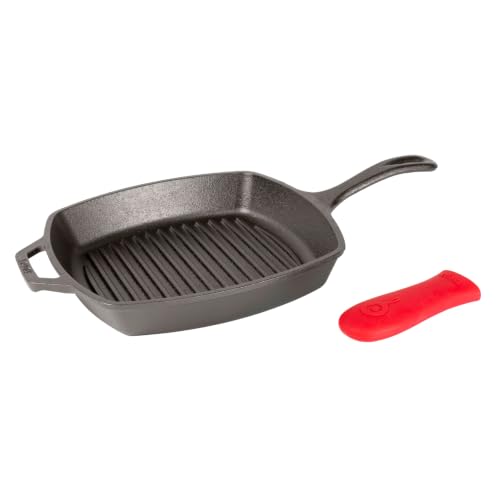
The best cast iron grill pan guide: size, ridges, enameled versus bare iron and care.
A heavy pan that lives in a cabinet you rarely open helps nobody. The right grill pan fits your burner, your storage shelf, and the number of people eating at your table on an ordinary Tuesday. This guide helps you find the best cast iron grill pan for your home by starting with space and household size, then moving to daily care and total cost.
Cast iron rewards a little routine, but sizes and shapes vary a lot. Use the product table below to match shapes against your stove, and read our broader guide to the best grill pan if you are still weighing other materials.
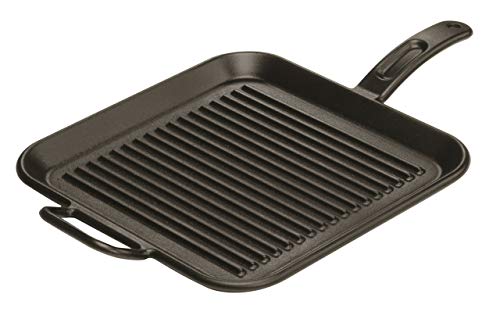


Quick Answer: The Three Shapes That Cover Most Homes
If you cook for one or two people, a compact square pan around 10 to 11 inches wide is usually enough, and it stores easily. If you cook for three or four, a larger square pan fits four chicken breasts or a row of vegetables without crowding. If your household is bigger, a double burner reversible pan stretches across two burners and flips to a flat griddle side.
Before You Buy: A Quick Checklist for Choosing a Grill Pan
Size: Match the Pan to Your Space and Burner
Measure your largest burner before you measure your appetite, because a pan that overhangs a small burner heats unevenly at the edges. A compact square pan suits a single burner and fits inside most cabinet shelves and oven racks. A 12 inch square pan covers a family meal but needs a wide burner and a strong wrist. Double burner pans run about 20 inches long, so confirm that your stovetop has two burners spaced to support one and a cupboard deep enough to store it flat.
Which Type Fits Your Routine
Bare cast iron is the classic choice, with raised ridges, strong heat retention, and a surface that improves as seasoning builds. Enameled cast iron skips most seasoning work and resists rust, but the coating can chip if you drop it or strike it with metal tools. Nonstick and ceramic coated pans feel easier at first, yet their coatings wear and eventually end the life of the pan, a trade worth weighing if you read about the best ceramic grill pan as an alternative. Stainless steel is lighter, though food grips it more firmly than seasoned iron.
Features Worth Paying For, and Ones to Skip
Two short handles beat one long handle on a heavy pan, because you can lift with both hands and oven mitts. Pour spouts on two sides help you tip out fat, and a channel at the edge keeps grease from pooling under food. A grill press adds value if you cook bacon, burgers, or sandwiches often, since it flattens food against the ridges. A matching lid is usually worth skipping, because lids trap steam and soften the seared surface you bought the pan to create.
Is a Cast Iron Grill Pan a Nontoxic Choice?
Bare cast iron carries no synthetic nonstick coating at all. Its cooking surface is seasoning, a layer of oil baked onto the metal through use, and you can renew that layer at home whenever it thins. That is a real advantage for shoppers who want to avoid PFAS and PTFE coatings entirely. Enameled cast iron and stainless steel also avoid those coatings, so cast iron is one of several sound routes, not the only one.
Induction, Gas, and Glass Top Compatibility
Cast iron works on gas, electric coil, and induction, since the metal is magnetic. On a glass top stove, the main concerns are weight and roughness, so lift the pan instead of sliding it and check that the base is smooth. Flame size matters on gas, and our guide to the best grill pan for gas stove explains how burner diameter changes your results. A rough base ring can wobble on flat glass, so a flat, fully machined bottom is the safer match there.
Oven Safe Temperature and Handles
Bare cast iron tolerates very high oven and broiler heat, which lets you start a thick cut on the stove and finish it in the oven. Enameled pieces often carry a lower stated limit from the maker, so read the rating printed for the exact piece you are considering. Short loop handles stay oven safe by design and take less storage room than a long handle. Whatever style you pick, plan on oven mitts every time, since every part of an iron pan gets hot.
Realistic Budget Ranges
Under about $30, you will find plain bare iron pans in the common sizes, often all a small household needs. About $30 to $60 adds better finishing, smoother bases for glass tops, preseasoned surfaces with more layers, and double burner reversible shapes. About $60 to $100 and above mostly buys enamel, which trades seasoning chores for a coating you must protect from chips. Spending more does not buy better searing by itself, so put your money toward size and surface first.
Which Cast Iron Grill Pan Type Fits Your Home?
Compact Square Pans for Small Kitchens
A compact square pan is the easiest cast iron to own. It heats on one burner, fits a small oven, and slides into a narrow cabinet where a long pan would not. For one or two people it grills two sandwiches, a pair of chicken thighs, or a modest pile of asparagus without wasted space. Its limit is crowding, because piling food wall to wall traps steam and prevents browning. If most of your meals are small, this is the shape you will reach for daily.
Larger Square Pans for Family Dinners
A larger square pan suits households of three to five, where dinner means four portions at once and a second batch would slow the meal down. The square shape uses burner space well and gives you corners for vegetables while meat sits in the center. This is the size most people picture for a steak night at home, and our guide to the best grill pan for steak covers cut thickness and resting in more depth. Expect real weight, so a two handle design matters.
Double Burner Reversible Pans for Bigger Households
A reversible pan puts ridges on one side and a flat griddle on the other, so one piece of iron handles burgers at lunch and pancakes the next morning. It feeds a crowd in a single pass and suits homes where weekend cooking is a group event. The trade offs are honest: it is the heaviest option, it needs two burners heating at similar levels, and the middle can run cooler than the ends. Choose it when your household size justifies it.
The Criteria That Matter Most
Judge any candidate for the best cast iron grill pan on five things: even heating across the ridges, build quality of the casting, safety of the surface material, fit with your stovetop and oven, and the effort cleaning takes after a greasy meal. You can check most of these from maker specifications and patterns in verified buyer reviews, such as repeated comments about wobble or chipped enamel. A pan that fits your home beats a heavier pan with stronger specs that you dread lifting.
Cast Iron Compared With Other Grill Pan Materials
What cast iron does well is hold heat. Once the ridges are hot, they stay hot when cold food lands on them, so you get dark grill marks and steady browning instead of a temperature crash. It also lasts for decades and moves from stovetop to broiler without complaint.
The honest drawbacks are weight, slower heating at the start, and a cleaning routine that asks for drying and a light coat of oil on bare iron. Nonstick pans are lighter and rinse clean in seconds, but you replace them when the coating fails. Enameled iron removes most upkeep while adding cost and a coating that can chip. Stainless steel sits between them, durable and lighter, though it gives up some heat retention.
Common Buying Mistakes to Avoid
- Buying the largest pan for a small burner, which leaves the outer ridges too cool to sear and wastes the extra size.
- Ignoring storage, which leaves a heavy pan buried under other cookware.
- Choosing enamel for a household that cooks with metal tools daily, which risks chips that cannot be repaired at home.
- Paying for a press and lid you will seldom use, which adds cost and clutter.
- Forgetting the weight when the pan is full, which turns a move from stove to oven into a strain.
Cost of Ownership and Care
Ownership costs for cast iron are low and mostly take the form of time. Bare iron needs no replacement parts, only cooking oil for seasoning, a stiff brush, and a few minutes of drying on a warm burner after washing. Our step by step guide on how to clean a grill pan covers removing stuck food from between the ridges without stripping the surface. Enameled pans cost more up front and more again if the coating chips badly.
Seasoning is the one skill worth learning early, because a thin, well maintained layer is what makes bare iron release food and resist rust. When the surface looks dull or patchy, our guide on how to season a grill pan explains the thin oil method that avoids a sticky finish. Store the pan dry, with a cloth between it and any cookware stacked on top. Treated this way, one pan can serve a household for decades.
Your Questions, Answered
Can you use metal utensils on a cast iron grill pan?
Yes, on bare cast iron you can. The seasoning layer is tough, and a metal spatula or tongs will not ruin it the way they can damage a nonstick coating. Small scrapes in the seasoning heal as you keep cooking with oil. Enameled pans are the exception, since metal edges can mark or chip the coating over time. If your household reaches for metal tools without thinking, bare iron is the forgiving choice.
Why does food stick to a new cast iron grill pan?
A new pan has only a thin factory seasoning layer, so proteins grip until more layers build through regular cooking. Preheating the pan fully helps a great deal, because food placed on cool ridges bonds as the metal warms. Patting meat and vegetables dry also matters, since surface moisture steams and sticks. Fatty foods such as burgers and sausages are the kindest first meals for a new pan.
Does a cast iron grill pan work well for panini and pressed sandwiches?
It does, and this is a job a flat skillet cannot copy as neatly. The ridges press stripe marks into the bread while a grill press or a second heavy pan flattens the sandwich so the filling heats through. Butter the outside of the bread lightly and keep the heat moderate, because a high flame scorches crust before cheese melts. Two to three minutes per side is a sensible starting point for most filled sandwiches.
How long does a cast iron grill pan actually last?
Bare cast iron has no coating to wear out, so its lifespan is measured in decades rather than years. Even a pan that rusts after poor storage can usually be saved by scrubbing the rust away and seasoning it again, as long as the metal is not deeply pitted. Cracks from a hard drop are the one failure you cannot fix. Enameled pans last a long time too, but their useful life ends when the coating chips through.
Is a grill pan worth buying if you already own a flat skillet?
For apartment and condo cooks without outdoor space, often yes. The ridges lift food out of its own fat, which gives you cleaner browning and visible grill marks that a flat skillet cannot produce. The trade off is more splatter on the stovetop and a slower cleanup around the ridges. If you grill meat or vegetables indoors several times a month, the difference justifies the cabinet space.
Final Thoughts
Start with your burner, your storage, and the number of plates on your table, and the right shape usually chooses itself. A compact square pan serves small homes, a larger square pan feeds a family, and a reversible double burner pan suits big households. Pick the best cast iron grill pan for the kitchen you actually have, check it against the product table above, and it will earn its shelf space for years.


