Best Centrifugal Juicers: Fit Your Counter, Household and Budget 2026
Disclosure: We may earn a commission when you buy through links on this page, at no extra cost to you. As an Amazon Associate I earn from qualifying purchases. Learn more

Choose the best centrifugal juicer by chute width, pitcher size, counter space and cleaning effort, with a checklist for busy homes.
Morning juice sounds simple until your counter is crowded, your kids are waiting, and a pile of carrots still needs washing. The right best centrifugal juicer fits that real routine, not just a showroom shelf. This guide helps you choose by counter space, household size, and budget, so speed does not come at the cost of daily frustration. Use the product table above to compare capacity and chute size at a glance.
Centrifugal models spin produce against a fine mesh basket at high speed, which separates juice from pulp in seconds. That pace suits busy homes, but models differ in footprint, noise, pulp dryness, and prep. The sections below walk through those differences in plain terms.




Quick Answer: The Right Fit in 30 Seconds
If you want one clear starting point, match the setup to your household first and your wish list second. A compact setup suits one or two people who juice a few times a week and store the machine in a cabinet. A balanced mid size setup suits most families, with a wide chute, a pitcher that holds several servings, and parts you can rinse quickly. A larger setup suits batch prep and harder produce in bigger volumes, but it needs permanent counter space.
All of these setups share the same strengths. They work fast, handle firm produce well, and cost less than most slow juicers of similar capacity. Where they part ways is convenience over time. Pay close attention to chute width, pitcher size, and how many parts need washing, because those details decide whether you still use the machine after the first month.
Before You Buy: A Quick Checklist for Choosing a Juicer
Which Type Fits Your Routine
Centrifugal juicers are the fast option, and they reward firm produce such as apples, carrots, celery, and ginger. If you mostly juice leafy greens or wheatgrass, a slow model will usually extract more from those soft leaves, so compare our guide to the best cold press juicer before you decide. If you want a broader view of every style, start with the best juicer guide and narrow from there. Citrus only households can use a much smaller tool, while daily mixed juice drinkers benefit most from centrifugal speed.
Features Worth Paying For and Ones to Skip
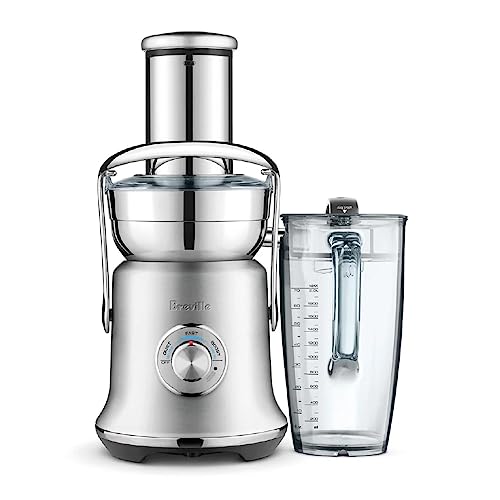
A wide feed chute is worth paying for because whole or halved apples pass through with far less cutting, which saves real time on busy mornings. Multiple speed settings also help, with a lower speed for softer fruit and a higher speed for dense vegetables. A pulp container that removes from the side and a pitcher with a foam separator add daily ease. You can usually skip decorative finishes, extra juice recipes in the box, and large accessory bundles with brushes and bottles you already own at home.
Wattage, Power and Energy Use
Most home models fall in a range of about 700 to 1200 watts, and higher wattage mainly helps the motor hold speed when you feed dense produce in quick succession. Wattage alone does not tell you how dry the pulp will be, so treat it as a capacity clue rather than a quality score. Because a batch takes only a minute or two, energy use per serving stays low. Steady pressure instead of forcing produce also reduces strain and keeps results more consistent.
Safety Features and Certifications
Look for a locking arm or lid switch that stops the motor when the cover is not secured, since the basket spins fast enough to throw produce if it starts open. Stable feet matter too, because a machine that walks across the counter under load is noisy and unsafe. In the United States, UL or ETL marks show the electrical design was tested by a recognized lab. Keep hands and utensils out of the chute while the motor runs, and always use the pusher provided.
Counter Space and Dimensions
Measure before you shop, including the height under your upper cabinets and the depth from the backsplash to the counter edge. Many family size models need a footprint close to a large dinner plate in each direction, plus clear space in front for the pitcher and pulp container. If the machine must move to a cabinet after each use, note its weight and whether the cord wraps underneath, because a heavy unit with a dangling cord quickly becomes one you stop moving.
Realistic Budget Ranges
At under $50, expect a compact body, a narrower chute, and more hand cutting. In the range of about $50 to $100, chutes grow, pitchers get larger, and two speed controls become common. From about $100 to $200, you gain stronger motors, drier pulp, and sturdier housings. Above about $200, you mostly pay for larger capacity and parts built for heavier daily use. No tier changes the basic method, so buy for fit and cleaning ease first.
Setups That Fit Real Homes
For Most Homes: A Balanced Mid Size Setup
This setup pairs a wide chute with a pitcher that holds enough juice for three or four glasses, so one session covers a family breakfast. Two speeds handle both oranges and carrots well, and the pulp bin is large enough that you rarely stop mid batch to empty it. It balances prep time, output, and washing in a way that suits most kitchens. Choose it if counter space is moderate and juicing will happen several mornings each week.
On a Budget: A Simple Compact Setup
A compact setup keeps the parts count low and the price down, which makes it a sensible first machine for one or two people. You will cut produce smaller and empty the pulp bin more often, but the unit stores in a standard cabinet and rinses clean in a few minutes. Output per session is smaller, yet quality on firm produce remains satisfying. Choose this type if you are testing the habit, your kitchen is small, or juice is an occasional treat.
For Long Term Use: A Larger Heavy Duty Setup
A larger setup adds a stronger motor, a bigger chute, and thicker housing parts that tolerate daily batch work without feeling strained. It suits households that prep juice for several days or process hard vegetables in volume. The trade off is size and price, and this type earns its place only if it can live on the counter full time. Choose it when your volume is proven, not hopeful, because an oversized machine hauled from storage will rarely get used.
How to Evaluate Centrifugal Juicers Before You Buy
Start with facts you can verify on the product page and in the manual. Check chute width in inches, pitcher and pulp capacity, dimensions and weight, speed settings, and warranty length for the motor and for parts. Then read buyer reviews through the lens of your own situation, such as small counters or large families, and look for repeated comments about leaking, vibration, or staining. Finally, confirm that replacement baskets and pitchers are sold separately, because a model with no spare parts has a shorter useful life by design.
What We Like and What We Do Not Like About Centrifugal Juicers
The strongest appeal is speed. From whole produce to a full pitcher often takes only a few minutes, including a quick rinse, and that pace fits school mornings and workday routines. Firm produce yields well, the learning curve is short, and prices stay reasonable across sizes. For a side by side look at slower extraction, read our comparison of best masticating juicer options and the detailed masticating vs centrifugal juicer guide.
The limits are just as clear. Spinning at high speed adds air to the juice, so it tastes best fresh and separates sooner in the fridge than slow pressed juice. Leafy greens and soft berries give lower yields, and the motor is loud enough to wake light sleepers. The mesh basket also needs prompt attention after each session. None of this rules the type out, but it should shape what you plan to juice most often.
Common Buying Mistakes to Avoid
- Buying the largest model for a small kitchen, so it ends up stored away and unused because setup feels like a chore.
- Judging by wattage alone, while ignoring chute width and pitcher size that affect your routine far more each day.
- Skipping the parts count, then discovering the basket, lid, pusher, pitcher, and pulp bin all need separate washing after every use.
- Planning mostly leafy green juices on a centrifugal model, which leads to low yields and wet pulp from the start.
- Ignoring spare part availability, so one cracked pitcher or worn basket ends the life of an otherwise sound machine.
Cost of Ownership and Care
Ongoing costs stay modest when you care for the basket and seals well. Electricity per batch is small, and the main expenses over time are a replacement basket, a new pitcher if one cracks, and descaling supplies if your water is hard. Rinse parts right after juicing, before pulp dries into the mesh, and wash them in warm soapy water. If you want a fuller routine, follow the steps in how to clean a juicer and dry every part fully before storing it.
Good habits extend motor life as well. Feed produce at a steady pace instead of forcing the pusher, alternate hard and soft items so the basket clears evenly, and let the machine rest between large batches. Keep the basket separate from heavy pans that could bend its fine mesh. If you are new to the appliance, the basics in how to use a juicer will help your first sessions go smoothly.
FAQ
How do you clean a centrifugal juicer basket without damaging the mesh?
Soak the basket in warm water with a little dish soap for about ten minutes, then brush from the outside inward with a soft brush so debris lifts out instead of pressing deeper. Avoid stiff bristles and metal pads, which can bend the fine mesh and reduce yield. If mineral film builds up, a brief soak in water with a splash of white vinegar helps, followed by a thorough rinse and full air drying.
Is a centrifugal juicer worth it for a small household?
Yes, if you drink juice a few times a week and value speed over maximum yield from greens. A compact model pays for itself against store bought juice fairly quickly, especially when you buy produce in season. It is less worthwhile if juice is a rare treat, because storage and washing stay the same whether you make one glass or four.
How long does a centrifugal juicer usually last?
With regular care, a home model often serves for several years of weekly use, and heavier built types can last longer under daily use. The basket and plastic pitchers usually wear first, while motors fail mainly after repeated strain from forcing produce or running long batches without pause. Replacing worn parts promptly protects the motor and keeps juice quality steady.
Are centrifugal juicers good for celery and ginger?
They handle both well, because celery and ginger are firm and fibrous in a way that suits fast spinning extraction. Cut celery into shorter lengths so long fibers do not wrap around the basket, and feed ginger in small pieces between other produce to help it clear. Yields from celery are solid, though a slow juicer can squeeze slightly more from each stalk. For mixed juice with carrots and apples, speed usually matters more than that small gap.
Can a centrifugal juicer handle leafy greens and wheatgrass?
It can process them, but results are modest compared with slow extraction, and the leaves often pass through with much of their juice still in the pulp. A useful trick is to roll greens into a tight bundle and feed them between firm items such as apple pieces, which pushes more leaf material against the basket. Wheatgrass in quantity is the weakest case for this type. If greens are the center of your routine, weigh that limit heavily before you buy.
Final Thoughts
The right choice comes down to fit. Match chute width and capacity to your household, count the parts you will wash, and let your budget buy sturdier construction rather than extras you will ignore. When those basics line up, the best centrifugal juicer for your home is the one you will reach for without thinking twice. Review the product table above, confirm your measurements, and pick the setup that matches your routine.