
Best Ceiling Fan With LED Light 2026: Buying Guide
Disclosure: We may earn a commission when you buy through links on this page, at no extra cost to you. As an Amazon Associate I earn from qualifying purchases. Learn more

Check lumens, dimming range and blade span first when choosing the best ceiling fan with led light for a bedroom or living room.
Choosing a fan and a light in one fixture sounds simple until you face lumen counts, blade spans, and mount types at once. The best ceiling fan with led light for your room moves enough air for the space, lights it evenly, and runs quietly at the speeds you will actually use. This guide covers types, sizes, and controls so you can match a fixture to your ceiling.
Use the product table below to line up span, brightness, and control style, then read on for the details behind each spec. For a broader start, see our guide to the best ceiling fan.


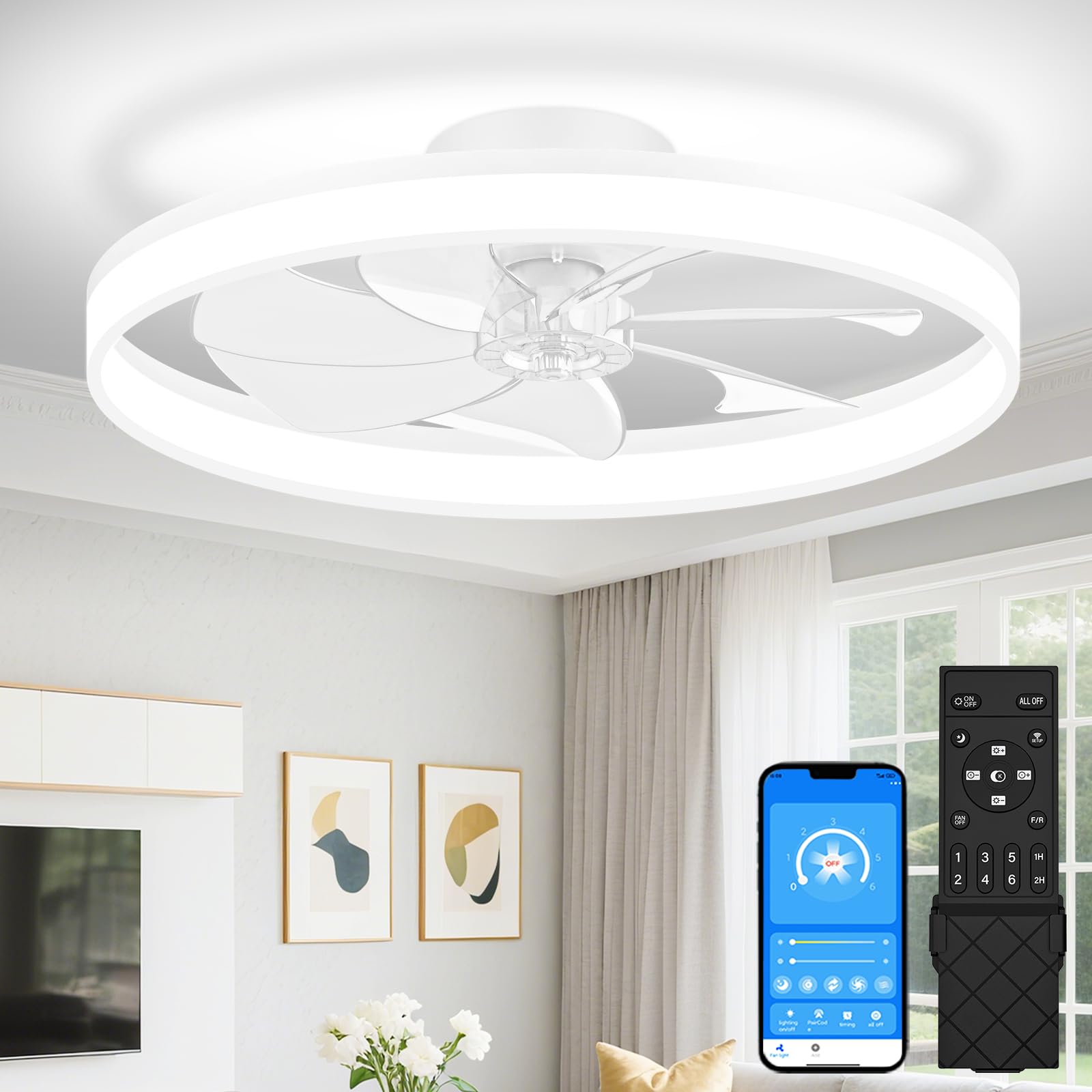
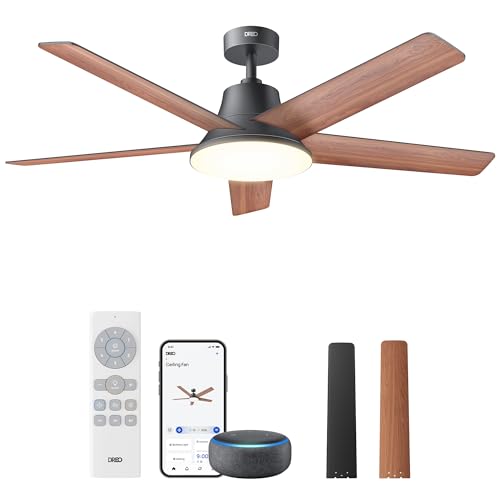

Types to Compare at a Glance
Most shoppers do better comparing three fixture types than chasing a single winner. Each suits a different ceiling height, and all use an integrated LED as the main light source.
- Low profile integrated LED fans: The housing sits close to the ceiling with the light in a shallow dome. Best for ceilings under eight feet.
- Standard mount fans with a downrod: A rod drops the blades into the room for stronger air movement. Best for ceilings of nine feet or more.
- Smart fans: Light and speeds are set from a phone or voice assistant. Best where the wall switch is awkward to reach.
Who Should Buy a Ceiling Fan With LED Light?
Your room decides which type you need far more than any single spec does.
Bedroom Sleepers Who Need Quiet Air and Soft Light
You run the fan all night, so motor hum and light behavior matter more than raw power. Look for a quiet DC motor, dimming that goes truly low, and a warm color temperature. A remote you can use without getting up is worth more than extra top speed. For room specific advice, see our guide to the best ceiling fan for bedroom.
Hosts and Families in a Busy Living Room
Your fan has to light a large seating area and move air across it. A span of 52 inches or more, output of around 1600 lumens or higher, and a matching finish will serve you well. Reversible direction also helps in winter. Our guide to the best ceiling fan for living room covers larger spans in more depth.
Owners Replacing an Old Ceiling Light Fixture
You already have a ceiling box and a wall switch, and you want one upgrade that adds air movement and light. Check whether the box is rated to hold a fan and whether you want separate wall control for light and fan. Integrated LED designs suit this group best, since the light never needs a bulb change.
Key Features to Compare
Five factors decide whether a combined fixture works well once installed.
Brightness in Lumens
Lumens tell you how much light the LED produces, and they matter more than wattage, which only shows power use. A small bedroom often feels well lit at about 800 to 1200 lumens, while a living room or kitchen usually needs about 1600 to 2500 lumens. Check that the stated output is for the light alone.
Color Temperature and Dimming Range
Color temperature, measured in Kelvin, describes whether light looks warm or cool. Around 2700 to 3000 Kelvin gives a warm glow for bedrooms and living rooms, while 4000 Kelvin and above looks crisper for kitchens. Pair that with smooth dimming down to about ten percent, since an LED that only dims halfway is frustrating at night.
Blade Span and Airflow
Span is the full width from blade tip to blade tip, and it should grow with your room. Rooms up to about 100 square feet suit a 42 to 44 inch span, rooms of 100 to 225 square feet suit 52 inches, and larger rooms may need 60 inches or two fans. Airflow, in cubic feet per minute, shows how much air the fan moves at high speed. Balance a high figure against noise, since the quietest setting is the one you will use most.
Motor Type and Everyday Noise
AC motors are the older design, usually cost less, and often offer three speeds with a slight hum. DC motors use less energy, run more quietly, and commonly give six speeds plus a gentler lowest setting for sleep. The trade off is price. For the full picture, read our explainer on dc vs ac ceiling fan motors.
Controls, Finish, and Style
Decide how you will run the fan each day. A handheld remote is most flexible, a wall control keeps everything in one place, and a pull chain is simple but awkward on high ceilings. Then match the finish to hardware already in the room.
How to Choose the Right Ceiling Fan
Work through the practical choices below in order. Skipping the early steps is the main reason fans get returned.
Size and Form Factor
Measure your room and multiply length by width for square footage, then pick a span from the ranges above. Blades should sit at least seven feet above the floor, and eight to nine feet is where air movement feels strongest. On a low ceiling, a flush mount form keeps blades high enough while clearing tall occupants.
Type
Flush mount and low profile types suit ceilings under eight feet. Downrod types suit ceilings of nine feet or more and can fit sloped ceilings with the right kit. Outdoor types carry a damp or wet rating for porches, while bladeless and caged designs trade some airflow for a look that keeps blades out of sight.
Features Worth Paying For
A remote, a reversible motor for winter use, and selectable color temperature earn their cost in daily convenience. WiFi and voice control are worth it if you already run a smart home, but add little if you prefer a wall switch. Skip decorative blade finishes or oversized spans your room cannot use.
Matching Light Output to the Room
Think in terms of total light for the whole room. A room that relies on the fan as its only light source needs the full output figures from the brightness section. A room with lamps can use a dimmer fan light as a supplement, where dimming quality matters more than peak output. Kitchens lean brighter, while bedrooms lean softer and warmer.
Fixture Size and Placement
Center the fixture over the main activity area, usually the bed or seating group, rather than the exact center of the ceiling if furniture sits off center. Keep blades at least 18 to 24 inches from the nearest wall so air circulates well. On a sloped ceiling, confirm the downrod lets blades stay level and clear the slope.
Dimmable and Smart Options
Check dimmer compatibility before you buy, since an LED module paired with the wrong wall dimmer can flicker or buzz. Many integrated LED fans dim only through their own remote or app, while the wall switch turns power on and off. Confirm a smart fan still runs from the remote when the internet is down.
Installation
Most combined fixtures are hardwired to a ceiling box rated to support a fan, not just a light. Turn off power at the breaker, confirm the bracket is secure, and follow the maker wiring diagram. Two people make the job safer, since one can hold the motor while the other connects wires. For a full walkthrough, follow our guide on how to install a ceiling fan, and hire a licensed electrician if wiring looks old.
How Much Should You Spend?
Basic integrated LED fans run about $80 to $150 and cover small rooms with simple controls. The middle range, about $150 to $300, brings quiet DC motors, better dimming, and selectable color temperature. Above about $300 you pay for smart features and premium finishes rather than stronger basic performance. Our overview on how to choose a ceiling fan helps rank these costs.
Do You Really Need a Ceiling Fan With LED Light?
If your room has one ceiling fixture and no room for lamps, a combined fan and LED light solves two problems with one install. The LED uses far less energy than old bulbs and lasts for years without a change, and the fan lets you feel cooler in summer and push warm air down in winter. Choose the combined fixture when a single switch limits your options, as in most bedrooms.
Common Mistakes to Avoid
- Buying by wattage instead of lumens: You end up with a dim room, since wattage shows power use and not light output.
- Choosing a span that is too small: The fan runs at full speed yet the corners of the room still feel still and warm.
- Mounting on a light only ceiling box: The fixture can wobble or work loose, since the box was never rated to carry a spinning fan.
- Ignoring dimmer compatibility: The LED flickers or buzzes at low settings when the wall dimmer was made for older bulbs.
- Forgetting blade clearance: Blades too close to a wall or slope create noise and weak, uneven airflow.
How to Make Your Ceiling Fan Last Longer
Dust the blades and light cover every few months with a soft cloth or a pillowcase slipped over each blade. Check blade and canopy screws once a year, since small vibrations loosen them over time. If it starts to wobble, stop and rebalance or tighten it rather than letting motion stress the mount.
FAQ
What is the best ceiling fan with LED light?
There is no single answer, since the right choice depends on room size, ceiling height, and brightness needs. A quiet DC model with about 1600 lumens suits most bedrooms and living rooms, while low ceilings call for flush mount designs. Use the product table above to compare span, output, and controls, and favor smooth dimming over decorative details.
Is a ceiling fan with LED light worth it?
Yes, if your room relies on one ceiling fixture for both air and light. You save the cost and wiring of a second fixture, and the LED uses little power for years without bulb changes.
How long does a ceiling fan last?
A well made fan motor often runs for ten years or more with basic care, and many makers back motors with long warranties. The integrated LED is usually rated for tens of thousands of hours, so it can serve for many years before output fades.
Is a ceiling fan worth it?
For most homes, yes. Moving air makes a room feel several degrees cooler, so you can set the thermostat higher in summer and use less cooling energy. In winter, reverse mode recovers warm air at the ceiling. The value drops in rooms you rarely use or where a safe blade height cannot be reached.
How do you clean a ceiling fan?
Turn the fan off and let the blades stop fully. Stand on a stable step ladder, slip an old pillowcase over one blade at a time, and pull it back slowly so dust stays inside. Wipe the light cover with a dry cloth, and never spray cleaner directly onto the motor housing.
What is the most reliable ceiling fan brand?
Reliability depends more on the model, its motor warranty, and correct installation than on the name on the box. Look for a long motor warranty, available replacement parts such as remotes and light modules, and full published specs. A properly mounted fan kept in balance will outlast a premium fan on a loose mount.
Final Thoughts
Start with room measurements, then match span, mount type, and light output before finishes or smart extras. When you compare the best ceiling fan with led light options in the product table above against those basics, the right type usually stands out quickly. Prioritize a quiet motor, honest lumen figures, and smooth dimming, and your fixture should give comfortable air and dependable light in every season.


