
Best Ceiling Fan for Living Room 2026: Buying Guide
Disclosure: We may earn a commission when you buy through links on this page, at no extra cost to you. As an Amazon Associate I earn from qualifying purchases. Learn more

Match blade span, brightness and noise to your seating area with this guide to the best ceiling fan for living room use.
A living room fan has a harder job than a fan in any other room. It must move air across a wide seating area, light the space where you read and talk, and look right above your main furniture. Choosing the best ceiling fan for living room use means balancing blade span, light output, and motor noise at once. The product table below sums up the main fan types, and the sections after it explain how to match each factor to your room.
Many buyers start with looks alone, then find the fan is too small or too dim for evening use. Measuring first prevents both problems. For the broader picture across all rooms, see our guide to the best ceiling fan options for the whole home.
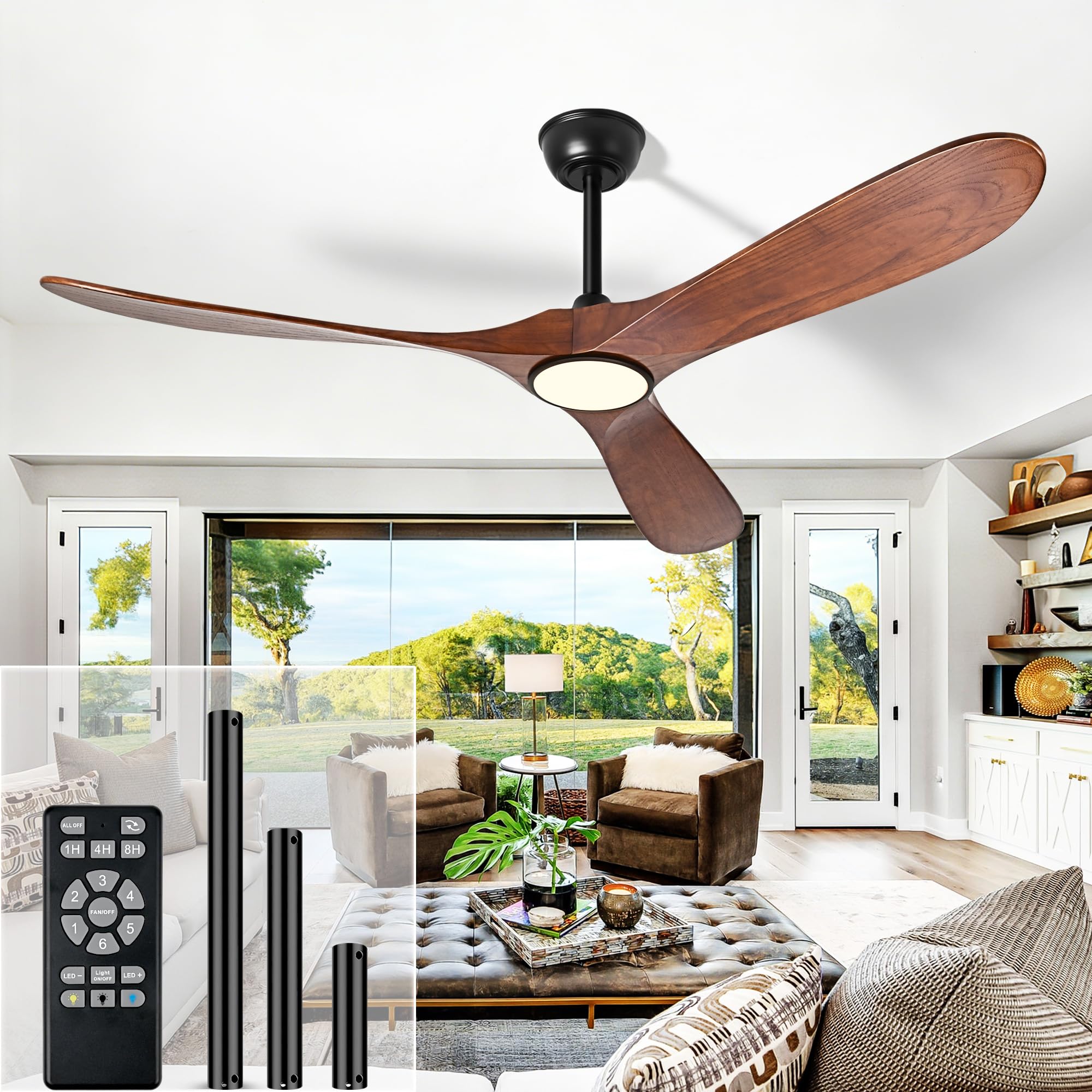


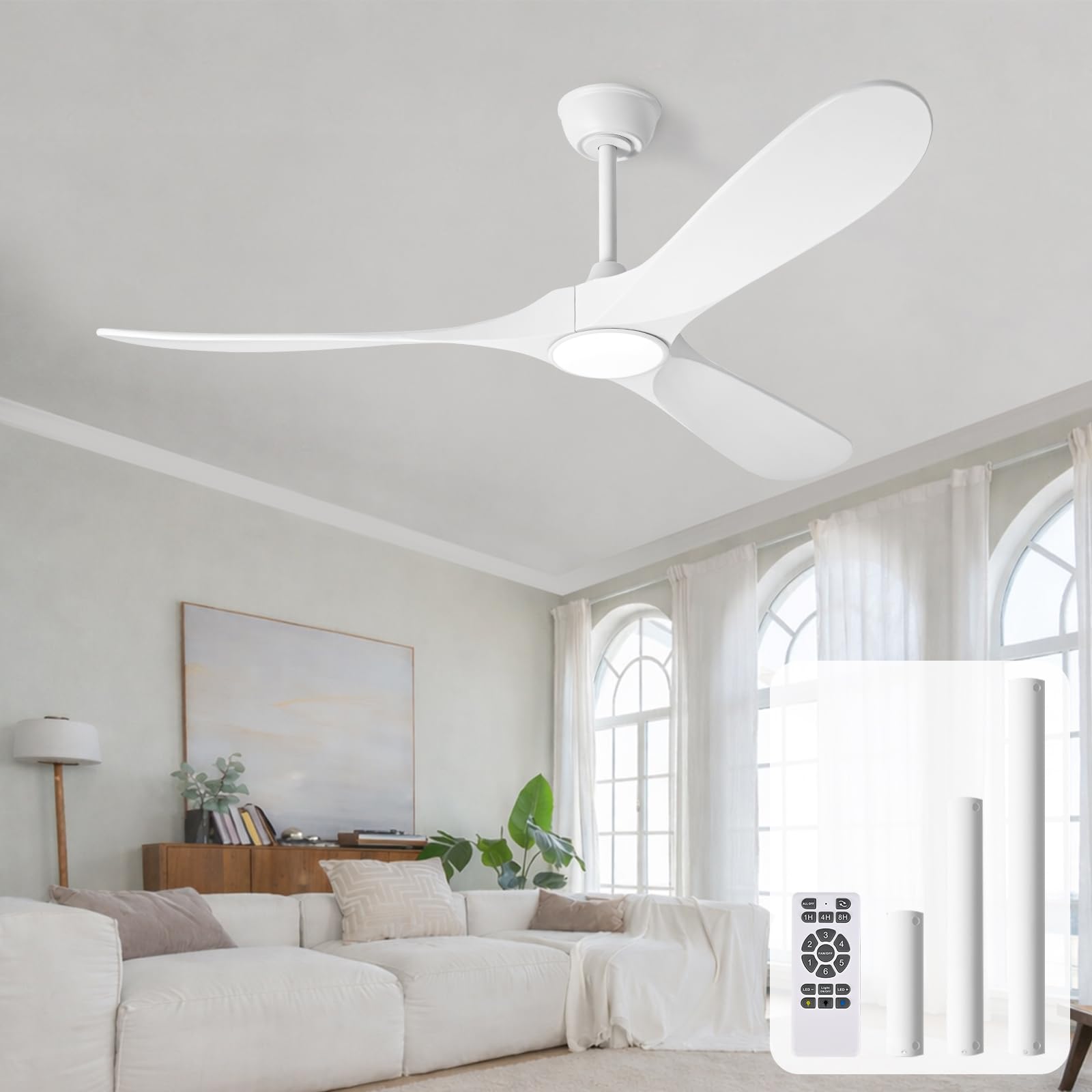
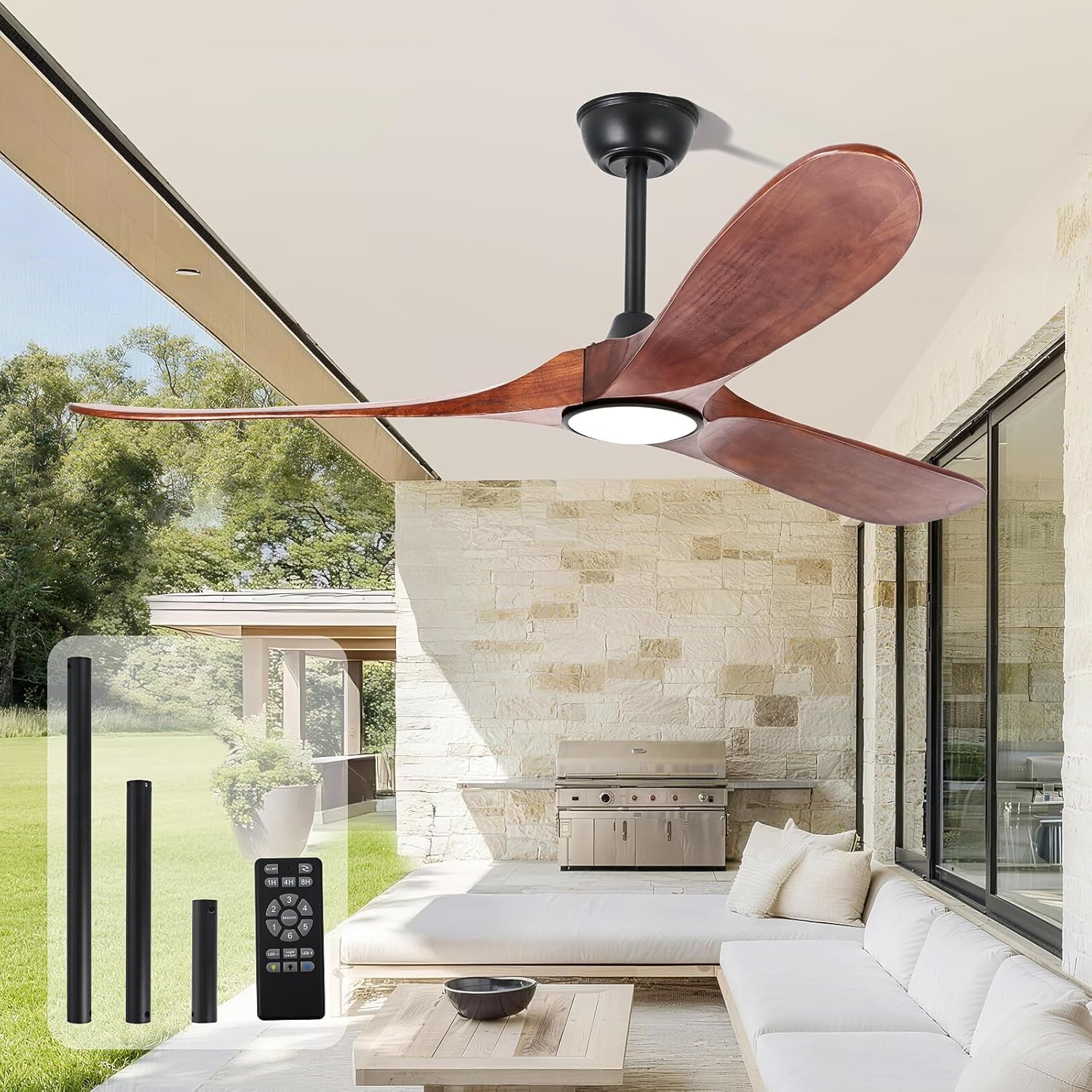
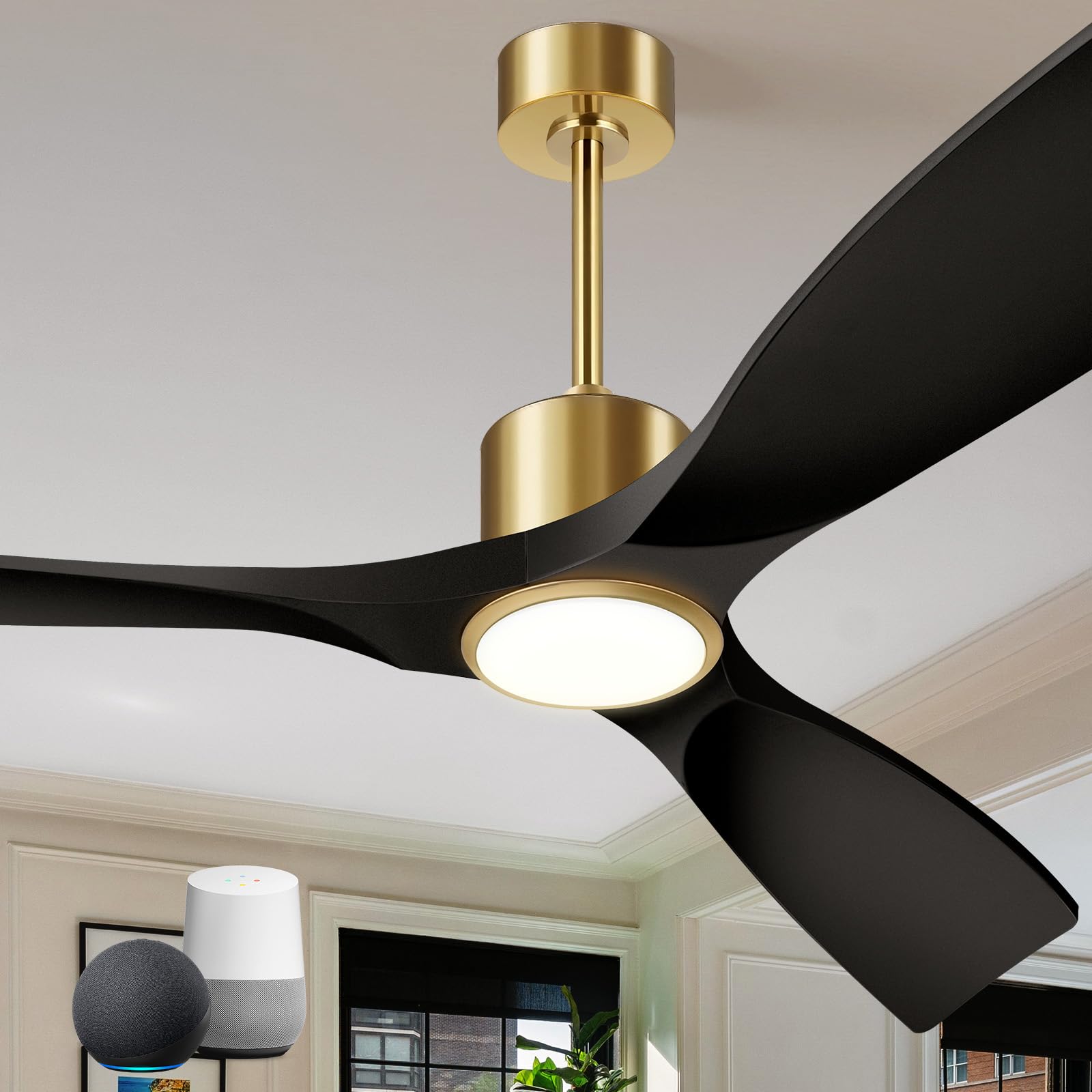


Fan Types Compared for Living Rooms
Instead of ranking individual models, this guide compares the three fan types that suit most living rooms. Each fits a different ceiling height, room size, and lighting need, so find your type first, then compare specs within it.
Standard Fans With a Light Kit
This is the most common living room choice. A downrod drops the fan so the blades sit at a good height for air movement, and a central light kit replaces a separate ceiling fixture. Spans of 52 inches suit most rooms, and most models include a remote. Choose this type when your ceiling is 9 feet or higher and you want one fixture for both air and light.
Flush Mount and Low Profile Fans
These fans hug the ceiling with no downrod, which keeps blade clearance safe in rooms with ceilings near 8 feet. Air movement is a little weaker than a downrod fan at the same span, because the blades sit closer to the ceiling. If your room has a low ceiling, read our guide to the best flush mount ceiling fan designs before you decide, since mounting style changes which spans will work.
Large Span and Smart Fans
Fans of 60 inches and above suit open plan rooms and vaulted ceilings, where a standard span leaves the corners still. Smart versions add app and voice control, timers, and light scenes you can adjust from the sofa. They cost more, but for a big room used every evening, the wider reach and flexible control often justify the price.
How We Chose the Types and Criteria in This Guide
We built the criteria here from maker spec sheets and the questions living room buyers ask most often. The factors are light brightness in lumens, color temperature, style and finish, ease of installation, energy use, and value for the room size covered. Use the criteria as a checklist for any fan you compare.
How to Choose the Right Ceiling Fan for Your Living Room
The steps below follow the order that matters most: size first, then type, then light, then control and installation. Our separate guide on how to choose a ceiling fan covers other rooms of the house.
Size and Form Factor
Blade span is the width from one blade tip to the opposite tip, and it sets how much air the fan can move. A span of 42 to 44 inches suits rooms up to about 144 square feet. A 52 inch fan covers roughly 144 to 225 square feet, and 54 to 60 inch fans suit larger rooms. For a very long room, two smaller fans spaced evenly often beat one oversized fan, since each seating zone gets its own moving air.
Type
Beyond the three types above, living room fans come in modern, farmhouse, industrial, caged, and boho styles, and a few bladeless designs hide the blades inside a ring. Style matters in a room guests see, but let ceiling height rule the mounting type first. Outdoor rated fans belong on porches, since you pay extra for weather sealing you do not need indoors.
Features Worth Paying For
A remote control is worth it in almost every living room, since the fan usually sits far from a wall switch and you adjust it from the sofa. A reversible motor matters if you heat the room in winter, because reversing the blades pushes warm air down along the walls. Motor type also affects noise and energy use, and our explainer on dc vs ac ceiling fan motors covers that trade off.
Lumens and Color Temperature
Brightness is measured in lumens, and a living room fan light should give roughly 800 to 1600 lumens if it is the main light source. Below that range the room feels dim at night, even if the fan itself works well. Color temperature is measured in kelvins. Light near 2700 to 3000 kelvins looks warm and suits evening relaxing, while 4000 kelvins looks cooler and better for reading or board games. Fans with selectable color temperature let you change the mood without changing bulbs.
Fixture Size and Placement
Center the fan over the main seating area, not over a walkway. Keep at least 18 to 24 inches between the blade tips and any wall, beam, or tall bookcase, or air movement drops and noise rises. Blades should sit at least 7 feet above the floor, and 8 to 9 feet is where most people feel the breeze best. On a sloped ceiling, check the maximum slope the mount allows and use a longer downrod so the blades clear the low side.
Dimmable and Smart Options
Dimming matters more in a living room than in most rooms, because the same light serves bright cleaning sessions and low movie nights. Check that the light dims smoothly without flicker, and note whether dimming works from the remote, a wall control, or only an app. Smart fans with WiFi can link to voice assistants and schedules, but confirm the fan still works with a plain remote if your network goes down.
Installation
Most living room fans are hardwired into a ceiling electrical box, and that box must be rated for fan weight, since a spinning fan stresses a box far more than a light fixture does. Turn off power at the breaker, not just the wall switch, before any wiring work. If the wiring looks damaged, hire a licensed electrician instead. Our step by step guide on how to install a ceiling fan covers the full process, from bracing the box to balancing the blades.
How Much Should You Spend?
Price bands break down roughly as follows, and each step up mainly buys quieter motors, better light, and stronger finishes.
- Basic fans priced under $100, with a small light kit, pull chain control, and a span suited to smaller rooms.
- About $100 to $200: the sweet spot for most homes, with a remote, a reversible motor, and brighter LED light.
- About $200 to $300: quieter DC motors, selectable color temperature, and finishes that hold up better over time.
- About $300 to $500: large spans, smart control, and premium materials for big or design led rooms.
What Matters Most in a Ceiling Fan for a Living Room
A living room is a shared, social space, and that shapes what matters. The fan runs for hours while people talk, watch films, and read, so low noise at the speeds you use most counts more than a huge top speed figure. A fan that hums or clicks will annoy you every evening, while a quieter fan fades into the background.
Light quality is the second living room factor. Guests notice a harsh or dim light far more than they notice air speed, so treat the fan light as a main room light, not an afterthought. A fan also lets you set the thermostat a few degrees higher while moving air keeps skin feeling cool, which lowers cooling costs across a summer. The fan does not cool the air itself, though, so switch it off when the room is empty.
Quiet running matters even more where people sleep, so if noise is your top concern in other rooms too, our guide to the best ceiling fan for bedroom use applies the same thinking to smaller spaces. In the living room, balance that quiet with span and light.
Common Mistakes to Avoid
- Buying by looks alone, then finding the span is too small and the far seats get no breeze.
- Mounting a downrod fan on a low ceiling, which leaves the blades too close to heads.
- Treating the fan light as a minor extra, then living with a dim room.
- Skipping the blade balancing steps after installation, so a small wobble grows into a clicking noise.
- Leaving the fan running in an empty room all day, which uses power while cooling nobody.
Care and Maintenance
Dust builds up on the top side of the blades and spreads around the room each time the fan starts. Wipe the blades with a damp cloth every few months, working from the motor housing outward so dust does not fall into the motor vents. Tighten any loose blade screws while you clean, since vibration slowly works them loose. Replace remote batteries once a year so a dead remote never leaves the fan stuck at one setting.
FAQ
What is the best ceiling fan for living room use?
There is no single model that fits every room, because span, ceiling height, and light needs differ. For most living rooms, a 52 inch fan with a remote, a reversible motor, and a light of about 800 to 1600 lumens covers the widest range of homes. Start with the fan type that matches your ceiling, then compare models inside that type using the criteria in this guide.
What should I look for in a ceiling fan for a living room?
Start with the right span for your floor area, then check light output, motor noise, and mounting style. One point buyers often miss is blade pitch, the angle of the blades, which is usually around 12 to 14 degrees. A steeper pitch moves more air at the same speed, but it also asks more of the motor, so pitch figures only help when you compare fans of a similar size and motor type.
How long does a ceiling fan last?
A decent ceiling fan motor often runs for about 10 to 15 years, and the motor warranty length is a fair clue to how long the maker expects it to last. The parts that wear first are usually the remote receiver, the light kit, and the pull chain switch, all of which can often be replaced without changing the whole fan.
Is a ceiling fan worth it in a living room?
For most homes, yes, because the fan spreads heated and cooled air more evenly through a room where people gather for hours. It also gives you a main light and air movement from one ceiling box, which helps in older rooms with few fixtures. The value drops if the room is rarely used, or if a low ceiling keeps air movement weak at every speed.
How do you clean a ceiling fan without spreading dust?
Turn the fan off and let the blades stop fully before you start. Slide an old pillowcase over each blade in turn and pull it back toward you, so the dust stays trapped inside the fabric instead of falling on the furniture below. A step ladder with a helper steadying it is safer than standing on a chair, and never pull on a blade for support.
What makes a ceiling fan brand reliable?
Reliability shows up in the details rather than the name on the box. Look for a motor warranty of at least several years, spare parts that the maker still sells, and clear spec sheets that list airflow and light output instead of vague claims. Steady model lines also help, because a maker that changes its lineup every year is harder to get parts from later.
Final Thoughts
Match the span to your floor area, pick the mounting type your ceiling height allows, and treat the light as a main room light with enough lumens for evening use. The product table above lists current fans so you can compare span, light, and controls at a glance. Chosen that way, the best ceiling fan for living room comfort is simply the fan that fits your room, runs quietly at the speeds you use, and lights the space the way your family actually lives in it.


